
Bathroom Privacy Glass: Frosted, Obscure, and Reflective
Bathroom Window Planning
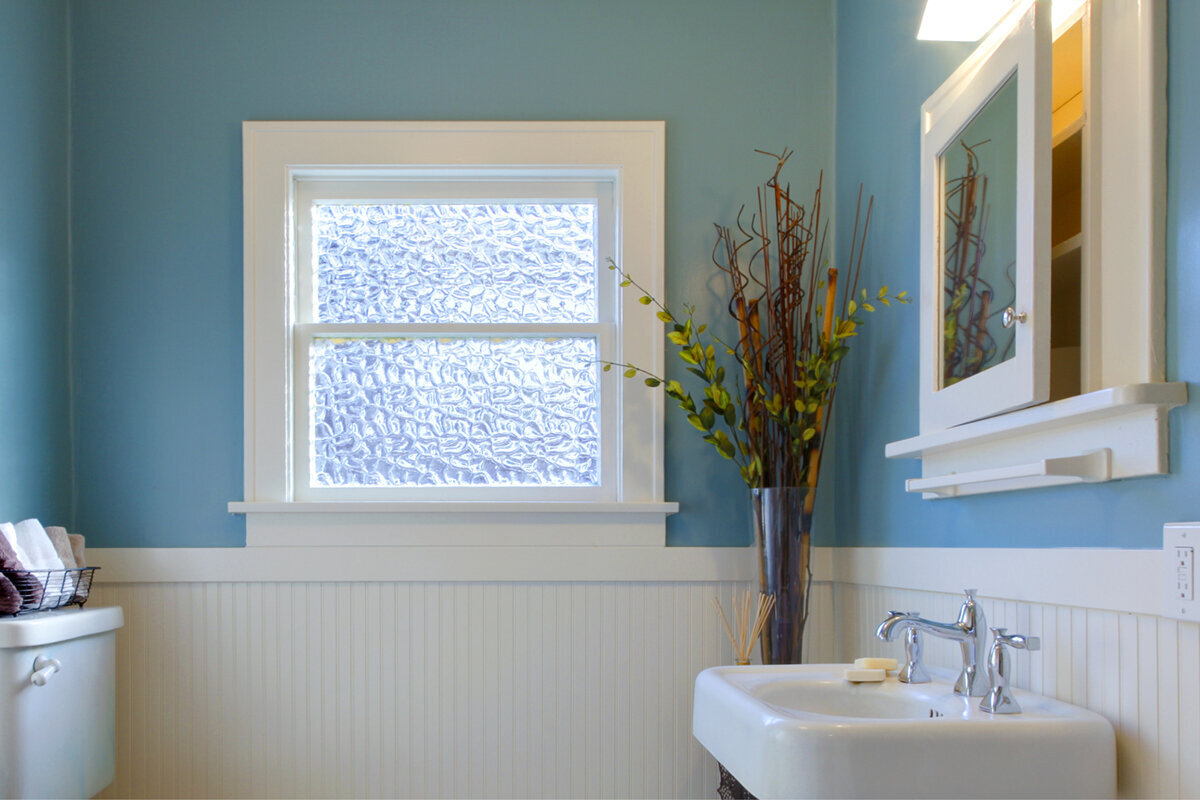
A bathroom window has to solve two decisions together: how it opens and how it protects privacy. Start with operation because sash clearance, handle reach, screens, exterior space, and cleaning access can rule out an otherwise appealing layout. Then decide whether the glass should permanently blur the view, create a textured image, or change appearance with the light. A fixed window above a tub has different needs from a casement beside a vanity, while glass near a shower brings extra cleaning questions. Frosted, obscure, and reflective glass can all limit visibility, but they behave differently at night, from close range, and at an angle. Compare each option from the bathroom and every realistic exterior viewpoint before selecting the configuration and glazing.
Define the opening before comparing glass
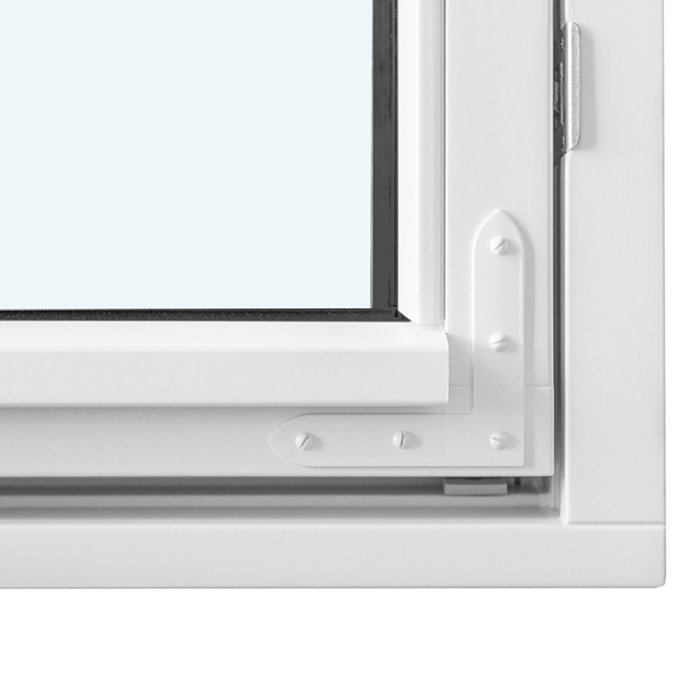
Separate the project into operation, location, and view. Is the window meant to provide ventilation, daylight, an outdoor connection, or simply a private visual break? A unit over a deep tub may be hard to reach, while a sash beside a vanity could conflict with a mirror, faucet, towel bar, or person using the sink. Mark the sill, glass area, handle position, and sash path on the room plan. Test views while standing, sitting, and using the shower rather than treating privacy as one straight line through the center of the pane.
A fixed window is a logical reference point when daylight matters more than ventilation through that opening. Without sash clearance to manage, placement and glass treatment become the main decisions. Fixed glass is not automatically best, however, especially if the room depends on the window for regular ventilation. Write the required operation into the project brief before requesting a quote: fixed, inward-opening, outward-opening, top-hinged, or pivoting. This prevents a decorative glass choice from being paired with an inaccessible latch or a sash that interferes with bathroom fixtures.
Understand the uniform blur of frosted glass
Frosted glass diffuses the scene beyond the window into a soft, generally even field. It suits bathrooms where the window should read as a calm light source rather than a patterned feature. The term alone does not establish how effectively a specific option conceals shapes at every distance. View a meaningful-size sample against both a bright background and a darker room, then move close to it. A small sample held against a showroom wall cannot reproduce the scale, lighting contrast, or exterior approaches of the finished bathroom window. For a useful sample test, place the glass between a person and several familiar objects rather than judging it only by printed literature. Check facial detail, body outline, color contrast, and movement from the approximate indoor and outdoor distances. Repeat the comparison with the brighter side reversed. The objective is not to assign an unofficial privacy rating, but to discover what remains recognizable in conditions resembling the bathroom. Photographing each setup from the same marked position can make subtle differences easier to discuss with other household members.
Frosted glass can be especially useful when tile, wallpaper, or fixtures already create strong visual activity. Its main tradeoff is that the desired blur also reduces views of foliage, weather, and sky. A partial treatment may preserve a clear upper view while protecting the lower sightline, but only if the room and exterior geometry support it. A small round fixed window offers another shape-led alternative where a compact fixed opening suits the design. Its title establishes the configuration, not a particular glass specification, so available privacy glazing still needs confirmation.
Treat obscure glass as a pattern-specific choice
Obscure glass disrupts a view through texture or pattern rather than a uniformly frosted appearance. Depending on the selected design, it may create ripples, linear movement, pebbled effects, or a softer decorative distortion. “Obscure” is a category, not one predictable degree of privacy. One pattern may conceal ordinary detail from several feet away yet reveal more shape at close range. Another may hide detail while making movement noticeable. Evaluate the exact sample from the closest exterior approach and at the viewing angles relevant to your property.
Texture can add character to a traditional room or make a broad pane feel less blank, but it may compete with patterned tile or cast busy highlights in side light. Review the sample beside the actual finish palette instead of choosing it in isolation. Ask which face creates the intended appearance, how that face is positioned within the completed glazing assembly, and what the exterior will look like. If the bathroom window belongs to a repeated facade composition, compare it with neighboring openings so the textured pane appears deliberate rather than like a late substitution.
Recognize the lighting limits of reflective glass
Reflective glass is often mistaken for permanent one-way privacy. Its appearance depends on relative brightness. When daylight makes the exterior brighter than the bathroom, the outside may show more reflection and less interior detail. After dark, bathroom lighting can reverse that relationship: the person inside may see a reflection while someone outside can see inward more easily. Reflective glass should therefore be treated as a daylight appearance option, not the only privacy safeguard for a bathroom used in the evening.
Reflective glazing may still suit an upper-level opening where exterior appearance, open sky, or a distant daytime view is part of the brief. It is less dependable beside a close path, driveway, deck, or neighboring window. A shade, blind, or curtain can provide a separate nighttime layer, but it must fit without obstructing the handle or trapping splashes. Review reflective glass head-on and from oblique approaches. If privacy should not depend on someone remembering to lower a covering, frosted or appropriately selected obscure glass is the more stable starting point.
Map sightlines at realistic heights
Privacy can fail because the protected band is in the wrong place, even when the selected glass performs as expected. People standing at a vanity, seated at a toilet, and using a shower occupy different positions. Exterior views may come from a path, raised deck, sloping yard, or neighboring upper floor. Use painter’s tape, removable paper, or a scaled elevation to mark the area that needs the strongest treatment. Include any raised tub platform, shower curb, and clear section proposed above the private glass.
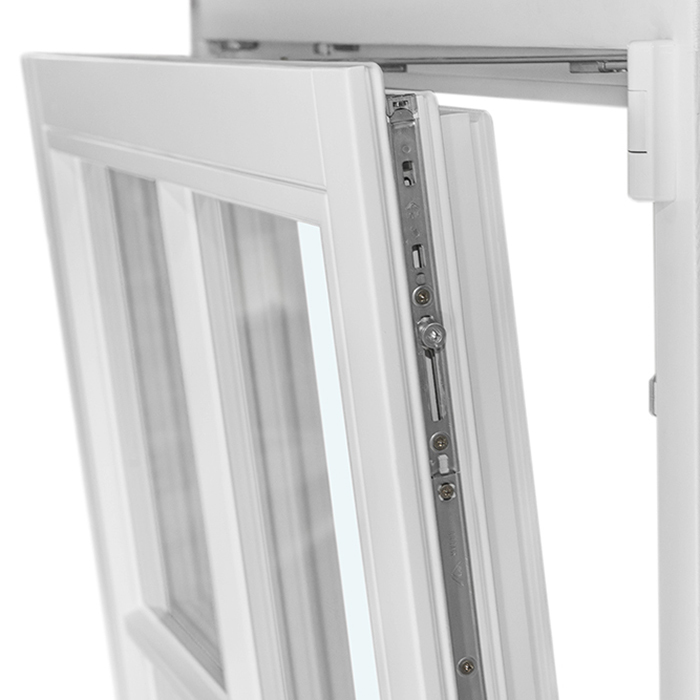
Operation can alter both the view and the available space. A single-sash inward-opening window may work where the room provides sufficient interior clearance and the handle remains easy to reach. Trace the sash arc on the plan, including a person leaving the shower or standing at the sink. Then ask about available handing, hardware location, screen arrangement if offered, cleaning access, and compatible glass choices. Keep the privacy zones visible on the approved drawing; a verbal instruction such as “obscure the bottom” is too imprecise for a multi-panel opening.
Balance daylight with the view you want to keep
Privacy glass does not necessarily mean a dark bathroom, but each treatment changes the character of incoming light. Frosted and obscure panes can spread daylight broadly, while room color, window area, orientation, overhangs, trees, and nearby buildings affect the final result. Decide whether you want soft ambient light, a clear strip of sky, or separate private and view zones. Compare morning and afternoon conditions if possible. A sample photographed in direct sun will not explain how the same glass feels on an overcast day or beneath a covered exterior area.
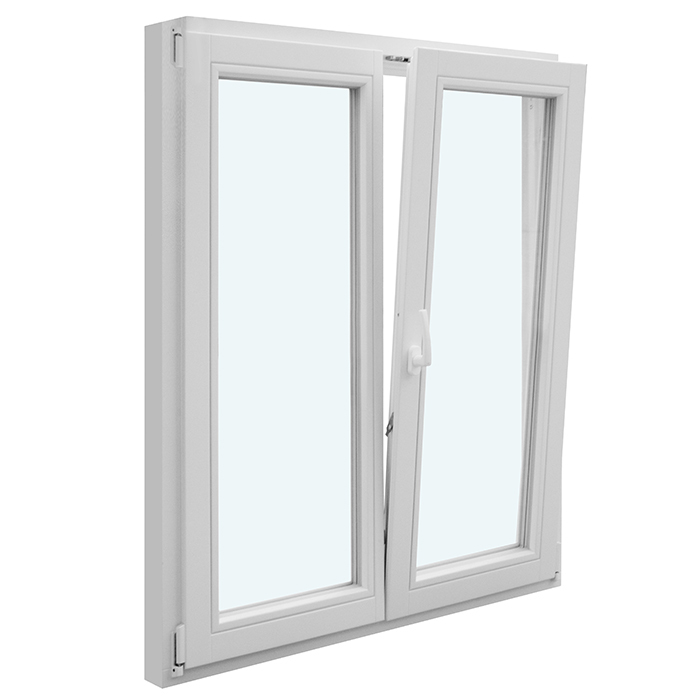
A two-sash inward-opening window can suit a wider composition when the room has enough interior space for the opening arrangement. The center meeting line becomes part of the view, so check where it falls relative to the tub, vanity, and exterior elevation. Separate sashes can also tempt a complicated mix of clear and private glass. Keep that division purposeful: every clear area needs its own sightline test. Treat the configuration as a layout option rather than evidence of any particular airflow, glazing, or hardware performance, all of which should be confirmed for the proposed order.
Plan around splashes and cleaning access
A window beside or within a shower needs closer maintenance review than one across the room. Soap residue, mineral deposits, and repeated wiping can affect how both smooth-looking and textured surfaces appear. Patterned relief may require a different routine, while a frosted appearance may show spotting in its own way depending on how the finish is produced and positioned. Request care instructions for the exact glass option, including recommended cleaners and prohibited abrasive tools. Do not infer maintenance requirements from a showroom sample or a broad privacy-glass label.
Also examine the sill depth, corners, trim transitions, latch access, and space around any interior covering. Imagine opening the window, wiping the pane, and drying the sill with wet hands. Reaching over a tub deck or around a fixed shower screen can make simple tasks awkward. When the opening is incorporated into a shower enclosure, coordinate the window, wall, sill, and shower system with the qualified professionals responsible for the project. Applicable requirements depend on the location and project conditions, so avoid relying on a generic online detail as the complete assembly plan.
Match the sash action to ventilation habits
Consider when the window will actually be opened: during bathing, afterward, only when the room is vacant, or rarely because another ventilation method serves the space. A top-hinged outward-opening window is one configuration to explore when its opening action fits the interior layout and the exterior has suitable clearance. Confirm the available size, handle reach, glazing choices, and cleaning method rather than inferring features from the product title. Privacy should still be evaluated with the sash closed because that is when the glazing must work without a change in user behavior.
A single-sash outward-opening casement window is another alternative where interior swing space is limited but the exterior path can remain clear. Compare its handle position, outward arc, screen arrangement if offered, and access to the exterior glass. An outward sash near a walkway creates a different planning issue from one facing a private planting bed. Bring both a floor plan and an exterior photograph to the product discussion. The best operation is the one that can be reached, opened, cleaned, and used without conflicting with fixtures or circulation.
Coordinate glass, frames, and visual divisions
Review bathroom glazing from indoors and from the facade. Frame color, sash proportion, and bar layout can either support or compete with the privacy treatment. A large uninterrupted frosted pane tends to read quietly, while obscure patterned glass adds visible movement. Decorative bars subdivide the appearance without necessarily dividing the glass; glass-dividing bars create separate panes. Ask which construction is proposed. Dense divisions may help the window relate to other openings, but they can also make an already textured pane look unnecessarily busy.
A combination window may be relevant when the elevation needs coordinated fixed and operating areas. Request the exact composition because the product category does not establish which sections open or how the glazing is divided. One practical arrangement places private glass at the exposed sightline and an operable area where exterior views are less direct. Another keeps the glazing consistent and uses placement to manage privacy. The order drawing should answer three questions without interpretation: which sections open, which panels receive each glass type, and how the completed arrangement aligns with nearby windows.
Turn the decision into an order-ready specification
Ask for a written, panel-by-panel description rather than accepting “privacy glass” as the final order language. Record whether each area is frosted, the named obscure pattern, reflective, or clear. Review overall dimensions, operation, handing, frame color, handle location, decorative bars or glass-dividing bars, and the intended appearance of relevant glass faces. Recheck the view from the shower, tub, toilet, vanity, exterior path, and any elevated neighboring position. If a covering remains part of the plan, verify its mounting space and clearance before approving the window.
A pivoting roof window is an alternative to discuss when light from above fits a bathroom below a roof and could reduce dependence on a low wall opening. It is not a universal substitute: roof geometry, weather exposure, access, room layout, and technical design need project-specific review. Confirm the available configuration and glass choices with the supplier. Bloomcabin states a 5-year warranty for windows and doors. Delivery is stated as 4–6 weeks, subject to order confirmation, so verify timing for the actual order and avoid building the construction schedule around an unconfirmed date.
Frequently asked questions
Is frosted glass more private than obscure glass?
Not automatically. Frosted glass generally creates uniform diffusion, while obscure glass uses a texture or pattern. The result depends on the exact treatment, viewing distance, pane size, angle, and lighting. Compare the actual sample at close range and from the relevant exterior positions instead of ranking the category names alone.
Does reflective bathroom glass provide privacy at night?
Do not rely on it as the only nighttime privacy measure. Reflection depends on which side is brighter. When bathroom lights are on and the exterior is dark, inward visibility may increase. Use a dependable private glazing treatment or a suitable interior covering when evening privacy is essential.
Can clear glass go above privacy glass?
Yes, if the final division blocks the sightlines that matter. Test views from nearby ground, decks, slopes, and neighboring windows rather than checking only straight ahead. Also consider whether the clear upper area reveals the room from an elevated viewpoint or disrupts the intended window proportions.
Which privacy glass is easiest to clean near a shower?
There is no universal answer without the exact glass specification. Smooth-looking and textured options can show deposits differently, and surface relief may affect cleaning effort. Request the manufacturer’s care guidance, then consider splash exposure, sill details, reach, and access around shower screens or fixtures.
Should glass be chosen before window operation?
Consider both together, but resolve the opening operation first. Sash direction, handle position, clearance, cleaning access, and screen placement if offered determine whether the opening works in the room. Then specify privacy glass for each panel. Glazing cannot correct an inaccessible latch or an impractical sash path.
Plan your next step
The right bathroom privacy glass must work when the room is bright, dark, occupied, wet, and viewed from the actual surroundings. Frosted glass offers a calm blur, obscure glass adds pattern-specific texture, and reflective glass remains dependent on lighting. Begin with operation and fixture clearances, then map sightlines before comparing samples. Record the selected treatment panel by panel, including any clear areas and supplemental coverings. This process preserves useful daylight, ventilation, and exterior design while making privacy a tested part of the window plan rather than an assumption.
