
Best Veg to Grow in Raised Beds: Match Each Crop to the Bed It Needs
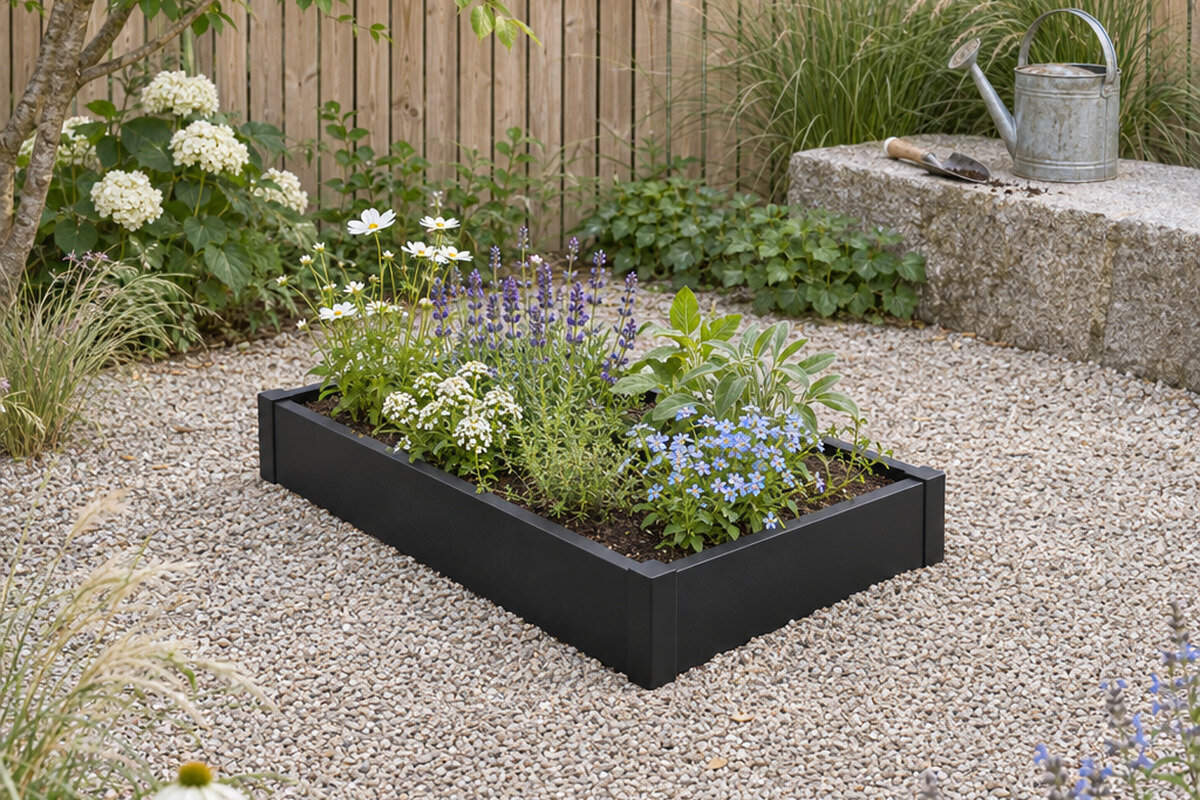

Bloomcabin · Raised-bed guides
Best Veg to Grow in Raised Beds: Match Each Crop to the Bed It Needs
The best veg to grow in raised beds are leaf lettuce and radishes for a small cool-season planting, carrots where there’s enough loose soil, and bush beans or a compact tomato for a warm-season bed with suitable light and space. Start with what you’ll eat, then check whether the site or the bed limits your choices.
Choose for the next planting
Pick vegetables you eat, then check which ones you can plant in your next local window.
Measure soil, not walls
Count soil beneath an open frame only if roots can use it. Compare usable depth with the variety’s needs.
Test reach before ordering
Mark the bed and paths at full size. Test whether you can reach the plants from the sides you’ll actually use.
Pay for what solves the problem
Price the frame, fill, delivery, site preparation, and crop supports. A taller wall doesn’t necessarily give you more planting area.
The best veg to grow in raised beds aren’t necessarily the ones that need the tallest frame. A short frame over usable ground can offer more rooting room than its walls suggest. A taller bed can make sense if you need a higher working edge or room for more fill, but it won’t fix a shady spot or a path you can’t reach from.
Start with two vegetables and ask what would stop each one from working. This guide takes that answer through to a frame comparison, a fill estimate, and a planting plan. If changing the variety solves the problem, you can keep the vegetables you want without buying a bigger bed.
01
Shortlist crops by what could rule them out
Start with the vegetables you buy or cook regularly. Then check your county or state Extension planting guide against the exact variety you’re considering. The best veg to grow in raised beds this month may differ from the crops you’d choose for the same space later. If your preferred crop is out of season, put it on the next planting list instead of changing the bed to accommodate it now.
Before ordering seeds, write down what could rule each crop out. For carrots, that might be usable soil depth; for a tomato, it might be the space the plant and support take together. If several candidates fit, the best veg to grow in raised beds are the ones you’ll harvest often enough to justify giving them that space.
- Leaf lettuce and radishes: A useful cool-season pair if you eat both. Give radishes their own short row so you can pull them without reaching through the lettuce.
- Carrots: Match the variety to the depth of loose, unobstructed soil. If the roots would run out of room, look for a shorter variety before shopping for a taller bed.
- Bush beans: A warm-season choice when you want beans without planning for a climbing variety. Check mature spread and leave room along the picking side.
- Compact tomatoes: Worth considering for a warm-season bed with suitable light and room for the mature plant. Mark the support’s footprint as well as the plant’s position.

02
Check the bed site from below and from the path
Check the site before choosing between varieties or frames. Look at shade across the proposed footprint at different times of day, not just when you happen to be outside. Note which part stays shaded and confirm that you can water the far end from a path. The best veg to grow in raised beds beside a fence might differ from your picks for a more open spot in the same yard.
Write down three separate things: wall height, the depth you intend to fill, and whether roots can use the ground underneath. An open bottom only adds rooting room if that lower soil is suitable. Look for obstructions, compacted ground, and places where water collects. If you suspect contamination, seek local guidance before growing food there; the frame won’t isolate its fill from the ground.
Now mark the outside footprint and where you’ll stand or sit to work. Try reaching to the center from the actual path, with the fence, gate, or other obstacles in place. A good test is whether you can reach a spot precisely enough to thin seedlings, not just brush it with your fingertips. The best veg to grow in raised beds won’t earn their space if the crop is easy to sow but awkward to pick.

03
Compare an edge strip and two ways to get two bays
Once you’ve identified the best veg to grow in raised beds for your site, compare frames against the constraint that matters most. These three Bloomcabin models are supplied unassembled and open to prepared ground, without floor panels. The listed wall heights tell you how tall the frames are, not how much soil you’ll put in them or how deeply the crops can root.
If the best veg to grow in raised beds for your plan fit in one strip over usable ground, compare that option before paying for two bays. If you need two bays, compare the equal-height and split-height models: the extra height doesn’t buy extra planting area. The frame prices above are US public listings verified November 21, 2026, not delivered totals. Before ordering, check the current listing, assembled inside dimensions, and model-specific assembly and care instructions. Add destination delivery and tax where applicable, along with your own fill and equipment costs.
- Narrow Aluminum Raised Garden Bed 39.37×19.69×3.94 in. The nominal footprint is 39.37 by 19.69 inches, with 5.38 square feet of nominal planting area. It has aluminum wall panels and corner posts. The 3.94-inch wall adds little above-ground soil depth, so choose this strip where the prepared soil below can supply the rest. Keep one long side clear for working and make sure you can water the strip end to end. Listed frame price: $234.97. Add the cost of shallow fill, ground preparation, and any watering equipment or supports.
- Double Aluminum Raised Garden Bed 78.74×39.37×11.81 in. The nominal footprint is 78.74 by 39.37 inches, with 21.53 square feet of nominal planting area across two nominal 39.37-by-39.37-inch bays. It has aluminum wall panels, corner posts, and T connectors. Both walls are 11.81 inches high at their respective bays. Choose it for two crop groups that don’t need different working heights or fill depths. Test reach from opposite sides, and check moisture in each bay rather than assuming they need water together. Listed frame price: $922.65. Budget fill for both bays, plus site preparation, watering equipment, and any supports.
- Split Double Aluminum Raised Garden Bed. The nominal footprint, planting area, and bay sizes match the equal-height double. It also has aluminum wall panels, corner posts, and T connectors. The left bay has 11.81-inch walls; the right bay has 31.5-inch walls. Choose it if a taller working edge or more room for fill in one bay solves a specific problem. Test reach at both heights and plan to check the two bays independently. Listed frame price: $1,274.12. Estimate fill separately for each bay before adding site preparation, watering equipment, and any supports.

04
Prepare the footprint and turn fill depth into an order
Clear the intended footprint and deal with any drainage problem before filling. Assemble the frame according to the instructions for that model. While it’s still empty, check your working positions again and decide where your hose or watering can will go. If a crop needs a support, mark the space it will occupy before you finalize the planting layout. The best veg to grow in raised beds for a narrow site may change if a support would block the only useful approach.
For a fill order, multiply each bay’s actual inside length by its inside width and intended fill depth, all in feet, to get cubic feet. Add the bay volumes and round up to whole bags if buying bagged soil. Don’t use the outside footprint or count a divider as soil space. Ask local Extension what fill and amendments suit your site; use a soil test and crop guidance rather than committing to a universal mix.
If your total is higher than expected, work out which cost is driving it. Would one bay hold the crops you’ll plant this season? Would a shorter carrot variety fit the rooting room you already have? The best veg to grow in raised beds on a budget may be a different variety of the vegetable you wanted, not a substitute you’re less likely to eat.

05
Price the extra height in a carrot-and-bean plan
Hypothetical worked example: A household wants one bay for carrots and one for bush beans. The site has suitable light for both, usable ground below, and a clear approach from opposite sides. The household will plant each bay in its own local window; both don’t have to be sown together. In this case, the best veg to grow in raised beds are carrots of a length the soil can accommodate and bush beans that leave a clear picking edge.
Assume each bay measures 3 feet by 3 feet inside and both low bays would get 10 inches of fill. Those are planning assumptions, not product specifications. At 10 inches, a bay takes 7.5 cubic feet, so the equal-height double takes 15 cubic feet. If the split model instead gets 10 inches of fill in its low bay and 24 inches in its high bay, it takes 7.5 plus 18, or 25.5 cubic feet.
At a hypothetical $9 per 1.5-cubic-foot bag, the equal-height bed needs 10 bags for $90 and the split-height bed needs 17 bags for $153. Adding the listed frame prices gives subtotals of $1,012.65 and $1,427.12, respectively, before delivery, tax, site work, and equipment. That’s a $414.47 difference under these assumptions. It’s not a checkout quote.
Choose the equal-height model in this example if the selected carrot fits the confirmed rooting depth and both bays are comfortable to work. If bending is the problem, mock up the higher edge and intended soil level before paying the difference. The best veg to grow in raised beds haven’t changed in that case; what you’re buying is a different working height.

06
Lay out the crops at the size you’ll actually harvest
Use the seed packet’s final spacing to mark the rows or plant positions before you sow. The best veg to grow in raised beds can still be poor neighbors if their mature leaves or supports compete for the same space. Keep a frequently picked row along an accessible edge, and put taller plants where their shade won’t fall on a crop that needs that light.
Follow the variety’s instructions for sowing depth and whether to sow directly or transplant. Acclimate tender indoor-grown starts gradually before setting them out. Label each row with the variety and planting date so you can tell what worked. If a bay will sit empty until a later window, decide whether you want a short planting there or whether you’d rather keep it free for the crop you bought it for.
Plan for the harvest as well as the planting. Can you pull a carrot without leaning across the beans? Can you pick from both ends of the bean row? The best veg to grow in raised beds are easier to keep harvesting when you can see and reach them without stepping on the soil or pushing another crop aside.

07
Use the first harvest to decide what to change
Check soil moisture in each bay or row before watering. Raised beds can dry faster than the surrounding garden, and a newly sown row may need attention even when the established plants beside it don’t. Water near established roots, and use mulch where it suits the crop to limit weeds and moisture loss. Don’t let a list of the best veg to grow in raised beds substitute for checking how the plants are actually doing.
Use the first harvest to test your original choice. Note whether you could reach each row, whether the soil depth suited the variety, and whether you picked what you grew. If a crop struggles, check the conditions before treating it. A difficult harvest might call for moving the row toward the path; a crop you rarely ate might call for a different choice altogether.
When a row clears, check the local planting window again before resowing. The best veg to grow in raised beds next time should reflect what the current planting taught you. If the problem was reach or timing, fix that first. More soil or another frame won’t make an inaccessible row easier to pick.

Questions readers ask
What are the best veg to grow in raised beds if I only want to try two crops?
For a cool-season start, try leaf lettuce and radishes if both fit your local planting window and you’ll use them. For a warm-season start, bush beans and a compact tomato are options if there’s space and light for both. If the tomato and its support would occupy most of the bed, plant just the beans rather than squeezing in a second crop.
Can the best veg to grow in raised beds grow in a frame under 4 inches tall?
Some can, if the frame is open at the bottom and the crop can root into suitable soil below. The frame height isn’t the total available depth. If the soil beneath the frame is unsuitable, don’t count it. Either choose a crop that fits the verified fill depth or reconsider the site and bed.
Does the advice on the best veg to grow in raised beds apply to a patio?
The crop checks still apply, but the construction changes. Use a container designed for the surface, with suitable drainage and enough internal soil depth for the crop. Verify that the site can support it when filled. The three Bloomcabin models compared here have no floor panel and are specified for prepared ground.
Buy the bed that solves your actual constraint
Write down your first crops, the room their roots need, and the sides you can work from. Check the model specifications and your local planting window before ordering. The best veg to grow in raised beds are the ones you have room to tend, reach, and harvest.
Find a raised bed for your plan
Compare layouts and check the dimensions on the product page.
