
Black Windows and Doors: Heat Exposure, Finish Care and Appearance
Window and door buying guide
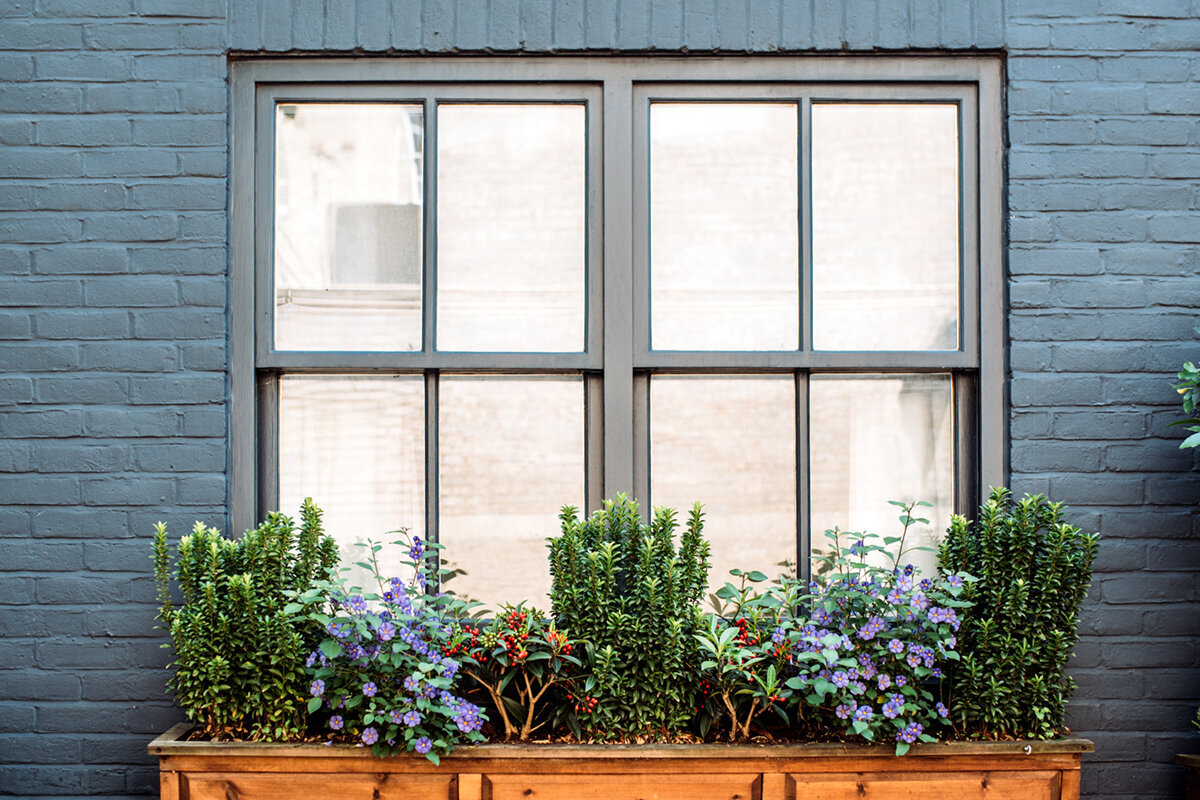
A black frame can make a small opening look deliberate, give a pale exterior a strong outline, or visually simplify a wide wall of glass. It can also become the first finish choice a homeowner regrets if opening direction, strongest sun, and maintenance were considered last. Start with operation: decide which windows must open, where a door swing needs clear space, and whether a large glazed opening should slide, fold, or swing. Then assess every elevation separately. A black window on a sheltered wall is not viewed or exposed like a black patio door facing an unshaded afternoon terrace. Before ordering, inspect a labeled finish sample outdoors, define the surrounding colors, and obtain the care instructions for the exact frame material and finish under consideration.
01 / Plan operation
Begin with the opening, not the color chip
The boldness of black can distract from a more basic choice: how the opening must work every day. A kitchen window above a counter may need reach-friendly operation; a bedroom opening may have furniture, screens, landscaping, or an exterior walkway to consider; a patio connection must suit regular traffic. Map these uses before comparing colors. Note the clear zone needed by a swinging door, where an outward-opening sash could meet planting or a railing, and whether each opening is mainly for view, ventilation, or access. Black emphasizes meeting lines between sash, fixed glass, and adjacent panels, making the final configuration particularly noticeable.
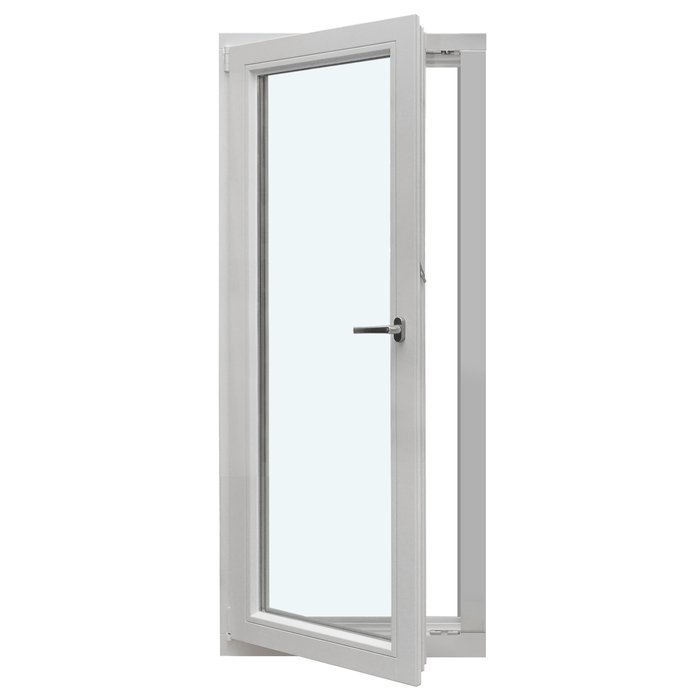
For a simple ventilating opening, compare the operating layout with the finish rather than assuming one black style should appear everywhere. A single-sash outward-opening casement window is an outward-opening configuration, so assess its swing path in the actual exterior setting. Where ventilation is unnecessary, a fixed arrangement may create a calmer composition. Put the alternatives on an elevation drawing with proposed colors and nearby materials. This can reveal whether divided sections, handles, or operating lines make the façade busier than intended. The strongest color decision does not hide operation; it makes the operation, proportions, and surrounding architecture feel deliberately connected.
Read sun exposure elevation by elevation
Dark surfaces interact with strong sunlight differently from light ones. That does not make black unsuitable for a sunny project; it means a sample viewed only at the design table is inadequate. List openings by orientation and note what modifies exposure: roof overhangs, porches, neighboring buildings, trees, and reflections from paving, water, or glass. A west-facing door may receive strong low-angle light while a recessed opening on the same side remains protected. Consider seasonal changes as well. A tree canopy may shade a frame during summer but leave it exposed after leaves fall, changing both its appearance and routine-care needs.
Hold finish samples directly against the proposed wall material. View them in morning light, bright midday conditions, shade, and the late light likely to reach the façade. One sample may appear charcoal, neutral black, blue-black, or brown-black as its surroundings change. For an exposed wall, ask about the exact frame material, finish, available dark colors, installation context, and applicable care instructions. Do not transfer guidance from a sample belonging to another product or finish system. The supplier, installer, and qualified project professionals should evaluate the proposed assembly and site conditions together rather than treating color as an isolated selection.
02 / Map sun exposure
Judge the black you will actually see
“Black” is not one visual result. Some finishes look soft and muted; others read as sharply ink-black. Sheen changes the effect: a glossier surface can reflect sky, trees, and neighboring buildings, while a lower-sheen finish may appear steadier but still shifts under changing light. Scale matters too. A small black casement can look like a precise outline around glass, while a bank of tall openings becomes a dominant architectural field. Request a sample large enough to assess from arm’s length and from across the property. Compare it with trim, siding or masonry, roofing, exterior lighting, and door hardware rather than against a blank showroom wall.
Glazed areas require equal attention. Against a dark façade, black frames may blend into the wall and make the glass look larger or more recessive. Against white, cream, pale wood, or light masonry, they usually create stronger graphic contrast. Grilles and decorative bars add rhythm but multiply dark lines. When construction distinctions matter, identify decorative bars separately from glass-dividing bars. Request an elevation showing mullions, transoms, active panels, and bars in the intended color. A mismatched centerline, inconsistent grid, or overly heavy pattern is far easier to correct on a drawing than after finished units arrive.
Balance contrast with the rest of the exterior
Black frames look most intentional when their relationship to the exterior palette is explicit. Decide whether they will provide the principal contrast, join a family of dark details, or form a narrow outline against the dominant wall material. Compare the finish with fascia, railings, exterior lights, house numbers, garage-door hardware, and visible screen frames. Exact matching is not always necessary and may make the design feel overly coordinated. Compatible undertones and visual weight are usually more useful goals. A near-black frame, for example, can coexist with dark bronze details when both are reviewed outdoors instead of being matched from unrelated online photographs.
Entry areas need a separate close-range review. A black door frame beside a light wall may make glazing, hardware, and adjacent panels more prominent than expected. A single-panel sidelight can be considered within that composition, but the door, sidelight, trim, and wall should be evaluated together. Bring the finish sample to the threshold and place it beside existing or proposed brick, stone, concrete, porch flooring, and exterior hardware. These surfaces can cast warm or cool reflections onto the frame. The test helps determine whether the black looks crisp, softened, or disconnected and whether another dark detail is needed to balance the entrance.
03 / Compare samples
Coordinate the room-side view
A black exterior frame does not decide the interior color automatically. Determine whether the room side should repeat the dark outline, use a lighter treatment, or coordinate primarily with flooring, cabinetry, wall paint, and interior doors. In a bright room with pale walls, black frames can organize a view like a picture border. In a compact room with several small openings, they may form a grid that competes with furnishings. Consider the usual sightline from inside: seated at a desk, working at a counter, resting in bed, or looking toward the yard. The interior treatment should support these daily views, not merely look effective in an exterior rendering.
Patio doors deserve particular attention because their frames remain a major part of the room when closed. With a Patio Life sliding patio door, review the sliding configuration, panel divisions, and furniture placement together. A broad dark frame may work well when it echoes shelving or lighting, but it can feel isolated among warm wood and soft whites. Build a materials board with actual samples where possible, including cabinet paint, countertops, flooring, walls, and textiles. View it in the room’s daylight and under the lighting used at night. This shows whether black frames connect the palette and emphasize the outdoors or become a separate, overly dominant element.
Choose door operation with traffic in mind
Large black glazed doors create a strong feature, so their operation should be convincing before appearance drives the choice. Sliding doors preserve space around the opening, while swinging panels require a clear path. Folding doors may create a broad connection when open, but stacked panels and multiple frame lines remain part of the closed view. Test the threshold area against realistic activities: carrying a tray, moving chairs, bringing in groceries, or allowing two people to pass. Mark where furniture, a grill, planters, screens, or landscaping could interfere. Because black emphasizes panel divisions, study accurate drawings of both open and closed positions instead of imagining uninterrupted glass.
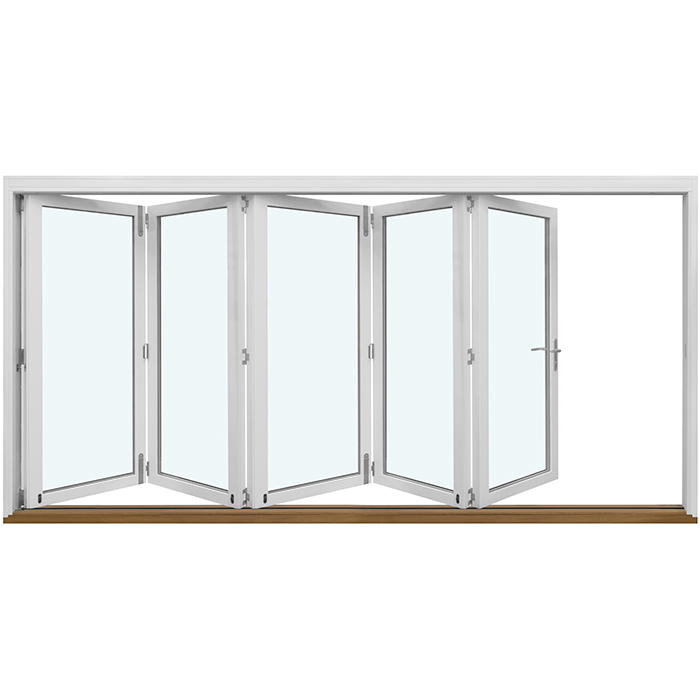
If a folding glazed opening suits the project, outswing bifold doors provide an outswing bifold configuration to compare. Verify the exterior room needed by the panels, the proposed handing, and where the stack sits relative to a porch, deck, or steps. If the exterior must remain clear, compare a sliding alternative; if interior clearance is the priority, an outswing arrangement may be relevant. Neither is automatically superior. Request the precise panel layout, handles, visible frame lines, and available black finish for the selected product. Those details answer more than a general question about whether black folding doors are suitable.
04 / Confirm the order
Treat finish care as routine work
Black finishes benefit from gentle, regular care because dust, pollen, dried water spots, fingerprints, and construction residue may be conspicuous. Obtain the manufacturer’s instructions for the exact frame material and finish before cleaning starts. Use the least aggressive method those instructions allow: remove loose debris carefully, apply the recommended mild cleaning solution with a soft cloth, and rinse or wipe as directed. Do not assume a solvent, abrasive pad, scouring product, or pressure-cleaning method is safe because it worked on glass, masonry, or another painted surface. Unapproved products should not be tested on a visible area of a newly installed frame.
Include grime-prone areas in the care plan: lower frame edges, tracks, weather-exposed sills, handles, and sheltered surfaces behind door panels. A single-panel inswing patio door is an inswing configuration; assess its interior swing and how easily the frame, threshold, and exterior-facing surfaces can be reached. Protect installed units during landscaping, painting, stucco, or masonry cleaning. This is not about creating a demanding maintenance ritual. It prevents buildup and accidental finish damage from unsuitable chemicals, tools, or nearby trades. Keep the product-specific care document with the order records so the correct guidance remains available to owners, cleaners, and future occupants.
Create consistency across opening types
Most projects use more than one opening type. An elevation may combine operating windows, a fixed stair window, a patio door, and an entry assembly. Black can make these elements read as a family, but only when proportions and frame lines are coordinated. Prepare an elevation sheet containing every visible opening, even if orders will be phased. Compare the frame profiles shown in drawings, mullion positions, decorative-bar patterns, and alignment between large and small units. Dark finishes can visually connect different forms, yet they also reveal small inconsistencies. Coordinating the openings early is more reliable than trying to disguise misalignment later with trim.
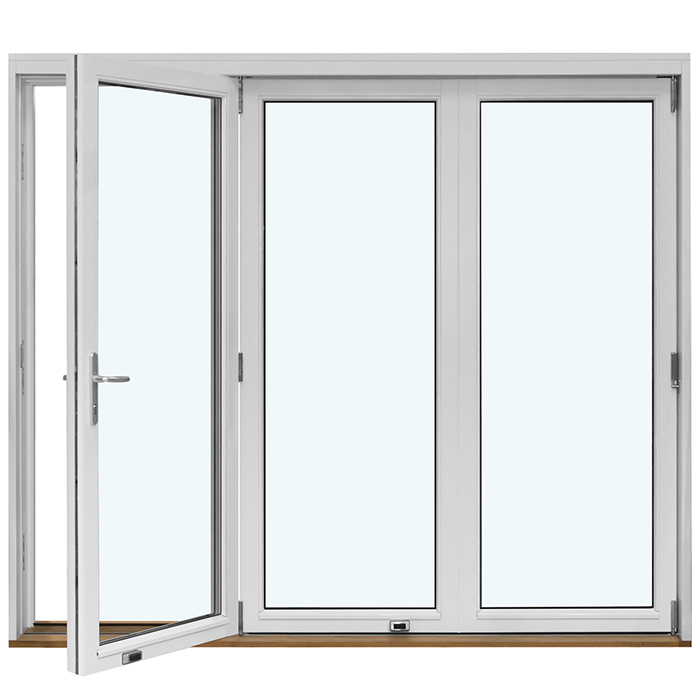
A two-sash outward-opening casement window may suit a composition requiring paired active sections. Compare it with a fixed-plus-operable arrangement if a quieter central view is preferred. Base the choice on ventilation, cleaning access, room use, and rhythm rather than assuming symmetry is always best. Ask whether the selected black finish is available across every product under consideration, and verify its description on each order line. Avoid relying on shorthand such as “standard black” when multiple materials or product families are involved. Labeled samples, coordinated drawings, and a written order review provide a clearer route to a consistent appearance.
05 / Maintain the finish
Turn heat concerns into specification questions
Heat exposure should prompt precise questions rather than vague concern. Tell the supplier which openings receive direct afternoon sun, whether reflective surfaces are nearby, and whether the frame is recessed, shaded, or fully exposed. Ask which dark finishes are offered for the selected product, what conditions its care guidance addresses, and whether more project information is needed. Separate frame appearance from overall room-comfort decisions. Glass selection, exterior shading, orientation, room use, and the surrounding wall assembly all affect how an opening performs. Black frame color alone cannot answer those questions, so review the complete opening with appropriately qualified project professionals.
For a high or difficult-to-reach opening, an outward-opening pivot window is a pivoting configuration to assess for operation, access, and exterior conditions. Determine how it will be opened, cleaned, and protected while nearby cladding or roofing is maintained. Create an opening schedule with columns for orientation, direct sun, shade, operation, finish, glass selection, screen needs, and cleaning access. The schedule converts preferences into decisions that can be checked before ordering. It also prevents a fully exposed opening from receiving the same casual specification as a sheltered window merely because both appear black on the elevation drawing.
Document the order and inspect delivery
Before ordering, confirm more than rough dimensions. Check every opening’s product configuration, handing, operation, frame finish name, interior and exterior colors, glass layout, decorative bars or glass-dividing bars, hardware finish, and visible accessories. Match the quotation to the latest drawings rather than an early concept rendering. A photograph of the approved sample can help document where it was viewed, but it is not a color standard. Keep the physical sample labeled until installation is complete. Ask the seller to replace broad wording with specific selections in the order documents, especially where different window and door families meet on one elevation.
At delivery, compare labels, product types, and visible finishes with the opening schedule before installation, following the seller’s reporting process if something appears incorrect. A triangular or angled fixed window is a distinctive fixed configuration whose drawing, orientation, and placement merit careful review before confirmation. Do not judge the final finish while protective coverings, construction dust, or temporary lighting dominate the site. After installation, clean only as the applicable instructions direct and inspect the frames in ordinary daylight. Bloomcabin provides a 5-year warranty for windows and doors. Delivery is typically 4–6 weeks, subject to order confirmation.
Frequently asked questions
Do black frames always get hotter than light frames?
Dark colors can absorb more solar energy, so direct-sun exposure deserves attention. Review orientation, shade, reflective surroundings, frame material, finish, and product guidance. Do not judge every opening by one sunny elevation. Ask the supplier about the exact product and finish proposed for each exposed location.
Should every opening use the same shade of black?
A coordinated selection is usually easier to read than several near-black tones, but finish names alone do not prove a match. Compare labeled samples under project lighting and verify every order line. Different product families may offer different finishes, so confirm visual compatibility rather than assuming it.
Are black patio doors harder to keep clean?
Black frames may make pollen, dust, water spots, and fingerprints more visible, especially near handles, tracks, and lower edges. Follow the care instructions for the selected material and finish. Clean routine buildup gently, and avoid abrasives, solvents, pressure cleaning, or tools that have not been approved.
Will black frames make a small room feel darker?
They create a stronger outline around the glass, which may define the view or feel heavy where several small openings form a grid. Test a sample against the room’s wall color, flooring, and furnishings in daylight. Consider the size and placement of openings before extending black to the interior.
What should I confirm before ordering?
Confirm operation, handing, configuration, finish, interior and exterior colors, glass layout, bars, hardware, exposure, cleaning guidance, and final drawings. Keep the approved sample and opening schedule with the order. Refer project-specific performance, installation, and compliance questions to the appropriate qualified professionals.
Next steps
Black windows and doors are most convincing when they solve a design problem as well as make a statement. Choose operation first, then evaluate each elevation for sun, shade, traffic, and cleaning access. Compare labeled finish samples beside the actual exterior and interior materials, and use coordinated drawings to review the complete composition. Obtain care guidance for the selected frame and finish, and check every order line before confirmation. This measured process turns black from a trend-led shortcut into a deliberate part of the home’s architecture.
