
Box Garden Beds: How to Choose, Set Up, and Plant One

Bloomcabin · Raised-bed guides
Box Garden Beds: How to Choose, Set Up, and Plant One
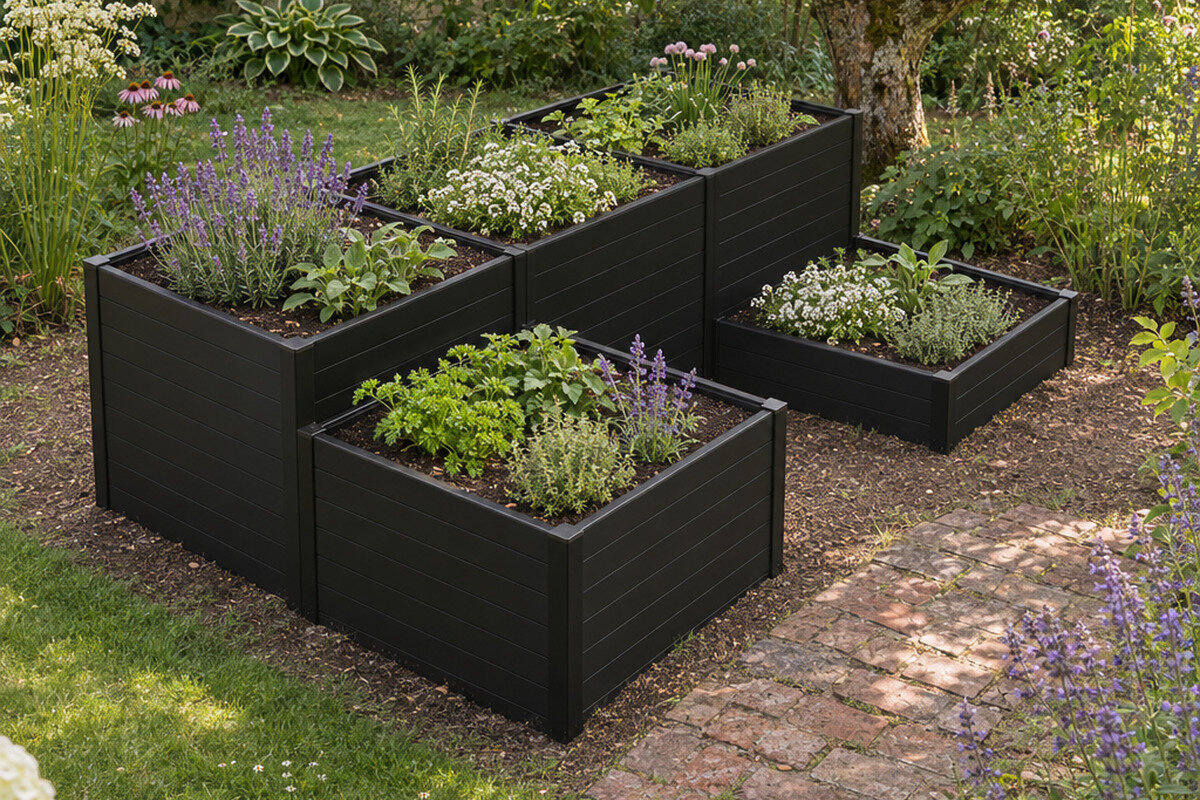
Box garden beds are framed growing spaces. For an open-bottom model, start with suitable ground and a width you can reach from the path. Then choose a wall height and layout that suit what you want to grow.
Check the base
Choose box garden beds by checking what will support the growing soil: suitable ground or a planter with its own base.
Test the reach
Mark the frame and its paths separately, then test how far you can reach from the side you'll actually use.
Read the dimensions
Compare wall height and planting area separately. A taller frame with the same footprint doesn't give you more room to space plants.
Measure before ordering soil
Use confirmed inside measurements and your intended fill depth to estimate how much soil you'll need.
Start with the place you intend to garden, not the kit that looks closest to the right size. Mark the frame and the route you'll use to water and harvest. If you can't reach the plants from that route, extra planting area is more likely to be a chore than a benefit.
The Bloomcabin box garden beds in this guide are open underneath. That makes the ground part of the decision, especially when you're choosing between a shallow edging frame and a taller box. Once you know where the frame will sit and what can grow there, you can check the dimensions, plan the fill, and choose a layout.
01
Decide whether an open-bottom box fits your garden
In this guide, box garden beds are raised planting areas with walls that hold soil in a defined shape, usually a square or rectangle. The Bloomcabin examples are open-bottom frames supplied unassembled. They sit over prepared ground. Unlike a bottomed planter, the frame doesn't provide a floor to hold the soil independently; unlike an elevated planter, it doesn't stand on legs.
Choose box garden beds if you want a clear planting boundary beside a path, lawn, or larger garden, or if you want bays you can assign to different crops. If a tidy edge is the only goal, weigh the time and cost of assembling and filling a frame against keeping an unframed bed. The box earns its place when it changes how you use the space, not just how the garden looks.
Box garden beds don't make a wet spot drain or separate food crops from questionable soil below. If water collects where you intend to plant, investigate before installing. If you don't know whether the ground is suitable for food crops, get local soil guidance before treating the frame as the solution. You may need another site or a different planter design. Pallet collars are a specific type of frame; the Bloomcabin models here are aluminum raised-bed frames or aluminum frames with an Accoya wood top course, not pallet collars.

02
Map the paths and test your reach
Before shopping for box garden beds, mark the nominal outside footprint with string or temporary markers. Then mark the paths separately. Walk from your water source to the bed with whatever you'll use to carry water, and try opening any nearby gate. If you usually garden with a cart, test the turn now. A footprint that fits between a fence and a path on paper may leave too little working room once the frame is in place.
Test reach at roughly the planned rim height. With access from only one side, try reaching all the way to the far edge. With access from two opposite sides, test the distance to the center. Mimic pinching off a leaf or making a seed furrow rather than just brushing the target with your fingertips. For box garden beds beside a fence, count the fence side as unavailable unless you've left a path you can actually use.
For U-shaped box garden beds, mark the opening as well as the outer boundary. The U-Shaped Aluminum Raised Garden Bed 118.11×78.74×11.81 in has five planting bays and a nominal 39.37-by-39.37-inch access notch. Try entering and turning in that space, then check which edges you can work from outside the U. Finally, watch where shadows fall and confirm that the light suits what you intend to plant. Change the orientation or site before you commit if either the reach or the light falls short.

03
Read the dimensions as separate measurements
When comparing box garden beds, use the nominal outside footprint for site planning and the listed planting area to compare models. For a planting plan or soil estimate, confirm the actual inside length and width. Wall height tells you how high the rim sits above the base; intended fill depth is how much soil you plan to put inside. Total rooting depth also depends on whether the ground below is suitable for roots.
Two box garden beds can offer the same listed planting area without fitting the same site. The Square Aluminum Raised Garden Bed 39.37×39.37×15.75 in and the Narrow Aluminum Raised Garden Bed 78.74×19.69×23.62 in each list 10.76 square feet. The square calls for access from at least two opposite sides. The longer, narrower option uses more of a garden edge but gives you a shorter reach across its width. Both have one compartment and an open base.
A divider changes how you can lay out the crops. The Double Aluminum Raised Garden Bed 78.74×39.37×11.81 in has two nominal 39.37-inch-square bays with 11.81-inch walls. Compare the space inside each bay with your crop layout rather than sketching rows as if they can cross the divider. For box garden beds with different wall heights across bays, write the height next to each bay on your sketch. The taller bay may suit tasks you'd rather do higher up, but check the reach and fill requirements before assigning crops to it.

04
Check the materials and instructions before assembly
Compare box garden beds by the parts you'll actually receive. The Classic aluminum frames discussed here use aluminum wall panels and corner posts. The Narrow Accoya Raised Garden Bed 39.37×19.69×23.62 in is an Accoya fusion model: wood forms the top 3.94 inches of all four walls, and aluminum forms the lower 19.69 inches and the corner posts. If you want wood at the rim, it fits that preference; if you want full wood walls, it doesn't.
Use the instructions for the exact model, not a gallery photo or the guide for a similar-looking frame. The photos can help you visualize a rim or divider, but they don't tell you how to join the parts or what the frame can support. Before ordering, review the current U.S. product listing and assembly instructions. Check what comes in the kit, which tools the instructions call for, and whether the site you've marked meets the setup requirements.
When box garden beds arrive unassembled, sort the pieces against the parts list and identify the sides or bays before joining them. Set up on the prepared spot as directed. Before adding soil, verify that the frame is oriented correctly, that you've finished the assembly checks in the manual, and that the paths you marked are still usable. It's easier to correct a layout or parts problem before the frame holds soil.

05
Prepare the ground and calculate the fill
For open-bottom box garden beds, assess the ground before covering it. If there's sod or established vegetation inside the outline, clear it as part of preparing the site. Look for compacted ground and spots where water collects. If you're relying on the soil below for rooting space, resolve those concerns before assuming a shallow frame will meet your crop's needs. Ask your local extension office about testing if the site's history or soil quality is unclear.
Estimate fill for simple rectangular box garden beds using the inside length, inside width, and planned fill depth. Convert all three to feet before multiplying to get cubic feet. Use any model-specific fill guidance, and don't automatically use the full wall height as the fill depth. When comparing bagged and bulk soil, put both quotes in the same units: one cubic yard equals 27 cubic feet.
For multi-bay box garden beds, calculate each bay separately if you have confirmed inside dimensions and a fill depth for each, then add the estimates. Don't count the notch in a U-shaped kit or use one wall height for bays of different heights. If the inside measurements aren't available, ask for a model-specific fill estimate before buying. Ask what is in the soil you're ordering, too. Use soil testing and crop guidance to decide whether to add compost or fertilizer instead of assuming more is better.

06
Lay out crops and care for each bay
For the first planting in box garden beds, pick a short list of crops you already know you'll use. Sketch them inside the usable dimensions of each bay and check mature spacing before deciding how many plants to buy or seeds to sow. Put crops you'll pick often where you can reach them without leaning over other plants. If you plan to add a crop support, include it in the sketch so you can see whether it blocks reach or takes up working space.
Use your seed packets and local extension guidance to confirm planting dates, sowing depth, spacing, and crop-specific needs. A calendar for another part of the United States isn't a substitute for guidance for your area. If several crops catch your interest but the first box is small, choose which ones get the space this season rather than squeezing them all into the same bay.
Box garden beds can dry faster than nearby ground, so check the soil in the box itself before deciding whether to water. Give newly sown areas a separate check rather than assuming they need the same care as established plants. Direct water toward the roots and consider mulch around established plants to slow drying. If one end looks dry while the other stays damp, check both spots and adjust where you water instead of giving the entire bed more.

07
Worked example: pick a shallow or tall box for a narrow edge
Hypothetical worked example: Jordan is comparing box garden beds for herbs and salad greens along a garden edge. The available strip is 52 inches long by 48 inches deep, including the working space in front. Assume the frame sits along the back of the strip, the front is the only working side, and the ground below is suitable for the chosen crops. The two candidates are the Narrow Aluminum Raised Garden Bed 39.37×19.69×3.94 in and the Narrow Accoya Raised Garden Bed 39.37×19.69×23.62 in.
Both box garden beds have the same nominal 39.37-by-19.69-inch footprint and list 5.38 square feet of planting area. On paper, either leaves 32? No: subtracting 19.69 from 48 leaves 28.31 inches in front, and subtracting 39.37 from 52 leaves 12.63 inches of spare length in total. Jordan checks that the front space works with a watering can and that the far edge is within reach. Since Jordan is comfortable working low and the crop plan can use the soil below, the shallow aluminum frame is the better fit. The taller model wouldn't provide more planting area.
For an illustrative soil estimate only, suppose Jordan measures 38 by 18 inches inside the assembled frame and plans to add 3 inches of soil over the prepared ground. That comes to about 1.19 cubic feet: 38 × 18 × 3, divided by 1,728 to convert the volume from cubic inches. Those inside measurements are assumptions, not product specifications or a bag recommendation. Jordan would use the measured interior and actual fill depth to place the order, then check local guidance and seed packets before sowing.

Questions readers ask
How wide should box garden beds be next to a fence?
Choose a width that lets you reach the far edge comfortably from the open side. Test the width at the intended rim height, not just on the ground. Leave room behind the frame if you need to maintain the fence, and make sure the remaining path still works for you.
Should I choose deeper walls for root crops?
Choose for usable rooting depth, not wall height alone. If the ground under an open-bottom frame is suitable for roots, it can contribute to that depth. If it isn't, check how much suitable soil you'll have above ground and compare that with the needs of the specific crop and variety.
Can I put box garden beds on a patio?
A patio needs a setup that holds growing medium and lets water drain without relying on the ground beneath it. The Bloomcabin frames discussed here have no floor. For a patio or deck, look for a planter intended for that surface and verify drainage, filled weight, and what the surface can support.
Choose the box you can work comfortably
The most useful box garden beds fit the way you move through the garden as well as the crops you want to grow. Mark the footprint, test the reach, and check the ground first. Then compare frames in Bloomcabin's raised garden beds range, confirm the inside measurements for your chosen model, and plan your fill.
Find a raised bed for your plan
Compare layouts and check the dimensions on the product page.
