
Buying a 44 mm Wooden Garden House: What Wall Thickness Means
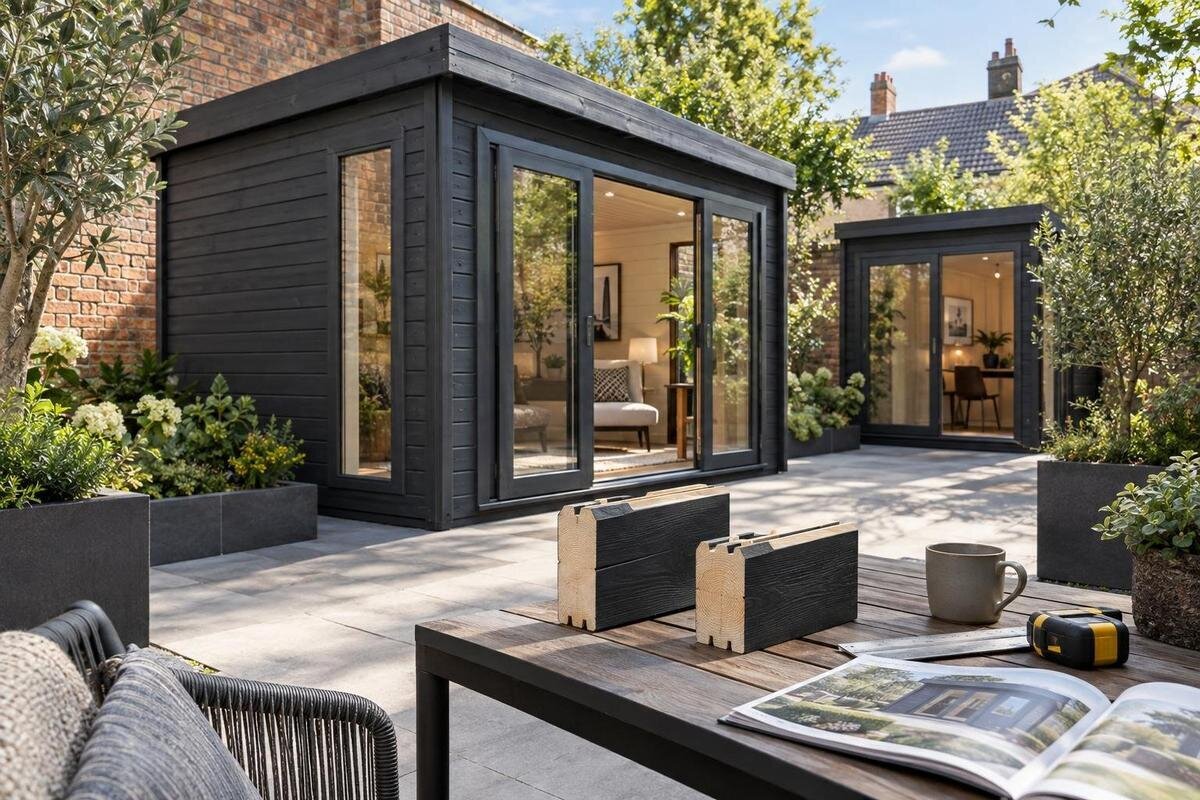
Garden house buying guide
Shopping for a 44 mm wooden garden house? The figure refers to the stated wall thickness: 44 millimeters, or 4.4 centimeters (about 1.73 inches). It is a useful specification to compare, but it does not tell you the building's footprint, usable floor area, insulation value, or whether it suits every use. A sound purchase decision connects the number to your plans and checks the rest of the construction, layout, site fit, maintenance, and order details. This guide explains what the measurement can tell you, what it cannot establish, and which details to verify before choosing a model.
01
What 44 mm wall thickness means
Wall thickness is the distance from the outside face of the wall toward its inside face. At 44 mm, that is 4.4 centimeters, or about 1.73 inches. The conversion helps when a product page uses metric measurements but your site plan uses feet and inches. The inch equivalent is rounded, so keep 44 mm in your comparison notes rather than relying on a rounded conversion. The number does not mean wall height, wood length, outside building width, or floor area; it is one construction dimension and should not replace those measurements.
Check precisely what the seller measures. A nominal board size and the thickness across a profiled or interlocking wall may be different dimensions, so a drawing or written definition matters. Ask whether 44 mm refers to the wood itself, an assembled wall profile, or a complete wall build-up; those terms are not interchangeable. Confirm whether the figure applies to every exterior wall or only one component. If the page gives a single number without defining it, request a dimensioned drawing. A photograph, perspective rendering, or model name cannot settle the measurement, and the same wording across two listings does not necessarily mean the construction is identical.
What the wall measurement does not tell you
Wall thickness says little about how large the garden house will be. Check its outside width and depth, wall height, roof overhangs, and layout against the space available. Interior clear space is not the same as the outside footprint: the wall assembly and floor plan shape the usable room. Find out whether listed measurements are external or internal, and whether projected roof edges are included. A plan can show where doors and windows affect the layout. If you need shelving or space for equipment, mark out the area and consider how items will enter. Use the Verdana 1 garden house listing as its own specification set; do not derive its dimensions from a model name or image.
The thickness figure also does not identify the wood species or grade, moisture condition, finish, or method of connecting wall sections. Nor does it specify the roof or floor construction, door and window details, or what treatment is applied. Check each of those facts separately because they can affect assembly, upkeep, and how the building fits your plans. Product pages may omit some information, so mark missing details as unknown rather than supplying an answer based on a general idea of 44 mm wood walls. Even similar model names do not confirm that dimensions, materials, or included components match.
02
Match the specification to your intended use
Begin with what you plan to do inside. A garden house for occasional tool storage has different practical demands from one used often for hobbies or longer periods of time. List what must fit, whether items are bulky, how they will enter, and whether shelving or clear floor space matters. Note how frequently you will go in and out and whether the use is seasonal or regular. A space you visit often may put more emphasis on access and upkeep than one opened occasionally. Wall thickness can help you compare construction, but it cannot establish suitability or answer these layout questions.
If you expect regular heating or use across seasons, review more than the wall dimension. Ask for a complete wall description and details for the roof, floor, doors, and windows, along with any stated insulation or air-sealing provisions. Confirm that the documentation applies to the exact model and configuration under consideration; a wood dimension is not a specified indoor temperature range. The Verdana 2 garden house should be assessed from its own published information, like any alternative. Write down the conditions you expect so you can ask focused questions. If your plan involves modifications or use beyond the product instructions, get model-specific guidance before buying.
Wall thickness is not an insulation rating
The 44 mm figure states a material dimension, but it does not quantify heat transfer through the finished wall or predict how the interior will feel. Thermal performance depends on the complete wall construction and how its parts meet, as well as other parts of the enclosure, including the roof, floor, doors, and windows. Air movement and actual use matter too. Even two garden houses described with the same wall thickness may differ in the rest of their construction. The number alone cannot establish equivalent thermal performance or support a reliable estimate of indoor temperature or energy use.
If warmth or temperature control is important to your purchase, ask whether product-specific performance information is available and exactly which wall assembly it describes. Compare any figures only when they use a comparable construction and measurement basis; a wood thickness and an insulated-wall rating are not equivalent measures. Read the Durano wooden garden house page for information it explicitly states, not as evidence of an unstated performance level. If insulation, weather sealing, or another feature matters, confirm that it is included in the described build-up. Treat missing information as a question to resolve before choosing.
03
Do not read 44 mm as a structural rating
A 44 mm figure is not a load rating, wind rating, snow rating, or guarantee of structural performance. Wall thickness is one part of a design that also depends on the wall layout and height, material properties, joint details, bracing, roof and connection design, support, and site exposure. A single dimension cannot establish how the building should be anchored or which conditions it is intended to withstand. Do not use the number to calculate structural capacity or infer that all garden houses with the same stated thickness perform alike. The relevant information is the documentation for the exact model and setup.
Review the installation instructions and any stated limits, then ask which documents apply to the model and configuration you are considering. This deserves particular attention at a site exposed to strong wind or heavy snow, or if you plan to modify the structure, attach heavy items, or alter its support. If an answer requires assessing local site conditions, seek a qualified local professional rather than extrapolating from 44 mm. The Veltor 1 garden house page is useful for this question only to the extent that it provides model-specific information; do not transfer guidance from another building or assume a similar appearance means the design is the same.
Check material and maintenance details
Thickness does not identify the wood species or grade, explain how the wood was dried, or say whether a protective treatment or finish is included. It also does not make wood immune to moisture. For durability and upkeep, look for specific information about the material, surface preparation, finish, and maintenance requirements. Find out whether the product arrives unfinished or with a stated finish, and whether later recoating or other care is your responsibility. Do not assume those details from a product image. The appropriate care depends on the wood and coating described, not on the 44 mm measurement alone.
Ask how the building should be protected from moisture in its intended location, which surfaces need attention, and how often inspection or renewal is recommended. Read the manufacturer's instructions for ventilation, water management, and any assembly adjustments or movement allowances; do not invent a care routine from a general description of wood. If you expect to cut, drill, or otherwise alter parts, ask what that means for assembly and maintenance before ordering. In the Orello 1 garden house listing, rely only on material and care details actually published, and do not transfer a finish or instruction from another model.
04
Plan for the footprint and usable space
Set the building out on paper before deciding that 44 mm works for your space. Compare its external width and depth with the area available, then check internal measurements and the position of doors and windows. If outside dimensions are fixed, thicker walls can reduce the clear interior span, although the exact usable space depends on the plan and wall profile. If the inside dimensions matter most, check the corresponding outside size as well. Allow room to reach the entrance, move stored items through it, and maintain the exterior. Use a dimensioned plan rather than estimating from a photograph.
Consider the route from the delivery point to the prepared location: gates, corners, steps, overhead obstructions, and narrow paths may affect access for components. Check the product instructions for the required support or base and confirm that the proposed location is suitable; wall thickness does not specify a foundation. For a shortlisted model, including the Modano 1 garden house, verify the footprint and access measurements in that model's own listing before marking out the site. Ask for clarification if a dimension is missing or its measurement points are unclear.
Confirm inclusions and delivery requirements
Make a contents check before placing the order. A product description may address the wall kit separately from a floor, roof covering, windows, hardware, treatment, or anchoring components; do not infer what is included from a photograph or the phrase wooden garden house. Read the exact list for the model and note anything presented as an option or as something you must provide separately. This makes a comparison more useful because two listings with the same wall thickness may differ in what you need to source. Confirm the configuration you actually intend to buy rather than relying on a general product description.
Review assembly and delivery information at the same time. Look for instructions explaining the assembly process, required tools and skills, and any handling requirements. Check whether package size or weight is provided if access and unloading matter at your property. Do not assume a 44 mm kit will be easy or difficult to handle from thickness alone. The Veltor 2 garden house page needs its own contents and ordering details checked. Similar names or images are not proof that two garden-house kits contain the same parts or arrive in the same configuration.
05
Compare written specifications on the same basis
Make a comparison sheet in which every number has a clear definition. Record each wall-thickness statement and whether it applies to a wood piece or a completed profile, along with inside and outside dimensions, wall height, material and finish, roof and floor information, openings, included parts, assembly instructions, and care requirements. Mark each entry as documented, not listed, or awaiting clarification. That keeps one prominent thickness figure from overshadowing information that may matter more to your plans. Retain the original wording and units so you can check a conversion or ask a precise follow-up question.
When two listings look similar, compare their written information independently; do not assume a family name or appearance means the construction is shared. The Veltor 3 garden house page can be reviewed with the same checklist, but measurements, materials, and assembly details should not be copied from another model. If the 44 mm definition is unclear, ask directly whether it refers to a wood piece, a profiled wall, or the whole assembly, and keep the answer with your order notes. If a missing fact affects your decision, wait for clarification rather than treating silence as confirmation.
Make the decision from the complete specification
Give the 44 mm measurement weight in proportion to what you need from the building. If occasional storage is the main purpose, usable room, access, care needs, and documented construction may matter more than the number alone. If the wall build itself is important to you, verify the definition and compare it with other stated construction details, not with a general idea that thicker always means better. Also consider the overall purchase scope: suitable dimensions, clear written inclusions, and realistic installation planning are part of the choice, while the thickness figure cannot settle any of those points.
Before ordering, be able to explain what the garden house will be used for, what dimensions and access that requires, what construction the product information actually documents, and what installation and care obligations come with it. Identify which unanswered detail could change your choice, then obtain a model-specific answer instead of guessing. This makes 44 mm a useful comparison point rather than a stand-alone verdict. It also helps you choose based on information relevant to your yard and plans, rather than on a single specification that cannot describe the whole building.
Frequently asked questions
How many inches is 44 mm?
44 mm equals 4.4 centimeters, or approximately 1.73 inches. The inch conversion is rounded, so keep the original millimeter figure when comparing specifications or asking a seller to clarify a measurement.
Does 44 mm mean the finished wall is exactly 44 mm thick?
Not necessarily. A listing may use the figure for an individual wood piece, a profiled wall, or a complete assembly. Check the product definition or drawing to see which measurement it describes before comparing it with another garden house.
Does a 44 mm wall mean the garden house is insulated?
No. The number states a wall dimension; it does not confirm that an insulation layer is present or describe thermal performance. Look for the full wall construction and any product-specific performance information.
Is a 44 mm garden house suitable for year-round use?
Wall thickness alone cannot establish that. Check the documented construction of the walls, roof, floor, doors, and windows, along with any insulation or air-sealing details. Compare those details with your intended use and conditions.
What should I compare between garden-house listings?
Compare how wall thickness is defined, inside and outside dimensions, materials and finishes, roof and floor details, openings, included components, assembly instructions, and care requirements. Ask for clarification wherever a detail could change your decision.
For a 44 mm wooden garden house, begin by confirming what the stated measurement describes. Then compare the documented wall construction with the building's dimensions, intended use, site requirements, maintenance, and included components. If a missing specification could affect your choice, get a model-specific answer rather than estimating from a photo or assuming that the wall number tells the whole story. The right garden house is the one whose documented features fit your plans, not simply the one with a number that sounds reassuring.
