
Buying a Garden House for an Art or Craft Studio
Garden house buying guide
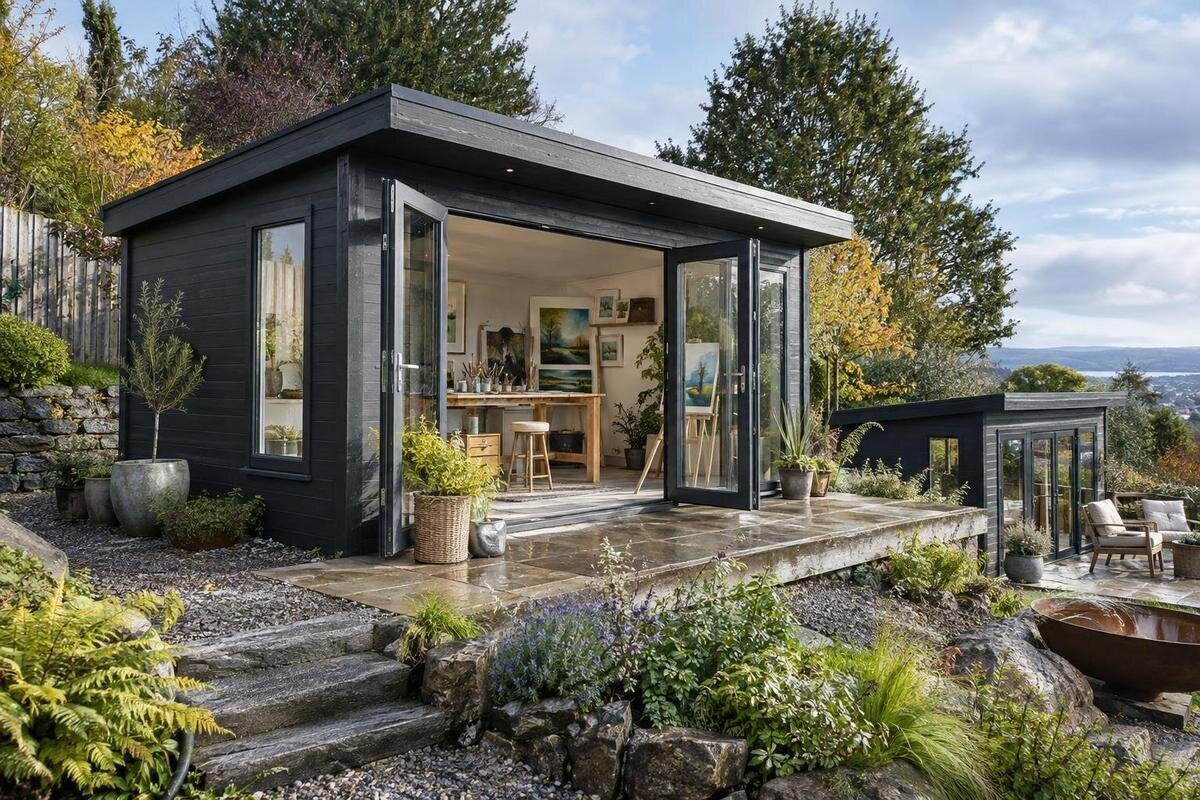
An art or craft studio needs more than an empty room: it has to fit the work in progress, the tools that stay out, and the way you manage light, materials, and cleanup. When buying a garden house for creative work, compare usable interior space and documented features with your own routines, not just a product photo or a nominal footprint. This guide focuses on choosing a dedicated backyard workspace, from measuring work zones to checking comfort, access, site preparation, and order details.
Match the building to your creative process
Begin by writing down the actual projects the studio must support. A watercolorist may need room to lay work flat and leave sheets undisturbed; someone who sews, builds models, or assembles jewelry may need a permanent bench, a machine, or several work surfaces. List each phase: bringing materials in, setting up, making, drying or curing when relevant, storing unfinished work, and cleaning up. Note which tools need to remain assembled and which can be put away. This inventory turns a broad wish for a creative retreat into spatial requirements you can test against a plan.
Record the size and number of projects you tend to handle at once. Measure the largest canvas, frame, length of fabric, paper stack, or craft piece you expect to move through the building, and note whether it needs to lie flat, stand upright, or remain protected. Think about where finished work can wait without covering the next work surface. If the garden house will also hold lawn equipment, seasonal boxes, or household overflow, count that as a separate use, not free storage. Decide what belongs in the studio and what can remain in the house before judging a model’s size.
Calculate the usable studio footprint
Plan around usable floor area, not the outline alone. A product listing may report outside dimensions, so look for clearly labeled interior measurements and a floor plan. Check whether wall thickness or the arrangement of corners affects the space available along a wall. Draw the workbench, easel, sewing machine, shelving, and storage at their actual footprints, using graph paper or tape on a clear floor. Add the chair and the room you need to turn, stand, reach, and handle a workpiece. A studio that fits every object only when no one is working is not a workable layout.
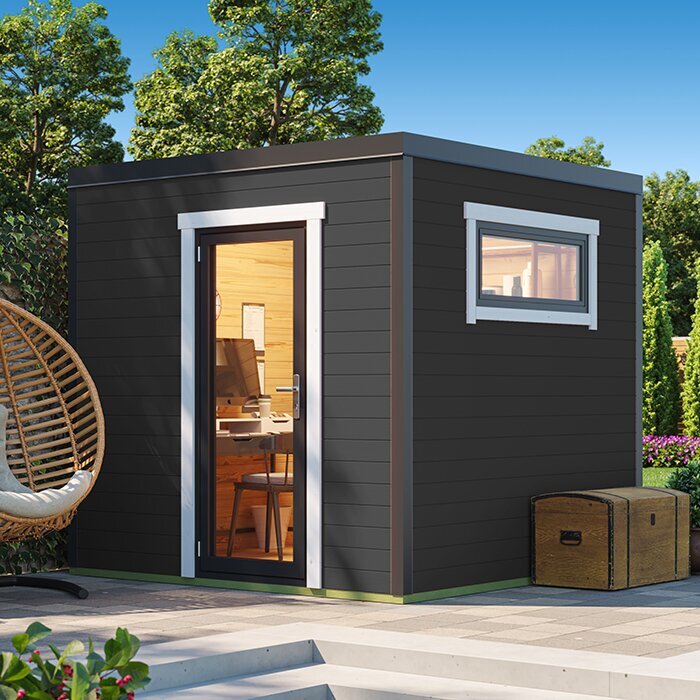
Map a clear route from the entrance to your main station and supplies, without weaving around a chair or moving a half-finished project. Include the opening paths for doors and windows if you expect to use them, and mark fixed items or service points shown in the plan. Consider demanding tasks such as spreading a pattern, turning a canvas, or laying out several components, rather than measuring only your everyday seated position. On the product page for the Verdana 1 garden house, look for the measurements and plan actually provided, then compare them with your layout; the name alone does not tell you the usable studio area.
Arrange work zones around the way you make
Organize the studio in the order you work. A craft process may need a receiving and sorting spot, a main making surface, a separate clean area for detail work, and somewhere for pieces to dry or wait. These do not always require separate tables: a movable cart or fold-away surface may handle occasional steps, while a project that stays underway may call for an undisturbed bench. The important question is whether you can move from one phase to another without piling tools on finished work or repeatedly clearing the surface you need. Treat the floor plan as a workflow diagram as well as a furniture plan.
Decide which fixtures are part of the building purchase and which you will add. An unfinished interior may need a bench, task chair, cabinets, wall-mounted tool storage, or protective floor covering before it is ready for your work; leave room and budget for those additions. If you plan to mount shelves or hang materials, verify the wall construction and any stated mounting guidance instead of assuming every surface can take a fastener or load. Keep the main route clear enough to carry work in and out, and reserve a place for ongoing projects. Use the same zone drawing when reviewing the Verdana 2 garden house listing: compare the dimensions it actually provides rather than assuming from the model name that your stations will fit.
Plan for daylight and task lighting
Daylight affects visibility and how you judge color, but the amount and direction of sun change with the site, season, and time of day. Observe the proposed building location at the hours you expect to work; note direct sun, tree shade, reflections, and whether a nearby wall or fence blocks light. A window that brightens a room can also create glare on a screen, shine across a glossy surface, or produce strong contrast between the work and its surroundings. Test your main desk or easel positions against those conditions before deciding where the studio should sit.
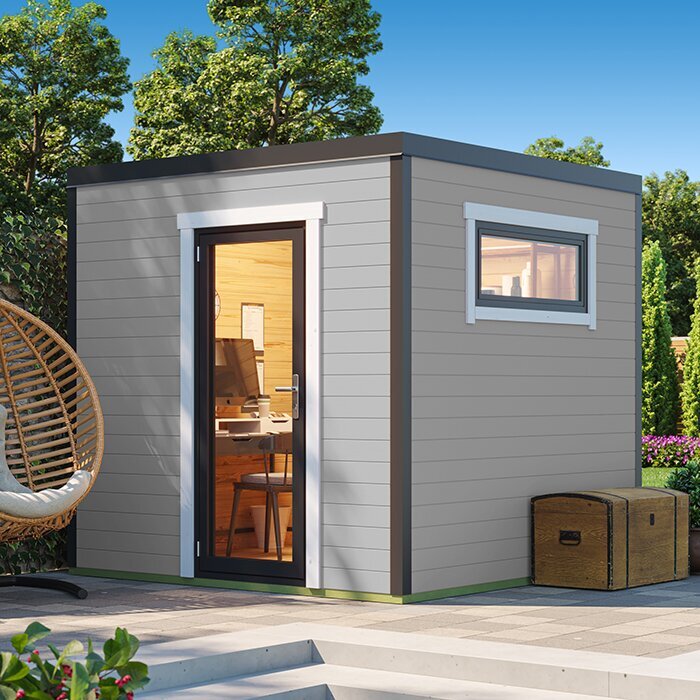
Plan dependable task lighting as well as daylight, especially for fine stitching, drawing, cutting, or color matching later in the day. Consider whether light can be directed at the work without casting a hand shadow, and whether several stations need separate fixtures. For color-sensitive work, evaluate lamps using their published color characteristics rather than choosing by brightness alone; compare samples under the light you will use. Check what a candidate’s listing states about windows, glazing, and openings. With the Durano garden house, as with any option, use documented details—not a photograph or model name—to estimate how daylight will reach the work area.
Decide how much seasonal comfort the studio needs
A garden house does not automatically provide the comfort of a finished indoor room. Decide whether you will work only in mild weather or want to use the studio across more of the year, then assess the building and any planned fit-out accordingly. Look for explicit information on insulation, floor, roof, windows, doors, and interior finish; check what each item means for the exact version you are considering. An insulation note by itself does not describe the whole building or guarantee a particular indoor temperature. Drafts, sun exposure, and the floor beneath your feet can also affect comfort during long sessions.
Include power and lighting in the plan, but do not assume outlets or built-in fixtures are included. Estimate the number and locations you need for task lamps and ordinary equipment, and decide whether heating or cooling is part of your intended setup. Have a qualified professional assess electrical work or building changes; suitable equipment depends on the structure, site, and applicable requirements. Consider how the room will feel when you are sitting still for detailed work as well as when you are moving around to paint, cut, or assemble. Read what the Veltor 1 garden house listing explicitly says about insulation, floor, and openings before estimating seasonal comfort.
Check ventilation needs for your materials
Materials used in a studio can bring requirements beyond ordinary room comfort. Water-based paints, solvents, adhesives, finishes, powders, and other supplies do not all have the same handling instructions. Before choosing a building, list the products you expect to use and consult their labels and safety data sheets for storage and ventilation guidance. Do not assume that opening a door or window will be suitable for every process. If fumes or dust are a regular part of your work, ask a qualified ventilation professional what the space needs. This is a selection question to settle before purchase, not an afterthought.
Separate the making area from clean storage where your workflow allows, and plan how to collect scraps, packaging, and reusable offcuts without letting them occupy your only clear work surface. If you use spray products, heat-producing equipment, or other tools with specific safety requirements, check the tool maker’s instructions and ask a qualified professional whether the proposed room is suitable. Check the candidate’s documented openings and any ventilation information rather than guessing from appearance. On the Orello 1 listing, look for explicit details if provided, and treat unanswered questions as unresolved.
Make storage part of the workspace plan
Storage is part of usable workspace, not something to squeeze in after ordering. Inventory materials by size, frequency of use, and how they need to be protected. Brushes and hand tools may need quick access; paper, fabric, canvases, and small components need a place where they will not be bent, crushed, covered in dust, or mixed with unrelated household items. Follow manufacturers’ recommendations for supplies affected by temperature, light, or moisture, and do not assume a garden house will maintain indoor-home conditions. Put frequently used items close to the relevant station, with less-used stock in another zone.
Measure storage units and their contents just as carefully as the main workbench. A cabinet may take up more floor area when its doors, drawers, or bins are in use, and tall shelves may not suit long materials or oversized pieces. Include access space in the taped plan, and verify stated shelf or wall-mount limits before loading them; do not infer capacity from appearance. Decide whether you need lockable storage, covered bins, or a protected place for works in progress, then include those items in the budget. Compare the Modano 1 garden house with your storage map using documented dimensions and included components; do not presume shelves are supplied.
Measure the route into the studio
Check how tools, supplies, and completed work will reach the building. Measure the largest item you expect to carry through the garden entrance and the garden house’s clear door opening, including its height and width. Allow for turning at the gate, along the path, and immediately inside the room. A long worktop or framed piece may be awkward to maneuver even if it is narrower than the doorway. Compare clear opening measurements, not the outside size of a door frame, and confirm that the approach will remain usable after landscaping or furniture is in place.
Consider the regular walk between the house and studio, too. A route that is easy in daylight may be less convenient when you carry supplies in the evening or need to protect a project from rain, so think about the path surface, lighting, and a place to set items down at the entrance. If anyone using the room has specific mobility or carrying needs, test the route and doorway against those needs instead of relying on a floor-plan sketch alone. Check the Veltor 2 garden house listing for stated clear openings and dimensions, if available; a product image is not a substitute for measurements.
Prepare the garden site before ordering
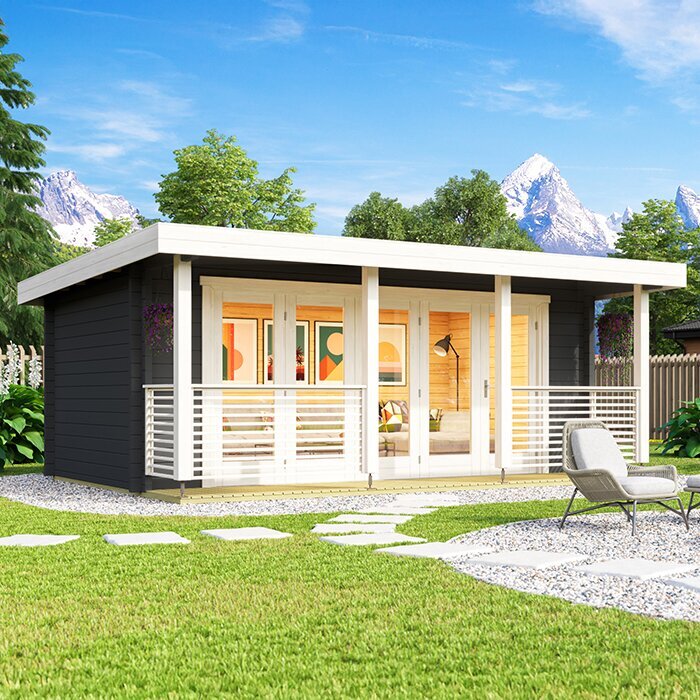
Choose the garden location with the working day in mind as well as the view from the house. Check where sunlight and shade fall, whether rainwater tends to collect, how close the studio will be to established trees, and whether the path gives a delivery crew and later users enough access. A comfortable route can also make it easier to bring in supplies and carry out finished work. Before ordering, verify the manufacturer’s site-preparation and base requirements for the exact building and configuration. Have a qualified local builder or site professional assess ground conditions and any base work rather than guessing from the appearance of the lawn.
Confirm requirements that apply to your property with the relevant local authority or a qualified local professional, including any approvals that may be required, before committing to a model. If you plan to add power or other services, factor their route and professional assessment into the site plan without treating them as included features. Check delivery and assembly access, clearance to nearby boundaries and structures, and whether future maintenance will be possible. When considering the Veltor 3 garden house, obtain its exact preparation requirements and compare them with a site assessment rather than assuming one base suits every yard.
Compare the complete order, not just the structure
Compare the total cost of a ready-to-use studio, not just the building line in a quote. Add any base work, interior finish, insulation, floor, furniture, storage, task lighting, climate equipment, and professional services you actually need; separate required items from optional upgrades. Ask which components are included in the configuration, which are shown only for illustration, and whether stated dimensions refer to the outside or inside. That gives you a fair comparison across candidates and helps prevent a low initial figure from hiding necessary fit-out work. Do not assume prices or inclusions from a photo, category name, or another model.
Before submitting an order, recheck the exact model and configuration against the plan you measured. Review the current written product details, payment and tax total, delivery method and destination, any access or unloading expectations, assembly responsibilities, warranty and return terms, and how missing or damaged components are handled. Confirm that the expected delivery window suits your site preparation and that the building can be assembled where intended. Save the documents for the particular version you select; similar names or photos can conceal important differences. When details are unclear, get the answer in writing before placing the order.
Frequently asked questions
How large should a garden house be for an art studio?
There is no single floor area that suits every artist. Measure the equipment and largest work you expect to handle, then draw in the furniture, storage, and clear space needed to use them. Compare that plan with stated interior dimensions, not just the building’s outside footprint.
Do I need an insulated garden house for an art or craft studio?
That depends on when you plan to work and what your materials require. Check the details for the wall, roof, floor, doors, and windows, and distinguish insulation from a finished interior. Ask a qualified professional about any heating or cooling plans for the specific building and site.
Are large windows always better for a studio?
Not necessarily. Daylight changes with the season, time, and surroundings, and direct sun can cause glare or make it harder to judge colors. Observe the proposed location during your usual working hours, then compare its documented window and opening details with your lighting plan.
Can I use paints, adhesives, or finishes in a garden house studio?
Check each product’s label and safety data sheet for handling, storage, and ventilation requirements. Do not assume that a door or window provides suitable ventilation for every process. If fumes or dust are part of your regular work, ask a qualified ventilation professional to assess the space.
What should I verify before ordering a garden house studio?
Confirm the exact model and configuration, stated measurements, included components, site-preparation requirements, delivery and assembly details, and the total cost of your planned fit-out. Also check applicable local requirements with the relevant authority or a qualified local professional before committing.
A useful garden house studio begins with an honest picture of the work: the tools that stay assembled, the projects that need space, and the conditions your materials require. Measure that setup, test it against stated product details, and account for the site and fit-out before ordering. The result is a more considered choice—and a workspace designed around making rather than constant rearranging.
