
Buying a Family Sauna: How to Choose Seating Capacity
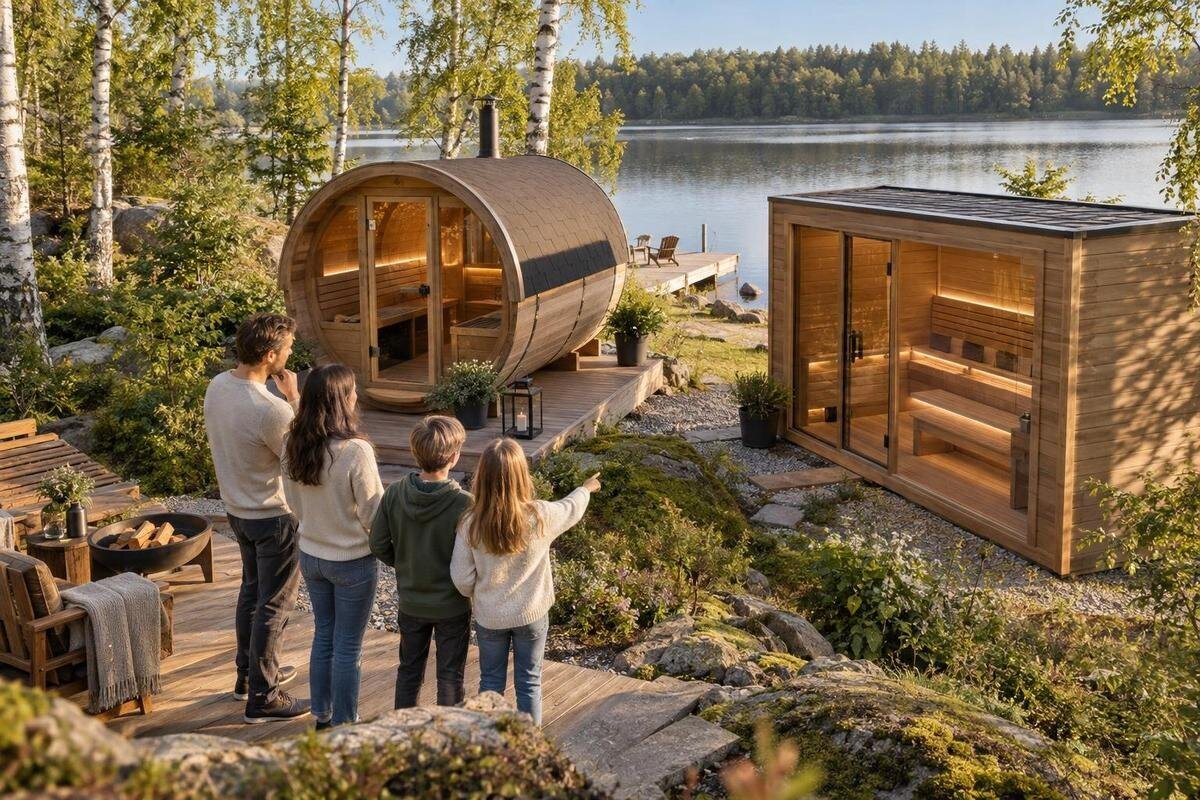
Family sauna buying guide
Buying a family sauna starts with a practical question: how many people are likely to sit inside at the same time? The number of people in your household is only a starting point. Some families want everyone to share a session; others expect staggered use or have only a few regular users. The right capacity depends on that real routine, plus the arrangement and dimensions of the available seating. Use a stated occupant count as a comparison point, not a comfort guarantee. This guide shows how to assess family sauna seating capacity, compare likely uses, and clarify important details before ordering.
01
Choose for shared sessions, not household head count
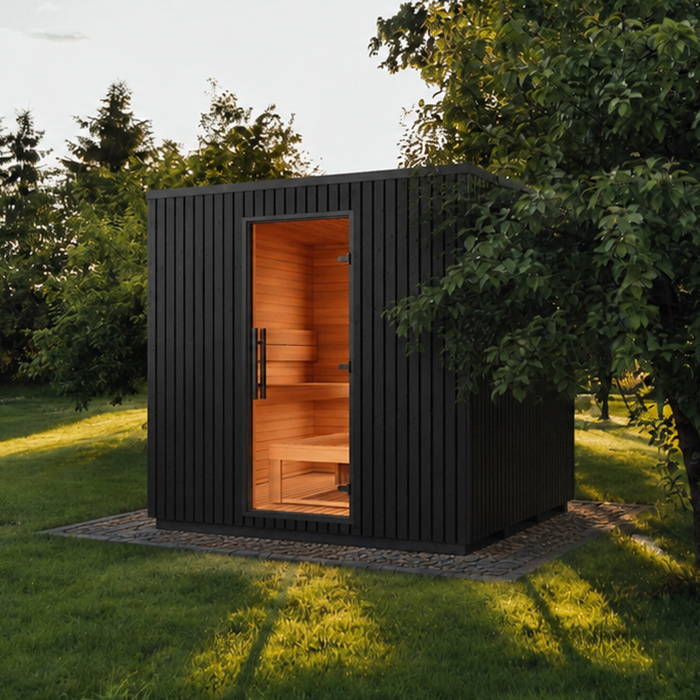
Size the sauna for the largest group that will use it together regularly, not automatically for every person who lives at home. Ask what a normal week looks like: who goes in at the same time, how often, and whether family members tend to arrive together. A household of five might commonly use the sauna in pairs, while another may want all five to share a session; the same household count can lead to different capacity needs. There is no dependable household-size formula that replaces this conversation. Start with the people and timing of actual use.
Before browsing, write down two estimates: the usual number of people in a session and the largest group you expect to share it during an ordinary week or weekend. The usual group keeps your choice grounded in everyday life; the peak group shows when a smaller layout might feel limiting. Do not use the entire family roster as the peak if its members rarely gather at once. If the pattern is uncertain, mark that estimate as tentative and compare options around the most likely routine. Give these figures more weight than an abstract wish to buy the biggest model. When the usual and peak counts differ by only one person, decide whether that extra place is important enough to shape the purchase. When the difference is larger, consider whether taking turns would genuinely suit the people involved.
Make a realistic list of regular users
List the household members who genuinely expect to use the sauna, then consider which of them would usually join at once. Do not turn the family roster straight into a seating order: someone may not want to use it, may come at a different time, or may use it only occasionally. Ask rather than assume, particularly when adults, teens, and younger children have different routines or expectations. Note the combinations you can picture, such as two adults after work or parents and children together on a weekend. The point is to identify the groups likely to share a session.
Keep current use separate from likely changes during the time you expect to own the sauna. For example, a child who is not interested now may want to join later, or a planned household change could alter who uses it together. Give weight to developments you can reasonably anticipate, not every hypothetical. If the future group would be substantially different, note that explicitly while comparing options. This makes it easier to see whether you are choosing for a current routine, a likely near-term change, or both, rather than letting an unstated guess determine the capacity. A simple list of likely groups can be more useful than one predicted household total: it shows whether the change affects simultaneous use or only the number of people living at home.
02
Keep occasional guests separate from everyday capacity
Add guests to your capacity estimate only when hosting them in the sauna is a real part of the plan. Distinguish a relative who visits often from friends who might come once a year, and consider whether visitors would join the household in one session or use the sauna at another time. If regular gatherings are important and you want everyone together, include the expected guests in a separate peak-use estimate. If visits are occasional, sizing around the household’s normal routine may make more sense. Be clear whether guest capacity is essential or simply a welcome extra.
A larger option can affect purchase cost, the space it requires, and installation needs, so weigh those considerations against how often extra seats would be used. Do not let an unusual holiday gathering automatically set the capacity for every regular session. On the other hand, if hosting together is one of the main reasons for buying, treating guests as an afterthought could leave you with a layout that misses the point. Compare the everyday and guest-use estimates side by side, then decide which one should guide the purchase.
Ask what the listed capacity actually describes
A capacity number is useful only when you understand what it describes. A listing might present a suggested number of users, a maximum, or a figure based on a particular seating arrangement; the wording and context matter. Do not assume that an advertised number guarantees comfortable space for every person in your family or means there is a distinct seat for each one. Ask the seller whether the figure refers to people sitting inside at the same time and how it was determined. If the listing offers no explanation, treat the number as a prompt for questions, not proof of fit.
Check that the stated capacity applies to the exact model and configuration you are considering. If the listing groups several versions together, ask which one the figure refers to and whether any difference in layout affects the seating. Request a model-specific drawing or written clarification if the description is vague. Product photos can help you understand the general appearance, but they cannot confirm usable seat width, interior measurements, or how many people the intended layout can accommodate. Base the decision on details tied to the selected sauna, not on an impression from an image. If you receive clarification, keep it with the product details so that you can compare finalists on the same basis and avoid relying on a general category statement later.
03
Compare the usable bench arrangement
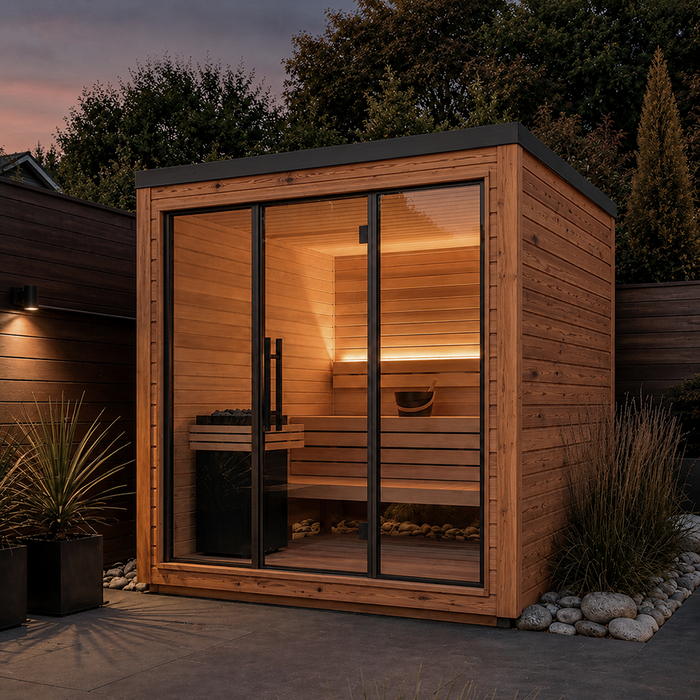
A head count does not show where each person will sit. Look at the seating plan and how the benches are arranged: a straight run, a corner, or more than one level can create different ways to use the same room. These are possible layouts, not features to assume; review the drawing for the specific model. Check whether the listed capacity is based on clear seated positions or on fitting people closely together along a bench. If the seller does not explain how the arrangement supports the stated number, ask for that explanation before deciding.
Consider what happens when everyone is inside at once: whether each person has a place to sit, whether someone is squeezed into an awkward position, and whether one person must move whenever another enters or sits down. Your family may be comfortable sitting close together, or may prefer more separation. Decide which is true for your group instead of assuming that any layout labeled for the right number will feel suitable. Comparing the actual arrangement with your household’s preferences makes the capacity figure more meaningful. Also consider how the group will use the space during a typical shared session. A layout that works for a brief, closely seated gathering may be less appealing if your household expects to spend longer periods together.
Include comfort and access needs for every user
Families do not all share the same expectations for personal space. Differences in height, body size, and sitting preferences can affect whether a group feels comfortable on the available benches, even when its head count matches the listing. Talk about those preferences before choosing a capacity. Some users may be content to sit close together; others may want room to change position or keep a little distance. A number on a product page cannot tell you which arrangement your family will prefer, so consider the people who will actually use the sauna rather than relying on a general occupancy estimate.
Think about how each person will get in, sit down, and get back out, especially if someone needs extra help or room to move. A stated capacity does not establish that the layout will meet a particular access need. Review the model-specific dimensions and ask the seller how the seating and entry are arranged. If a family member has a specific mobility requirement, discuss the details with the seller or a qualified professional rather than assuming that an extra seat—or a larger head-count rating—will solve it.
04
Count accompanying adults and simultaneous users
If a child or another family member will use the sauna only with an adult present, include that adult in the count for the shared session. It is easy to compare the number of children with a product’s stated capacity and overlook the adults who will be with them. Make your estimate reflect the group that will actually be inside together, including any family member who needs to accompany or assist someone else. Set household expectations about supervision separately; a product’s occupant figure does not replace those decisions.
Also distinguish people using the sauna across an evening from people using it at one time. Taking turns may work for a family with different schedules, but it is not automatically a practical substitute for a shared session. Consider whether separate turns fit your household’s routine and whether the people who need to be together can use it together. If shared use is a key reason for buying, do not justify a smaller capacity by assuming everyone will simply go in separately. Make that trade-off deliberately.
Use interior measurements, not only the outside size
Exterior dimensions tell you how large the sauna is overall, but they do not by themselves show how much usable bench space there is inside. Compare the stated interior measurements and seating plan for each model rather than inferring capacity from the outer size. Two products with similar exterior dimensions can still have different arrangements, so an overall measurement is not a substitute for a view of the seating area. Check which figures describe the inside and which describe the outside, and confirm that the measurements belong to the exact version you are considering.
A dimensioned drawing is especially helpful when a listing shows a capacity but gives little detail about the benches. Ask for one if the interior plan or seating dimensions are not clear. Use it to understand where the seats are and how the stated group is expected to fit, not just to compare the sauna’s overall footprint. If a drawing is not to scale or leaves a question unanswered, request clarification rather than estimating usable seating from a photograph. That small check can prevent a mismatch between a product’s headline number and the layout you expected. Compare drawings in the same way for each finalist, noting any seating area that is interrupted by an entry, corner, or change in bench depth. This creates a clearer comparison than exterior measurements alone.
05
Confirm equipment and installation details for the selected size
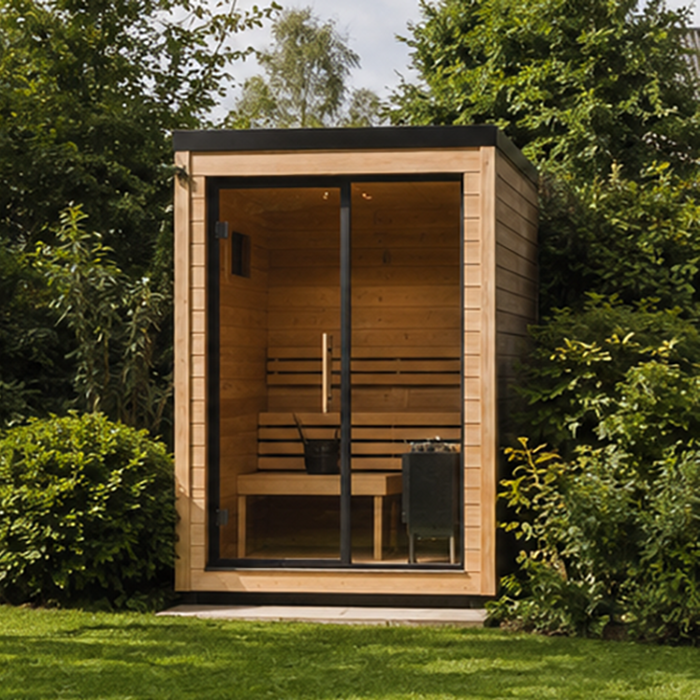
Do not infer equipment compatibility from a seating number. Ask the seller to confirm which heating equipment and configuration are specified for the exact sauna you are considering, and whether the details you are reviewing apply to that model. This matters when comparing options with different interior layouts: a larger capacity label alone does not explain what equipment is included or what the selected configuration requires. Review the model-specific information before you choose, rather than assuming that a similar-looking product or a general category description answers the question.
Before ordering, have a qualified installer confirm the electrical and site requirements for the selected model and its intended location. Do not use the family’s capacity estimate as a substitute for that review. Also check what is included in the purchase and what installation or assembly arrangements you will need to make separately. If a requirement could affect which model works for your site, resolve it before checkout. These checks are about confirming the exact sauna and installation plan; they do not require you to make technical judgments from a capacity label.
Compare finalists using the same capacity questions
Use the same questions for every sauna you are considering. Record the stated capacity, what the seller says that figure means, the actual bench arrangement, and the interior dimensions. Set those details beside your usual group and your largest regular shared group. If hosting matters, note the guest group separately. This simple comparison helps reveal when one option appears to fit only because its capacity is described differently, or when a product has a suitable head count but an unclear seating plan. Do not let one prominent number stand in for details that are missing.
Before placing an order, confirm that the product description, drawing, equipment information, and installation details all refer to the same model and configuration. Keep a note of any unanswered questions and get clarification before deciding. Then prioritize the use that matters most to your family: regular shared sessions, occasional gatherings, or a balance between the two. The goal is not to maximize the stated occupant count. It is to choose a capacity that makes sense for the people who will use the sauna together and for the installation you have planned.
Frequently asked questions
What capacity should I look for in a family sauna?
Use the largest group that will regularly sit in the sauna at the same time as your baseline. Add occasional guests only if sharing a session with them is important, then check the stated capacity against the bench arrangement and your family’s comfort preferences.
Does every person in the household need a seat?
Only if you expect everyone to use the sauna together. Household size and simultaneous use are different measures. If family members usually go in smaller groups, base your choice on that routine rather than on a gathering that may never happen.
Can I trust the capacity number on a product page?
Treat it as a figure to clarify, not a guarantee that the layout will feel comfortable to your family. Ask whether it describes people seated at the same time, review the bench arrangement and interior dimensions, and consider how much personal space your group prefers.
Should I buy a larger sauna in case we have guests?
That depends on how often guests will use it with your household and how important shared sessions are. Extra capacity can be worthwhile for regular gatherings, but a rare event may not justify the added space or installation demands. Compare likely use, not just the biggest possible group.
What details should I confirm before ordering?
Confirm what the listed capacity means, which model and configuration it applies to, and how the actual benches accommodate that group. Review interior dimensions and the specified equipment, then have a qualified installer confirm any requirements for your site before you place the order.
The best family sauna is not necessarily the one with the highest occupant count. It is the one whose stated capacity matches a realistic shared-use group, whose benches give those users a workable place to sit, and whose requirements fit the intended installation. Decide how often you need everyone together, treat infrequent visitors as a separate choice, and compare model-specific drawings and details before placing an order. That way, the capacity decision reflects how your family expects to use the sauna rather than a number chosen in isolation.
