
How to Buy a Garden House When Delivery Access Is Limited
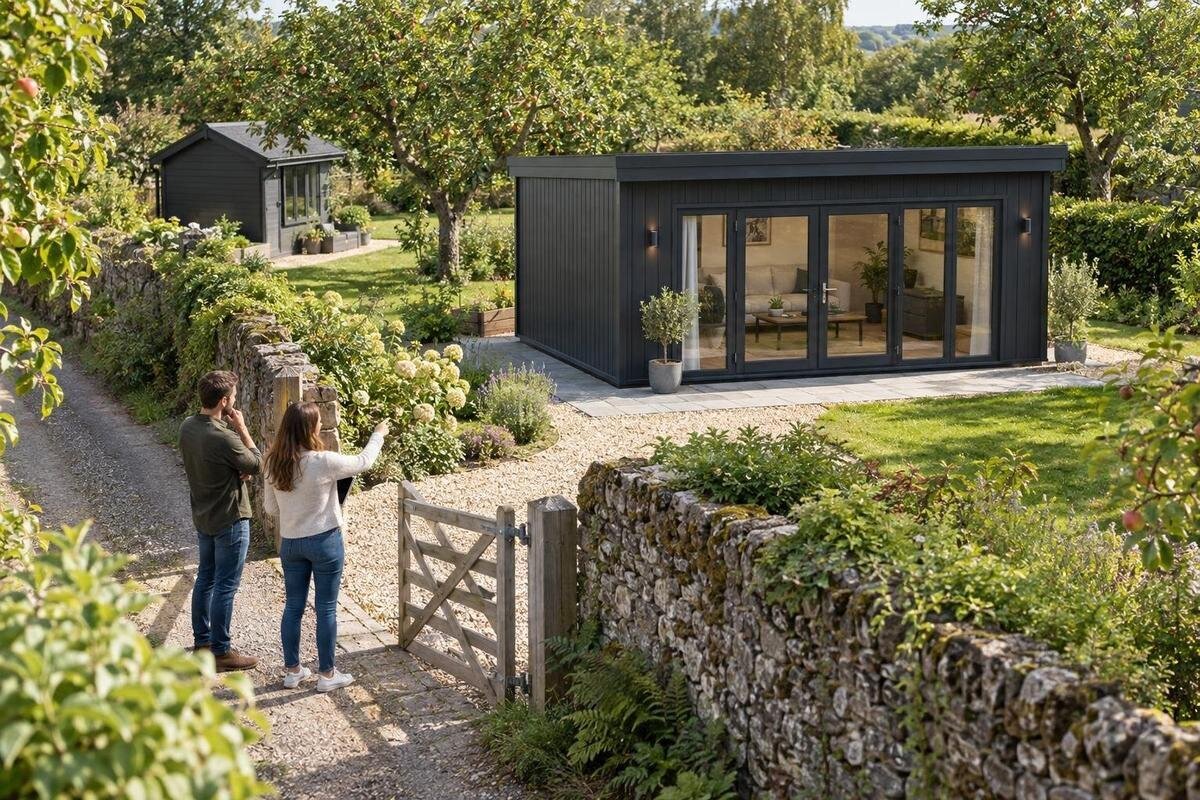
Garden house buying guide
Buying a garden house for a property with a narrow gate, sharp driveway turn, low branch, or limited unloading space takes more than matching the building’s footprint to an open patch of yard. The route may determine which delivery method is workable, and a finished building’s dimensions do not reveal the size or shape of its shipping packages. Before ordering, map the route from the delivery vehicle’s stopping point to the intended location, measure its tightest points, and ask the supplier for delivery and unloading requirements for the exact model. Those details let you compare realistic options instead of guessing from a photo.
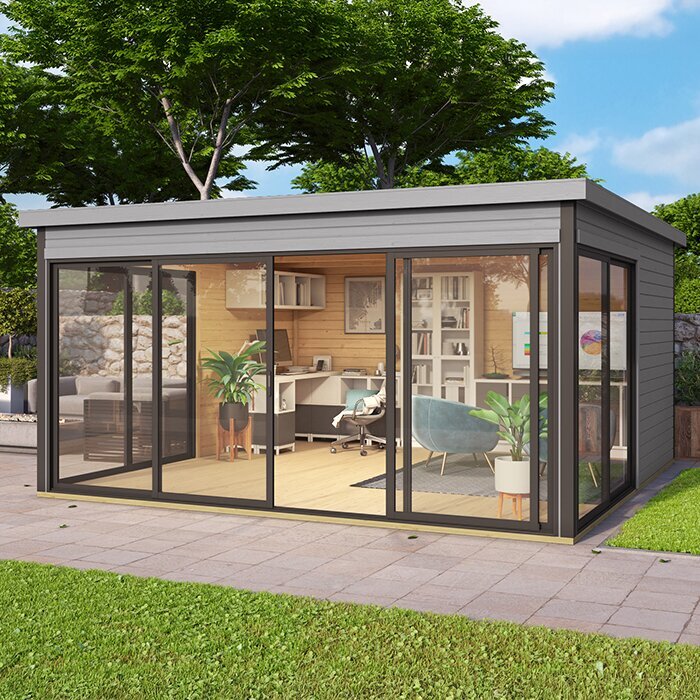
Building footprint and delivery access are separate checks
Treat fit and delivery as separate tests. First ask whether the completed garden house suits your intended use and the space available at the chosen site. Then ask whether the shipment can travel from a place a delivery vehicle can reach to that location and be unloaded there. The building’s footprint helps with placement, but it does not tell you the delivery format, package dimensions, or handling method. Protective packaging or a pallet may affect the space needed, and a photo or model label answers none of those questions. Keep placement measurements and delivery measurements in separate notes.
Before comparing appearance or optional features, write down the intended location, the likely vehicle stopping point, and the route between them. Note whether you have more than one possible entrance and which parts of the route you control. Do not treat a gate, fence panel, parked vehicle, neighbor’s driveway, or overhanging branch as temporarily available without permission. Include the date of your notes, since seasonal storage, landscaping, or construction can change a route between planning and delivery. A tight route does not automatically rule out a candidate, but it makes delivery information part of the purchase decision. Consider the intended use and garden layout alongside the access facts, rather than assuming one will solve the other.
The full route to the drop-off point
Begin where a delivery vehicle could actually stop, not at the gate alone. Trace the full route through the driveway, side yard, gate, path, and any turns to the proposed unloading area and final location. A map may show one wide path while the usable route narrows around a downspout, retaining edge, air-conditioning unit, steps, planter, fence post, or stored item. Include every threshold and change of direction, as well as any crossing of shared or separately controlled space. Do not assume you can use a neighbor’s driveway or move a shared barrier.
At each pinch point, record the clear opening, what creates its edges, and whether the opening will be available with the gate or door positioned as it will be on delivery day. Note steps, slopes, surface changes, and how far a package would need to travel after unloading. Include the route surface in your notes: loose gravel, soft ground, mud, or a raised threshold may affect how a shipment can be moved after it is set down. A quick sketch with measurements is more useful than a single overall driveway width. Take photos looking toward and away from tight spots; label each one so the supplier can match it to your sketch. Write units beside every measurement and identify obstacles that are fixed, movable with permission, or outside your control.
Narrow openings and tight turns
Measure clear width rather than the stated width of a gate or passage. Posts, hinges, latches, handles, fence returns, walls, and nearby equipment can reduce the usable opening; an open gate can also occupy part of the path. Record the narrowest point at each constriction, including places where protruding hardware or a wall makes the opening tighter at one level than another. Note where a wide package could be turned or carried. Do not use the garden house’s finished dimensions as a substitute for the dimensions of each packed piece.
A straight run and a corner are different problems: a long package may pass through an opening only if it can be angled, and the corner may not leave enough room to turn it. Mark tight bends, short landings, dead ends, and places where a delivery vehicle would need to back up or reposition. Also identify any doorway immediately after a turn, since the available room on both sides of the opening can matter as much as its clear width. A package’s width alone does not establish that it can be maneuvered around a corner. For an exact inquiry about the Verdana 1 garden house, identify the listing and ask the supplier to compare your measurements with its delivery requirements; do not infer clearance from the model name or image.
Overhead clearance along the route
Check the route above head height as well as at ground level. Low eaves, gutters, garage-door tracks, carports, tree limbs, signs, arches, and overhead service lines can limit a delivery vehicle or the handling of a package. Identify the lowest point along the route, not just the height of the gate. Ask the supplier or carrier what clearance its actual vehicle and unloading method require, and compare that requirement with the full approach. The finished garden house’s height is not a substitute for the clearance needed during delivery.
Photograph each overhead obstacle from the approach and note whether it is fixed, seasonal, or potentially removable. Measure vertically from the route surface where clearance is tight, and note if the ground rises beneath an obstacle, reducing the usable height. A branch that seems clear today may hang lower at another time, while a low structure cannot be treated as flexible. Do not move utility lines or arrange work on them yourself; ask the relevant service provider or a qualified professional about any needed change. When comparing a candidate such as the Verdana 2 garden house, confirm shipping and handling clearance for that exact listing rather than using any finished-product height you may find as a measure of vehicle clearance.
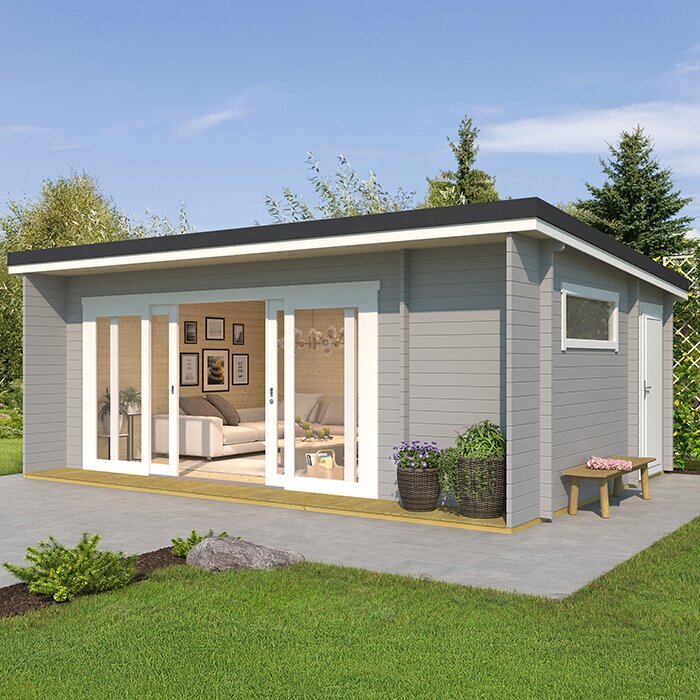
The unloading area and final carrying route
An open route still may not provide a workable place to stop and unload. Determine where the truck could stand, whether it can approach and leave, and how much clear room is available around the proposed drop-off point. Then trace the final leg from that point to the garden house location. Ask whether delivery ends at the curb, driveway, or another point, and what unloading means under the supplier’s terms. Do not assume the driver will carry packages through a gate, across a yard, or to the intended location.
Ask what vehicle or equipment is used, whether unloading is included, where the packages will be placed, and who is responsible for moving them beyond that point. Handling equipment may need its own approach or operating space, so ask what applies instead of planning around an imagined method. Check whether the designated area blocks a garage, sidewalk, access lane, or other daily route while packages are waiting to be moved. Keep the drop-off area clear of cars, bins, furniture, and doors that swing into it. For the Durano garden house or another candidate, tie the unloading answer to your address and exact order, not simply to a general description of delivery.
Package dimensions and delivery details
Ask for shipping measurements, not only the dimensions of the completed structure. Confirm whether the garden house arrives assembled, in components, or in another format; how many separate packages there are; and the packaged length, width, and height of each. Ask whether those figures include protective packaging or a pallet. If a package is unusually long or needs to be kept in a particular orientation, find out how it is moved. Weight and handling-equipment information may matter too; if the seller cannot provide a detail, ask the delivery team what access limits it uses.
Request the requirements for the actual vehicle and unloading arrangement: vehicle width and height where relevant, room to turn or back up, overhead clearance, and space needed to unload. Ask whether the delivery team needs a firm, level place to stop or whether a particular approach direction affects access. Ask where the driver can leave the shipment and whether movement along the final part of the route is included. Save the response with the model or order reference; a measurement for a different version or a general estimate may not answer your case. If you are requesting information for the Veltor 1 listing, use that precise name in your correspondence and ask which figures apply to its shipment.
Questions for the seller and delivery team
Send the seller or delivery team a concise access summary: the exact delivery address, proposed stopping and drop-off locations, a route sketch, measurements at each bottleneck, overhead obstacles, and photos. Ask whether the vehicle can reach the proposed point, which measurement governs access, and whether turning and unloading have been considered. Ask if another vehicle, drop-off point, or delivery method is available for your situation. Specific details make it easier for the person responsible for dispatch or the carrier to review your route than a general description such as limited access.
Clarify who unloads, how far the shipment can be moved, what must be cleared or prepared, whether someone needs to be on site, and what happens if actual access differs from what you described. State any access limitation plainly, including a narrow gate, a shared driveway, restricted parking, or a route that is unavailable at certain times. Ask about extra handling, rescheduling, and any other delivery charges or terms before checkout; policies vary, so rely on the written terms for your order. If the answer is simply that access should be fine, ask what measurements and route features that conclusion covers. Include the exact candidate, such as Orello 1, in the request and keep the reply with your order records.
Comparing candidates with the same access facts
Compare shortlisted garden houses in a simple access table, not just side by side for appearance or finished size. For each one, record the largest package, tightest route width, lowest overhead point, turning constraint, delivery vehicle, unloading method, drop-off location, and any work needed before arrival. Add the supplier’s written confirmation and any quoted delivery or handling costs. A smaller completed footprint alone does not show that a shipment will be easier to move; package shape and delivery method need separate confirmation.
Mark each item as confirmed, possible only after a specific change, or still unknown. Treat unknown as unresolved, not as a quiet yes. Add the date and source of each answer so you can distinguish a supplier confirmation from your own estimate or an informal assumption. If access is close, send additional photos or ask for a delivery assessment before ordering. You could also explore another entrance, temporary barrier removal with permission, or a different drop-off point, but only if the supplier confirms the arrangement is workable. Apply the same comparison process to the Modano 1 listing; its name or image cannot settle access. Ask who arranges and pays for any agreed change.
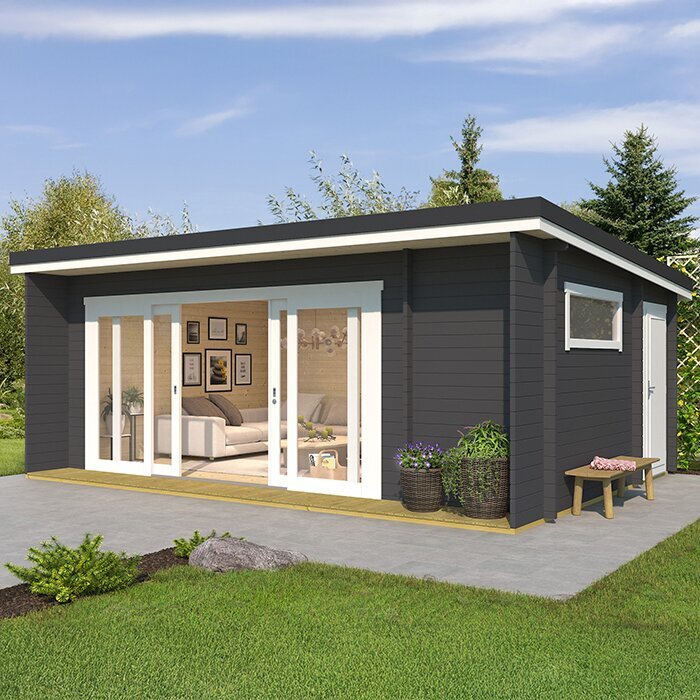
Preparing for the scheduled delivery
Once the plan is confirmed, prepare the route and unloading area that the supplier has approved. Move vehicles, bins, planters, stored materials, and other movable items; open the gate fully and keep the opening clear. Tell household members and anyone working on the property which route is reserved, and keep children and pets away from the delivery path. If construction, parking, weather, or a neighboring access arrangement changes the route or drop-off area, contact the supplier before dispatch rather than leaving the driver to discover the difference.
Set out a clear handoff: identify the drop-off zone, give the delivery team a contact who understands the agreed route, and confirm who will be available if the terms require someone to receive the shipment. Keep your route sketch, measurements, and written delivery confirmation available in case there is a question at arrival. Know how to record a damaged or missing package and whom to notify under the seller’s delivery process. Do not redirect the vehicle or request extra handling on arrival without checking what was agreed. If the access plan for Veltor 2 changes after confirmation, send the new information before the scheduled delivery.
Alternatives when the route is not workable
If the supplier cannot confirm that the vehicle, packages, and unloading arrangement can use the route, ask what alternatives are actually available. Options to ask about might include another vehicle, delivery to a different accessible point, a different delivery format, or a separately arranged handling service; none should be assumed to be offered or suitable. For each option, establish who arranges it, what access it still requires, where responsibility ends, and what charges or order terms apply. Do not treat forcing a package through a narrow gap as a delivery plan.
If no arrangement is confirmed, pause the purchase and reconsider the intended location, route, or candidate before committing. Changes such as taking down a gate, using another property entrance, or placing the garden house elsewhere need permission and a realistic plan; verify the proposal with the people responsible before relying on it. Consider whether the alternative still leaves a practical, agreed path from the drop-off point to the final site rather than solving only the vehicle approach. If you choose another model, repeat the access check rather than carrying over assumptions. Apply the same standard to the Veltor 3 listing: proceed only when the exact shipment, route, stopping point, and unloading responsibilities are understood in writing.
Frequently asked questions
What should I measure before ordering a garden house?
Measure the continuous route from the place where the delivery vehicle can stop to the unloading area and planned location. Record the narrowest clear widths, lowest overhead points, tight turns, steps, and changes in surface. Also note the available space for the vehicle and for unloading. Send the measurements and photos to the supplier for review.
Do the garden house’s listed dimensions tell me if it will fit through a gate?
Not by themselves. Finished-building dimensions do not establish the size or shape of the shipping packages or how they will be handled. Ask for the dimensions of each packaged piece, including any pallet or protective packaging, and confirm the delivery vehicle and unloading requirements for the exact model.
Should I measure the gate or the gate opening?
Measure the clear opening with the gate positioned as it will be on delivery day. Include anything that reduces usable space, such as posts, hinges, latches, handles, or a gate panel that sits in the path. If you are considering removing a gate or other barrier, get permission and confirm the plan with the supplier first.
What should I ask about unloading?
Ask where the delivery ends, whether unloading is included, what vehicle or equipment will be used, and who moves the shipment beyond the drop-off point. Confirm how much space that equipment needs and whether the final route into the yard is part of the delivery. Get the answer for your address and specific order.
What if the supplier cannot confirm that the shipment will fit?
Send the supplier your measurements, route sketch, and photos, then ask about any available alternatives and their requirements. These might involve a different drop-off point or delivery arrangement, but none should be assumed to be available. If there is no confirmed, workable plan, reconsider the route, location, or garden house before ordering.
The right garden house for a property with limited access is not simply the one that looks as though it might fit through the gate. It is the one whose specific shipment, vehicle route, unloading point, and any required site preparations have been confirmed before you commit. Compare those details alongside the intended use, and a difficult entrance becomes a practical question to resolve rather than a guess based on a product image.
