
Buying a Sauna for a Coastal Garden: What to Consider

Sauna buying guide
Choosing an outdoor sauna for a coastal garden means considering the exact site as carefully as the cabin. Salt, wind-driven rain, persistent humidity, direct sun, and ground drainage can differ from one corner of a property to another, and each may affect materials, access, and upkeep. A broad claim such as weather-resistant is not enough to judge a purchase. Use this guide to turn local conditions into questions about a particular sauna’s construction, installation scope, maintenance instructions, and warranty. No single distance from the shoreline or material label answers those questions for every garden.
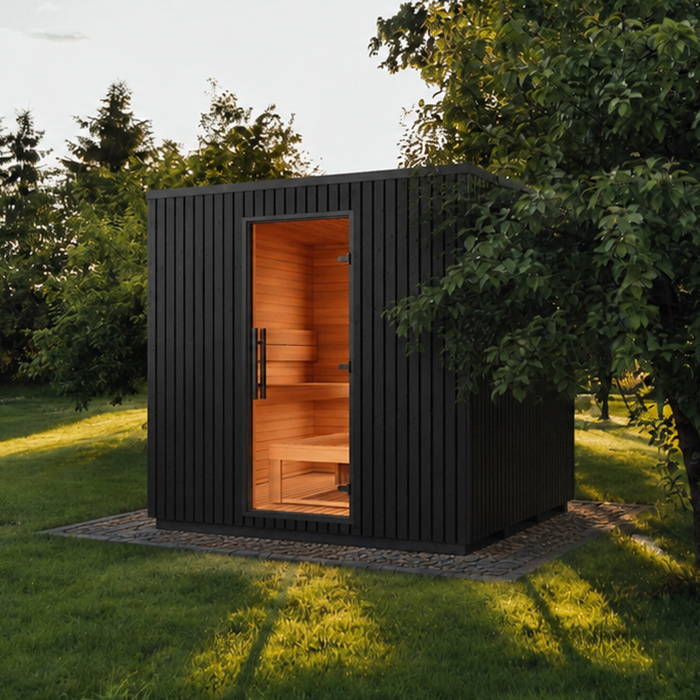
How coastal exposure varies across a garden
Coastal exposure is not a single condition. A garden a few streets from the water may face a different mix of airborne salt, direct spray, wind-driven rain, and humidity than a site on an open shoreline. Even within one property, a sheltered side and a wind-facing corner can weather differently. Before comparing saunas, observe where rain and spray reach, which directions strong winds usually come from, and whether buildings, fences, or vegetation block them. Note seasonal changes too: a leafy screen may offer less protection when bare. If possible, observe the proposed location after more than one kind of weather instead of relying on a sunny-day visit. This is a practical site review, not a way to assign a universal safe distance from the ocean.
Use those observations to ask the manufacturer or seller whether the exact model is intended for outdoor use in a salt-air setting, and request details behind any coastal, marine-grade, or weather-resistant claim. Those terms can describe very different assemblies; they do not tell you how the cladding, finish, fasteners, roof components, or fittings are specified. Ask what exposure the guidance assumes and whether it covers direct spray or only general outdoor use. Also ask whether coastal placement changes care requirements or warranty coverage. Request the relevant product document or a written answer before relying on a broad marketing phrase. Another buyer’s experience, a display photo, or a shore-distance estimate cannot establish how the sauna will fare in your particular garden.
Choosing a location with room for use and maintenance
Choose a position by evaluating access, use, and exposure together. Check the route from the house, privacy from nearby windows, preferred outlook, and whether the path remains practical after rain. Then note which directions bring salt spray or wind-driven rain. A wall or hedge may reduce exposure from one side, but the effect depends on wind and the gap around the sauna; a tight corner is not automatically the driest spot. Compare candidate areas on a simple site plan, marking boundaries and nearby structures. Use measured dimensions from the manufacturer’s documentation rather than a promotional photograph, and include specified installation and service clearances. A location that looks attractive from indoors may still be awkward when carrying supplies or opening the door.
Think beyond the sauna’s footprint. The door needs a usable approach, and installers may need access during assembly and later service. Ask the supplier for exterior dimensions, required clearances, door swing, and the space needed to inspect or replace components; do not infer these from a model name or image. Consider where wet shoes, towels, or a changing area will go without blocking drainage or maintenance access. If you plan a fence, screen, or planting for privacy, check whether it is compatible with the sauna’s ventilation and servicing instructions. Leave the final location open to review until you have the product documents and installation requirements in hand.
Drainage, wet ground, and the sauna base
Water management deserves a site-specific look because repeated dampness can affect an outdoor structure even when it is designed for exterior use. After rain, note where water gathers, how roof runoff and garden irrigation travel, and whether soil stays wet around the candidate location. Check the same area after a particularly wet period if possible; a dry afternoon can hide a recurring puddle. Include nearby downspouts, paved areas, and regularly used sprinklers in your review. Follow the sauna manufacturer’s guidance for water clearance and placement rather than assuming a flat-looking patch drains well. The goal is to identify questions for the installer, not to design a base from an online rule of thumb.
Ask what base or support the specific sauna requires, whether it is included, and who confirms that the prepared surface is suitable. Installation guidance should address the product and local site conditions; a general diagram cannot assess a garden with uneven, soft, or waterlogged ground. If the property is exposed to flooding, storm surge, or regular standing water, check authoritative local site information and discuss the proposed location with a qualified installer before ordering. Avoid a spot where routine runoff or irrigation will continually wet the sauna’s lower parts. Any grading, drainage, or foundation work should be scoped by a qualified professional rather than improvised from assumptions about the yard’s slope.
Comparing exterior materials and finishes
Request a materials schedule, not just a list of attractive species or a phrase such as premium wood. Find out what is used for exterior cladding, the structural frame, the door, the roof, interior surfaces, and exposed trim. Ask which parts are untreated, treated, or factory-finished. If a wood species or heat-treatment process is named, ask what role it plays in the product and what the manufacturer says about exterior coastal use. The name of a material alone does not establish how a complete assembly performs; joints, finish, exposure, and maintenance matter too. Confirm that the information refers to the precise sauna configuration you are considering, not a different series or an optional upgrade.
Ask how often exterior finishes need attention, what signs of wear to look for, and which cleaning or refinishing methods the manufacturer recommends. Sunlight, rain, and repeated wetting can all affect exposed finishes, but the appropriate care depends on the materials and the product guidance. Do not assume that a factory finish is maintenance-free or that every coating is suitable for salt-exposed conditions. If you plan to stain, seal, or otherwise change a finish, ask whether that is compatible with the manufacturer’s instructions and warranty. A useful comparison records the initial finish, the expected upkeep, and who is responsible for any finishing work after delivery.
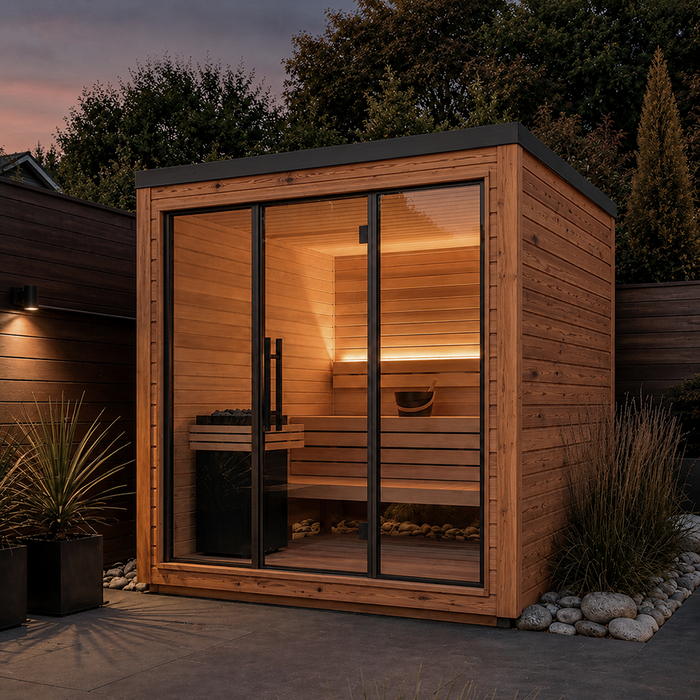
Salt air and exposed metal hardware
Salt-laden air can accelerate corrosion on exposed metal, so look beyond the main cladding when comparing a sauna for a seaside garden. Ask what materials are used for fasteners, hinges, latches, handles, vents, roof edges, and other fittings exposed to weather. Small components matter because they may be difficult to reach once the sauna is installed, even though they are not prominent in a product photo. If controls or heater parts are exposed to the outdoor environment, ask for model-specific information about those components too. Request a parts description rather than assuming that the appearance of a fitting tells you what it is made from.
Terms such as stainless steel or corrosion-resistant are not a complete explanation of performance in every exposure. Ask the manufacturer to identify the relevant specification and say whether it is intended for the conditions at your site. Find out whether different metals are used in adjacent parts, how exposed hardware should be maintained, and whether replacement parts are available if a fitting deteriorates. Also read warranty wording for exclusions covering corrosion, coastal locations, or maintenance. You do not need to interpret metal specifications on your own: ask the seller or manufacturer to explain what they mean for this exact product, and keep the answer with the product documents.
Roofs, shelter, and wind-driven rain
Rain does not always fall straight down, especially in a windy coastal garden. Consider which side of the proposed sauna faces prevailing weather, whether roof runoff from nearby buildings could reach it, and whether water tends to collect around the site. Ask the manufacturer what roof covering and exterior joints are part of the model, what exposure its installation guidance assumes, and whether any additional protection is approved. A product photograph may show a finished roof, but it does not establish its material, maintenance needs, or suitability for a particular amount of wind-driven rain. Make sure the seller’s answers apply to the exact version being quoted.
A canopy, porch, or enclosure may reduce direct rain in some circumstances, but it does not automatically make a sauna suitable for a coastal site. Added shelter can redirect water or change airflow, and it may affect specified clearances or service access. Before planning a cover or building a screen around the cabin, ask the manufacturer whether that arrangement is allowed and have a qualified installer review the proposed setup. Do not assume a close-fitting enclosure will keep the sauna dry; trapped moisture can create its own maintenance concern. Include any extra structure in the site plan and clarify who is responsible for ensuring the complete arrangement follows the sauna’s installation guidance.
Heater, utilities, and qualified installation
Compare the sauna and heater as a compatible package, not as unrelated purchases. Confirm whether the quoted sauna includes a heater, controls, and other components, and ask the manufacturer to identify which options are intended for the specific cabin. If a heater is selected separately, have the supplier or installer confirm compatibility with the sauna and its published capacity. Ask what ventilation, utility, and access provisions are specified, but do not try to derive connection requirements from a photograph or a general product description. A written installation document for the exact model is more useful than a verbal assumption about what will fit your garden.
Clarify who evaluates and completes each part of the installation. For an electric heater, ask a qualified installer to assess the required service and connection at the proposed location. If you are considering a fuel-burning heater, ask who will review its flue, clearances, and any local approvals that may apply. These are matters for product-specific instructions and qualified professionals, not do-it-yourself estimates. Check whether delivery, assembly, utility work, and commissioning are separate responsibilities, and get the boundaries in writing. Coastal moisture can make careful attention to exposed components especially relevant, so ask how the installation plan addresses the site without attempting electrical or fire-safety work yourself.
Capacity, dimensions, and everyday access
Choose capacity by comparing the stated number of users with the actual interior layout. Ask for published interior and exterior dimensions, seating arrangement, door position, and any space the manufacturer requires around the cabin. A capacity figure does not tell you whether the benches or entry will suit the people who plan to use the sauna, so review the layout drawing when available. Do not infer measurements from a product name or image. If more than one size is under consideration, mark each footprint and required clearance on the garden plan; this makes it easier to see whether a larger cabin would compromise the route, drainage, or maintenance access.
Think through ordinary use at the site: where users will arrive from, whether they need a nearby place to change, and how the route feels when the ground is wet. Check the door’s opening direction and keep the approach clear as specified by the manufacturer. Leave space for service access and for reaching exterior surfaces that need care. If privacy screens or landscaping are part of the plan, include them in the measured layout rather than adding them after installation. A sauna that fits on paper may still be an awkward purchase if its entry, path, or upkeep area conflicts with the rest of the garden.
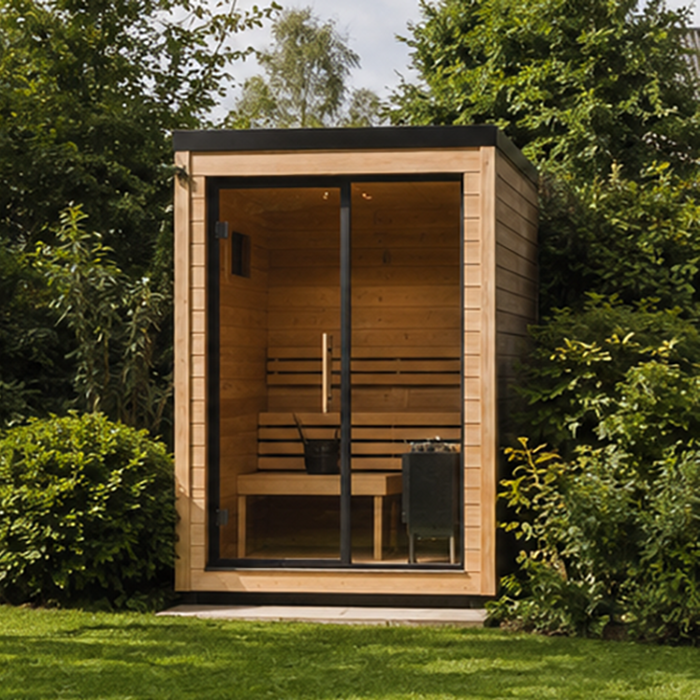
Planning for coastal maintenance
Ask for written care instructions before choosing a finish or exterior configuration. Find out what the manufacturer recommends for cleaning salt deposits, caring for the finish, and checking exposed fittings. Do not assume that rinsing, pressure washing, or using a familiar household cleaner is appropriate for every surface; ask which methods and products are compatible with the materials. Request guidance on how often to inspect the cabin and what signs call for attention. The answer may vary by product and exposure, so a generic maintenance promise is less useful than model-specific instructions that describe the work the owner can expect.
Consider whether the proposed location makes that work practical. A narrow gap between the sauna and a fence may be difficult to inspect, while dense planting can hide lower cladding or restrict access to fittings. Make sure there is a workable route for routine care and any later service, and ask whether the sauna needs access on particular sides. Keep the installation instructions, finish details, and maintenance record together; that makes it easier to follow the manufacturer’s schedule and explain the product history if a question arises. A low-maintenance claim should be assessed against the actual tasks and conditions, not treated as a promise that the sauna needs no attention.
What to confirm before placing an order
Ask for a written quotation that identifies the exact sauna configuration and lists what is included. Depending on the package, relevant questions may cover the heater, controls, roof components, finish, base or support, delivery, assembly, and installation. Confirm which items are excluded and who arranges any site preparation or utility work. Give the supplier accurate information about the garden route, gate widths, steps, overhead obstacles, and the proposed installation area, then ask whether a site review is needed before delivery. Agree on who will resolve a mismatch between the delivery plan and the access available, rather than waiting until the sauna is on its way.
Read the product documents and written terms before committing. Check whether coastal exposure affects warranty coverage, what maintenance is required to keep within the manufacturer’s instructions, and how damaged or missing components are handled. Confirm the responsibilities of the seller, delivery team, installer, and any other contractor so that essential work is not left unassigned. If local approvals or site restrictions may apply, consult the relevant local authority or a qualified professional instead of assuming a general sales answer settles the matter. A clear order record lets you compare options on the same basis: the product, its care, the installation scope, and its fit with your coastal garden.
Frequently asked questions
How can I tell whether a sauna is suitable for salt air?
Ask the manufacturer about the exact model’s materials, exterior finish, exposed hardware, and guidance for coastal use. Request a written answer about whether its recommendations cover direct spray or general outdoor exposure, and check what the warranty says about salt-air conditions.
Is there a safe distance from the ocean for an outdoor sauna?
There is no single distance that establishes suitability for every garden. Wind direction, direct spray, shelter, and local site conditions all matter. Assess the proposed spot and ask the sauna manufacturer and installer to address that location specifically.
Can I put a sauna under a covered patio?
Only if the sauna’s installation guidance permits that arrangement. A roof or enclosure can change airflow, clearances, and how rain reaches the structure. Ask the manufacturer and qualified installer to confirm that the proposed shelter is compatible with the specific model.
Which exterior materials are best for a coastal garden sauna?
A material name alone does not establish how the complete sauna will handle coastal exposure. Compare the documented cladding, finish, roof components, and hardware, then ask what maintenance the manufacturer requires and whether its guidance applies to your site.
What should I confirm is included before ordering?
Get a written list of the sauna components, heater and controls, base requirements, delivery, assembly, and installation responsibilities. Confirm any exclusions, site-access needs, warranty terms, and who will answer questions about coastal exposure and ongoing care.
Buying well for a coastal garden is less about finding a single coastal-ready label and more about matching a documented product to the conditions at its exact location. A sound comparison records exposure, water behavior, available access, material and hardware details, maintenance instructions, installation scope, and written coverage. If a seller cannot explain an important claim for the exact model, keep that uncertainty in the comparison rather than filling it with assumptions. Choose once the sauna and the site plan make sense together.
