
Buying a Sauna for a Small Garden: What to Consider
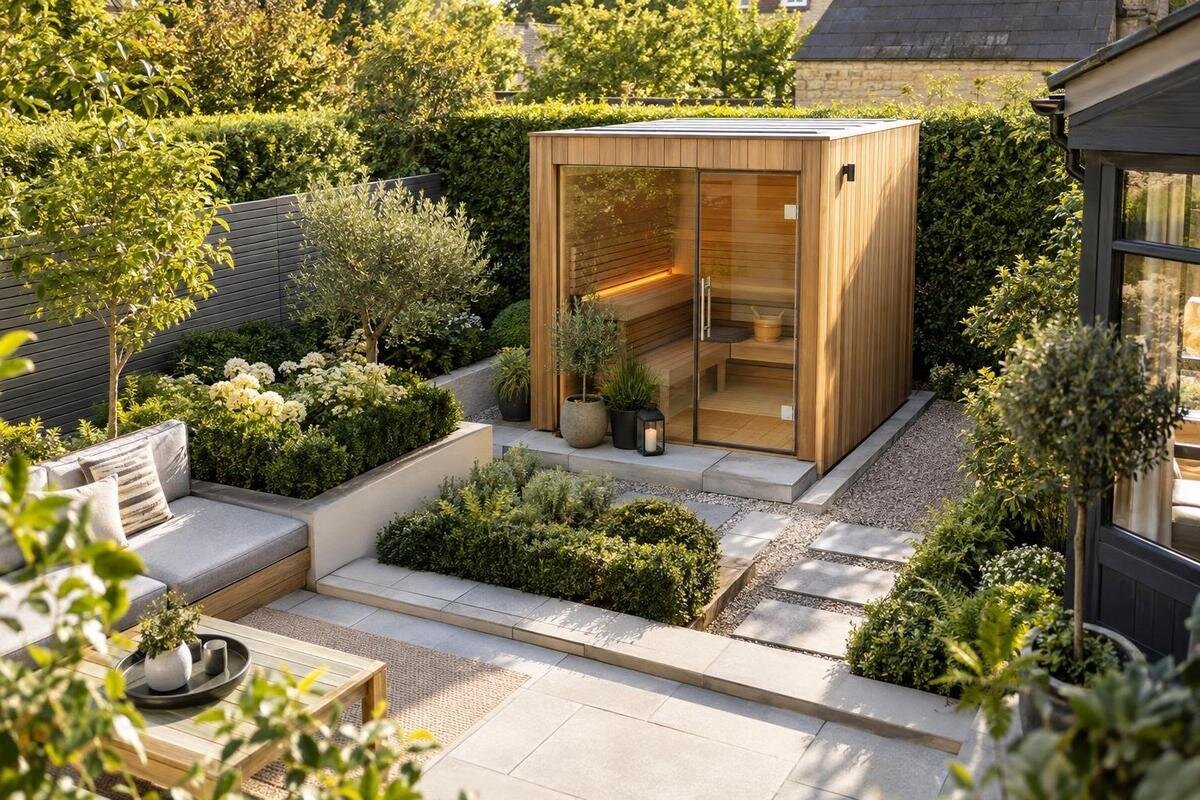
Small-garden sauna buying guide
Buying a sauna for a small garden is not just a search for the smallest cabin. The unit has to fit alongside access, required clearances, delivery, installation, and the parts of the yard you still want to use. Start with a measured plan, then compare the outside dimensions and site requirements of each model with that plan. Capacity and heater choice matter too, but they are practical only if the sauna can reach the spot and the necessary base and utilities can be arranged. This guide focuses on those purchase decisions before you place an order.
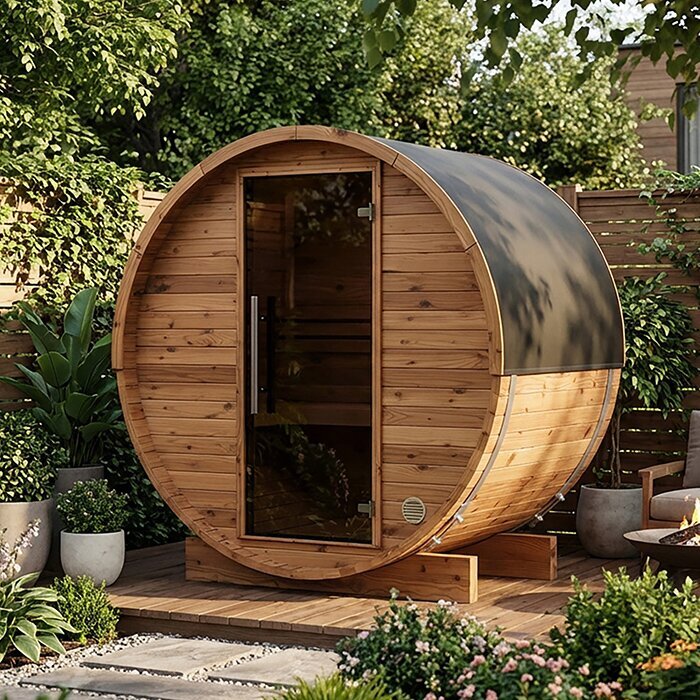
Measure the usable garden area
Start by measuring the part of the garden that could genuinely hold a sauna, rather than assuming the full backyard is available. Note distances to the house, fences, trees, gates, retaining walls, steps, utility equipment, and other structures. Mark permanent obstacles and the areas needed for doors, bins, seating, or regular yard work. Measure the clear length and width at several points if the ground or boundaries are irregular. A dimensioned sketch is a more reliable starting point than a photograph or rough visual estimate. Also record overhead features such as eaves and branches; if utility lines or buried services may affect placement, ask qualified professionals to advise before planning around them.
Put the measurements into a simple plan and mark the space you want to keep for moving through the yard. Include access to the house, storage areas, garden beds, and any gates you use often. A spot that looks empty in a photograph may be part of a route you rely on every day, or may be needed for routine maintenance. If you have more than one possible location, measure each separately rather than trying to judge which feels larger by eye. This gives you a fair basis for comparing models and helps identify early whether a compact footprint would preserve useful outdoor space or leave the garden awkward to use.
Compare exterior dimensions and clearances
Use the exact outside dimensions for the model you are considering, not an estimate based on a product photo or a broad category label such as compact. Check what the dimension drawing includes: the cabin body, any roof projection, steps, or other exterior features can affect how much ground area the installation occupies. Distinguish the footprint from the extra room needed around it. A sauna may fit within the measured rectangle on paper but still leave too little space for the door, access, or maintenance. Ask the supplier for a dimensioned drawing and compare it with your sketch before deciding that the location works.
Required clearances depend on the specific sauna and its heating system, so do not apply a one-size-fits-all distance. Check the manufacturer’s installation information for space around the unit, door operation, ventilation openings where applicable, and access to service points. If the instructions are unclear, ask the supplier and have the relevant qualified installer review the proposed location. Include those requirements in the plan before judging the remaining garden space. A layout that counts only the cabin’s outline can force changes later, such as moving a fence-side path or shifting the proposed location. Better to discover that on paper than after the site has been prepared.
Choose capacity for your usual routine
Think about how many people are likely to use the sauna at the same time on a regular basis. A capacity figure can help narrow the options, but it does not tell you everything about the interior: seating arrangement, usable bench dimensions, and room to enter and sit comfortably vary by model. Compare the interior information as well as the exterior footprint. If you expect to use the sauna alone most of the time but occasionally share it, decide which use matters more rather than sizing the purchase around a rare gathering. The goal is a layout that suits your normal routine without taking more garden space than you can reasonably spare.
In a small backyard, a larger interior can affect the amount of outdoor area left for circulation and other uses. At the same time, choosing the smallest model solely because it has the shortest listed footprint may create an interior that does not suit your plans. Compare the actual seating layout and dimensions across your shortlist instead of relying on labels such as two-person or family size. If a particular use matters, confirm it against the manufacturer’s specifications. Treat capacity as one part of the fit: a model is only a practical choice if its inside space, outside footprint, access, and site requirements all work together.
Check the delivery route to the site
Measure the route from the place where a delivery vehicle can stop to the sauna’s intended position. Check gates, narrow side yards, turns, steps, overhead obstructions, and changes in surface along the way. The sauna’s installed dimensions do not necessarily tell you how much room delivery requires, so ask for the relevant shipping or component dimensions. Find out whether the proposed delivery method depends on a clear path or particular access conditions. If the route passes through a shared area or depends on moving an obstacle, resolve that before ordering. A unit that fits the garden can still be impractical if it cannot be brought to the chosen spot.
Ask who is responsible for moving the sauna from the delivery point, what assembly is expected on site, and whether any equipment or additional access arrangements may be needed. Do not assume that delivery includes positioning, assembly, or the work required to make the site ready; confirm what is included in writing. If access could be difficult, have the supplier or installer assess it before you commit. Also consider possible effects on lawns, planting, paths, or fences, and ask who handles any restoration. These details influence the total project and can point to a better location or a model with a more manageable delivery plan.
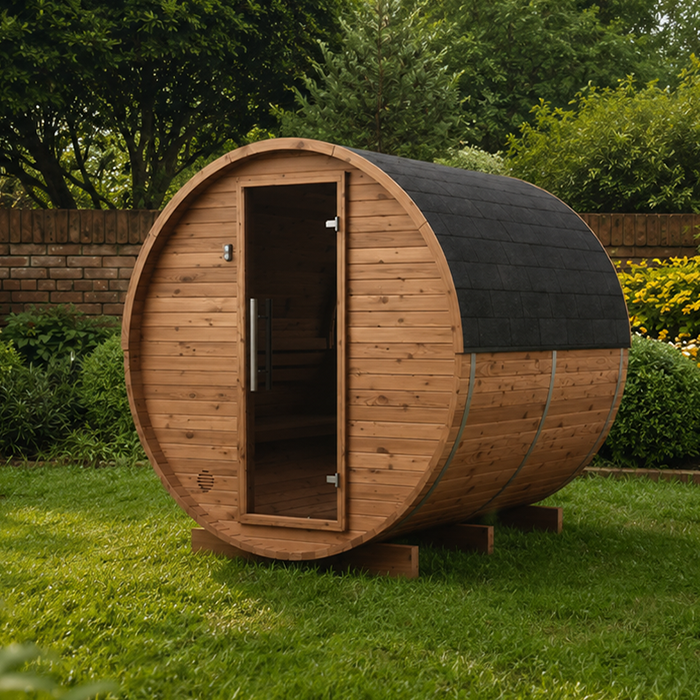
Choose a heater that suits the site
Compare the heating options actually offered for the sauna rather than assuming every cabin can use every type. Traditional electric, wood-fired, and infrared systems involve different routines and site needs, and they are not interchangeable on every model. An electric heater depends on a suitable power supply and must be reviewed by a qualified electrician. A wood-fired option brings practical questions such as fuel storage and ash handling, as well as fire-related siting requirements to verify locally. A small garden can make storage and access especially noticeable, so think about where supplies and equipment would go before choosing a system.
Consider the whole arrangement, not just the heater itself. Ask whether the selected model is designed for the heater being considered, what utility or site requirements apply, and what ongoing care the manufacturer specifies. A qualified professional should assess installation requirements; do not try to resolve electrical or fire-safety questions from a sales photo or a general description. If two options seem equally appealing, compare their day-to-day responsibilities and how each fits the garden layout. The suitable choice is the one that matches the model, the site, and your routine, not simply the option with a feature name that sounds most convenient.
Confirm the base and ground conditions
Check the manufacturer’s instructions for the required base and support before selecting a final location. There is no universal foundation that can be assumed to suit every sauna or every garden. An existing patio, deck, or paved area may look convenient, but appearance alone does not establish that it meets the specific model’s requirements. Ask what the installation information says about the base, levelness, support, and drainage, then have a qualified contractor assess the site if needed. Avoid choosing a spot simply because it is close to the house or visually tidy; the ground and the required preparation are part of the buying decision.
Look at where rainwater and runoff travel through the garden and whether the proposed position could make access or upkeep difficult. Ask the supplier or installer how the model is intended to be placed outdoors and what ongoing care is recommended for its specific construction. Do not assume that a sheltered corner eliminates weather-related considerations, or that an exposed area is automatically unsuitable; confirm the model’s requirements. If the site is sloped, soft, or otherwise uneven, get a qualified assessment rather than guessing at a solution. A suitable location is one where the base requirements, drainage, and access can all be addressed without compromising the rest of the yard.
Plan the entrance and everyday circulation
Consider how you will reach the sauna from the house and move around the remaining yard. A narrow gap may technically fit the cabin but leave no comfortable route past it, or make it harder to reach a garden bed, storage area, or outdoor seating. Include the path you expect to use and the areas needed for ordinary yard tasks in your sketch. Think about steps or changes of surface on the way, especially if they would make regular access inconvenient. These practical details matter more than a layout that looks neat from indoors but does not work when you use the garden.
Check which way the sauna’s door opens and how that affects nearby walls, fences, planting, and the approach path. Choose an orientation that leaves the entrance usable and does not create an avoidable pinch point. If the model has exterior vents, access panels, or other service points, keep them reachable and follow the manufacturer’s clearance guidance. Privacy can matter too: consider sightlines from the house and neighboring areas before deciding where the entrance should face. If you plan to add a screen or planting, confirm that it will not block required access or openings. The layout should accommodate both the sauna and the garden you intend to keep.
Budget for the complete project
Compare the cost of the whole setup, not only the sauna’s purchase price. Depending on the model and site, the project may involve a base, site preparation, delivery, assembly, utility work, qualified installation, or changes to the surrounding garden. Ask for an itemized quotation that states what is included, what is optional, and which tasks remain yours to arrange. Do not assume that a low initial figure covers the work needed to make the site ready. If you are comparing several options, use the same list of cost categories for each so that you are comparing like with like rather than overlooking a project expense.
Also ask what regular maintenance the manufacturer recommends and what information is available about energy or fuel use. If you want to estimate ongoing costs, use model-specific data and your own utility or fuel costs rather than relying on a broad claim about sauna efficiency. Include any fuel storage needs in your space plan as well as in your budget. Find out which parts or services may need attention over time, without assuming that every model has the same upkeep. A realistic comparison includes the installation, routine operation, and care of the exact sauna you are considering, not just the amount due at checkout.
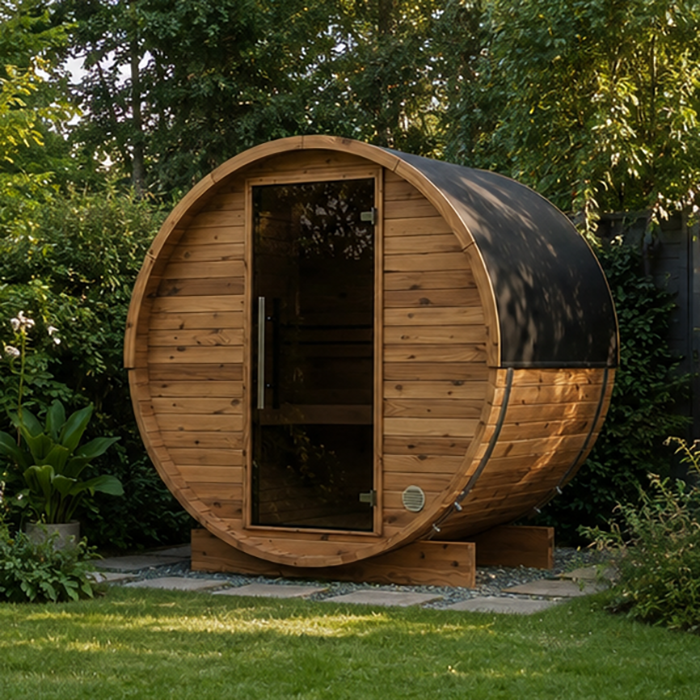
Check local requirements and professional work
Before ordering, check with the appropriate local office and any homeowners association or property manager about requirements that may apply to the proposed location and sauna. Do not assume a small unit is exempt, or that a requirement for one type of heater also applies to another. Rules and approval processes can depend on the property, placement, and equipment. Ask about the specific model and site rather than relying on a general answer from someone who has not reviewed the details. This is especially important if the plan involves new utility work, ground preparation, or a wood-fired heater. Resolve relevant questions before delivery or installation is scheduled.
Identify which qualified professionals should review the plan. Electrical work needs assessment by a qualified electrician, while the base and site preparation may require a contractor familiar with the work. Ask the supplier what installation documents are provided and who is responsible for each part of the project. If you are arranging the work separately, share the exact sauna specifications with the professionals before making commitments. Clarifying responsibilities can prevent gaps between delivery, preparation, and installation. It also gives you a chance to learn whether the chosen location or heating option creates additional practical requirements before you have paid for a model that is difficult to place.
Compare your shortlist with a written checklist
Make a comparison sheet for each sauna you are considering. Record the exact exterior and interior dimensions, capacity, door position, required clearances, heater compatibility, utility needs, base requirements, delivery method, and assembly arrangements. Add the total quoted cost and note which parts of the project are not included. Use manufacturer drawings and written installation information, not a thumbnail image or a product name, to fill in technical details. A side-by-side comparison makes trade-offs visible: one model may leave more usable yard space while another may better suit your expected number of users. The details are more useful than a quick impression of which cabin looks smallest.
Set a few non-negotiable conditions before choosing: for example, the route must work, the site must meet the model’s installation requirements, and the remaining garden must still serve its intended uses. Eliminate options that fail those conditions, then compare the preferences you can compromise on, such as interior space or heater type. Before placing an order, confirm that the quotation and delivery plan refer to the exact model you assessed. A clear shortlist helps you make a decision based on the garden you have, the work you can arrange, and the way you expect to use the sauna.
Frequently asked questions
How much space does a small garden sauna need?
There is no single space allowance that works for every model and garden. Start with the sauna’s exact exterior dimensions, then add the manufacturer’s required clearances, space for the door and access for installation and maintenance. Leave enough room for the yard functions you plan to keep.
Can I put a sauna on an existing patio?
Possibly, but the fact that a patio is already paved does not confirm that it meets a particular sauna’s base requirements. Check the model’s installation information and ask a qualified contractor to assess the surface, ground conditions, drainage, and any preparation needed.
Is an electric or wood-fired heater better for a small backyard?
Neither is automatically the better choice. Compare the heater options offered for the sauna, the site’s available utilities, routine fuel or maintenance needs, and any local requirements. Have a qualified professional review the proposed setup; do not assume a heater can be added to a cabin that was not designed for it.
How can I tell whether a sauna will fit through my gate?
Measure the narrowest point on the whole route, including turns, steps, overhead obstacles, and any gates or fences. Ask the seller or delivery provider for the shipment dimensions and whether delivery involves separate components or on-site assembly. Confirm the route before ordering.
What should I confirm before placing an order?
Confirm the exact model’s exterior dimensions, required clearances, base requirements, heater and utility needs, delivery method, assembly arrangements, and total quoted costs. Check applicable local requirements as well, and establish who is responsible for site preparation and qualified installation.
A practical small-garden sauna is one that fits the whole site plan, not just a rectangle on the lawn. Give priority to firm constraints such as the delivery route, base requirements, clearances, utilities, and local approvals; then weigh capacity, heater choice, and the outdoor space you want to preserve. Comparing exact model information against measured conditions helps you avoid choosing by appearance alone. The result is a purchase decision shaped by how the sauna will fit into both the garden and your regular routine.
