
Buying a Sauna for Cold Winters: What to Ask About Heat-Up and Heat Loss
SAUNA BUYING GUIDE
Buying a sauna for cold winters involves more than asking how many minutes it takes to warm up. That figure depends on the starting temperature, the target used in the test, the room’s size and construction, the heater paired with it, and the stated ventilation conditions. Heat loss matters after warm-up too: it affects how much energy the sauna needs to maintain its operating conditions and how quickly the cabin cools when the heater is off. Compare options using the same assumptions, and ask for the basis of any performance claim in writing. This guide focuses on questions that make a cold-weather purchase comparison more useful.
Why cold-weather comparisons need context
An outdoor sauna starting on a frigid day faces a different initial condition from a unit measured in a mild room. The air and interior surfaces begin colder, and exposed parts of the enclosure may lose heat as the heater runs. How much that changes the warm-up depends on the particular design, siting, weather exposure, and heater; there is no single winter adjustment that applies to every sauna. A time shown in a brochure or quoted in a demonstration is therefore a result for some set of conditions, not a universal promise. Treat it as a useful data point only after the seller explains what it describes.
Before comparing times, define the use conditions you care about. Will the sauna usually start from a cold, unheated state, or is it in a space that stays warmer between uses? Is it fully exposed to winter weather or in a more sheltered location? Ask what target temperature and operating setup the manufacturer uses; do not substitute your own assumptions for the maker’s directions. These details help you distinguish the time needed for one cold start from the heat required to hold warmth afterward. Keep those as separate questions in every quote comparison rather than relying on an impressive headline figure alone.
Ask what the sauna heat-up time measures
Ask exactly how the seller defines heat-up time. Does the clock start when the heater is switched on, and does it stop when a room-air sensor reaches a stated reading, when the controls indicate readiness, or after conditions stabilize? Ask where the measurement is taken and which sensor or method is used. The answer matters because air temperature can vary within a room, and a controller reading does not necessarily describe every surface or location. Use a target that matches the manufacturer’s normal operating guidance, and compare like with like.
Request the starting conditions: outdoor temperature, starting temperature inside the cabin, any preheating, room dimensions or stated volume, heater configuration, and ventilation setup. Ask whether the measurement was taken in a test environment or in an installed sauna, and whether doors remained closed throughout. If the seller has no cold-weather test, ask what evidence or calculation supports its estimate and which assumptions it uses. A transparent estimate may still be approximate, but it lets you judge uncertainty. An exact number without conditions is much less useful for a winter purchase than a range tied to a clearly described setup.
Match the heater to the exact sauna
Choose a heater as part of the sauna system, not as a wattage number in isolation. The room’s volume matters, but so can ceiling height, exposed surface area, glazing, construction, insulation, and the cold conditions assumed by the manufacturer. Ask which room dimensions and enclosure features the recommended heater size assumes. If a quote uses a standard room volume, ask whether windows or other less-insulated surfaces change the recommendation. Follow the manufacturer’s sizing guidance for the exact cabin and heater pairing; an online rule of thumb may not include the details that affect your installation.
Request the exact heater and control configuration included in the quote, plus the manufacturer’s stated electrical requirements and compatibility information. Do not assume that choosing a more powerful heater automatically solves slow winter warm-up; the heater must suit the cabin, controls, and site, and an inappropriate substitution can create a compatibility or installation problem. Have a qualified electrician or sauna installer confirm what the planned setup requires before you commit. That professional can assess the actual site without relying on a generic online sizing estimate. Keep the model and configuration written into your quote so performance statements refer to the same system you will order.
Compare the whole insulated enclosure
Heat does not leave only through the side walls. Ask for information about the full enclosure: wall, ceiling or roof, and floor construction; insulation materials and stated thermal values, if supplied; and how the insulated layers connect at corners and other joins. In the United States, a seller may provide R-values, but check what each value covers and whether it describes a complete assembly or one material. A high value for one wall layer is not a complete description of a sauna’s heat retention. If performance information is available only for a mild climate, ask whether the manufacturer has guidance for colder installation conditions.
Insulation and air sealing address different paths for heat loss. Insulation slows heat transfer through surfaces; gaps around panels, joints, windows, or doors can allow warm air to escape and cold air to enter. Ask how the manufacturer describes the enclosure seams and door seal, and whether its heat-up figures assume a specific assembly. Do not try to improve a quoted result by improvising changes to vents or the cabin construction. For details that depend on how the unit is assembled at your site, get the maker’s instructions and have a qualified installer resolve questions before the order is finalized.
Ask about the floor, base, and roof
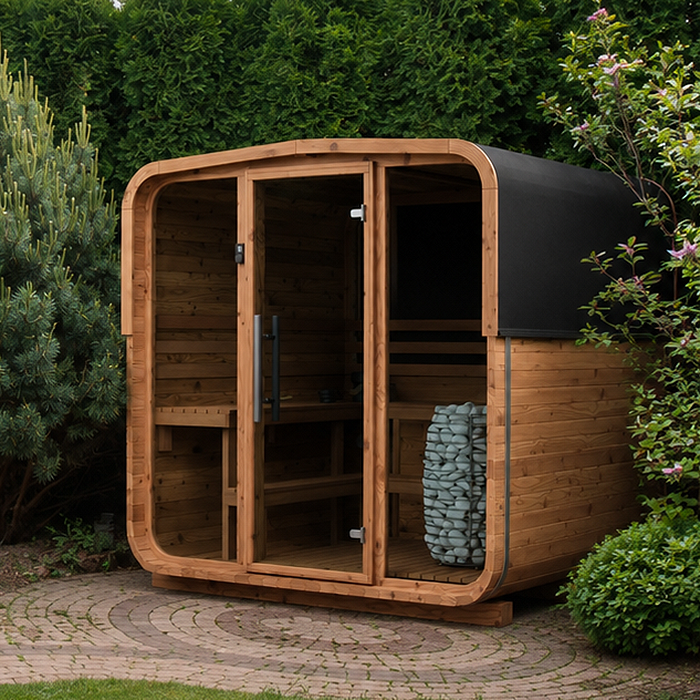
The floor and the transitions at the base deserve their own questions. A cabin can have well-described walls yet lose heat through other exposed surfaces; a cold slab, raised platform, or an uninsulated lower boundary may affect the result if the design does not account for it. Ask whether published performance assumes a particular base, floor construction, clearance, or enclosure beneath the sauna, and which of those parts are supplied. Do not infer floor insulation or a complete weather boundary from an exterior photograph. The seller should identify the assembly and site-preparation assumptions for the exact model.
Include the roof or top of the enclosure in the same conversation. Ask what layers and weather protection the manufacturer specifies, how the design handles the junction between the roof and walls, and whether its test setup matches the location you have in mind. If you plan to install the sauna on a deck, slab, or other support, ask a qualified local site professional to assess that support and the required preparation; do not use a performance brochure to answer structural questions. Agree on the final base and assembly conditions before delivery is scheduled, especially if groundwork is a separate part of the project.
Treat ventilation as part of the setup
Ventilation is not simply an unwanted leak. A sauna has a designed air exchange, and its intended vent arrangement is part of the setup; blocking openings to reduce heat loss can conflict with the manufacturer’s instructions and is not a sound buying strategy. Ask what intake and exhaust arrangement the cabin requires, whether vents are included, and what configuration was used for any heat-up test. If the seller quotes performance with a different setup from the installation instructions, ask for an explanation before comparing figures. A winter claim is meaningful only if ventilation is part of the stated conditions rather than an unstated assumption.
Separate designed ventilation from uncontrolled drafts. Ask whether the enclosure has documented sealing details around panel joints and the door, and how an installer is expected to assemble the supplied parts. During use, opening the door also exchanges air; an advertised warm-up test may not represent a routine with repeated entries. This does not mean you should avoid necessary ventilation or keep the door shut at all costs. Instead, compare test conditions fairly, follow the manufacturer’s operating guidance, and ask whether any available data describes the cabin after a door opening or only its initial preheat.
Include glass and doors in heat-loss questions
Windows and a glazed door can change the enclosure’s heat-transfer profile compared with insulated wall sections. Their value may be natural light or a view, but include the glass area and specification in a winter comparison rather than assuming every sauna has equivalent glazing. Ask the seller for window and door construction details and any thermal-performance data it can document. If there are multiple configuration choices, compare each option’s heat-up assumptions with the exact configuration on the quote. Do not infer the number of panes, insulation level, or seal quality from a product name or a photograph.
Ask how the door is designed to close and what the manufacturer recommends for checking its fit after installation. A gap can undermine claims about the enclosure, while an opening to an outdoor setting exchanges warm interior air with colder air. For a heat-up estimate, find out whether the door stays closed and whether the figure describes reaching a target once or recovering afterward. These distinctions help you weigh a larger glass area or an easy-access layout against winter performance without treating the design choice as automatically good or bad. Request the written specifications for the option you are actually considering.
Separate warm-up time from energy use
Heat-up time and energy use are related but not interchangeable. Two setups may reach a target at different times while drawing different amounts of power, and a short preheat figure does not tell you what it takes to maintain conditions. If the seller provides energy-use figures, ask for consumption over a defined cycle: cold start to target, then any holding period, with the outdoor and starting temperatures, room setup, heater, and ventilation stated. Also clarify whether the figure is measured or estimated. Without a common method, energy numbers from separate listings can create a misleading ranking.
Translate a power or consumption figure into a budget only after confirming the exact heater and expected use with appropriate professional or utility information. Local energy rates, weather, thermostat settings, and the time spent holding heat all affect the result; the heater’s rated input alone is not an operating-cost estimate. Ask whether the quote includes the heater, controller, and any required installation work, and obtain a separate site-specific estimate for work outside the sauna package. This keeps the purchase comparison focused on documented equipment and avoids treating a general winter estimate as a promise about your bill.
Confirm the sauna’s cold-weather suitability
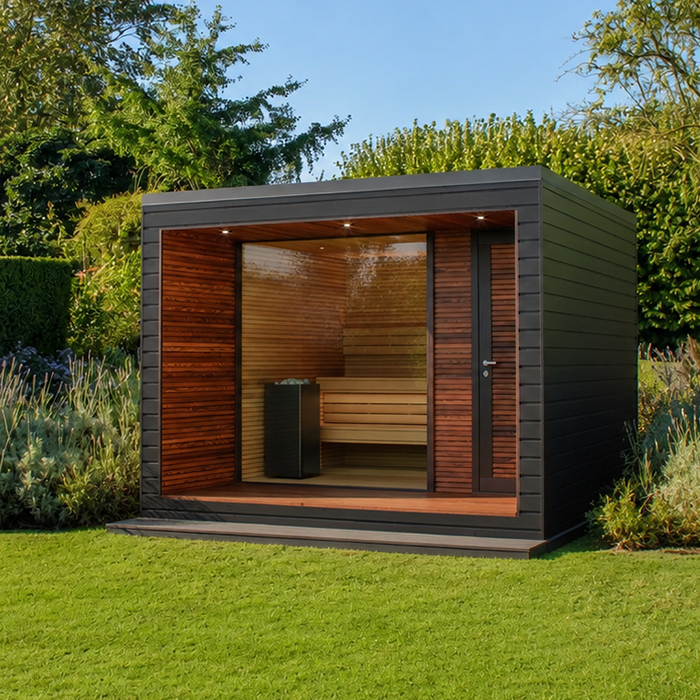
Confirm that the exact sauna is intended for the environment where you will put it. If it will be outdoors, ask the manufacturer to state the permitted exposure and operating conditions, and what weather protection and maintenance its design requires. Ask about limits for components, finishes, door seals, and other exposed parts, along with any conditions that could affect warranty coverage. Terms should come from the seller or manufacturer for the precise model; the category label, marketing image, or a similar-looking cabin is not evidence of cold-weather suitability. If the information is vague, treat the gap as an unresolved buying question.
Plan storage and installation as part of the order, not as an afterthought. Ask how shipped components must be stored before assembly, what site preparation must be complete, whether delivery includes unloading or assembly, and which trades or services are outside the quote. For snow, wind, foundation, drainage, or electrical questions, have the relevant qualified local professional review your site and the manufacturer’s instructions; do not extrapolate a capacity or installation method from a photo. Check any written terms for exposure-related exclusions and confirm that the proposed setup matches them before placing the order.
Compare complete quotes before ordering
Use a side-by-side comparison that records the exact cabin model and options, heater and control, stated heat-up time, starting and target conditions, measurement method, room volume, insulation information, glazing, floor and base assumptions, and ventilation setup. Ask for an itemized written quote showing what is included, such as the heater, controls, delivery, unloading, assembly, and any site preparation. Note what the seller excludes, including work that may need a separate installer. This makes it easier to see whether a lower or higher quote reflects a different configuration rather than a better winter-performance claim.
Before ordering, confirm that the performance documentation and quote describe the same configuration, and that changes such as added glazing, a different heater, or a different installation site have been captured. Ask the seller to confirm delivery access, storage requirements, setup responsibilities, and the terms that apply to your proposed use. Keep answers, drawings, and instructions with the order documents. If data is unavailable, mark it as unknown rather than treating a generic estimate as a guarantee. A sound decision is based on evidence for the sauna you will actually receive and the site where it will operate.
Frequently asked questions
How long should a sauna take to heat up in winter?
There is no single time that applies to every sauna. Warm-up depends on the starting temperature, outdoor conditions, room size and construction, heater, ventilation, and what counts as reaching the target. Ask for an estimate for the exact model with those assumptions stated; treat a time without conditions as incomplete, not as a promise for your site.
Does a bigger heater always make a sauna heat up faster?
No. The heater must be suitable for the cabin, controls, and installation. A more powerful unit may not be compatible, and it will not address air leakage or unclear test conditions. Ask the manufacturer for the approved heater pairing for the exact sauna, and have a qualified electrician or sauna installer confirm the site requirements.
Is insulation enough to prevent heat loss in winter?
No. Insulation is only one part of the enclosure. Seams, doors, glazing, the base, the roof, and designed ventilation also affect heat retention. Ask about the complete assembly and its test conditions. Do not block required vents or make unapproved changes to the cabin to try to improve a heat-up result.
What should I ask about a cold-weather heat-up claim?
Request the outdoor and starting temperatures, target and measurement method, cabin size and configuration, heater and controls, ventilation setup, and whether doors stayed closed. Ask whether the figure was measured or estimated, and make sure it applies to the exact sauna and options in your quote.
Can I compare advertised heat-up times from different saunas?
Only if the definitions and test conditions are comparable. Different starting temperatures, targets, enclosures, heaters, or ventilation setups can make the figures misleading side by side. Ask for the method and assumptions for each model; if they are not available, treat the comparison as uncertain.
A cold-weather sauna is not judged by a single fast heat-up claim. The useful comparison connects a stated result to the exact heater, enclosure, ventilation, and test conditions, then checks that the proposed installation suits the site. Request the underlying information, compare complete quotes, and treat any missing details as uncertainty rather than assuming the most favorable result. That gives you a clearer basis for choosing a sauna that fits your winter conditions.
