
Buying a Thermowood Sauna: Material and Maintenance Considerations
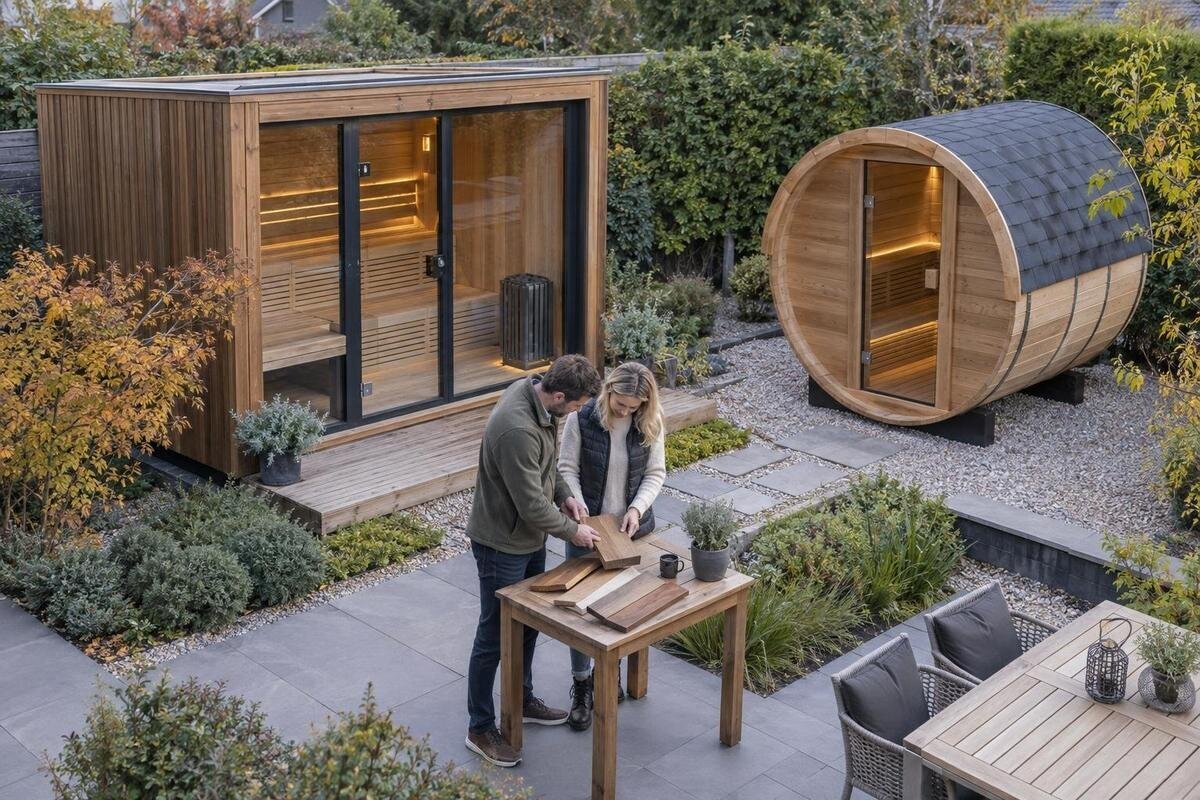
SAUNA BUYING GUIDE
Choosing a Thermowood sauna involves more than deciding whether you like the look of heat-modified wood. The name alone does not tell you which parts use it, how the rest of the structure is built, or what maintenance its finishes will need. Those details affect both the purchase and the work you can expect after installation. A useful comparison starts with a component-by-component material description, then considers intended location, cleaning instructions, exterior care, and repair information. Ask for these details in writing before you compare options. That makes it easier to judge a complete sauna rather than relying on a single material label.
What the Thermowood label tells you
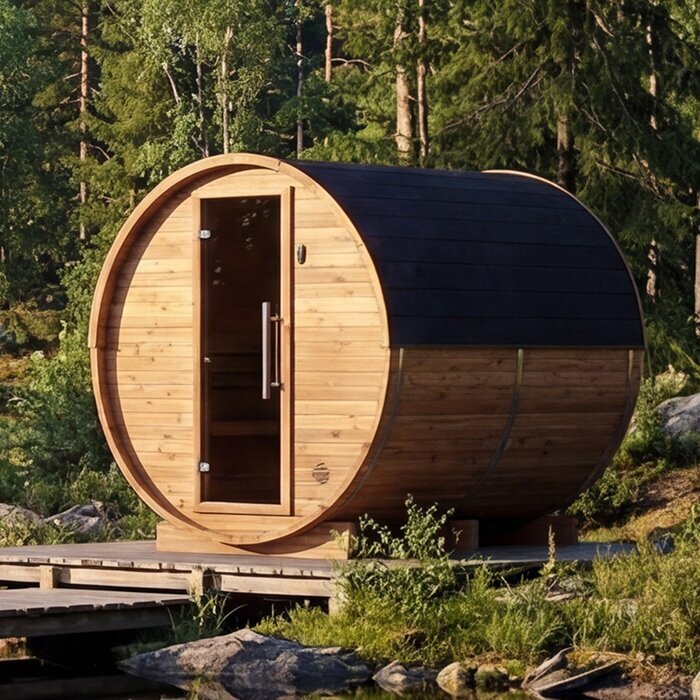
In a sauna listing, Thermowood usually signals thermally modified lumber: wood changed through a controlled heat-treatment process, rather than a promise about the complete sauna. The exact species, process, and product specification can differ by maker; some processes use steam or another controlled environment. Ask whether the supplier is using a trade name, a process description, or a treatment designation, and request the document that defines it. Do not assume the word identifies one species, a particular treatment class, or uniform quality across every part. If a listing gives only the label, you do not yet have enough information to compare materials fairly.
Ask for the wood species, treatment method or documented designation, and the components where it is used. If Thermowood refers to a branded or supplier-specific process, request its explanation and care documents in writing; a marketing phrase alone does not explain the material. Confirm whether the wording concerns the timber itself or an applied surface finish, and whether other materials appear in the same assembly. Keep the answer with the quote and order documents. A specification sheet, component list, or manual helps you check whether the purchase matches the description, while a color swatch or photograph cannot establish how the wood was made or where it is installed.
Find out which sauna components use thermally modified wood
The term may apply to selected boards rather than every part of a sauna. Request a written component list or drawing that identifies the interior wall and ceiling lining, benches, supporting frame, exterior cladding, floor, door parts, and trim where those components are present. The materials can differ from one area to another, and not every design uses the same construction. Ask whether the stated treatment applies to the timber itself or whether a finish is being described in similar terms. This component-by-component view is more reliable than interpreting a product name, image, or overall color.
Then consider how each material will be used. Interior surfaces and seating are in a heated room, while an exterior board faces the weather only if the sauna is installed outdoors. A frame also has a different job from decorative cladding. Ask which surfaces have a factory-applied finish, which can be touched up, and what material is specified for repairs. If a seller describes the whole sauna with one wood label but cannot map it to individual parts, request a clearer specification before comparing it with another option. That detail helps set realistic expectations for both maintenance and future repairs.
Weigh moisture stability against strength
Thermally modified wood is often chosen because it tends to absorb less moisture and move less as surrounding humidity changes than the same wood before treatment. That can be useful in a setting where materials experience warmth, humidity, and drying periods. It does not stop all expansion, contraction, checking, or water exposure. Performance still depends on the species, treatment, board dimensions, workmanship, and complete assembly. Treat claims about stability as a reason to ask follow-up questions, not as a guarantee that the sauna cannot warp, leak, or need maintenance.
Heat treatment can also affect mechanical properties; some thermally modified stock may be more brittle or have lower strength than comparable untreated wood. Do not infer that a board is suitable for a bench, frame, or other structural role simply because it carries the Thermowood label. Ask the manufacturer which components use the material and how each part is specified for its intended use. If you cannot get a clear answer about structural components or assembly, ask the supplier or a qualified sauna professional to clarify it before ordering. Guessing from the wood name or appearance is not a substitute for product information.
Check the complete construction for its intended location
Material choice and construction are separate parts of the purchase. A thermally modified cladding board does not, by itself, make a sauna weatherproof. For an outdoor installation, the roof, seams, openings, drainage details, base, and any exterior finish all contribute to how the complete unit handles exposure. Ask the seller to confirm that the specific sauna and its supplied configuration are intended for your planned location. Also ask which parts need protection or inspection and whether the guidance changes with the selected finish. Do not assume that a material label or an outdoor-looking image establishes where a particular sauna can be installed.
Indoor placement still calls for product-specific information. Interior surfaces encounter heat, changing humidity, and contact with perspiration or cleaning water; an outdoor shell may also face rain and sunlight. Those areas may use different materials or finishes. Ask how the actual configuration is designed to manage moisture and which surfaces are meant to remain unfinished, be sealed, or be recoated. A useful answer should refer to the sauna you are considering, not just the general benefits of thermally modified lumber. If you plan a location with unusual exposure, confirm its suitability with the manufacturer or a qualified installer rather than extrapolating from a general description.
Compare color, finish, and weathering expectations
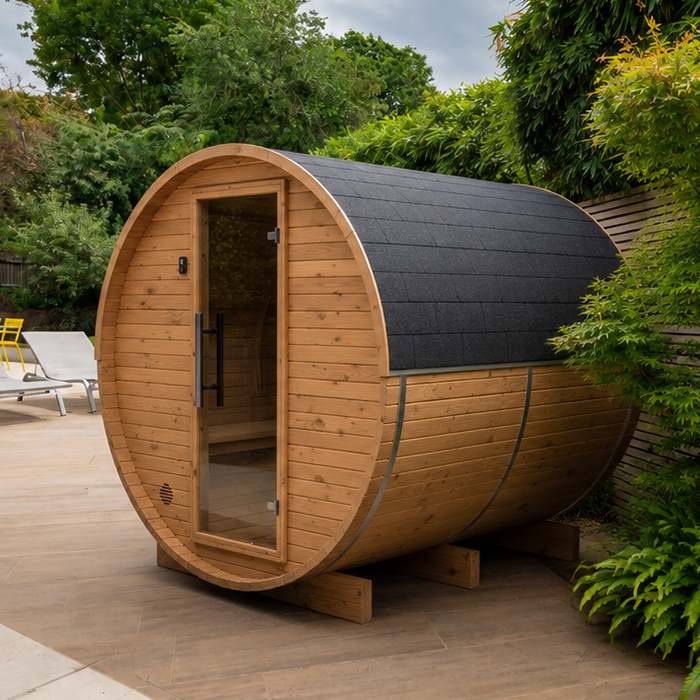
Heat treatment often darkens wood, but the finished color varies with species, process, sanding, and any stain or oil. Natural boards can also vary in tone, and a small sample may not represent every surface on a finished sauna. If appearance matters to your decision, ask for a sample or current images of the finish and find out which components it represents. Check expectations for both interior and exterior surfaces; similar wood descriptions do not guarantee a uniform color across different materials or coatings.
Sunlight and weather can change the appearance of exposed wood over time, including fading or graying, while coatings may also weather and need renewal. That change is an appearance and maintenance consideration; it does not, by itself, establish that a product is defective. Ask whether the exterior is supplied unfinished, stained, oiled, or otherwise protected, and which products or methods are allowed for touch-ups. For interior sauna surfaces, use only finishes the manufacturer identifies as appropriate for that location and heat. Do not assume that an oil or varnish intended for outdoor wood is suitable for a hot interior.
Plan cleaning for the sauna interior
Interior care generally means removing dust and residue without soaking the wood, then allowing the room to dry as described in the owner’s manual. Ask whether benches, walls, floors, and removable accessories have different cleaning instructions; they may not all have the same material or finish. Where the manufacturer permits it, a soft cloth or brush may be appropriate for routine cleaning. Follow the instructions for the actual surfaces rather than applying a method intended for another type of wood. Promptly dealing with visible spills or marks can also make later cleaning easier than relying on aggressive scrubbing.
Do not treat a sauna interior like an ordinary bathroom finish. Pressure washing, soaking, abrasive pads, strong solvents, and unapproved disinfectants can roughen, discolor, or damage wood or its coating. Before using soap, stain remover, oil, or a cleaning concentrate, check the care instructions for that component. Ask whether a finish should be renewed at all, and whether a worn surface can be repaired or needs a different approach. A written routine is more useful than a broad claim that Thermowood is easy to maintain, because it identifies what to do and what to avoid.
Ask how the exterior should be maintained
Outdoor maintenance depends on the complete construction and its exposure, not just the timber name. Sun, wind-driven rain, standing water, and nearby vegetation can affect surfaces at different rates. Confirm the permitted location and site conditions with the manufacturer, then ask which elements the owner should inspect: exterior boards and finish, joints, trim, door seals, roof edges, and the area where the sauna meets its base. Look for visible changes such as peeling coating, damaged boards, or persistently damp areas. Follow the maker’s instructions or seek professional support to understand a problem instead of assuming treatment of the wood has resolved its cause.
Request a maintenance schedule that distinguishes routine visual checks from cleaning and recoating, and ask how it applies to a sheltered or more exposed site. There is no universal interval to infer from the word Thermowood; finish type, exposure, workmanship, and the manufacturer’s instructions all matter. If the sauna has an exterior coating, record its name and ask how to touch it up or renew it. If the exterior is intended to remain unfinished, get written guidance on expected weathering and what signs should prompt further attention. This makes ongoing care easier to plan before the sauna arrives.
Get care and repair information in writing
Request the owner’s manual or care sheet before purchase if it is available. It should explain what to clean, what to avoid, where a finish is present, and how the manufacturer recommends inspecting or repairing the material. Check whether the routine fits the time and effort you are prepared to give the sauna. If a listing describes the product as maintenance-free, ask exactly what that phrase covers and what cleaning or exterior checks remain the owner’s responsibility. Keep the written guidance with your order documents so you can refer to the instructions for the configuration you actually receive.
Ask how repairs are handled if an interior board, bench slat, exterior board, or finish is damaged, and whether the supplier can identify compatible replacement materials. This does not mean parts will or will not be available; it makes the expectations clear before you buy. Find out whether a repair calls for a particular species, treatment, fastener, or finish, and who is qualified to carry it out. Keep the component list, product instructions, and any batch or finish details provided with the sauna. If written warranty terms are offered, review any care requirements they specify rather than assuming that all maintenance methods are acceptable.
Confirm package contents and installation requirements
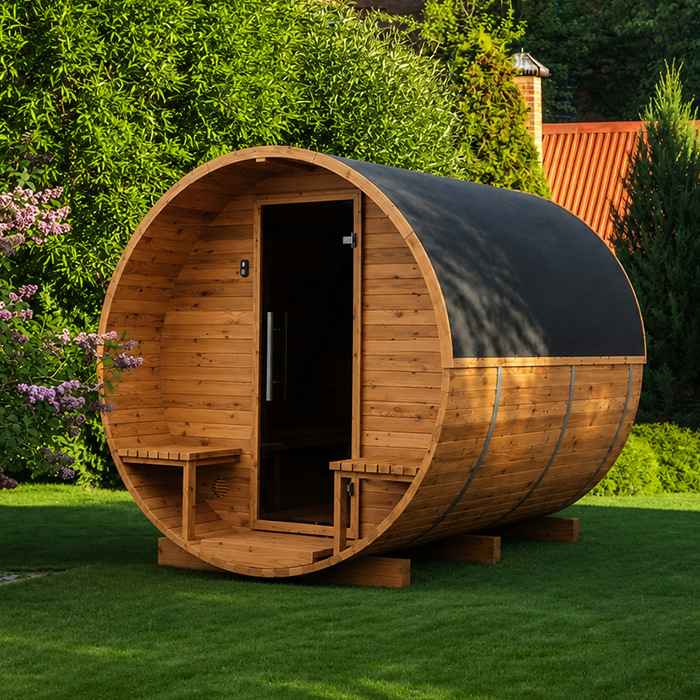
Thermowood is only one part of the purchase specification. Confirm the exact model and configuration, which parts use the material, what finish is applied, and what is included or sold separately. Ask specifically about the heater and controls, electrical components, floor and foundation requirements, ventilation parts, fasteners, assembly materials, and accessories shown in product images. Inclusion varies, so the order documents should settle each point. Do not assume that a pictured accessory, heating system, or finish is included simply because it appears alongside the sauna. Clear itemization also helps you budget for the complete setup rather than the visible timber alone.
Before committing, verify site dimensions, delivery access, package handling, assembly responsibility, and any professional work required. Use drawings and installation instructions for the exact model, and ask the supplier or a qualified installer about electrical or site-specific questions. Do not estimate those requirements from a photograph. If you plan an outdoor installation, confirm that the intended location and support arrangement are acceptable to the manufacturer. A written list of prerequisites can reveal practical obstacles early, so the choice of wood does not overshadow the work needed to receive and install the sauna.
Compare ownership requirements, not just the wood name
Use the same comparison questions for every sauna you consider: record the species and treatment documentation, the components covered by the material description, the interior and exterior finishes, the intended location, and the cleaning and maintenance instructions. Add practical purchase details such as included equipment, assembly scope, site preparation, and repair information. This makes options easier to compare even when one seller emphasizes the timber and another focuses on the complete construction. A low-maintenance claim is useful only when you know which part it describes and what care the manufacturer still recommends.
Choose the sauna whose material specification and maintenance instructions fit both the location and the attention you can give it. If a particular color is important, remember that exposed wood and finishes can change over time. If low upkeep is a priority, compare the requirements for the complete exterior, not just the thermally modified boards. If the supplier cannot explain which components use Thermowood or provide clear care instructions, include that uncertainty in your decision. The label can help identify a material choice, but the written specification and the care plan are what make it meaningful for your purchase.
Frequently asked questions
Is a Thermowood sauna waterproof?
No. Thermal modification can change how wood responds to moisture, but it does not make the wood or the complete sauna waterproof. Weather protection depends on the sauna’s construction, finishes, assembly, and intended location. Ask the seller to confirm whether the specific model is suitable for your planned setting.
Does every part of a Thermowood sauna use thermally modified wood?
Not necessarily. The term may refer to selected boards or visible surfaces rather than the entire sauna. Ask for a component list that identifies the wood used for the interior, benches, frame, exterior, and other parts where relevant. Do not rely on photographs to establish what is included.
Does Thermowood need to be sealed or oiled?
There is no universal answer. Requirements depend on the wood, its location in the sauna, any existing finish, and the manufacturer’s instructions. Ask which surfaces should remain unfinished and which products, if any, are suitable for maintenance. Do not apply a coating based only on general advice for outdoor wood.
How often does an outdoor Thermowood sauna need refinishing?
There is no single interval that applies to every sauna. Finish type, sunlight, weather exposure, workmanship, and the manufacturer’s care instructions all affect the schedule. Request written guidance for the exact exterior finish and ask what signs indicate that cleaning, touch-up, or refinishing is needed.
Can I clean sauna wood with ordinary household products?
Use only cleaning products and methods approved for the specific surfaces. Some ordinary cleaners, solvents, abrasives, or disinfectants may damage wood or its finish, and residue can be a concern in a heated interior. Check the manual before using soap, oil, stain remover, or a concentrated cleaner.
The most useful Thermowood sauna comparison connects the material description to the actual components, construction, intended location, and maintenance plan. Before ordering, get the wood and finish details in writing, read the care instructions, and confirm what the package includes. When those answers are clear, you can decide whether the sauna’s appearance and upkeep suit your plans. If they are vague, ask for clarification before treating the Thermowood label as a reason to choose one option over another.
