
Can You Put a Hot Tub on a Deck? What to Check First
Site preparation
A deck can look spacious and feel firm without showing whether its framing can support a hot tub. The answer depends on the exact unit’s filled-and-occupied weight, the area and pattern where it bears, and the complete path through the deck to the footings and ground. Before buying, obtain current manufacturer documentation and arrange a qualified structural assessment of the proposed model and location. Neither a product name nor a generic deck-load figure can establish suitability.
Before you buy 1
Can a deck support a hot tub?
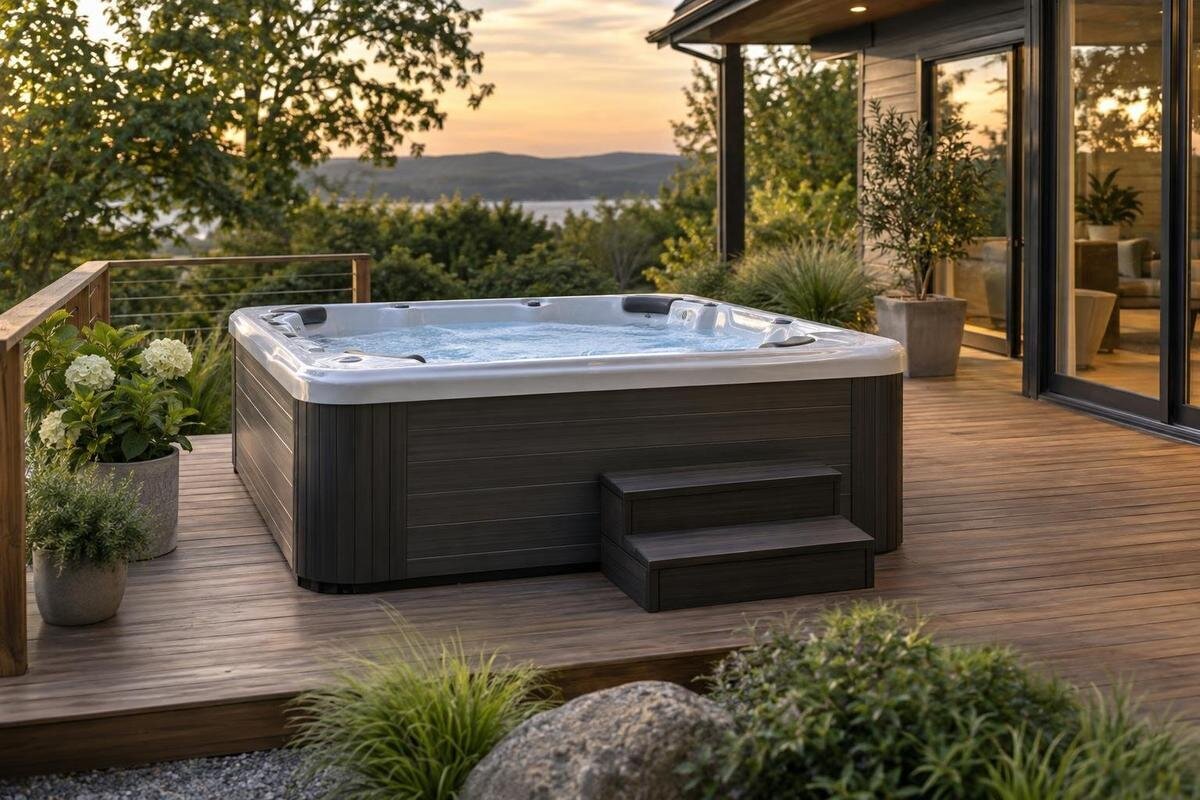
Some decks can be designed or confirmed for a hot tub, but no appearance-based rule answers whether a particular one can. A walking surface may feel rigid while hiding framing details, repairs, or support conditions that affect capacity. Conversely, an older-looking deck cannot be declared inadequate by age alone. What matters is the actual assembly, its condition and geometry, and the added load at the proposed location. A tub places substantial weight over a limited part of the deck for extended periods; a deck intended for ordinary use may not have been designed for that added demand. Its ability to carry people or outdoor furniture is not proof that it can carry a filled tub.
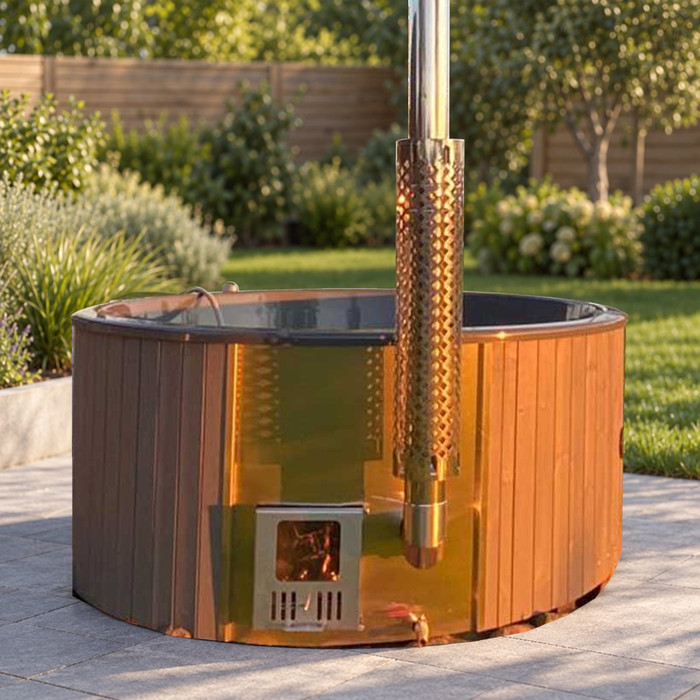
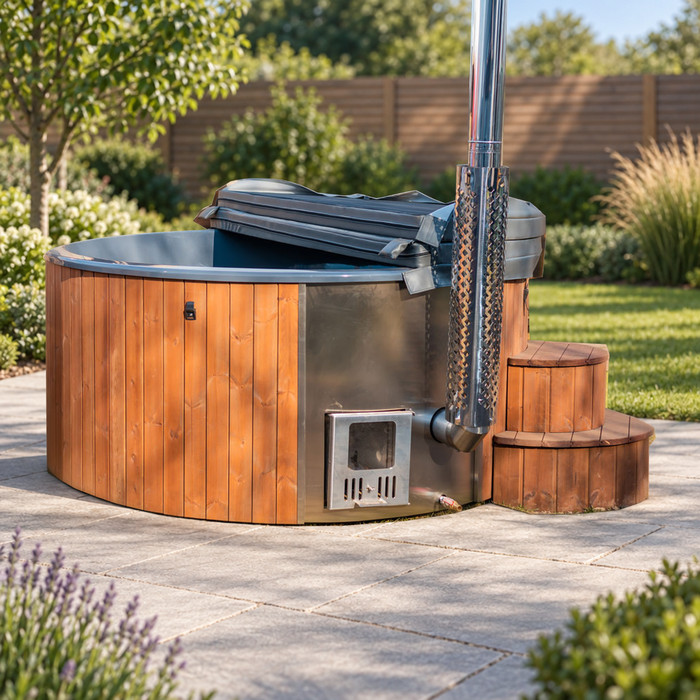
Suitability is specific to a model, deck, and precise placement—not a category-wide yes or no. A structural professional may conclude that the deck is adequate as built, needs professionally designed changes, or is not a reasonable location. For example, Bloomcabin Hot Tub Cove 2 is a model to assess, not evidence that any deck can support it; its name does not establish its filled weight, support pattern, or dimensions. If the deck is still planned, give the designer the selected tub information before the framing design is finalized, rather than assuming a conventional deck can accommodate it later.
Get the hot tub’s filled-and-occupied weight
Ask the manufacturer for the exact model’s weight in operating condition, not just its empty or dry weight. Find out precisely what a published filled-weight figure includes: the tub and fixed components, water at the intended fill, and whether occupants are included. Ask which fill level the figure represents and whether optional components change it. If the available information gives only an empty weight or water volume, request the operating-load details rather than combining figures yourself. A label such as filled may not answer every question. Request a current written response tied to the model so the structural professional can use clear, consistent assumptions.
Clarify the occupancy assumptions separately. Ask for the manufacturer’s stated user limit or load assumptions, if provided, and confirm whether the quoted total already includes occupants. Do not infer seating or capacity from a numeral in a model name, or turn an advertised water volume into your own structural load. Tell the professional how the tub is intended to be used, while allowing them to determine which figures apply to the assessment. Apply the same process to Bloomcabin Hot Tub Haven 6: the name identifies the model, but it is not a weight or occupancy specification.
Before you buy 2
Compare the tub footprint with the framing below
Obtain the exact outside footprint and, separately, the manufacturer’s stated support area or contact pattern. The footprint tells you how much space the tub occupies on the deck; it does not by itself show how its weight reaches the structure below. Ask for a drawing or written requirement describing the area that must be supported, any specified bearing points, and any conditions for orientation or surface levelness. Provide a plan view or underside diagram if the manufacturer supplies one. Do not assume every part of the tub bears equally, or that a loose panel will spread the load appropriately. Any proposed load-spreading feature needs to be included in the professional design.
Give the structural professional a marked drawing of the intended position and orientation, then have that location compared with the framing below. Joist direction and spans, beam and post lines, and the tub’s actual support pattern all affect which members are involved; shifting the unit can change that relationship. There is no universal instruction, such as placing a tub over one beam, that proves the whole deck works. Flag any proposed position near an edge, opening, or cantilever so it can be reviewed rather than judged by eye. A candidate such as Bloomcabin Hot Tub Fjord 8 needs verified dimensions and support instructions, not a footprint inferred from its name.
Trace the load from decking to the ground
Assessment should follow the entire load path, not stop at the boards directly under the tub. A professional may examine the decking and its attachment to the joists, the joists and their connections to beams, the beams’ support on posts, and the posts’ connections to footings. Each transfer matters: stronger-looking boards do not resolve a concern with a member or connection below, and a substantial beam does not answer how its posts are supported. If the deck attaches to a house, that connection may also be part of the system to review. Some components are concealed, so a surface-only view can leave important questions unresolved.
The review continues from the footings to the supporting ground, because the load ultimately has to reach the ground through the deck’s supports. The professional will consider the actual spans, member arrangement, connections, and footing conditions as a system; looking only at the nearest joist or post is not enough. Plans or an inspection may be needed where framing is hidden or records are incomplete, and the professional can determine what access is appropriate. For Bloomcabin Hot Tub Aurora 10, the catalogue identity is only a starting point: compare the exact manufacturer support requirements with the verified structure at the proposed spot.
Before you buy 3
Deck condition, spans, and past alterations matter
Condition is part of capacity, not a cosmetic detail. Tell the assessor about any soft or decayed wood, insect damage, splits, corrosion at exposed metal connectors, loose or missing fasteners, movement, or deterioration around posts and footings. These signs do not let a homeowner calculate a safe load, but they can point to areas that need closer inspection. A clean, freshly painted surface may hide damage underneath; an older deck is not automatically unsafe, and new-looking boards do not prove that hidden framing is sound. Do not treat a quick visual check as a substitute for the professional review.
Geometry and history matter too. The assessment should identify joist and beam spans, cantilevers, post spacing, connection details, and changes made since construction. A remodel, cut or notched member, replaced post, previous repair, or unknown connection can make old plans differ from the deck as built. Share available drawings, permit records, repair notes, and photos, while being clear about what is uncertain; the assessor can decide whether further access is needed. If the Cove 2 listing is under consideration, bring its exact manufacturer information together with the deck’s known history rather than treating the catalogue page as structural evidence.
What a qualified structural professional should review
Choose a qualified structural professional with experience assessing residential decks and the loads they must support. Depending on the project and local rules, that may mean a structural engineer or another professional authorized to evaluate and design the structure. Ask what qualifications apply where you live and whether the work includes a site-specific review of the existing deck, rather than a general inspection or verbal opinion. Also ask how the professional will verify concealed framing and whether the available records are sufficient. A deck contractor may help price or carry out changes, but make sure a qualified person takes responsibility for the structural assessment and any design.
Provide the exact model and current manufacturer documents, filled-weight inclusions, support diagram, proposed location, and any deck plans or records. Ask the professional to review the decking, joists, beams, posts, connections, spans, footing conditions, overall condition, and full load path. If parts are concealed, ask what further inspection is needed. Request written findings that identify the model and position reviewed, the information and assumptions used, any limitations, and required changes. If you are considering the model shown in the Haven 6 product listing, use that page to identify the tub, then obtain the technical information needed for the assessment.
Before you buy 4
Use current instructions for the exact model
Obtain current installation instructions and technical information from the manufacturer for the exact model and version. Look for outside dimensions, operating weight and its inclusions, support-area or bearing instructions, and any stated surface or orientation requirements. Check for explicit guidance on elevated installations or restrictions that could affect a deck. These details may be in separate documents, so ask the manufacturer or seller for the source if the product page is incomplete. Do not substitute another model’s instructions because the names or appearance seem similar; the support information needs to match the tub being considered.
Treat silence as an unanswered question, not permission. If the manual does not spell out a support detail, ask the manufacturer in writing and share the answer with the structural professional. Make sure dimensions, weights, and diagrams refer to the model you plan to order; a sheet for a different version cannot close a gap by assumption. If the manufacturer says a question needs professional interpretation, have that issue addressed directly in the assessment. When reviewing the Fjord 8 product page, check that any manual or diagram you obtain applies to that exact model before using it in the deck review.
Check local building-code and permit requirements
Building-code and permit questions depend on the state and the local jurisdiction that handles the property; do not rely on a universal online answer. Contact the city or county building department, or the relevant local office if the property is outside city limits. Ask which adopted code and amendments apply and what process covers the actual scope: a new deck designed for a tub, adding a tub to an existing deck, or modifying the deck. Describe the proposed project accurately and ask whether those situations are treated differently. Use current information from the responsible government office rather than advice based on another location.
Ask whether a permit, plans, professional design documents, inspections, or other approvals are required, and when they must be obtained. An older deck permit or prior inspection is useful background, but it does not by itself show that the structure was evaluated for your selected tub and location. Keep the official response and any permit conditions with the structural assessment. If you are considering Aurora 10, give the local official the exact manufacturer documentation; a catalogue name alone cannot answer the code or permit question.
Before you buy 5
Options after the structural assessment
If the professional confirms that the deck as built can support the exact model at the reviewed position, keep the written assessment and follow any stated conditions and the manufacturer’s support instructions. Confirm with the local building department that the applicable approval or permit process is complete before proceeding. If the answer depends on information that is not yet available, such as a concealed connection or unconfirmed product load, pause the purchase decision until that gap is resolved. A casual opinion that the deck feels solid is not a substitute for a conclusion tied to the actual tub and location.
If changes are needed, ask for a site-specific design that identifies what must be changed and how the work will be verified. Do not add posts, beams, sistered joists, or improvised spreaders on a guess; an unreviewed addition can leave the overall load path unresolved. Confirm whether modifications require local approval or inspection. If a designed reinforcement is not practical, consider a different professionally assessed location, but evaluate that spot separately rather than assuming another surface is suitable. Comparing these options before ordering avoids committing to a model before the structural work is understood.
Keep the decision tied to the exact model and deck
Before approving a purchase, assemble one matching set of information: the exact model and current manual; filled-and-occupied weight with its inclusions; dimensions and support instructions; the proposed position; available plans and the deck’s actual condition; the professional’s written conclusion; and the local office’s permit direction. The documents should refer to the same model and location. A product listing, deck drawing, inspection report, or permit record may answer one part of the question, but none replaces the others. Note any conditions or unanswered points that the professional or local official has identified.
For a new deck, give the designer the selected model information and support instructions before the structure is finalized, then confirm that the completed deck matches the design. For an existing deck, tell the assessor about differences between records and what is actually present. Reopen the review if you change the tub, its orientation, or its position, or if an inspection reveals a condition not covered by the assessment. A conclusion tied to one model and configuration should not be transferred to another by assumption.
Frequently asked questions
Does a solid-feeling deck mean it can hold a hot tub?
No. A firm walking surface does not reveal the size, condition, spans, or connections of the framing below it, or how that framing transfers load to the footings. A qualified structural professional needs to assess the actual deck and the exact tub location.
Can I use the tub’s empty weight or water volume to estimate the load?
No. Ask the manufacturer for model-specific operating-weight information and clarify whether it includes water, fixed components, and occupants. Give those source figures to a qualified professional instead of converting volume or adding estimated weights to create your own structural calculation.
Will plywood or a platform make the deck suitable?
Not automatically. A panel may change how the tub bears on the surface, but it does not establish whether the joists, beams, posts, connections, and footings can carry the load. Use a spreader or other support only if it is included in a professional design and follows the manufacturer’s requirements.
Does an existing permit or past inspection settle the question?
Not by itself. The record may document an earlier project and its approved scope, but it may not address the added load from your selected tub at its proposed location. Ask the local building department what applies now and arrange a model-specific structural assessment.
Can a professional assess the deck from photos and plans alone?
Sometimes records can answer important questions, but photos may not show concealed framing or connections, and plans may not match the deck as built. The professional should decide whether the available evidence is sufficient or whether a site visit or further access is needed.
The useful answer is a model-and-location-specific assessment, not a visual guess or a one-number rule. Match the manufacturer’s load and support information to the deck’s actual framing, connections, footings, and condition, then confirm the local approval process. If the deck needs changes, have them designed and reviewed before committing to a tub; if no suitable design is available, assess another location.
