
Choosing a Hot Tub for Two: Comfort, Space, and Practicality
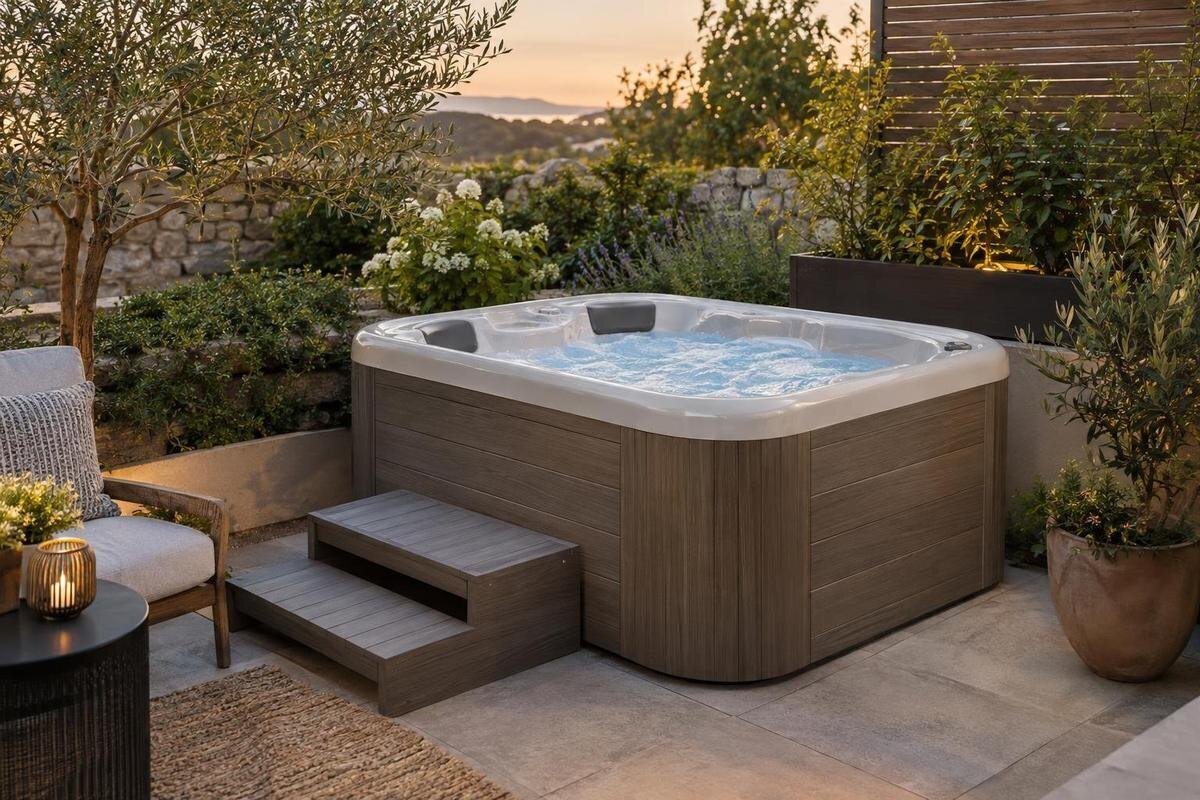
Hot tub buying guide
Choosing a hot tub for two is a question of shared comfort as much as capacity. A stated headcount does not show whether the seats, legroom, and entry arrangement work for the people who will use it. Compare how both of you prefer to sit and move, then account for solo use and the occasional guest. Treat model names as product identities, not proof of capacity, seating, dimensions, or features.
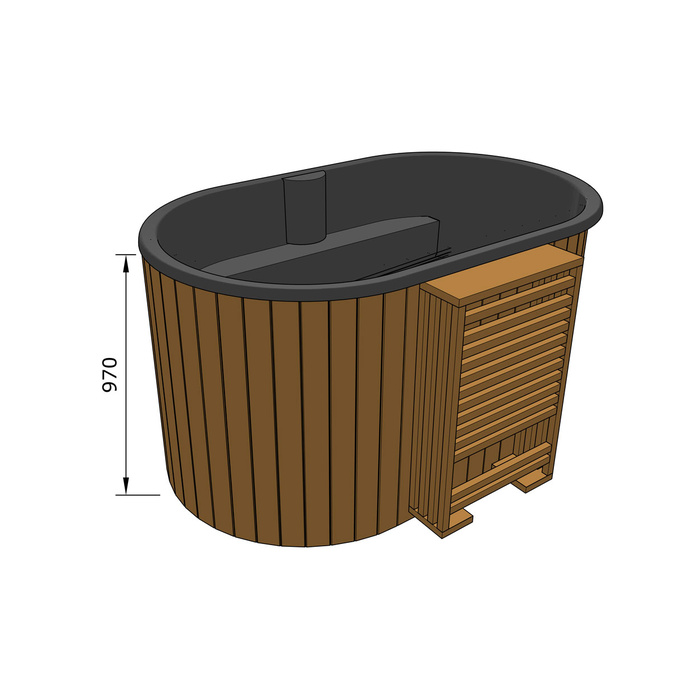
How will the two of you use the tub?
Define the use pattern before you interpret a “for two” label. Are the same two people likely to use the tub together most of the time, or will one often use it alone while the other joins occasionally? Do you tend to sit in one position, or do you both like to shift? A comfortable choice has to suit how the pair actually shares the tub, not simply accommodate two people in a still product photo. Write down your ordinary routine and the conditions that matter most: seats beside one another, room to stretch, or a little separation between users. That turns a vague capacity target into specific comfort priorities.
Have each regular user rank those priorities independently before comparing models. One person may prefer sitting beside a partner; the other may care more about legroom or being able to move without asking someone to shift. Compare the lists and agree on essentials before looking at model labels. Include the Bloomcabin Hot Tub Cove 2 listing in your shortlist and use the same comparison columns for every candidate. Describe preferences in concrete terms: whether you want to face each other, sit alongside each other, or have a choice of positions. If your preferences differ, look for an arrangement that meets both sets of essentials rather than averaging them into a compromise neither person enjoys. Keep separate notes for each user so that a strong preference from one does not accidentally become a requirement attributed to both.
Treat listed capacity as a starting point
A stated capacity tells you the listed number of occupants, but it does not describe the spacing or shape of the seats, the room available for legs, or how two particular people will sit. A tub listed for more occupants is not automatically more comfortable for a pair, and a lower stated number does not by itself prove that two seats suit you. Capacity also cannot show whether positions are side by side, opposite, or shaped for different postures. Treat it as one comparison field, not a comfort rating or a substitute for a seating layout.
Look for a current specification sheet or manufacturer drawing that identifies actual seating positions and distinguishes them from any maximum-capacity statement. Note which details are explicit, which are missing, and which wording is only a general description. The Bloomcabin Hot Tub Haven 6 product page can be one row in your review, but the numeral in its name does not establish capacity or layout. If those details are unclear, ask for a model-specific drawing or written description before deciding. That is more reliable than guessing from a name or photograph.
Compare the actual seating positions
Look at where each person sits, not just how many marked places are shown. Seat width, contour, back angle, and orientation can affect whether two people have elbow room or feel pushed into one posture. Preferences vary: one user may enjoy a more upright position, while another wants a different angle or more open space in front of the knees. Those questions relate to the specific layout; they cannot be settled from the tub’s exterior length. If seat measurements or a seating diagram are available, compare them with the way each of you normally sits.
If the seller offers a demonstration, assess both regular users in their preferred positions, following the seller’s guidance. Notice whether shoulders, elbows, or knees crowd each other, and whether either person has to twist to make room. If a tryout is not available, ask for a dimensioned seating plan and a description of each position. When reviewing the Bloomcabin Hot Tub Fjord 8 product listing, identify the two positions you would choose first and compare them as a pair. Two individually appealing seats are not enough if their occupants compete for the same space. If possible, also consider swapping places: would each person still have an acceptable seat, or does the arrangement work only with one fixed assignment? Record each user’s response separately rather than giving the whole tub a single comfort score.
Check legroom and shared foot space
Legroom deserves a separate check from seat width. When two people sit at once, their knees and feet may need to share the same area, depending on the layout. Consider where each person’s legs would naturally rest and whether either would have to keep adjusting to avoid contact. Raised or contoured seating can also change the open floor space available; a roomy-looking interior does not necessarily mean that every sitting position has the same space in front of it.
Look for interior measurements or a drawing that shows the seats in relation to the foot space, rather than relying only on an overall length. Ask whether the stated measurements refer to the inside or outside of the tub, and whether seat contours are included. Review the Bloomcabin Hot Tub Aurora 10 listing with your two intended seating positions in mind. Trace where each person’s knees and feet would go, noting any shared area rather than assigning all the open space to one user. If the drawing does not answer that question, ask the seller for clarification. Distinguish a preference for stretching out from a need for comfortable bent-knee seating; those are different requirements, and each person may value them differently.
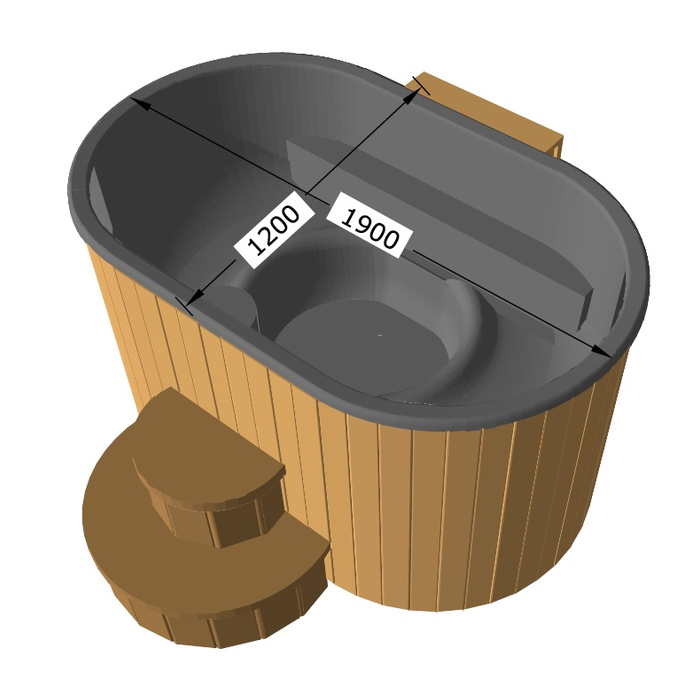
Room to change position
People do not always stay in one fixed position. You may want to bend or extend your legs, turn slightly toward each other, or change seats while using the tub. A layout that accommodates two people sitting still may feel restrictive if every small adjustment requires the other person to move. Think through those everyday movements alongside the initial seating position: can each user find a comfortable angle, and can one shift without making the other give up their place? Distinguish occasional contact that you both find comfortable from crowding that forces someone to sit awkwardly.
On a dimensioned seating plan, mark the two positions you expect to use and discuss the movements each person wants to make. Use the plan to identify questions about overlapping knee, foot, or elbow space, not to predict an exact fit from a sketch. If the layout is shown only in a general product image, do not treat that image as a scale drawing. Check that any diagram matches the exact model being considered. During a demonstration, distinguish a small adjustment within a seat from changing seats entirely. Both may matter, but they place different demands on the layout. This helps you explain a concern precisely rather than describing the whole interior as simply too tight or spacious.
Consider entry and exit for both users
Entry and exit are part of shared comfort, not an afterthought. Consider which way each person would approach the tub and whether one user would need to climb across a seat or ask the other to move. If you expect to get in and out at different times, ask whether the interior arrangement leaves a clear way to do so without disrupting the person already seated. A layout that looks comfortable once occupied may feel less practical if reaching the preferred seat is awkward.
Check the product drawing and description for the actual entry area and any access features the manufacturer identifies; do not assume a step, handhold, or other feature is present from a photograph. If one person has a particular access or support need, ask for confirmed measurements and details that address that need instead of relying on a general capacity statement. When a diagram leaves the entry arrangement unclear, request a model-specific explanation. The goal is to understand how each person will use the tub, not to infer ease of access from its overall size.
Separate usable interior space from exterior dimensions
Exterior dimensions describe the tub’s outside size; they do not tell you how much usable room two people have inside. The walls and the shape of the seats take up space, and the arrangement of those seats affects how the remaining area can be used. Two models with similar outside measurements could still differ in seat spacing or footroom, so an exterior length and width are not a substitute for a seating plan or interior measurements.
When comparing listings, note whether each measurement is explicitly labeled as interior or exterior and what points it covers. If a page gives only outside dimensions, leave interior space marked as unknown rather than treating the footprint as a substitute. Compare the product details for Bloomcabin Hot Tub Cove 2 with the other candidates using measurements whose meaning is clear. Keep outside size and shared seating space in separate columns, so neither gets mistaken for the other. For this decision, ask two distinct questions: is the overall size acceptable to you, and does the interior give both users the seating space they want? Answering one does not answer the other.
Account for solo use and shared upkeep
Think about how the tub will feel when only one person is using it. If solo use will be common, consider whether each partner would still enjoy the available positions alone, rather than judging the layout only during shared use. One person may have a favorite seat while the other values switching between positions. Note whether the same layout supports both habits without making occasional solo use the deciding factor for every feature. Also discuss how you expect to divide routine care. A product may serve both people, but that does not mean upkeep will automatically be shared. Separate the question of who uses it most from who is willing and available to handle recurring tasks; those may not be the same person.
Review the manufacturer’s care guidance for the specific model before purchase. Use it to understand the routine tasks and expectations, without assuming that one water-care schedule applies to every product or pattern of use. When comparing the care information for Bloomcabin Hot Tub Haven 6, note which responsibilities you would share and which one person would normally handle. Discuss who will keep track of completed tasks and how the other person will know what remains to be done. If the usual person is unavailable, decide whether the other is willing to take over. This is a household responsibility discussion, not a reason to invent a maintenance schedule. Compare the documented requirements with the effort both of you are prepared to contribute, alongside your assessment of seating comfort.
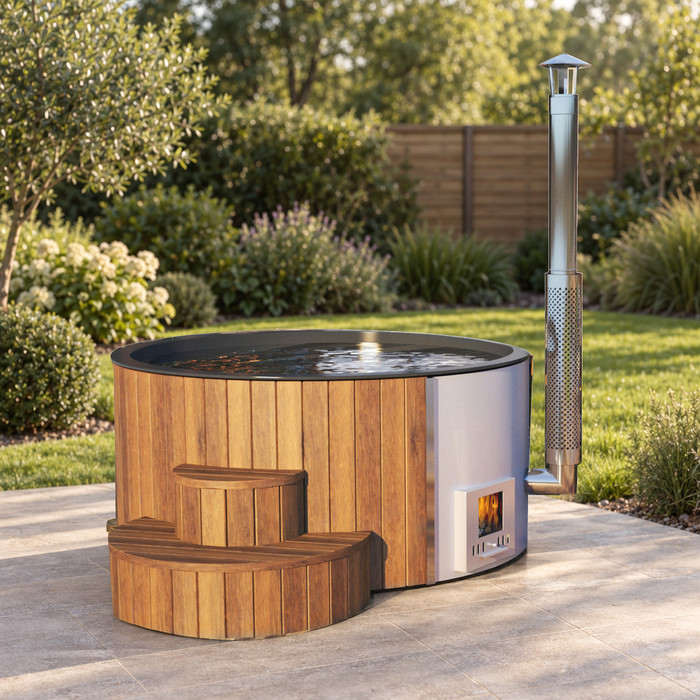
Decide how much guest flexibility matters
Separate regular use by two people from the occasional visit by someone else. Ask how often an additional person would actually use the tub at the same time, rather than choosing around an imagined maximum gathering. If visits are rare, daily comfort for the two regular users may matter more than unused seating. If another person is likely to join often, make that a real requirement and confirm the stated capacity and seat arrangement instead of assuming extra room from a model name.
Consider the practical trade-offs of a more flexible arrangement: will it still give both regular users the positions and legroom they want, and can the household manage the associated care? Use the model information for Bloomcabin Hot Tub Fjord 8 to compare those requirements with your shortlist. Separate an essential guest place from a place that would merely be nice to have. Ask whether you would accept a less-preferred everyday seat to gain that flexibility, and make sure both regular users agree on the trade-off. If comparing costs, use published fill-volume or operating information where available, alongside your usage pattern, local energy rates, and local conditions. Do not assume a particular bill from a seat count, or let an unquantified expectation of savings outweigh a clear difference in comfort.
Compare your shortlisted models
Use one comparison sheet for each candidate, including Bloomcabin Hot Tub Cove 2, Bloomcabin Hot Tub Haven 6, Bloomcabin Hot Tub Fjord 8, and Bloomcabin Hot Tub Aurora 10. For each, record the capacity as stated, the actual seating arrangement, seat measurements if published, interior and exterior dimensions, entry details, and care guidance. Add water volume or operating information only when the product information provides it. Use the Bloomcabin Hot Tub Aurora 10 product page as its model reference, keeping the same fields for all four candidates. Alongside the specifications, include a separate assessment from each regular user. This keeps personal comfort preferences visible without presenting them as product specifications.
Mark each comparison item as confirmed, unclear, or not provided. Then sort your requirements into must-haves and preferences: room for both sets of legs might be essential, while accommodating an occasional visitor might be optional. If an important item remains unclear, seek a model-specific drawing or written specification rather than filling the gap with an assumption. Do not treat an unknown detail as either a benefit or a defect. Once the essential questions are answered, compare the remaining preferences and any compromises each person would accept. A layout suited to your usual two-person routine may be the stronger choice; a more flexible arrangement earns its place only if you both value what it adds.
Frequently asked questions
Does the number in a hot tub’s name tell me how many people it seats?
No. A model name identifies a product; it does not confirm its capacity or seating layout. Look for current manufacturer or seller information that states capacity and shows the actual positions. If either detail is missing, ask for it rather than treating a numeral as a specification.
What should two people check in the seating layout?
Compare the positions both of you would actually use: their spacing and shape, room for elbows and knees, and how the seats are oriented. If available, use a dimensioned drawing or a seller demonstration. A total seat count alone will not answer whether your preferred positions feel comfortable together.
How can we judge legroom from a product listing?
Look for a seating diagram and interior measurements that show the seats and shared foot space. Overall dimensions or a product photo may not reveal how much room remains around molded seats. If the listing does not make this clear, request model-specific measurements or a drawing.
Should occasional guests change our choice?
Let your usual two-person routine set the standard, then decide whether guests will use the tub often enough to justify a more flexible layout. Confirm the actual capacity and seat arrangement before relying on extra places. Also compare the care requirements and any published operating information for each model.
How should we compare operating costs?
Use comparable, model-specific information where available, such as published fill volume and operating guidance. Your usage pattern, local energy rates, and local conditions also affect costs. Without comparable figures, do not estimate a bill from a model name, seat count, or the assumption that a particular layout costs less.
Make the choice around the two people who will use the tub regularly: their preferred positions, legroom, ability to shift, and comfort getting in and out. If guest flexibility matters, weigh it against those everyday needs and the care routine you are willing to share. A good shortlist is built from confirmed seating and dimension details, not a number or name that only sounds right.
