
Cloudy Hot Tub Water: Common Causes and What to Check
Hot tub water troubleshooting
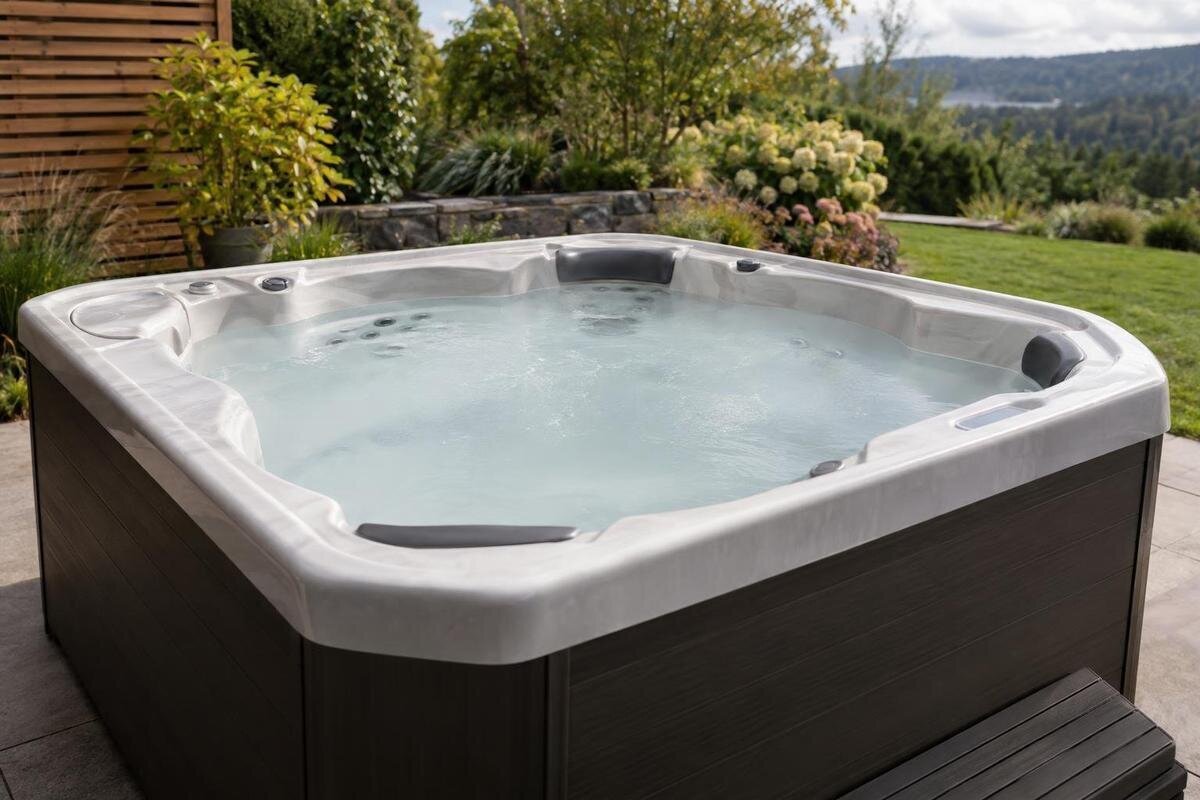
Cloudy water is a symptom, not a diagnosis: fine bubbles, suspended material, residue, mineral particles, water-care conditions, or a filtration or circulation problem can look similar. A cautious troubleshooting sequence is to record when the haze appears, review recent use and additions, test according to the hot tub and product instructions, then assess the filter and water movement using approved procedures. Avoid trying several treatments at once; they can obscure the cause and may conflict with product directions.
What cloudy water can—and cannot—tell you
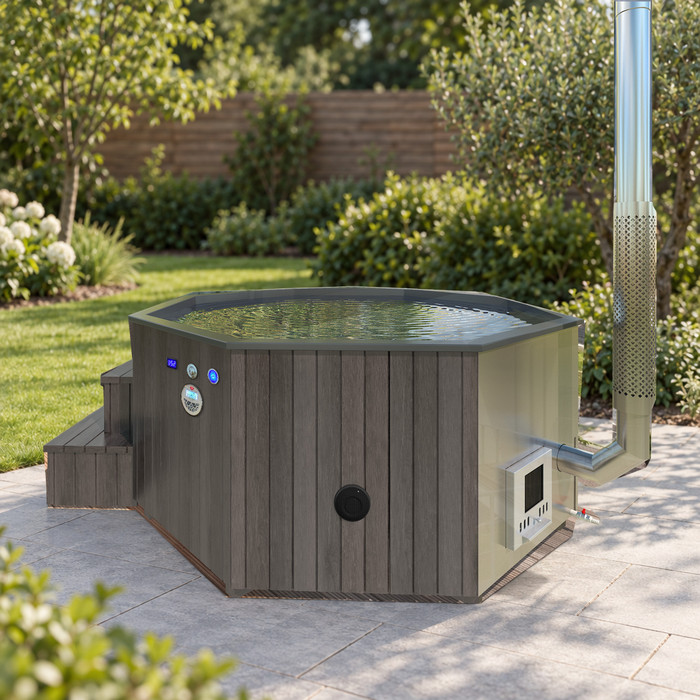
Cloudiness is an appearance, not a diagnosis. Something in the water may be scattering light: fine bubbles, suspended particles, residue, or mineral material can create a similar haze. A uniform milky look, visible flecks, or a change that coincides with circulation can help you describe the problem, but those clues do not reliably identify its source. Do not use color, smell, or clarity as a substitute for the water tests and care instructions that apply to your tub.
Appearance also cannot confirm whether sanitizer and other required water-care parameters are in range. Clear water is not proof that the readings are acceptable, and cloudy water alone does not establish a particular chemical fault or contaminant. Record when the haze began, whether it is constant, and what was happening at the time. Note whether the water changed after bathing, a refill, a product addition, or a normal pump cycle. Those observations help narrow the checks without committing you to a treatment too soon.
Common causes to investigate
Water-care conditions are one possible source. The sanitizer, pH, alkalinity, hardness, and other parameters named in a tub's care instructions can affect clarity in different ways. Mineral particles can also form under some water conditions, including after a change in source water. A deposit on a surface may make a mineral issue worth asking about, but a deposit or haze by itself is not confirmation. Check the parameters and targets specified for your particular setup rather than applying a range found for a different sanitizer or spa.
Other possibilities include fine debris, material brought in during use, a filter that needs attention, or circulation that is not working as expected. Some products or residues may also contribute to haze, especially after an addition or cleaning. Fine bubbles can make the water look cloudy while they are suspended. Several causes can overlap, so one clue rarely settles the question. Treat each observation as a lead to test or check, not as a reason to replace a part or add a chemical without supporting instructions.
Find instructions for your exact hot tub
Before testing or handling a filter, locate the owner's manual and any current water-care or service instructions for the exact model. They may describe which parameters to test, how to access the filter, what cleaning procedure is permitted, and how to interpret an indicator or alert. The instructions for a test kit or treatment product matter too. General advice may not match the filter arrangement, circulation pattern, or water-care products specified for your tub.
Keep the model identification and relevant care documents together, and use the manufacturer's support channel if you cannot confirm that a procedure applies. A catalogue entry such as Bloomcabin Hot Tub Cove 2 identifies a product name; it does not establish filter type, circulation settings, or water-care targets. Match the instructions to your equipment before using them to interpret the haze. Separate the information you already have from questions that remain unanswered: you may have directions for testing but still need help identifying the filter-access procedure. When asking for help, name the procedure you are trying to confirm and describe the symptom. That gives support a specific question to answer rather than a general request to explain cloudy water.
Review recent use and added products
Think back to when the haze first appeared and what changed beforehand. Note whether the tub had more use than usual, whether bathers used lotions or other personal-care products, and whether swimwear might have carried detergent residue. These are possible sources of material in the water, not proof that a particular person or product caused the problem. If cloudiness follows use, record the timing and whether the appearance persists. A pattern is more useful than a single observation because circulation and other conditions can change between checks.
Also list every recent addition or cleaning product by name, with the amount and approximate time used if known. Distinguish an amount you recorded from one you are estimating; if you do not know what was added, say so rather than filling in a likely answer. Keep the product label available when asking about a possible connection to the haze. Do not combine products, repeat a dose, or add a clarifier simply to see what happens; follow each label and the tub's instructions. If you are considering Bloomcabin Hot Tub Haven 6, ask which water-care products its instructions permit so you can assess whether your existing supplies would be compatible.
Read water-test results carefully
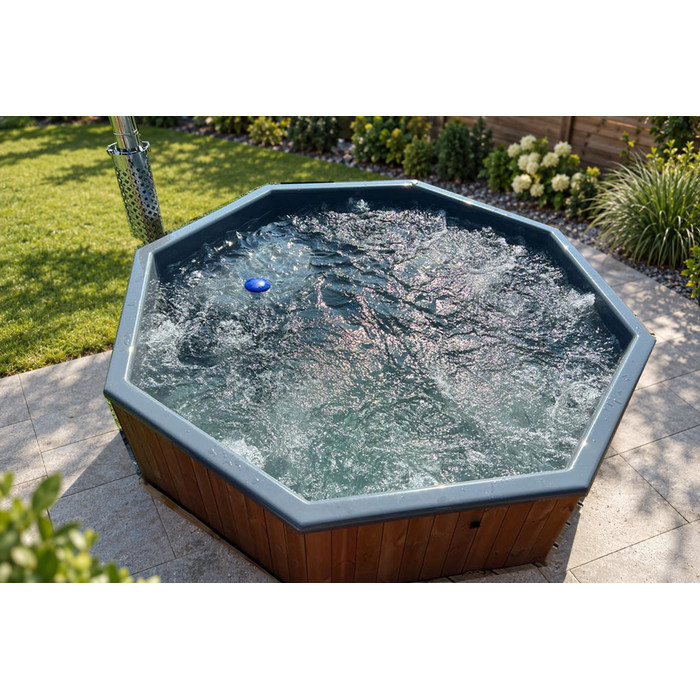
Use a test method and parameters that match the hot tub's instructions and the sanitizer or care system in use. Follow the kit directions for sample collection, timing, storage, and reading the result; check that the kit is within its stated use period. Strips, drops, and digital testers have different instructions, so do not assume they can be read or compared in the same way. Compare results with the applicable manufacturer's guidance and product labels, not with an unrelated chart or another owner's routine.
A test reports only the parameters it measures, and a result is a snapshot rather than a complete explanation of clarity. Record the readings, the time taken, and whether the sample was collected before or after a product addition. Keep the actual result alongside the applicable target instead of noting only that the water tested "fine." This preserves the distinction between what you measured and how you interpreted it. If a result is unexpected, repeat it only as directed by the test-kit instructions or ask the manufacturer how to interpret it. Do not average conflicting results or chase one reading with repeated additions. When evaluating Bloomcabin Hot Tub Fjord 8, ask which test parameters and methods its care instructions specify, including where to find help with readings you cannot interpret.
Inspect the filter using the approved procedure
Check the filter only if the owner's manual explains how to access it. Look for visible debris, damage, an incorrect fit, or another condition the manual identifies as relevant. A filter can need attention without looking obviously dirty, and a filter that appears clean does not rule out a water-care or circulation issue. Follow the specified shutdown and access steps before handling it. Do not dismantle equipment or use an improvised cleaning method to try to remove a suspected blockage.
Use only the cleaning method, products, and replacement guidance specified for the filter. Some manufacturers distinguish between routine rinsing and more thorough care, but the correct method depends on the equipment; do not assume a cleaner, tool, or replacement interval is universal. When recording a filter check, distinguish its visible condition from the action taken. For example, noting debris and noting that you completed the prescribed cleaning procedure are different pieces of information; neither alone explains the cloudiness. If you are comparing Bloomcabin Hot Tub Aurora 10, ask for its filter-care instructions, compatible replacement part, and access procedure. Consider whether those instructions explain what an owner can inspect and when a service professional should take over.
Assess circulation without opening the equipment
Compare the tub's normal operating indicators with the instructions for your model. Depending on the design, the manual may explain a display message, a flow indication, or what to observe during a normal cycle. Some systems circulate on an automatic schedule, so a quiet period or a change in visible jet activity is not, by itself, proof that circulation has stopped. Likewise, water movement at a visible outlet does not confirm that every part of the filtration system is working as intended.
Note any warning message, unusual change in flow, or repeated interruption and check whether it coincides with the cloudy water. Describe what you can observe rather than assigning a mechanical cause: an exact displayed message or a change at a visible outlet is more specific than saying the pump has failed. Note whether the behavior is constant or occurs during a particular normal cycle. Do not open the equipment compartment, bypass a control, or attempt electrical or pump repairs. For Cove 2, request guidance that matches the exact model and the behavior you recorded. If the manual's checks do not explain the symptom, or an alert persists, give those details to the manufacturer or a qualified service professional.
Choose a corrective step only after checking the evidence
Once you have the observations and test results, look for a cause that the applicable instructions actually address. If a result is outside the stated guidance, use only a correction identified by the hot tub manufacturer and the relevant product label. Follow the directions for amount, order, mixing, and any wait before testing again or using the tub. Do not combine products or make several successive additions unless the instructions explicitly say to do so. Household cleaners and unapproved additives are not substitutes for a specified water-care product.
If the readings appear acceptable but cloudiness remains, more sanitizer or a clarifier may not address the source. Review which checks are complete and which remain uncertain before repeating work. A recorded test result, a filter inspection, and an observation of circulation answer different questions; do not treat one as confirmation of the others. Recheck the filter and circulation only as the approved procedures direct. For Haven 6, use the exact-model instructions to determine whether the findings call for a water-care correction or further troubleshooting. Do not repeat a treatment just because the water has not cleared immediately; follow the product's stated process and timing. If directions conflict, do not cover the situation, or leave the next action unclear, pause and contact the manufacturer or product provider.
When to pause use and seek help
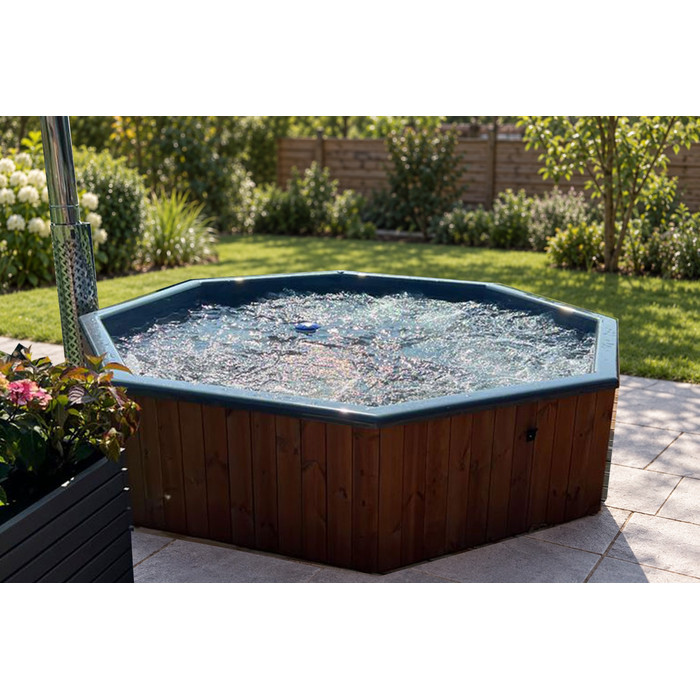
Pause use if the cloudiness prevents you from seeing the bottom, if a required test result is outside the applicable instructions, or if you cannot interpret the result confidently. Also stop and consult the relevant product label or manufacturer if the haze followed an accidental or uncertain product addition. Follow any direction in the manual or label to keep the tub out of use during a water-care correction, and use its stated criteria for resuming. Do not rely on appearance alone to decide that the water is ready.
Contact the manufacturer or water-care product provider for questions about test results, compatible products, or model-specific instructions. Contact a qualified service professional for persistent flow problems, equipment alerts, leaks, or a filter issue you cannot safely assess. Before calling, organize a short account of when the cloudiness began, recent use and additions, test results, and any displayed message. Include what you have already done under the instructions and what happened afterward. Keep observations separate from suspected causes so the person helping you can assess both. If your tub is Fjord 8, provide its exact model information along with that account. Ask which check or correction applies to your findings and what criteria must be met before use resumes; a general suggestion to improve clarity does not resolve an unanswered equipment or water-care question.
Compare documented maintenance needs before buying
When choosing a hot tub, compare the written information that will matter if water clarity becomes a concern: the documented filtration arrangement, the exact compatible filter or replacement part, how it is accessed, and the manufacturer's cleaning and replacement guidance. Ask how circulation is described in the manual and which water tests and care products are specified. If considering Aurora 10, look for explanations of normal operation, owner checks, and situations that require service. These details help you assess how clearly the manufacturer explains troubleshooting, rather than judging the system by a photograph or a broad filtration claim. Do not infer capacity, filtration performance, or maintenance requirements from a model name or number. Keep unanswered questions separate from documented features when comparing models so that missing information does not become an assumed advantage.
Ongoing costs depend on documented replacement parts, permitted care products, local availability, and whether service is needed. Ask for current information about the parts and products required for the model you are considering, and assess whether its stated care fits the time and upkeep you want. Separate tasks described as owner maintenance from those requiring service when considering that commitment. Also distinguish a known requirement from a cost you cannot yet establish: without the compatible part or prescribed care method, a maintenance estimate is incomplete. The useful buying comparison is how well each model's documented requirements fit your needs. A future purchase is a separate decision, however; replacing a hot tub is not a way to diagnose or correct cloudy water in the one you already own.
Frequently asked questions
Does cloudy water always mean the sanitizer level is too low?
No. Fine bubbles, suspended material, residue, mineral particles, water-care conditions, or restricted circulation can look similar. Cloudiness cannot confirm a sanitizer reading, and clear water does not confirm that all required water-care parameters are within the applicable instructions. Test with the method and targets specified for your hot tub and care products.
Should I add clarifier or extra sanitizer to clear the water?
Do not add a product just because the water looks cloudy. First review test results and recent changes, then follow the hot tub instructions and the product label for any correction. Products differ, and adding several treatments in succession can make it harder to identify the cause or may conflict with directions.
Could air bubbles be making the water look cloudy?
Yes, fine bubbles can scatter light and create a temporary haze, sometimes when circulation starts. If the appearance changes as the bubbles dissipate, that is a useful observation, not proof of the cause. If the cloudiness persists or returns, check water-care results, the filter, and circulation as directed by the manufacturer.
Does cloudy water mean I need to replace the filter?
Not necessarily. Debris, a filter that needs attention, incorrect seating, damage, or a circulation issue are possibilities, but appearance alone cannot identify a failed filter. Check it only using the model's instructions, and follow its specified cleaning or replacement guidance. Contact the manufacturer or a qualified service professional if the condition is unclear.
When should I stop using the hot tub and ask for help?
Pause use if the haze prevents you from seeing the bottom, if a test result is outside the applicable instructions or cannot be interpreted, or if there is an equipment alert or suspected product mix-up. Follow the manual and product labels. Ask the manufacturer about water-care questions and a qualified service professional about persistent flow or equipment problems.
Treat cloudiness as a clue, not an instruction to add a chemical or replace a part. A record of when the haze began, what changed, the test results, and your filter and circulation observations can help identify the next check. Make corrections only when the exact-model guidance and product labels support them. If those instructions do not explain your findings, take the record to the manufacturer or a qualified service professional rather than guessing at another treatment.
