
Drainage Around a Garden House: Keeping Water Away From the Base
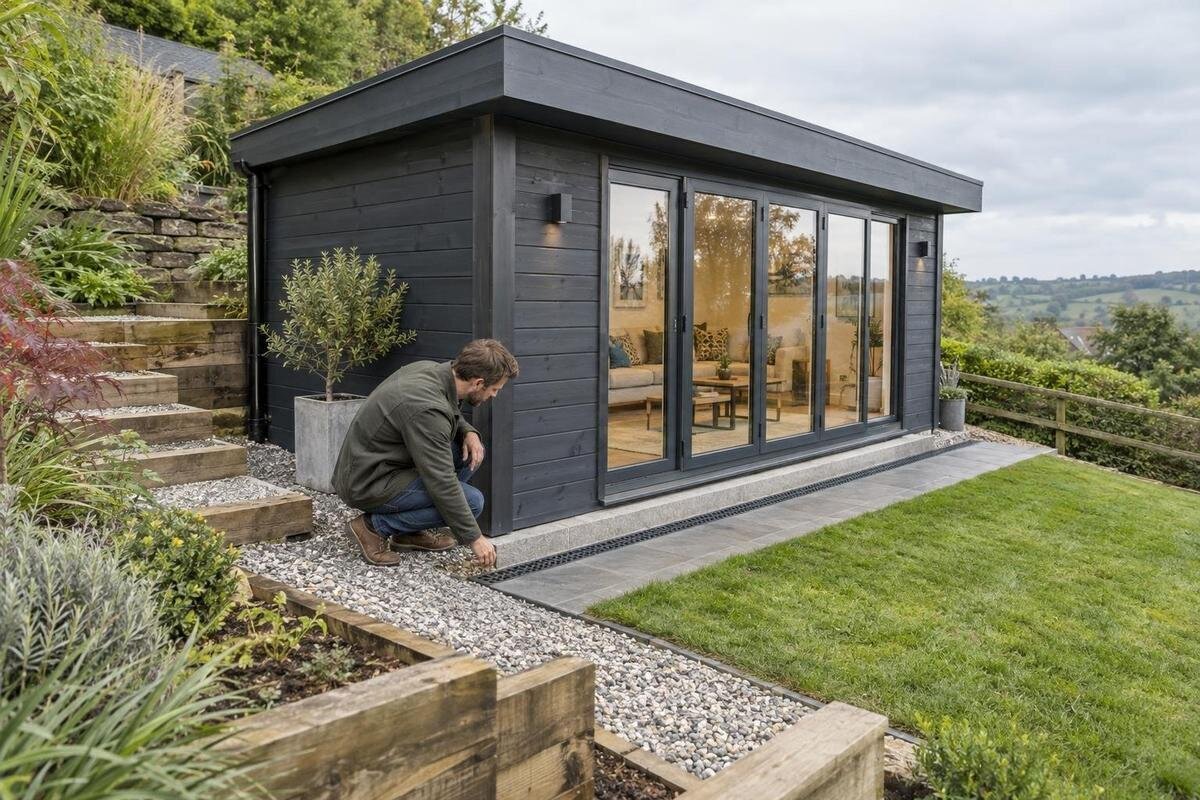
Garden house planning
Garden house drainage starts with tracing water, not automatically adding gravel or a drain. Rain can reach the base from the roof, travel across the yard, or collect in a low spot; each source may need a different response. A useful plan begins with the site and intended base, then informs where and which garden house to order. This guide explains what to observe, what to ask, and how to plan runoff so water does not repeatedly gather beside the structure. It does not assume that a particular model includes gutters, drainage parts, or a base.
Before you order 1
Identify where the water comes from
Garden house drainage is not one problem with one standard fix. Roof runoff drops at the eaves or exits a downspout; rain on the yard travels over the surface; water can also move through soil and affect a low area. Splash from a roof edge may wet one strip, while a shallow depression collects runoff arriving from several directions. Water running off a patio can reach the site as a concentrated stream, unlike rainfall landing directly on the ground. Identify the source and route before selecting a gutter, channel, or base detail. A product choice cannot correct a drainage path determined by the wider yard.
Pay attention to where water appears first, how it moves, and what changes after rainfall stops. A wet line below an eave suggests a different pattern from water arriving across an uphill lawn, paved area, or existing path. Dampness at the lowest side of a site that lasts well after the rest dries also differs from brief splash at a drip edge. Note whether a raised bed, edging, patio, or packed soil interrupts the route. These clues help narrow the problem but do not establish what is happening below ground. If water seeps up or the area stays saturated, have the site assessed rather than covering the evidence with stone. The cause may involve the surrounding property, not just the footprint.
Observe the site through a rain event
Visit the proposed location during rain if it is safe to do so, then return after the weather clears. Photos taken from the same spot help show where runoff crosses, where it slows, and which low points stay wet. Include the surrounding yard in each view: a small puddle beside the future base may be fed by a much larger paved or planted area upslope. Repeat observations after different rain events instead of basing a purchase on a sunny-day walk-through. Note roof-edge drips, existing downspouts, drainage inlets, soil washout, and changes in flow caused by doors, gates, or established paths. If a storm makes observation unsafe, take notes afterward.
Make a simple site sketch showing the proposed building outline, existing paving, visible slopes, wet areas, and a possible route for water to leave. The sketch need not include engineering measurements; its purpose is to make the decision clear to you, the seller, and the installer. Mark details you still need, such as the required base area or installation clearances, rather than guessing. For a candidate such as garden house Verdana 1, compare any provided model-specific requirements with the site plan and request missing documentation. The name or product image cannot tell you whether the location drains well. Bring your notes into questions about the structure and site preparation.
Before you order 2
Match the house footprint to the drainage plan
Choose a location by considering more than the space occupied by the walls. The planning area may also need to account for the documented base footprint, roof overhangs if specified, access for installation and upkeep, and an open route for water. Do not assume the wall line is the full footprint or infer clearances from a photo. Compare the maker’s stated dimensions with the area on your plan, and ask how required working space affects beds, paths, fences, and a downspout outlet. A spot that looks dry during one visit may behave differently after seasonal rain or a change to the surrounding garden.
Pay particular attention to locations that sit at the lowest point, receive flow from a broad uphill area, or lie between hard surfaces that funnel water toward them. If a qualified site professional confirms a workable solution, such a location may still be considered; otherwise, moving the proposed site can be simpler than correcting a difficult corner later. When comparing garden house Verdana 2, look for or request its site and base requirements, then compare them with the same location you use for other candidates. Product information describes what is required of that model; a site assessment shows what the yard can support. Treat missing information as a question to resolve before ordering.
Coordinate the base and surrounding drainage
The base and the surrounding ground need to work as one plan. Even a base designed for the structure and site can be affected by runoff repeatedly reaching its edge; changing soil or paving around a finished base can also redirect water toward it. Do not pile soil, mulch, or edging against the bottom of the house unless the product instructions allow it. Keep any required clearance unobstructed, and do not cover features the instructions identify as needing to remain open. Exact base construction depends on the product and ground conditions, so avoid copying a detail from another garden house or a photograph.
Before ordering, ask what base the specific model requires, how much area it occupies, and whether surrounding surface levels or a proposed drain could conflict with it. For the Durano garden house, use written, model-specific requirements if available, and request clarification where they are not. If the site has recurring standing water, signs of seepage, soft ground, or a complicated change in level, involve a qualified local installer or drainage professional early. Ask how the base, surface runoff, and water outlet relate, and which site work needs to happen before assembly. This helps prevent a drainage measure from being treated as an afterthought.

Before you order 3
Plan a destination for roof runoff
Roof water deserves its own route because a roof collects rain across an area and releases it along an edge or through a downspout. If the water falls beside the base, repeated wetting can create a muddy strip, wash away loose soil, or form a puddle; the effect depends on the roof and site. Do not assume that gutters are included, can be added, or are compatible with a particular model. Check the product documentation and ask about approved accessories before changing the roof drainage arrangement. A rain barrel may collect water, but its overflow route also needs to be planned.
Decide where roof runoff will go before choosing how to collect it. A downspout should not end beside the structure or discharge into a shallow depression that sends water back. Consider the route to a suitable outlet, avoiding conflicts with walkways, doors, and maintenance access. If water might be directed to a rain garden, infiltration area, or storage container, confirm that the location and overflow are appropriate for the property. For garden house Veltor 1, check any model-specific guidance about roof drainage and compatible fittings. Never infer that gutters are included or suitable from a product photo.
Account for paths, paving, and planting
Runoff from the rest of the yard may be the main issue even when roof water has its own outlet. Surface finishes change how water travels: compacted soil and paving can shed it, while a raised bed or new border can interrupt its route. As the site is prepared, avoid creating a berm, edging strip, or path that traps water beside the base. Where ground levels need adjustment, a qualified professional can assess a suitable approach; do not guess at grades or move soil before deciding where the water should go. The aim is not to make every nearby surface impermeable or perfectly dry, but to prevent repeated concentration against the structure.
Review landscaping and hardscape as part of the buying plan, not as decoration to add without considering drainage after installation. A patio, path, or bed may be useful, but its position can change runoff and reduce access for maintenance. If paving is planned, ask how its surface will carry water and whether a narrow gravel margin is being mistaken for a complete drainage solution. Compare the footprint and any documented requirements for the Orello garden house with the space left for both the base and a viable water route. Product appearance alone cannot show how a model fits the finished landscape. Keep the house, paving, planting, and outlet together on your site plan.
Before you order 4
Match a drainage measure to the source
Choose a possible drainage measure based on the source of the water. Where roof drip is the issue, compatible gutters or a controlled downspout route may help; where yard runoff crosses the site, surface grading, a shallow swale, or a channel may be considered. A buried drain or infiltration feature is a different intervention: its placement, outlet, and maintenance must suit the site. No one option works for every property, and a buried pipe without an effective destination may move rather than solve the problem. Ask a qualified professional to assess persistent water, flow from a large area, or work that involves excavation or changes to existing drainage.
Be cautious of quick fixes that hide water without guiding it away. Loose gravel can reduce visible mud at a drip point but does not create an outlet; extra soil can push runoff toward another area; a drain cover can clog if it is inaccessible. Before spending on a remedy, describe the problem plainly: roof water, surface flow, a low spot, or seepage. Clarify what result is expected, where the water will go, what upkeep is involved, and who will confirm the approach is suitable. When considering Modano 1 garden house, compare any documented site and base requirements with a drainage plan you can implement, rather than assuming the model removes the need for one.
Choose a workable runoff outlet
Every diversion needs a destination. Water carried away from the base should not be left at the end of a downspout, sent to a path where it pools, or redirected toward another structure. Trace the route all the way to its intended discharge or infiltration point, and consider what happens when a channel or storage container overflows. Do not rely on a dry well or infiltration area just because it fits in a small space: soil, groundwater, nearby structures, and existing drainage all matter. Have a qualified professional assess the options where infiltration or a new outlet is being considered.
The outlet can affect where the garden house can sit. A location may fit the building but leave no practical way to carry runoff around it, or place a drain where it is difficult to reach for cleaning. Discuss the route with the installer and, where relevant, a local drainage professional before finalizing the order or landscape plan. Water-discharge requirements can vary by location, so check applicable local guidance rather than assuming a particular method is permitted. Use the same site sketch to compare Veltor 2 garden house with other candidates, noting whether the planned route remains unobstructed. The site, not the model name, determines whether runoff has a workable destination.

Before you order 5
Plan for inspection and maintenance
Drainage needs occasional attention after the garden house is in use. If approved gutters, grates, channels, or downspout extensions are part of the setup, keep them accessible and clear of leaves, soil, and other debris. After rainfall, look for fresh sediment, washed-out ground, or a new puddle; these changes may indicate a blocked outlet or a route altered by gardening. Recheck the area after adding mulch, a raised bed, paving, or a fence, since each can change how water travels. For buried drainage, keep a record of its route and any service points so maintenance does not require guesswork. Avoid plant growth or stored items that prevent inspection.
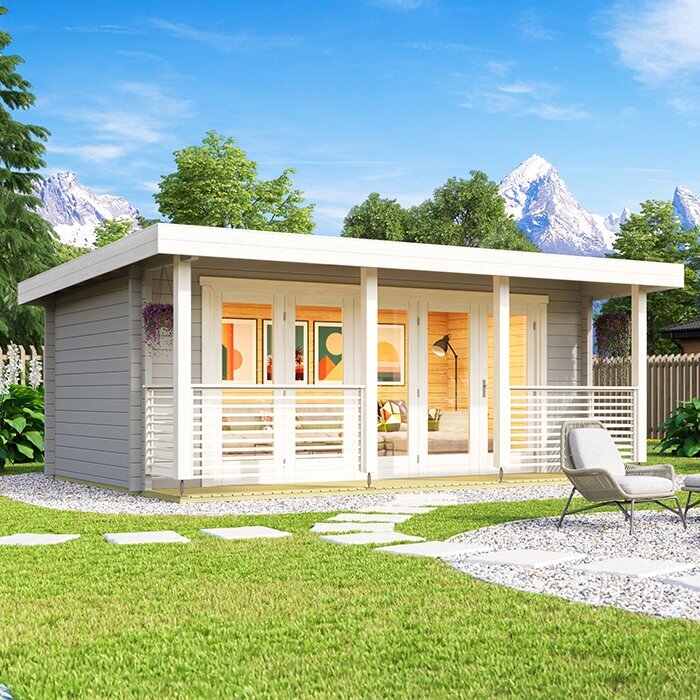
Ask before purchase which drainage accessories, if any, are included, what must be obtained separately, and whether the proposed arrangement follows the product instructions. Do not assume a gutter, drain, or rainwater collector comes with the house because it appears in a staged scene. For the Veltor 3 garden house, check the product documentation and confirm who is responsible for site drainage work and later upkeep. Include those answers in the project plan alongside the base, landscaping, and installation needs, without relying on unverified costs or timing. A clear maintenance plan helps keep a working water route clear after the house is assembled.
Confirm the plan before ordering and delivery
Before delivery, confirm the selected model’s documentation, proposed position, base plan, roof-water route, and destination for yard runoff. Make sure the working area and access for installers do not cross a planned channel or leave outlets inaccessible. If a professional recommends excavation, grading, or drainage work, agree on which work happens first and who will coordinate it. Where buried utilities or existing drains may be affected, use appropriate local locating and professional services before digging. These are planning checks, not a substitute for a site-specific design. If the water route is still unclear, resolve it before assembly rather than attempting a rushed fix afterward.
Use a comparison sheet for every garden house on your shortlist: documented footprint and base requirements, any stated roof-water guidance, space for an outlet and maintenance, and information still awaiting confirmation. Check delivery access and the sequence of site work separately; a location that drains well is not useful if the setup blocks the planned route. Ask the seller or manufacturer for model-specific documents and the installer for site-specific advice, keeping those sources of information distinct. A sound purchase is one whose documented requirements, prepared location, and workable runoff plan agree. That is a more reliable basis for ordering than appearance alone.
Frequently asked questions
Is a little water beside a garden house always a drainage problem?
Not necessarily. A short-lived wet patch after rain is different from recurring pooling, water that flows toward the base, or ground that stays saturated. Look for the source and how long the water remains. If pooling repeats or water appears to seep up from below, have the site assessed before treating the surface.
Should the ground slope away from a garden house?
The general aim is to keep surface runoff from collecting at the base, but the water also needs a suitable destination. A change in grade that sends water toward a path, another structure, or a neighboring area can create a new problem. Ask a qualified professional to assess the site if grading is needed.
Will gutters solve drainage around a garden house?
Gutters can help manage roof runoff when they are compatible with the model and lead to a suitable outlet. They do not address runoff crossing the yard or water collecting in a low spot. Plan the full route, including where the water goes after it leaves a downspout.
Does gravel around the base prevent pooling?
Not by itself. Gravel may reduce visible mud at a drip point, but it does not necessarily carry water away or solve runoff coming from elsewhere. Before adding it, identify the source and the route to an outlet. Avoid using gravel to conceal persistent pooling or seepage.
Can I put a garden house in a low or wet area?
Possibly, but the site needs a suitable plan for the base and water route. A low spot with recurring standing water or no clear outlet deserves professional assessment before you order. You may find that choosing a different location is more practical than trying to correct difficult drainage after the house is installed.
A garden house is easier to choose when drainage is part of the location decision. Trace water across the site, compare the model’s documented requirements, and agree on the base, outlet, and maintenance access before ordering. If there is no clear route for runoff, resolve that issue first. A prepared location and a workable drainage plan give you a sounder basis for choosing a garden house than appearance alone.
