
Easy Flower Beds: How to Set Up a First Bed You Can Keep Up With
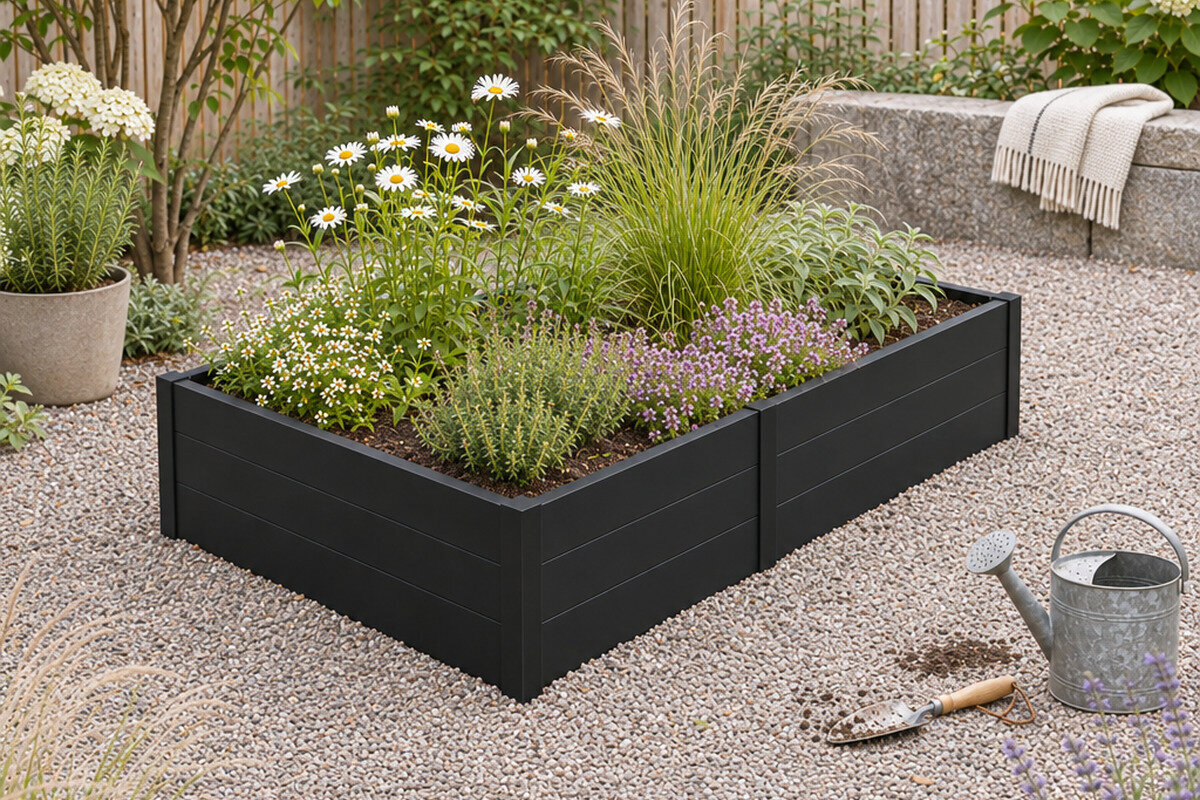

Bloomcabin · Raised-bed guides
Easy Flower Beds: How to Set Up a First Bed You Can Keep Up With
Easy flower beds start with one small, reachable patch, a nearby water source, and flowers that thrive under similar conditions. Use an existing in-ground spot if the soil and drainage are suitable; add an open-bottom raised frame if you want to contain extra soil or work at a more comfortable height.
Choose the spot first
Easy flower beds start where suitable light, convenient water, and comfortable reach overlap.
Make the frame earn its place
Buy a frame only if it solves a problem, such as containing added soil or bringing plants within easier reach.
Measure before ordering
Use measured inside dimensions and planned fill depth to estimate soil.
Keep planting simple
Start with a few flower varieties that share light and watering needs. Space them for mature growth.
The best test of a first bed is whether you’ll still want to tend it after the novelty wears off. Before you buy anything, mark out a spot, stand where you’ll weed, and walk the route you’ll take to water. Those three checks tell you whether the design fits your habits as well as your yard.
This guide focuses on easy flower beds for one manageable planting, with an open-bottom kit as an option rather than a requirement. You’ll compare two shapes, work out how much soil a simple frame takes, and use plant labels to turn that space into a layout without guessing how many flowers will fit.
01
Choose the bed that removes your biggest chore
The easiest flower bed is the one you can set up and tend without repeating a chore you already know you dislike. If hauling soil is the problem, start with an existing patch that doesn’t need much added fill. If crouching is the problem, consider a raised frame, but test the working height and reach before you buy. If you tend to forget watering, change the location before changing the bed: a spot you pass regularly is easier to check than one tucked behind a shed.
Easy flower beds aren’t a particular shape or product. They can be planted at ground level, mounded without a frame, or raised inside a frame. A mound needs room for its sloping edges. A frame defines the edge and holds added soil at the sides, but it also adds materials and setup. The Bloomcabin options discussed here are open-bottom kits for prepared ground, not freestanding planters that hold soil above a floor.
One small planting area suits a first season because you can lay out the entire bed before you plant. It’s also enough to find out whether you prefer sowing or transplanting, standing or sitting to weed, and tending one variety or several. Easy flower beds still need watering, weeding, and occasional attention; the goal is to make those jobs convenient, not to eliminate them.

02
Walk the site before you commit
For easy flower beds, pick the site before the frame. Compare what you see at the proposed spot with the light requirements on the labels of flowers you like. Check more than once: a place that looks sunny in the morning may be shaded later by a fence or tree. If the spot is fixed, choose flowers for the light it gets rather than trying to make a favorite variety work there.
Walk the route from your water source to the bed. Check whether the hose will reach without dragging through another planting, or whether you’d be comfortable making the trip with a watering can. Then mark out the bed and its paths with objects you can move. Try opening any nearby gate, walking through with your tools, and reaching the farthest planting point from the side you’ll actually use. Don’t count space behind a fence-side bed as access.
Easy flower beds start with ground you understand. Check where water collects after rain and look at the soil where the bed will sit. An open-bottom frame alone won’t fix persistent pooling or make potentially contaminated soil suitable for planting. If the site’s history or drainage is uncertain, pause and ask your local Extension office what to check, or choose a better-understood location before ordering a kit.

03
Compare shapes by reach, not just square footage
Compare the outside footprint first, since that’s what has to fit alongside paths and garden edges. Then look at the listed planting area and the number of compartments. Neither tells you exactly where a plant can go: for that you’ll want the clear inside dimensions. Wall height is a separate measurement. A tall wall can change how high you work and how much fill you move, but it doesn’t bring the center of a wide bed any closer.
The Square Aluminum Raised Garden Bed 39.37×39.37×15.75 in has a single compartment, a nominal planting area of 10.76 square feet, and 15.75-inch walls. The Narrow Aluminum Raised Garden Bed 78.74×19.69×23.62 in also has one compartment and a nominal planting area of 10.76 square feet, but its walls are 23.62 inches high. For easy flower beds beside a garden edge, the narrow model lets you work from one long side if that reach suits you. The square model is laid out for access from at least two opposite sides.
Hypothetical setup example: A gardener has an 8-foot span across a level patch and wants a single cluster of flowers rather than a long border. With a 24-inch working gap on each of two opposite sides, the square bed needs about 87.4 inches across that span: 39.37 plus 24 plus 24. That fits within 96 inches. From either open side, the center is about 19.7 inches past the outside edge. The gardener tests that reach and both gaps, and checks the other direction for fit and access before choosing the square. Those gaps are assumptions for this gardener, not universal path widths. For easy flower beds, that dry run tells you more than planting area alone.

04
Prepare and assemble before moving soil
Once you have a layout you can work in, mark the frame’s final position and clear the footprint. Deal with existing weeds and remove obstacles that would keep the frame from sitting as intended. Recheck the surface after clearing it; don’t assume a bed that looks level from the path will sit evenly. If site preparation reveals a drainage problem you hadn’t noticed, stop before the frame is filled, while moving it is still an option.
The square and narrow Bloomcabin models above ship unassembled and have no floor panel. Before setup, confirm the current specifications and read the instructions for the exact model. Identify the parts and follow the manufacturer’s assembly sequence and site requirements rather than improvising hardware or supports. When planning easy flower beds, leave enough room to work beside the frame during assembly, not only enough room for the finished footprint.
Make one final pass before bringing in the soil. Check that the assembled frame sits as directed, that it’s oriented the way you planned, and that you can still reach the planting area from the intended sides. Pick a route for bringing fill from its drop-off point. If your tools won’t fit through the route you marked, solve that now. The last easy time to reposition a bed is before you fill it.

05
Estimate the fill from the inside
Easy flower beds take less guesswork when you measure the space you’ll actually fill. Use the clear inside length and width of a rectangular planting bay and the intended depth of added soil. Don’t use the outside footprint or assume you’ll fill to the rim. Keep fill depth separate from rooting depth: where the ground below an open-bottom bed is suitable, roots can extend into it. A short wall over usable soil is therefore different from the same depth in a container with a floor.
Continuing the hypothetical setup: Say the gardener measures 38 by 38 inches of clear inside space after assembly and plans to add 12 inches of soil. Those are assumed measurements for this example, not Bloomcabin specifications. The estimate is 38 × 38 × 12 divided by 1,728, or about 10.0 cubic feet. Compare that figure with the volume marked on the bags or the supplier’s sale increment. For a divided or U-shaped kit, measure and calculate each planting bay separately; paths and access notches don’t take fill.
Check what you’re buying as well as how much. Ask about the source and characteristics of purchased soil. If you’re unsure what amendments are needed, use a soil test and local guidance rather than adding compost or fertilizer by default. With easy flower beds, ordering from the measured volume and buying amendments for a stated need keeps you from paying for material you may end up storing or hauling away.

06
Pick flowers you can care for together
For easy flower beds with one care routine, start with two varieties that suit the same light and moisture conditions. For a sunny spot, you might compare packets or tags for a compact zinnia and a French marigold; choose them together only if the instructions for those particular varieties suit your site and available space. If the spot doesn’t get the light those tags call for, change the flowers rather than the watering or feeding plan. Use local Extension guidance and the packet or tag to choose a planting window.
In the hypothetical square bed, suppose both chosen varieties call for 18 inches between plants and fit the available edge space. On the 38-inch square planting surface, mark two rows 18 inches apart, with two planting positions 18 inches apart in each row. In each direction the positions sit 10 and 28 inches from the same inside edge, leaving 10 inches from the nearest center to each outer edge. That gives four positions under the example’s assumptions. If the labels call for more space, reduce the number rather than squeezing the plants together.
For transplants, set the pots at the marked spots before digging so you can look at the arrangement from the path. For direct sowing, mark the rows or stations and follow the packet for sowing depth and thinning. Don’t sow or transplant every empty corner just because the first planting looks sparse. Easy flower beds leave room for plants to grow and enough space for you to see what needs attention.

07
Build a short care routine and adjust it as you go
Easy flower beds benefit from a regular check, not an automatic watering schedule. Feel the soil before watering, account for recent weather and whether you have seeds, new transplants, or established flowers, and direct water toward the root zone when needed. A raised bed can dry faster than nearby ground, so check the bed itself rather than using the lawn as a guide. Where mulch suits the flowers and their stage of growth, it can help limit moisture loss and weeds.
Pair that moisture check with a quick look at the flowers and the spaces between them. If one plant wilts or yellows, check its soil and look for damage or a difference in exposure before deciding what caused it. Avoid treating or feeding the whole bed in response to one plant you haven’t diagnosed. Keep the labels so you can look up any variety-specific advice instead of trying to remember which flowers went where.
At the end of the season, note the chore that took more time than expected. If reaching the middle was awkward, move plants you tend often closer to the working edge next time. If different watering needs kept sending you back out, choose a better-matched pair. Easy flower beds stay manageable when you fix the recurring problem before adding more planting space.

Questions readers ask
Do easy flower beds need a raised frame?
No. If you already have suitable soil, adequate drainage, and comfortable access, planting at ground level skips the work of assembling and filling a frame. Choose a raised frame when you have a reason to contain added soil, mark a clear border, or bring the work closer to a comfortable height.
Can I use an open-bottom kit on a patio?
Don’t assume you can. The models discussed here have no floor panel and are designed to sit over prepared ground. For pavement, choose a planter intended for that surface and verify its rooting depth, where runoff will go, and any relevant support limits before filling it.
Are seeds or transplants better for easy flower beds?
Choose based on the work you prefer. Transplants let you see and arrange the plants before putting them in the ground. Direct sowing skips transplanting but can mean watching for emergence and thinning. Check the variety’s instructions and local planting window before deciding.
Start with one bed you’ll want to tend
Before you shop, mark the site, test your reach, and find two flowers with compatible needs. Easy flower beds are usually the ones that fit into the routine you already have, so add more space only after the first bed is comfortable to care for.
Find a raised bed for your plan
Compare layouts and check the dimensions on the product page.
