
Elevated Herb Garden: How to Grow Basil and Cilantro From Seed

Bloomcabin · Raised-bed guides
Elevated Herb Garden: How to Grow Basil and Cilantro From Seed
To start an elevated herb garden from seed, give basil and leaf cilantro separate rows in a draining planter on legs. Check that both fit at mature size, sow cilantro in a local cool-season window, and wait for warm, frost-free conditions to sow basil.
Measure below the rim
Measure the settled mix in your elevated herb garden. Stand height doesn’t add rooting room.
Give each crop its own date
Sow leaf cilantro in a local cool-season window. Sow basil when frost danger has passed and conditions are warm.
Distinguish seeds from plants
Count final basil plants and cilantro sowing positions separately when laying out your elevated herb garden.
Find the cause before reseeding
Before resowing a gap, check the sowing date, moisture at seed depth, and signs that water moved the mix.
In an elevated herb garden, roots stop at the planter floor or an insert. Measure the depth of the settled mix and the space inside the walls before committing to two rows. The stand height determines how comfortably you can work, not how much room the roots have.
Plan the two rows together, then sow and tend each one on its own schedule. The worked example below shows how three final basil plants and 13 cilantro sowing positions can fit into the same trough. If yours has room for only one row, use the same planting steps and give the other herb a separate pot.
01
Choose leaf varieties and give each crop its own sowing date
For an elevated herb garden you’ll pick for cooking, choose a sweet basil you like to eat and a slow-bolting cilantro intended for leaf harvest. Read the basil packet for final spacing and look for mature width on the packet or variety description. The word “compact” alone doesn’t tell you how many plants fit. On the cilantro packet, look for directions for leaf production. Coriander is the seed of the same plant, but if that’s what you want to harvest, use the packet’s seed-production spacing rather than the close leaf-row layout below.
Utah State University Extension’s home-garden guides put basil in warm conditions after the last frost and cilantro in a cooler planting window. Use your local Extension calendar and the forecast to put dates on those cues. A warm afternoon isn’t enough reason to sow basil if cold conditions are still expected. Likewise, don’t hold cilantro until basil weather if that means missing your local cool-season window.
Mark both rows in the elevated herb garden, but date each one only when you sow it. If the cool window is already closing, start basil when conditions suit it and save the cilantro seed for the next suitable window. If cool conditions are likely to last, you can sow a short stretch of cilantro first and leave part of its line open for a later sowing. That gives you a second planting without having to clear a row that’s still producing leaves.

02
Check sun, reach, and settled mix depth before sowing
Choose a spot where your elevated herb garden will get at least six hours of direct sun. Check at planter height: a railing or overhang can put the back of the trough in shade even when the patio looks bright. With the planter empty, reach down to where you’ll thin the far row. If you can’t reach comfortably without leaning on the rim, allow access from both sides or turn the planter before filling it.
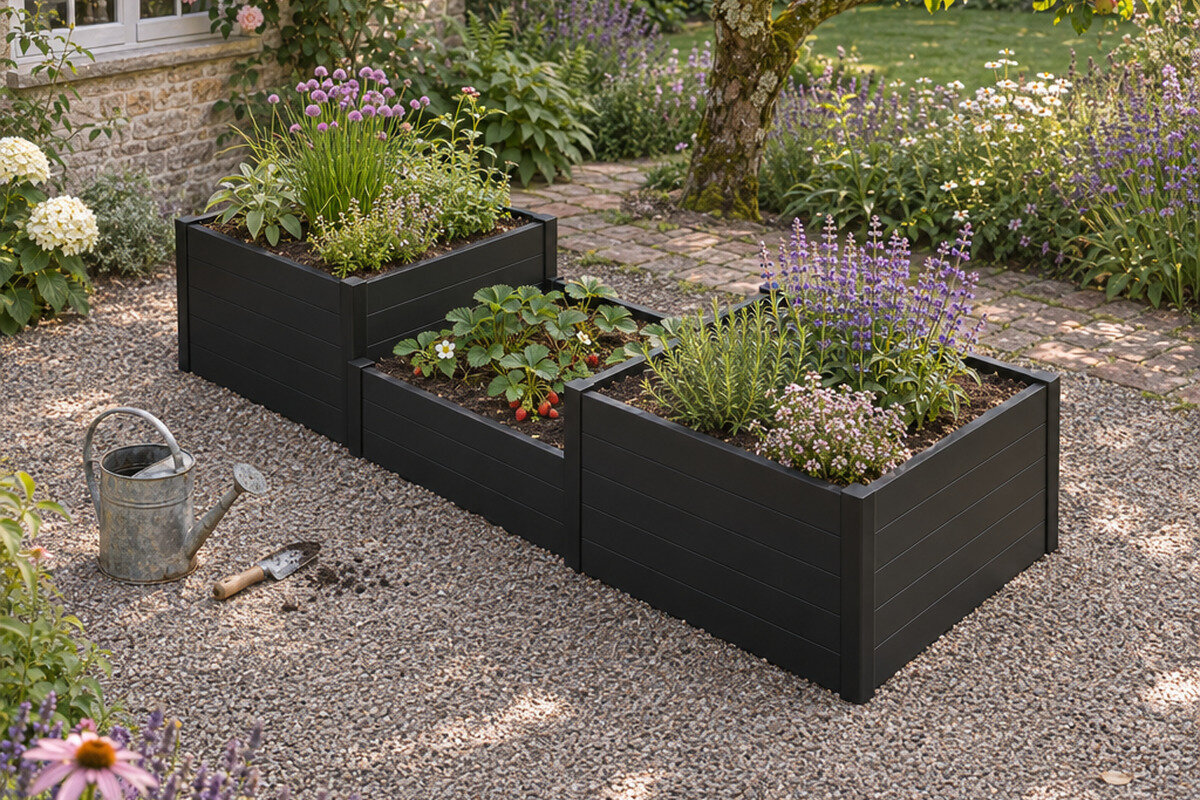
A planter on legs needs a floor that holds the mix, working drainage outlets, and a verified rating for its filled, watered load. For an elevated herb garden on a deck or balcony, also verify what the supporting surface can carry before filling the trough. The Bloomcabin beds in the gallery are ground-standing, open-bottom alternatives for prepared soil. They aren’t examples of the leg-supported trough used here, and their wall heights don’t tell you how much rooting space that trough needs.
Fill the elevated herb garden with a mix labeled for outdoor containers and leave room below the rim so you can water without washing mix over the side. Moisten it, let it settle, and measure from the surface to the floor or insert that limits root space. Check that depth against the container guidance for both selections. Before sowing, make sure excess water can leave the box and that nothing blocks the outlets. If only one herb has enough rooting room, give the other a suitable separate pot.

03
Map two rows and count what actually fits
Hypothetical example: An elevated herb garden measures 36 inches long by 30 inches wide inside at the settled mix line. Assume the usable depth suits both selections. Mark the basil centerline 7 inches from one long wall and the cilantro centerline 8 inches from the opposite wall. That leaves 15 inches between rows: 30 minus 7 minus 8. The example borrows that distance from Utah State’s minimum between cilantro rows in a home garden as a layout starting point, not as a tested requirement for a mixed trough.
On both lines, mark the run from 6 to 30 inches, measuring from the same short wall. At the 12-inch final spacing in Utah State’s basil home-garden guide, the 24-inch run fits three final plants at 6, 18, and 30 inches. Leave room to sow between those marks so you have seedlings to choose from when thinning. For cilantro, the Utah home-garden guide’s 2-inch sowing interval for leaf use gives 13 positions: 24 divided by 2 is 12 intervals, plus the starting position. That’s a sowing count for the elevated herb garden, not a prediction that 13 plants will establish.
If your basil label calls for 15 inches between plants, three would need a 30-inch span from the first stem to the last. That won’t fit the marked 24-inch run. Keep two instead, at 9 and 27 inches, which gives 18 inches between stems. Then check mature width across the elevated herb garden as well as along it. If moving a row away from its neighbor puts it too close to a wall for the selection you chose, move one herb to a separate pot instead of squeezing both in.

04
Sow basil shallow and use a separate furrow for cilantro
For basil, Utah State’s home-garden guide recommends sowing one-eighth inch deep, then thinning first to 3 to 4 inches and later to 12 inches. Its leaf-cilantro guide calls for sowing one-half inch deep at 2-inch intervals. These are starting points from Utah home gardens, not cultivar-specific instructions for an elevated herb garden. If your packet gives different directions for your seed or for containers, follow those and change the marks before you sow.
Smooth the moistened mix and use a ruler or marked stick to check the first few seed positions. If only cilantro’s window is open, make and cover just that line; there’s no need to cut the shallow basil furrow yet. After covering the seed, water gently enough to leave the mix in place. Label the selection and sowing date at the end of the row. Save the packet so you can check any expected emergence range against the time the seed has actually been in the mix.
When the second crop’s window opens, check the row line again. Seedlings sometimes come up to one side of a mark, so measure from the stems you intend to keep. If the planned spacing still works, sow from the side of the elevated herb garden that lets you reach the new line without brushing against the older seedlings. If you have to reposition it, check its wall clearance before opening the furrow.

05
Read bare patches before deciding whether to reseed
Check moisture just beside the seed line in the elevated herb garden so you don’t dig up the seed. A dark surface after a light sprinkle doesn’t tell you whether the mix is moist half an inch down where the cilantro was sown. If you’ve staggered planting, check near the older seedlings separately. Water where the mix needs it, and inspect the outlets if puddles persist rather than adding more water because another spot looks dry.
If a patch stays bare past the expected emergence window, compare it with the part of the same row that came up. A channel crossing the seed line may mean water moved seed; a ridge may mean some seed ended up under extra mix. If the gap follows one edge, check whether that edge gets missed when you water or dries before the rest. If the whole row stays bare, revisit the sowing date, conditions, and depth before blaming the seed.
Correct what you can see before reseeding the elevated herb garden. Use a gentler flow if water carved a channel, or change where you aim the watering can if one end has been missed. Resow just the bare stretch, and only while the local window still suits that crop. Give the replacement sowing its own dated marker. Otherwise, it’s easy to mistake a younger patch for one that’s falling behind.

06
Thin from stem to stem and fill only gaps worth keeping
As you thin basil in the elevated herb garden, use the intermediate spacing on the first pass so you still have choices. On the final pass, measure from stem to stem and keep healthy seedlings near the planned centers. A sturdy seedling just off a mark is fine if the actual distances still work. Don’t leave a tight pair at one end to make up for an empty spot at the other.
Cilantro for leaves was sown closer by design, so don’t thin it to look like the basil row. If seed washed into a cluster or you sowed extras, follow the packet’s leaf-crop directions to decide what to remove. Check across the elevated herb garden as well as along each row. If off-center seedlings from opposite rows crowd each other, keep the better-placed plant rather than counting on frequent clipping to maintain the gap.
If a bare stretch is worth filling with a nursery start, first check that there’s room at its mature size and that the local transplant window is still open. University of Maryland Extension recommends gradually acclimating tender plants raised under shelter before moving them outdoors. Follow the start’s planting instructions, not the seed depth, and check moisture around the root ball separately from the mix around plants that are already established.

07
Use the first picking to check whether the layout works
Let each row in the elevated herb garden reach picking size on its own schedule. Utah State’s basil guide starts harvest at six to eight leaves and leaves two to four leaves on each cut stem. Rotate among the basil plants rather than cutting the same one every time. Its cilantro guide starts leaf picking at about 4 to 6 inches tall. If the cilantro reaches that point while the basil is still establishing, pick the cilantro and leave the basil alone.
At that first picking, check whether you can reach the back row without bending basil stems out of the way and whether you can water the mix without flattening front-row seedlings. If you have trouble just reaching, improve access before giving up a planting position. If foliage already overlaps and you can’t reach the soil between plants, sketch where you’ll leave more room next time.
Keep the two sowing dates and a short note about what you changed. If one end of the elevated herb garden came up late and you found that water repeatedly missed it, adjust your watering approach before changing the spacing. If the basil filled its row but crowded the cilantro, leave out one basil plant or grow one crop separately next time. Those are different fixes, and the first picking is a good time to tell which one you need.

Questions readers ask
How deep should an elevated herb garden be for basil and cilantro?
There’s no single depth established here for both herbs. Measure from the settled mix surface to the solid floor or insert, not to the bottom of the stand. Check the container guidance for both selections and use the greater depth requirement if they share a trough. If the packets don’t give that guidance, check with the seed supplier or local Extension office before buying a shallow planter.
Can I sow cilantro first in my elevated herb garden and add basil later?
Yes. Mark the basil line and leave it unsown until warm, frost-free conditions arrive. Before sowing, remeasure from the cilantro stems you’re keeping, not just from the old marker. If the foliage will crowd the basil row, use a separate pot. If the local seasons barely overlap, plan on different picking periods even if both herbs grow in the same trough.
Can I fill a gap in my elevated herb garden with a nursery start?
Yes, if it’s still a suitable time to transplant and the gap is large enough for the mature plant. Measure between the stems on either side rather than judging by the patch of visible mix. Use the nursery label’s planting depth, not the depth you used for seed, and water around the root ball after planting.
Start with the row that’s ready
Measure your elevated herb garden, mark both lines, and write each crop’s sowing depth and spacing on its label. Sow the row whose local window is open, date it, and leave the other line ready for its turn.
Find a raised bed for your plan
Compare layouts and check the dimensions on the product page.
