
Enclosed Raised Garden Bed: Choose Protection That Fits the Pest

Bloomcabin · Raised-bed guides
Enclosed Raised Garden Bed: Choose Protection That Fits the Pest
Choose an enclosed raised garden bed only after you identify the pest or cause of damage. Match the barrier to how the pest reaches the crop, verify how it fits and attaches, and make sure you can close it properly after watering or harvest.
Identify the cause
Choose an enclosed raised garden bed only after you know what is damaging the crop and how it reaches it.
Inspect the whole barrier
Check the material and clear mesh opening, then check the seams, access panel, and lower edge.
Verify fit and support
Measure the assembled bed and verify how the separate enclosure is supported before buying or cutting anything.
Check it in use
Make sure you can reach the crop and close the barrier again. Track fresh damage, not old marks.
Fresh peck marks on ripe strawberries call for a different response than damage that starts at the soil line. If you’re considering an enclosed raised garden bed, work backward from the latest damage: what caused it, how did it reach the crop, and where would a barrier have to stop it?
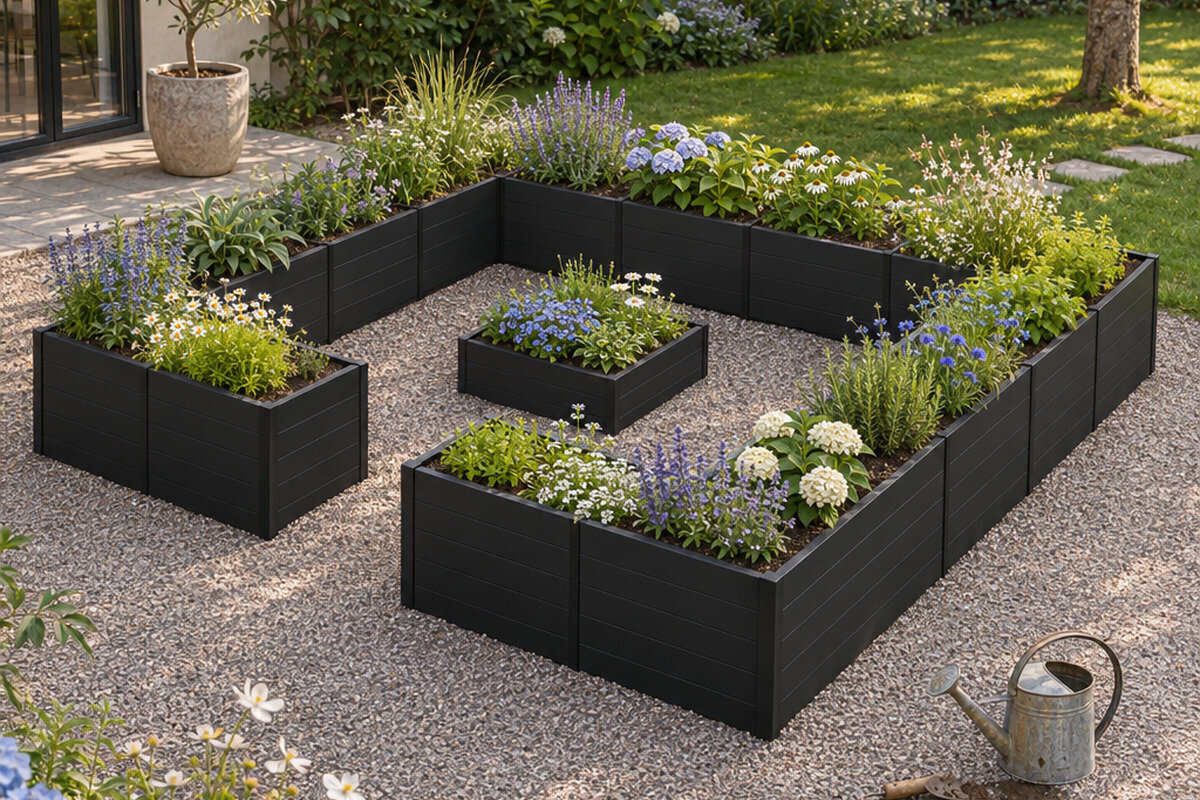
Here, an enclosure means a raised-bed frame paired with a separate cover or cage. Bloomcabin’s illustrated frames have walls and an open base; the supplied specifications do not list pest covers or enclosure hardware. Treat the bed and its protection as two separate purchases or planning decisions.
01
Name the pest and trace its route
Start with the crop, the damaged part, and what you saw. “A bird landed on the rim and pecked a ripe strawberry” is enough to start assessing an overhead barrier. “Something ate the leaves” is not. If no pest is visible, photograph the damage and look at leaf undersides, stems, and the soil line. Check the bed again around the time you normally discover fresh damage. Ask your local extension office for identification help if the signs are unclear.
An enclosed raised garden bed is worth considering when you can explain how the target gets in. A bird coming from above points you toward a top and any exposed sides. A confirmed animal approaching from ground level makes the lower edge and corners more important. Evidence of tunneling calls for a separate assessment below the frame; a lid won’t close a route beneath an open-bottom bed.
Before committing to an enclosed raised garden bed, write a one-sentence goal: “Keep birds from reaching ripe strawberries from above or through the sides.” That gives you something to test. If you find the damage comes from plants drying out, for example, a barrier won’t solve the problem. Check the cause rather than buying a finer cover in response to an unexplained symptom.

02
Choose a material for the target
Choose the material for the pest you’ve confirmed. For birds reaching fruit from above, look for a supported barrier specified for bird exclusion that won’t rest on the fruit. If you are comparing rigid mesh and flexible netting for an enclosed raised garden bed, check whether the rigid panels close flush at the joints and whether the netting can be held taut, with no loose folds around the edges. Don’t assume either option works just because its openings look small.
For a confirmed insect pest, look for screening specified for that insect and verify when it needs to go on. An enclosed raised garden bed won’t remove insects already on the plants. Before closing it, inspect the crop and use local guidance to check whether the cover will need to be opened during flowering or at another stage. There’s no point keeping a cover shut if the crop needs access the barrier would prevent.
Ask for the clear opening: the free space between the strands or wires, not the thickness of those strands and not the panel dimensions. For an enclosed raised garden bed, that specification is only one part of the choice. Check how the material must be supported, how its edges are secured, and whether the instructions cover the conditions at your site. If the listing says only “protective mesh,” get the missing details before relying on it.

03
Find the gaps the mesh won’t fix
Walk around the enclosed raised garden bed with the cover closed. Follow the path the pest would take rather than looking only at the main panels. Sight along the lower edge where it meets the rim or ground, and look behind posts and at the ends of overlapping panels. A mesh panel with the right opening won’t help if the pest can go around it at a seam.
Use a ruler to check the widest clear gap at any suspect joint. Compare it with the limit for the target pest, where you have reliable guidance. If the panel uses a removable closure, open and shut it as you would during a harvest, then look again. A loose corner that closes only when you hold it down is not closed in normal use.
Check where the protection on your enclosed raised garden bed actually ends. An open frame base may be irrelevant to a bird coming from above, but it matters if the identified pest travels underneath. Don’t plug openings or add a floor by default. If the route is below grade, check pest-specific guidance and assess the site before deciding whether a different system is needed.
- Check each corner, including where the top, side, and lower edge meet.
- Inspect joins, hinges, and latched edges with the access panel fully closed.
- Recheck any opening made for a hose, stake, or plant support.

04
Measure the fit and verify the support
Measure the assembled frame where the enclosure will sit. Outside length and width tell you what the cover must span or surround; the inside dimensions tell you what you can reach and where plants can grow. Measure at more than one point if posts or fittings change the profile. For an enclosed raised garden bed with a lift-up lid, also measure the free space above and behind it while it opens. A cover can fit when shut and still hit a fence when you lift it.
Compare usable clearance with the crop at the stage you want to protect. Measure from the same point on both the bed and the cover, such as the rim, when comparing plant height and lid height. Allow room for any supports and for growth during the protection period. Wall height is a frame dimension, not the amount of space below the lid, the depth of the soil, or the crop’s total rooting depth.
Decide what will carry the enclosure before choosing an attachment. Bloomcabin’s verified products are open-bottom frames, and the supplied specifications do not document enclosure mounting hardware or cover load ratings. If your enclosed raised garden bed relies on the frame for support, verify that the proposed connection is approved before drilling or clamping. Otherwise, consider a separate enclosure designed to stand on its own, and check its support and anchoring instructions for your actual site.

05
Worked example: Check a cover for strawberries
Hypothetical example: You see a bird land on the rim and peck a ripe strawberry in a narrow planting strip beside a garden edge. You want the enclosed raised garden bed to protect ripening fruit without having to move the entire cover each time you pick. Your frame is the Bloomcabin Narrow Aluminum Raised Garden Bed 78.74×19.69×23.62 in. Its nominal footprint is 78.74 × 19.69 inches, its walls are 23.62 inches high, and the base is open. You measure the assembled frame rather than ordering a cover by the nominal numbers.
You’re considering a separate rigid mesh cage with a top and side access. Assume its maker specifies it for excluding the bird you observed and documents a freestanding installation on your site. You check how the mesh panels attach to the cage supports and confirm the cage does not need to fasten to the aluminum bed. With the cage in its intended position, assume the underside of the closed top is 24 inches above the bed rim and the tallest growth you plan to protect reaches 18 inches above that same rim. That leaves 6 inches of overhead clearance. You still check the sides so no berries sit against or poke through the mesh.
Now suppose the panels have half-inch clear openings, but your ruler shows a 1-inch gap at the lower corner of the latched access panel. The gap is twice as wide as the panel openings. That doesn’t establish a universal size limit for birds; it tells you that the installed barrier has a larger opening than the panels you evaluated. Before relying on the enclosed raised garden bed, check whether the maker’s instructions provide an adjustment. Close and latch the panel again, then remeasure. If you can’t resolve the mismatch, choose a different enclosure rather than declaring the fit good.

06
Make watering and harvest easy enough to repeat
Try the jobs you’ll do most: pick fruit at the far edge, look under a leaf, and water near the roots. You should be able to do them without stepping on the soil or leaning on the enclosure. On a bed beside a fence or garden edge, try the opening from the side you can actually stand on. With an enclosed raised garden bed, a usable planting width means little if a hinge or support puts the back row beyond reach.
Before settling on a hinged panel or a removable top, act out opening it with a harvest bowl or watering can in hand. Check where a removable panel will go without blocking your feet or resting on the plants. If a hose runs through the enclosure, check the opening around it after moving the hose. If you need to open the cover to water, confirm that you can close and secure it again without pinching a stem or leaving a panel ajar.
An enclosed raised garden bed still needs light suited to the crop and convenient water access. Check those basics with the barrier in place, not just when the bed is uncovered. Local crop guidance can help you decide when the plants need access for pollination and when opening the cover would undermine protection. If those needs conflict, revise the cover arrangement or the time you use it.

07
Judge success by fresh damage and everyday use
Before installing the barrier, photograph a few affected plants and note where the damage is. After closing the enclosed raised garden bed, revisit those plants and look for fresh injury. In the strawberry example, you could mark which fruit was already pecked and check newly ripening berries for damage. Fewer new marks is more useful evidence than how sturdy the cage looks, though it cannot tell you whether the same pest pressure was present both times.
Inspect after harvest or any weather that could shift the barrier. Start with the spots you touch: the latch, the removable corners, and any edge you move for watering. Then check where plants are nearing the cover. If fresh damage appears at an outer edge, see whether fruit or leaves extend beyond the protected space before blaming the mesh opening.
If damage continues inside an enclosed raised garden bed, revisit the diagnosis before switching to a finer material. Check whether the pest was inside when the barrier went on, whether the damage matches what you originally observed, and whether a different entry route is still open. If the crop outgrows the cover or access becomes so difficult that it stays open, the setup is no longer a good fit, even if the material itself is intact.

Questions readers ask
Does a Bloomcabin raised-bed frame come with a pest enclosure?
The Bloomcabin configurations shown are open-bottom raised-bed frames. The supplied specifications do not list a cover, mesh, a door, or enclosure mounting hardware. If you want an enclosed raised garden bed, verify the separate cover or cage and its support method rather than treating the nominal bed size as a compatibility rating.
What mesh size should I use for an enclosed raised garden bed?
Choose the opening for the identified pest, not the bed style. Ask your local extension office for pest-specific guidance and compare it with the barrier maker’s stated clear opening and intended use. When the barrier is closed, check that the corners, seams, and door do not leave a larger route in. A mesh specification alone does not tell you what happens at the edges.
Can I add an enclosure after the crop has already been damaged?
Yes, if you’ve identified a pest that the barrier can keep out and checked that it isn’t already inside. Photograph the affected plants before closing the enclosed raised garden bed. Old holes, missing leaves, or damaged fruit will not tell you whether the barrier is working; look for new damage on the next inspection.
Make the decision before you buy
A well-chosen enclosed raised garden bed blocks the route you identified without getting in the way of the crop. Before you commit, confirm the barrier’s intended use, measure the fit and the widest gaps, and practice opening and closing it. Then check for fresh damage under normal use.
Find a raised bed for your plan
Compare layouts and check the dimensions on the product page.
