
Galvanized Steel Garden Beds: How to Choose a Kit That Fits

Bloomcabin · Raised-bed guides
Galvanized Steel Garden Beds: How to Choose a Kit That Fits
Galvanized steel garden beds can be a practical choice when the kit is documented for what you want to grow, fits the working space around it, and has a base that suits the site. If you cannot verify the coating, hardware, or intended use, keep comparing before you buy.
Ask for the model sheet
For galvanized steel garden beds, verify the steel, coating, panel thickness, hardware, and stated use for the exact model.
Measure three things
Measure outside fit, inside growing space, and working clearance separately. Wall height is not always rooting depth.
Check below the frame
An open base over soil and a container on paving require different drainage plans.
Compare like with like
Bloomcabin’s Classic aluminum example is an alternative material, not a galvanized steel model.
When shopping for galvanized steel garden beds, ask for the specification sheet and assembly manual for the exact model you would order. You are buying a frame that must hold the growing mix at the depth you plan to use, not just a set of panels with a familiar finish. Check how the panels join and whether the instructions cover where you want to put the bed.
Start with a simple task: mark the space for one bed, list the crops you want to grow, and compare two kits against the same requirements. That makes it easier to rule out a bed that would block a path, leave too little planting room, or require a base setup the supplier does not support.
01
Read the panel, coating, and intended-use specifications
The steel forms the wall; the zinc coating helps protect the steel from corrosion. Neither tells you, by itself, how the finished frame will hold its shape or what conditions the manufacturer expects it to withstand. When comparing galvanized steel garden beds, read the panel thickness alongside the panel profile, the length of the wall sections, and the supports shown in the assembly drawing. A visibly ribbed wall is not a substitute for a drawing that shows how the full frame goes together.
Ask for the steel grade or specification, the coating type, and the coating thickness or designation if listed. Ask whether the stated panel thickness refers to the base metal or the finished sheet. Check whether the soil-facing side has a separate finish and whether the fasteners and connectors are identified separately. Listings for galvanized steel garden beds sometimes give a single description for the kit; you need to know which parts that description actually covers.
Then look for a written statement of intended use. For a food garden, ask whether that exact model is intended for growing edible crops and whether there are conditions on installation or soil contact. A listing that simply says “outdoor” or “garden” does not answer that question. If you are comparing galvanized steel garden beds with reclaimed panels, do not give unknown coatings or an unknown history the same weight as a current specification.

02
Check the footprint from the path and the planting area from the inside
Make a short planting list before choosing a footprint. If you want salad greens and herbs beside a path, start with the rows or groups you want to plant, then see how much inside space they require. Use the seed packet or local extension guidance for spacing and planting timing. If you are comparing galvanized steel garden beds for a spot against a fence, test whether you can reach the far edge from the path without stepping into the growing area.
Mark the outside footprint on the ground with string or stakes. Include any projecting rim, hardware, or supports shown in the drawing. Walk the route you will take with a watering can, and check that a gate still opens and that you have room to kneel or harvest. When two galvanized steel garden beds have the same nominal width, the deciding measurement may be the space left to work beside them, not the width printed on the box.
Record the actual inside dimensions separately from the nominal outside measurements. Then check the planned fill depth rather than assuming the soil will come to the rim. A crop that needs more rooting room might still fit an open-bottom bed where roots can enter suitable ground below. The same wall height over a hard surface would not give the crop that extra space.

03
Decide what happens to water underneath the bed
An open base is not a drainage system by itself. Before placing galvanized steel garden beds on soil, visit the site after rain or irrigation. Look for water sitting where the bed would go, runoff from a nearby roof or paved area, or compacted ground beneath the footprint. If water already collects there, move the proposed bed or resolve the site problem before ordering. If you suspect contamination, seek local guidance rather than assuming that an open frame and imported soil will isolate the roots.
For a patio, check whether the manufacturer shows how the growing mix is retained and where water exits. Do not assume an open-bottom frame can be turned into a patio container by adding a liner or drilling holes. Ask what the approved setup requires, and check where runoff would go so it does not cross a doorway or the path you use to tend the bed.
Before choosing among galvanized steel garden beds, note how much light the location gets and how you will bring water to it. A spot may fit the frame but still be inconvenient to irrigate, especially if the hose route crosses a busy path. Raised soil can dry faster than nearby ground, so choose a location where it will be easy to check moisture and water when needed.

04
Check the assembly drawing before ordering soil
Download the manual for the exact configuration before you buy. Listings for galvanized steel garden beds may show several layouts, but the parts list and drawing for your layout are what matter. Check which fasteners, supports, and edge pieces are included, which tools are needed, and whether the maker specifies a way to prepare the site. If required hardware is missing from the parts list, ask the supplier to clarify before assuming it comes with the kit.
When the kit arrives, match the parts to the manual and inspect panel edges, slots, and holes before assembly. Follow the specified connection sequence and install any required braces before filling. If holes do not line up, confirm the panel orientation and part number before trying to force the fit. Ask the supplier about damaged finishes or incorrect parts rather than drilling new holes or swapping in hardware that happens to fit.
Before filling galvanized steel garden beds, make a final check against the drawing: the frame sits as intended, the required supports are installed, and the joints and rim are complete. Stand where you will water and harvest to make sure the assembled bed leaves the clearance you marked out. If anything needs to be moved or corrected, do it while the frame is still empty and follow the manual’s filling directions.

05
Work through a two-kit decision before you buy
Hypothetical example: You are comparing two galvanized steel garden beds for salad greens and herbs. Assume a level strip of prepared soil is 8 feet wide, with access from both long sides. You want a 2-foot working strip on either side. That leaves 4 feet for the outside width of the bed. Kit A measures 4 feet across at its widest point; Kit B measures 4 feet 6 inches. Centered in the strip, Kit B would leave only 1 foot 9 inches on each side. Kit A fits your clearance target; Kit B does not.
Assume the seller confirms that Kit A has a rectangular interior 6 feet long and 3.5 feet wide, and you plan to fill it to a uniform depth of 10 inches. Multiply 6 feet by 3.5 feet to get 21 square feet. Multiply that by 10/12 of a foot to get 17.5 cubic feet. That is the geometric fill estimate before settling, not a soil order based on the outside dimensions. For a kit with separate bays, calculate each bay using its own inside dimensions and fill depth rather than the overall footprint.
The numbers narrow the choice; they do not settle it. When choosing between galvanized steel garden beds, keep the fit calculation separate from the materials decision. If the seller of Kit A cannot confirm the coating or intended use, the fact that it fits does not fill that gap. Keep shopping rather than giving up either a clearance you need or the documentation that matters for your crops.

06
Compare aluminum as an alternative, not an equivalent
Use the same comparison columns for galvanized steel garden beds and for alternatives: stated materials, intended use, outside footprint, inside growing space, base design, assembly, and upkeep. Compare the full setup, including any required parts not supplied with the frame and the amount of growing mix you need. A larger nominal bed is not a better value if part of it is out of reach or if it cannot be used on your site.
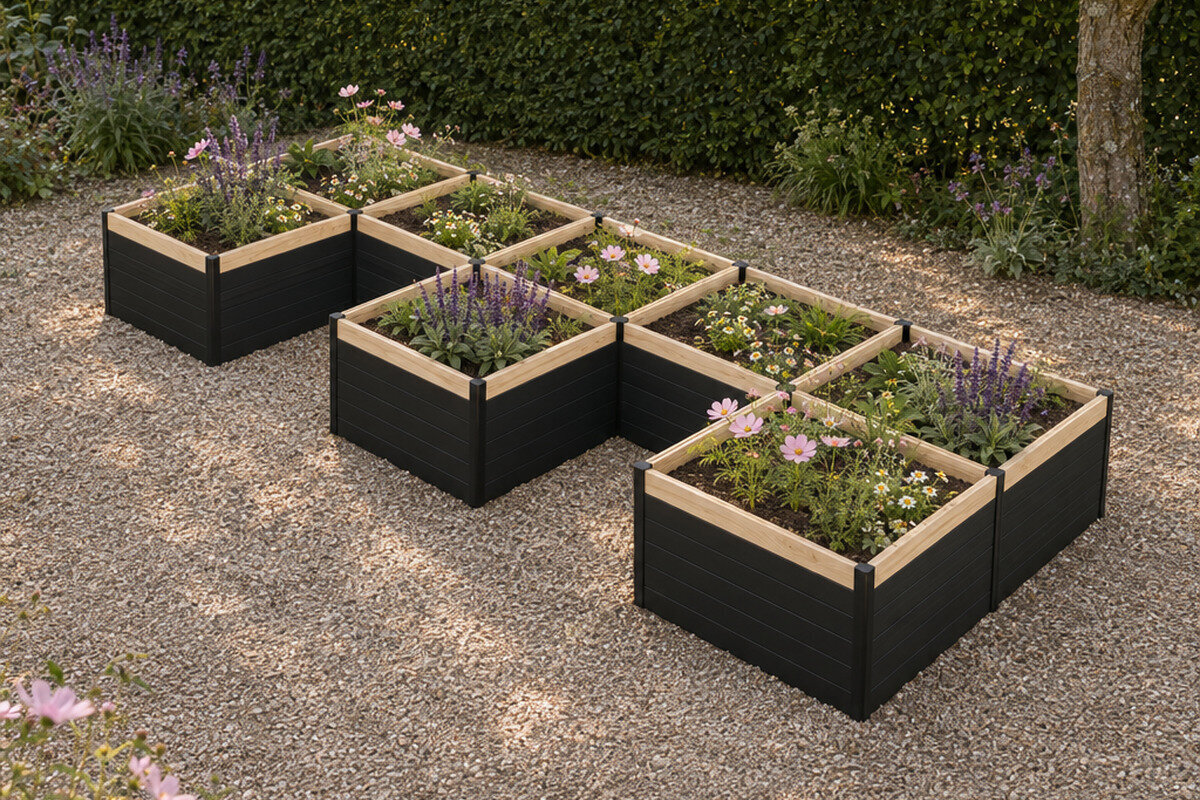
For a documented aluminum comparison, Bloomcabin’s Square Aluminum Raised Garden Bed 39.37×39.37×15.75 in has a nominal 39.37 × 39.37-inch footprint, a nominal planting area of 10.76 square feet, and 15.75-inch walls. It has one planting compartment, aluminum wall panels and corner posts, and an open base for prepared ground. The nominal planting area is not a field measurement of clear inside space. If fit is tight, confirm the dimensions you need before ordering.
If you are set on galvanized steel garden beds, rule out aluminum on material alone. If you are open to either, compare how each model would solve the same problem: whether it fits the space, provides usable growing depth, and comes with instructions you can follow. A material name alone does not establish a longer service life or less maintenance.

07
Inspect the frame and tend the soil as separate jobs
Save the assembly and care instructions where you can find them after planting. For galvanized steel garden beds, inspect the rim, visible coating, and connections when you clear the bed between plantings or after a tool strikes the wall. If a panel shifts, a fastener loosens, or a sharp edge develops, check the manual and ask the manufacturer how to address it. Do not assume a coating repair sold for another use is appropriate for surfaces that touch growing soil.
Keep frame checks separate from crop care. With galvanized steel garden beds, a sound-looking frame does not tell you whether seedlings have enough moisture. Check the soil and adjust watering to the weather and the stage of growth. Water near the roots when needed, and use crop guidance and a soil test to decide whether amendments are needed rather than adding fertilizer on a schedule.
Keep the model number and a copy of the parts diagram. If you notice a gap or a change in the shape of a wall, take a photo and identify the affected part on the diagram. That gives the supplier something concrete to work with and helps you avoid replacing a fastener or support by appearance alone.

Questions readers ask
Are galvanized steel garden beds suitable for growing vegetables?
They can be a fit, but the label alone does not tell you whether a particular kit is intended for growing food. Ask for written guidance for the exact model, including any conditions on its use. If the supplier cannot identify the soil-facing materials or clarify whether the bed is intended for edible crops, choose a better-documented option rather than treating the missing information as approval.
Can I put galvanized steel garden beds on concrete?
Only choose a model whose instructions cover that setup. Confirm what retains the growing mix, how excess water gets out, and how much usable soil depth the design provides without ground underneath. For a deck or other elevated surface, verify that the structure can support the filled bed before proceeding.
Can I use salvaged panels instead of buying galvanized steel garden beds?
Do not treat a similar-looking sheet as equivalent to a documented kit. Identify the panel’s material, coatings, prior use, and condition before considering it for contact with growing soil. You would also need a suitable frame design and hardware. If the composition or history is unknown, set the panels aside for a different project rather than guessing.
Make the decision before you fill
Shortlist galvanized steel garden beds only after the supplier has answered the material and intended-use questions that matter to you. Then verify inside dimensions, access, and drainage on your site. It is much easier to resolve a missing specification before the bed arrives than to change plans after it is full.
Find a raised bed for your plan
Compare layouts and check the dimensions on the product page.
