
Garden House Delivery Day: How to Prepare Your Property

Garden house delivery
Garden house delivery day is a logistics handoff, not just the moment a shipment reaches your address. A truck may need a different route from the one you use every day, and the packages may not match the dimensions of the assembled house. Useful preparation happens before the appointment: confirm what the delivery service includes, measure vehicle access and the package route, agree on an unloading spot, and make sure the person receiving the order knows the plan. The checks below help you prepare without guessing about the carrier’s equipment or the shipment’s format.
Confirm what delivery includes before booking
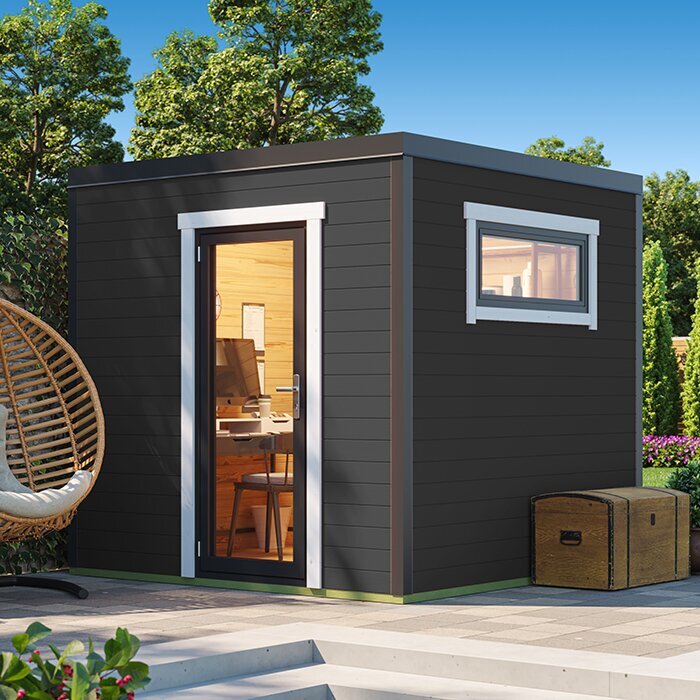
Before setting a delivery date, find out exactly what delivery covers for your order. It might mean arrival at the curb, placement at a designated drop point, or another arrangement; do not assume the driver will carry packages to the garden or assemble the house. Ask who unloads, whether handling equipment is supplied, whether the carrier needs access to a private drive, and where the shipment is expected to be left. Read the order confirmation for the service description and restrictions, then get unclear points answered by the seller or carrier in writing. If you are considering the Verdana 1 garden house, confirm the arrangements for that specific order rather than inferring them from a model name or product image.
Ask how the appointment is arranged: whether the carrier gives a delivery window, calls ahead, or requires a receiver to be present. Confirm the best phone number, how delays are reported, and whom to contact if the vehicle cannot use the agreed access route. If someone has to unlock a gate or move a car, make sure that person can cover the full window, not just the expected arrival minute. Ask about rescheduling or failed-access terms before finalizing a date; these conditions vary by service. Save the answers with the order paperwork so a change in staff or plans does not leave the driver without instructions.
Get shipping-package dimensions and handling details
The finished house’s listed dimensions are not enough to plan a delivery route. Ask for the number of packages and the outside dimensions of each, especially the largest piece, along with any handling requirements provided for the shipment. A packed component can have a different length or profile from the assembled structure, so compare package measurements with the narrowest gate, passage, bend, or other point on the route. Once you have identified the Verdana 2 garden house, request details for the exact order rather than estimating package size from a photo or model name.
Clarify which measurements apply to the route for packages and which apply to the delivery vehicle or unloading equipment. Ask what equipment the carrier expects to use, what access space it needs, and whether it will move packages beyond the vehicle’s stopping point. If final shipment measurements will not be available until later, find out when they will be issued and how to raise an access concern. Keep the answers with your order confirmation so the person meeting the driver can work from the same information instead of memory or a rough estimate.
Measure the route from the truck to the unloading point
Walk the full route from the agreed vehicle stopping point to the proposed unloading area. Measure the narrowest openings with gates and doors positioned as they will be on delivery day, and include turns and usable space around fixed obstacles. Note the route’s length as well as its tightest point, since the carrier may limit how far it will move a shipment after unloading. A straight line across the yard is not the same as a clear path. If the Durano garden house is under consideration, compare your route measurements with confirmed package dimensions, not just the finished-house dimensions.
Record the measurements in a simple sketch and take photos from the approach and at difficult turns. Flag steps, uneven paving, soft ground, narrow side yards, and changes in level to the carrier before the date; do not leave these details for the driver to discover. If the packages cannot follow the direct path, ask which alternative route or drop point the service will accept. Never assume a crew can lift a shipment over a fence, carry it through your home, or cross a neighbor’s property. Make sure the route you describe is one you can actually keep clear.
Check the delivery vehicle’s approach and turning space
Check whether the delivery vehicle itself can reach and leave the property; a gap wide enough for a package does not prove a truck can use the drive. Ask the carrier for its vehicle access and turning requirements instead of relying on a generic clearance number. Review the entrance, gate, driveway, approach from the street, turning space, and stopping point. Account for cars, bins, and other objects that may normally be in place, not just an empty driveway on a quiet day. Whether you are ordering the Veltor 1 garden house or another design, use the carrier’s requirements—not the house footprint—to assess vehicle access.
Look up and around the route, too. Low branches, awnings, garage overhangs, and utility lines can affect where a vehicle or unloading equipment can go. If a line or fixed obstruction makes clearance uncertain, tell the carrier and consult an appropriate qualified provider; do not move or alter utility equipment yourself. Check whether the vehicle can turn around or needs a different approach, and discuss a narrow street or shared entrance in advance. If access depends on a neighbor’s land, get permission and agree on the route before delivery day.
Choose a specific unloading area
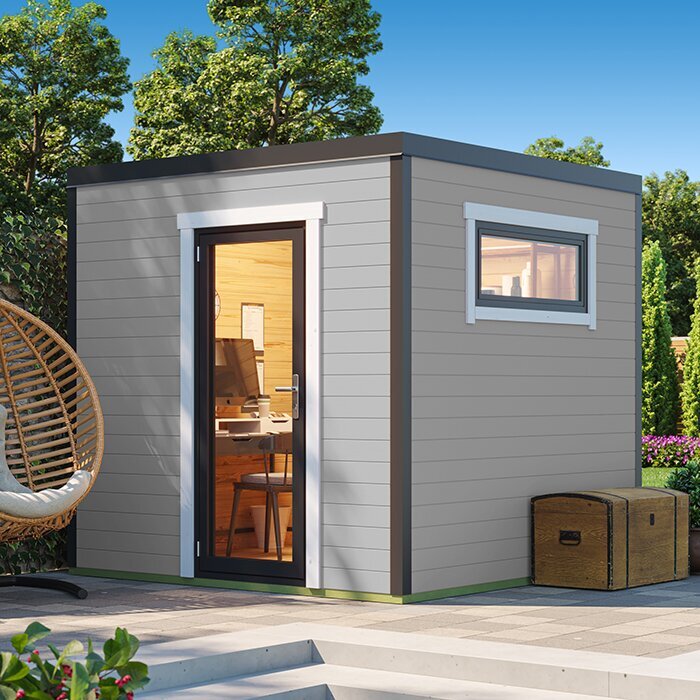
Choose one unloading spot and describe it clearly to the carrier; by the house is not a precise plan. The area needs to fit the confirmed package footprint and the handling method the carrier will use, with room to set packages down without blocking a doorway, garage, driveway, or route people still need. Ask whether the surface is suitable for the carrier’s equipment and whether the truck must stop beside the drop point. When arranging delivery for the Orello 1 garden house, base the plan on confirmed shipment details, not the apparent size of the finished structure in a photo.
Clear the proposed area of parked cars, patio furniture, planters, hoses, bins, toys, and yard tools before the appointment. Check whether unloading could obstruct a gate, shared path, or access to another part of the property, and choose an alternative if it would. If the drop point is not where the house will later be assembled, do not assume the carrier will move the packages again; ask about carry distance and arrange any further handling separately. Avoid a last-minute attempt to shift a heavy package without an agreed, appropriate method.
Coordinate parking, shared access, and a receiver
Name one person to meet the driver and give that person the order reference, delivery instructions, contact numbers, route sketch, and location of the agreed drop zone. Keep a backup contact available in case plans change. Make sure everyone in the household understands which entrance and unloading area are reserved, and who can answer the carrier’s questions. For the Modano 1 garden house, keep the order reference with the delivery paperwork; the model name helps identify the purchase but does not replace package and access information.
Coordinate shared access early. Ask neighbors to keep a shared drive or agreed access path clear, and arrange any permission needed to use an area that is not yours. If the truck may need to stop at the curb or in another shared space, confirm the proposed arrangement with the carrier and check locally whether approval is needed. Do not assume there will be a convenient place to park on arrival. Keep children and pets away from the unloading area, and leave lifting and equipment operation to the delivery crew or other people assigned to that task.
Recheck the route and plan for weather
Check the route again shortly before delivery, because a clear path can change when bins are collected, cars arrive, landscaping work begins, or rain and snow affect the surface. Move loose items and make sure gates open fully. Tell the carrier about soft, slippery, muddy, or uneven sections rather than covering them with improvised boards or mats; a temporary surface can create another obstruction or a trip hazard. If weather could affect the planned unloading method, ask the carrier what conditions might change the appointment and how to get an update. If you are arranging delivery for the Veltor 2 garden house, make that contingency part of the order-specific plan.
Have a fallback for an area that is wet, blocked, or otherwise unsuitable on arrival. A different agreed drop point or a new appointment may be possible, but only the seller or carrier can confirm what the service permits. Ask in advance what to do if the original spot cannot be used and whether an alternate location changes the carry distance or access needs. Do not pressure a driver to unload where the crew cannot work safely, or improvise a route through a hazard just to avoid delay. A clear communication plan is more useful than an unapproved workaround.
Confirm the plan shortly before arrival
At the interval the carrier specifies, reconfirm the delivery date, address, arrival window, contact number, vehicle approach, gate access, and unloading spot. Send the route sketch and useful photos if the carrier accepts them, and ask whether the information is sufficient. Keep the order confirmation for the Veltor 3 garden house or your chosen model beside those notes, so any mismatch between the purchase and dispatch details can be resolved before the truck is on its way. Do not wait until the driver is at the gate to report a known access restriction.
The day before, move vehicles and movable obstacles, secure a clear path, and unlock the agreed gate if that is part of the plan. Put the receiver’s phone somewhere it can be heard and make sure the person has the carrier’s contact details. Share access instructions through the carrier’s approved channel; avoid leaving gate codes or personal information where passersby can see them. Tell household members or anyone sharing the property that delivery is expected. If a detail has changed, contact the carrier rather than hoping the driver will find another route.

Record the package count and condition at handoff
Meet the driver at the agreed place and check that the shipment and delivery paperwork correspond to your order. Use the packing list or delivery note to confirm the stated package count; do not rely on memory or assume every model arrives in the same number of pieces. Look over accessible package exteriors for obvious damage while the handoff is taking place. Ask the carrier how visible damage or a missing package should be recorded before the driver leaves, and follow the stated process. Keep any notes or photos with your order records and contact the seller or carrier as directed.
Agree on the exact placement before unloading starts, especially if the yard has more than one possible drop area. If a package is missing, visibly damaged, or left somewhere other than the agreed point, raise it at handoff and record the facts accurately; do not assume that a photo alone completes a report. Read what any delivery acknowledgment covers and ask how to record an exception if needed. Keep labels, paperwork, and packaging available until you have checked the shipment against the documents and understand the seller’s process for reporting a problem.
Plan for delays or failed access
Prepare for a failed access attempt as carefully as for a successful one. A car left in the driveway, a locked gate, construction on the approach, or a route measurement that does not match the actual opening can prevent the agreed plan from working. Ask ahead what the carrier will do if it cannot reach the unloading area, whether a different drop point is possible, and how rescheduling works. Confirm any possible redelivery or holding charges in the order terms rather than assuming they do or do not apply. If a problem appears on delivery day, call the named contact and agree on the next move before changing the plan.
After the truck leaves, keep the delivery record, photographs, and any open follow-up together, and pass unresolved issues to the named seller or carrier contact. Check that the agreed route and access area are clear before returning vehicles or household activity to normal. Delivery preparation is complete when the handoff has been recorded, the shipment is placed where agreed, and any exception has a clear owner. Keeping access, unloading, and receipt distinct makes the day easier to manage without confusing delivery service with later assembly or site work.
Frequently asked questions
How much clearance does a delivery truck need?
There is no single clearance number that works for every delivery. Ask what vehicle and unloading equipment will arrive, what approach and turning space they require, and whether packages must pass through a gate or along a path. Measure the narrowest opening and compare it with the carrier’s requirements for your order.
Will the delivery crew take the garden house to its planned location?
Only if that service is included and the carrier has agreed to the drop point. Confirm where unloading ends, who is responsible for moving packages beyond it, and whether carry distance or access restrictions apply. Do not count on the crew to carry the shipment to the future build site without confirmation.
Should I measure the route using the finished house dimensions?
No. Use the outside dimensions of each shipping package for gates, turns, and paths, and the carrier’s vehicle requirements for driveway access. The assembled-house dimensions answer a different question. If package measurements are not yet available, ask when they will be provided and what happens if they reveal an access problem.
What if the planned access route is blocked on delivery day?
Call the named carrier or seller contact before directing the truck to an improvised drop point. Ask whether an alternate location is acceptable and how a failed attempt or rescheduling is handled. Do not assume the driver can use an unapproved route or unload on a neighbor’s property.
What should I check when the shipment arrives?
Compare the package count with the delivery paperwork and look over accessible package exteriors for visible damage. Ask the carrier how to record an issue before it departs, note exceptions accurately, and keep photos and documents with your order. Then follow the seller’s reporting process; a photo alone may not complete it.
A well-prepared garden house delivery begins with accurate information: what is arriving, what the carrier will do, and how both the vehicle and packages will reach the agreed drop point. A named receiver, a cleared unloading area, and a plan for access problems help reduce last-minute uncertainty. With those details settled, delivery day becomes a matter of following the agreed route and recording the handoff—not guessing what a driver can move.
