
Garden House Doors That Stick: Seasonal Movement and Adjustment
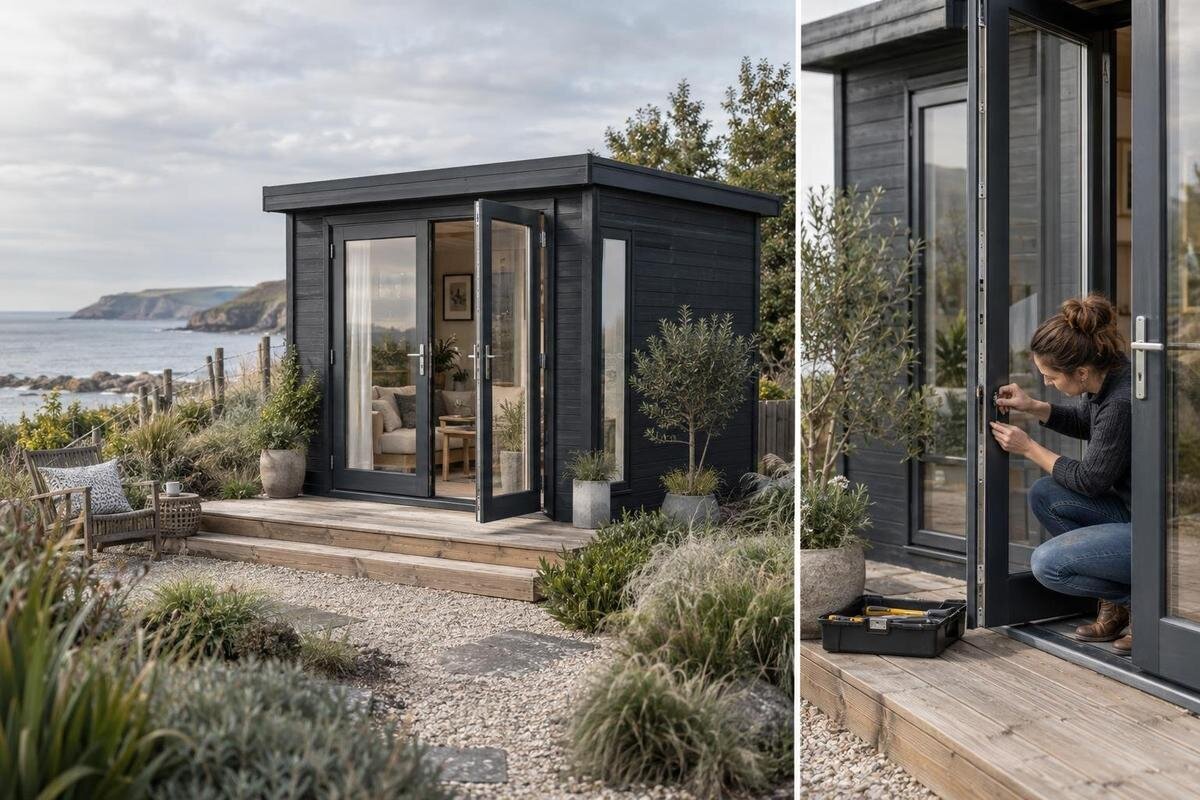
Garden house doors
Seasonal changes in moisture can make a wooden garden house door rub, but weather is not the only possible cause. A loose hinge, latch misalignment, an obstruction at the threshold, or movement in the frame can produce similar symptoms. Start by locating the contact point and noting whether the door binds during movement or only as it latches. This guide covers careful inspection, instruction-led adjustments, signs that call for help, and details to verify if you are choosing another garden house.

Locate the first point of resistance
Open and close the door slowly using its usual handle. Do not slam it or pull hard toward the latch. Notice where resistance first appears: at an upper corner, along a side edge, near the bottom, or only as the latch reaches the strike plate. Stop at the first bind rather than forcing the door through it. Keep fingers clear of hinges and closing gaps; if someone watches, have them stand clear of the door’s swing. To find a faint rub, look for a fresh scuff after one gentle pass. If you use removable painter’s tape to mark the contact area, test it on an inconspicuous part of the finish first. If the contact seems to shift from pass to pass, stop and note that instead of repeating the test.
Record whether the door catches on opening, closing, or both; whether it moves freely before the latch engages; and whether resistance changes when you use the handle normally. A door that swings freely until the last inch needs a different check from one that scrapes throughout its travel. Do not lift the door by its handle or lean on it to reproduce the fault. The exact contact point helps guide the next inspection, so write it down rather than relying on memory. If shopping for a new unit, compare the stated opening type and clearance—not photos alone—on pages such as garden house Verdana 1, and confirm any missing details before ordering.
Check whether the problem follows the weather
Weather can be part of the explanation because wood takes on and releases moisture as surrounding conditions change. Its dimensions can change, which may alter the gap between a door and its frame. The effect depends on the wood, construction, exposure, and assembly, so a warm or cold day by itself is not proof. Note recent rain, damp conditions, or a prolonged dry spell, and record whether the sticking eases or worsens as conditions change. Compare observations over time rather than repeatedly adjusting the door after each wet or dry spell. A recurring pattern is useful evidence, not a diagnosis.
Look for conditions that could keep the same area damp, such as water repeatedly reaching the door or frame, but do not hose down the area or try to swell or dry the wood deliberately. Note whether other parts of the structure appear to have shifted as well. If the contact persists beyond a weather change or begins at several points, widen the inspection instead of labeling it seasonal. When buying a different garden house, check the maker’s care and installation guidance and ask about anything not stated. Garden house Verdana 2 is one listing to review for documented details; it does not establish how your current door was built.
Inspect the frame, threshold, and visible gaps
Look at the gap between the door and frame with the door open and closed. Is it fairly similar along each edge, or does it narrow noticeably at one corner? Check whether the bottom edge catches on the threshold, floor, or an object. Look for a loose or raised threshold, dirt or leaves in the way, and visible changes where frame parts meet. Compare the top corners and sides rather than focusing only on the point that rubs. A visual inspection can help show where movement is occurring, but it cannot establish that a foundation or supporting surface is level or sound. Do not pry off trim or dismantle the frame to investigate.
Take photos from the same angle and note whether the gaps look different from earlier observations. A tapered gap might relate to a sagging door, a shifted frame, moisture, or assembly; appearance alone cannot identify which. If the frame looks distorted, the unit moves, or several parts bind, stop and ask an installer or qualified carpenter to inspect it. For a new purchase, compare the documented opening dimensions, threshold arrangement, and support requirements for Durano wooden garden house with your site. If a detail is not stated, get the manufacturer’s answer before ordering; a product photo is not a measurement.
Check hinges and fasteners before adjusting
With the door in a stable position, look at every visible hinge or pivot. Check whether a hinge leaf has lifted from the wood, a pin appears displaced, a screw head sits proud, or the hardware moves during normal operation. Do not take weight off a hinge or put fingers beneath the door to test it. If the door is heavy, wide, glazed, or awkward to hold, do not work on it alone; have an installer or qualified professional assess it. Even a small shift at a hinge can change how the latch side meets the frame, so inspect the hardware before considering an adjustment to the strike plate.
If a screw is clearly loose and the instructions allow user tightening, use a driver that fits and tighten only as directed. Stop if it turns freely, the wood flexes, or resistance rises unexpectedly; overtightening can damage the wood or pull hardware out of position. Do not substitute longer or larger fasteners, fill holes, or move a hinge without the maker’s guidance. When comparing new units, review the hardware and assembly information for Veltor 1 garden house and ask what is documented or available. A photo alone cannot tell you whether hardware is adjustable.

Separate latch trouble from rubbing
Close the door gently while watching the latch tongue and strike plate. If the door and frame move freely but the latch touches the top, bottom, or face of the plate, the final closing point may be out of line. Look for fresh marks on the plate or a visibly loose fastener. Notice whether the handle returns normally and whether the door stays aligned when held just short of latching. These observations help distinguish a latch issue from a door that is already rubbing elsewhere. Do not repeatedly force the latch to seat or use the handle to pull the door shut.
A misaligned strike plate may be a symptom of a sagging door or shifted frame, so moving it first can hide rather than fix the cause. Do not bend the latch, enlarge the opening, or rely on the lock to pull the door tight. Adjust the plate only if it is designed for adjustment and its instructions explain how. Treat a latch that no longer engages as a functional problem, not just a cosmetic rub. If considering a different garden house, check which closing or locking details are actually specified for Orello 1 garden house and ask about anything the product information leaves unclear.
Make only manufacturer-directed adjustments
Find the product manual or ask its manufacturer before touching adjustment screws. Hardware can look similar while using different adjustment points, so instructions for another door are not a reliable substitute. If the instructions permit an adjustment, photograph the original positions, identify the fastener you are changing, and make one small change at a time. Keep the door supported as directed and use the specified tool. Re-test its full movement gently after each change. If it becomes harder to move or the gap worsens, stop rather than making a second change to compensate.
There is no universal number of turns or screw location that applies to every garden-house door. Do not loosen several hinges together, remove a door leaf, or modify the wood when the correct procedure is unclear. If an adjustment is reversible, note the original position so you can explain what changed to an installer or repair professional. Do not keep experimenting if the adjustment fails to improve alignment. For a future purchase, ask how the maker documents maintenance and adjustment; review the available information for Modano 1 garden house and request any instructions that are not shown.
Use different checks for sliding or folding doors
Sliding and folding door systems need a different inspection from a hinged swing door. For a slider, note whether it binds throughout its travel or only at one point. Look for visible debris, an obstruction, loose trim, or obvious damage without taking the panel out. Remove only loose surface dirt with a soft brush or vacuum if the instructions allow it. Do not spray lubricant, apply a cleaner, or adjust roller screws by guesswork; the appropriate care depends on the hardware. Keep hands clear of panel edges and track pinch points while observing the door.
For a folding door, watch each panel through a slow cycle. Note which joint first resists, whether the panels line up, and whether a hinge, track, or guide appears displaced. Do not force several panels together, detach a guide, or adjust a heavy or glazed assembly without its instructions and suitable help. If comparing a new garden house, verify the operating style and required clearance in the product documentation for Veltor 2 garden house. A model name or gallery image does not establish which hardware is included or how it should be maintained.
Know when to stop and get professional help
Stop troubleshooting if the door needs force to move, a hinge has pulled loose, the surrounding wood is breaking, glass is damaged, the frame has changed shape, or the whole unit moves. Also stop if a small adjustment made according to the manufacturer’s instructions makes the problem worse. These signs can involve more than a seasonal fit and should be assessed by the installer, manufacturer, or a qualified carpenter. Do not remove panels or take weight off hinges as a DIY experiment, especially on a heavy or glazed door. Keep the door from being slammed until it has been assessed.
Get help sooner if the latch no longer engages reliably, or if the problem began after an impact, a leak, or recent assembly. Describe when the problem started, where the door rubs, and what you have already checked; photos and the product instructions can help explain the issue. Avoid planing, sanding, drilling new holes, bending hardware, or changing the supporting base as a first response. Such work can permanently alter clearances and may conceal an installation or structural problem. If the cause remains uncertain, further force is less useful than an inspection.

Compare the opening carefully if you are replacing the garden house
If the door cannot be corrected and the whole garden house needs replacement, first identify what failed. A new unit can still bind if it is assembled or supported out of alignment, so replacement alone is not a cure for a shifting or unsuitable base. Compare the opening style—swing, slide, or fold—with the space around it, including room for a door leaf or panel to move and a clear path through the doorway. Consider the intended use, threshold access, and how often the door will be used. These practical fit questions matter more than choosing a design from a photograph.
Read the specifications and assembly instructions for the exact product variant before ordering. Verify the stated exterior and opening dimensions, what is included, the required support or foundation, and any maintenance guidance. Do not assume that variants share dimensions or parts. Check how the maker identifies the door mechanism and whether service parts are available; ask for clarification if a detail is absent. Veltor 3 garden house is one listing you can examine, but its model name alone is not evidence of its door design. Keep the product record and installation instructions after delivery.
Record what changes over time
Keep a simple log through changing weather: note the date, recent conditions, exact contact point, whether the latch was engaged, and whether the same movement caused the rub. Photograph the door from a consistent position, and avoid marking finished wood. If it is safe to do so, compare its operation after a dry period or a change in weather. Do not wait to address a door that is unsafe, cannot latch, or is getting worse. A short record can help distinguish a recurring seasonal pattern from a new problem that began after installation or impact.
After an adjustment, record what changed, which instructions you followed, and whether the door moved more smoothly. This makes it easier to avoid repeating tweaks that undo one another. If the door works only after a particular adjustment or under a particular seasonal condition, tell the installer or manufacturer rather than increasing the adjustment. Routine visual checks of hinges, latch alignment, the threshold, and the frame can reveal new contact or loosening early. Follow the maker’s maintenance directions for the specific unit, and leave unclear hardware procedures to a qualified person.
Frequently asked questions
Can humidity make a wooden garden house door stick?
Yes. Wood responds to changes in moisture, so the clearance between a door and its frame can change as conditions shift. That pattern does not prove the wood is the only cause: loose hardware, frame movement, water exposure, or an installation issue can look similar. Track the same contact point over time before making an irreversible change.
How can I tell whether the latch or hinges are the problem?
If the door binds during its swing, look for contact along an edge, at the threshold, or around the hinges. If it moves freely until the final part of closing but the latch hits the strike plate, check the latch alignment. These clues help narrow the cause, but visible hinge movement or a shifted frame may need professional attention.
Should I sand or plane a door that rubs?
Not as a first step. Seasonal changes may ease, and removing wood can leave a lasting gap or damage the finish. First check for a loose hinge, an obstruction, latch misalignment, or a change in the frame. Consider trimming only after the cause is clear and the manufacturer or a qualified professional confirms the appropriate repair.
Is it safe to tighten a loose hinge?
Only if the door is stable, the fastener is visibly loose, and the product instructions allow you to tighten it. Use the correct tool and follow the instructions without forcing the screw. Do not work alone on a heavy or glazed door, and stop if the screw spins, the wood moves, or the hinge looks damaged.
What if the door sticks again after an adjustment?
Record when it happens, where it rubs, and what adjustment was made. If the problem returns with changing weather, the door may be responding to seasonal conditions, but a recurring bind can also point to hardware or frame movement. Avoid adding more adjustments or removing wood; contact the installer, manufacturer, or a qualified carpenter if the cause remains unclear.
A sticking garden house door is a clue, not a diagnosis. Note exactly where it binds, separate a swing problem from a latch or track problem, and check the visible hinges, frame, and threshold before changing anything. Make only small adjustments that the manufacturer’s instructions support. If the door needs force, the frame has shifted, or the cause remains uncertain, stop and arrange an inspection rather than removing wood or altering hardware.
