
Desk Placement in a Garden House Office: Daylight, Glare and Video Calls
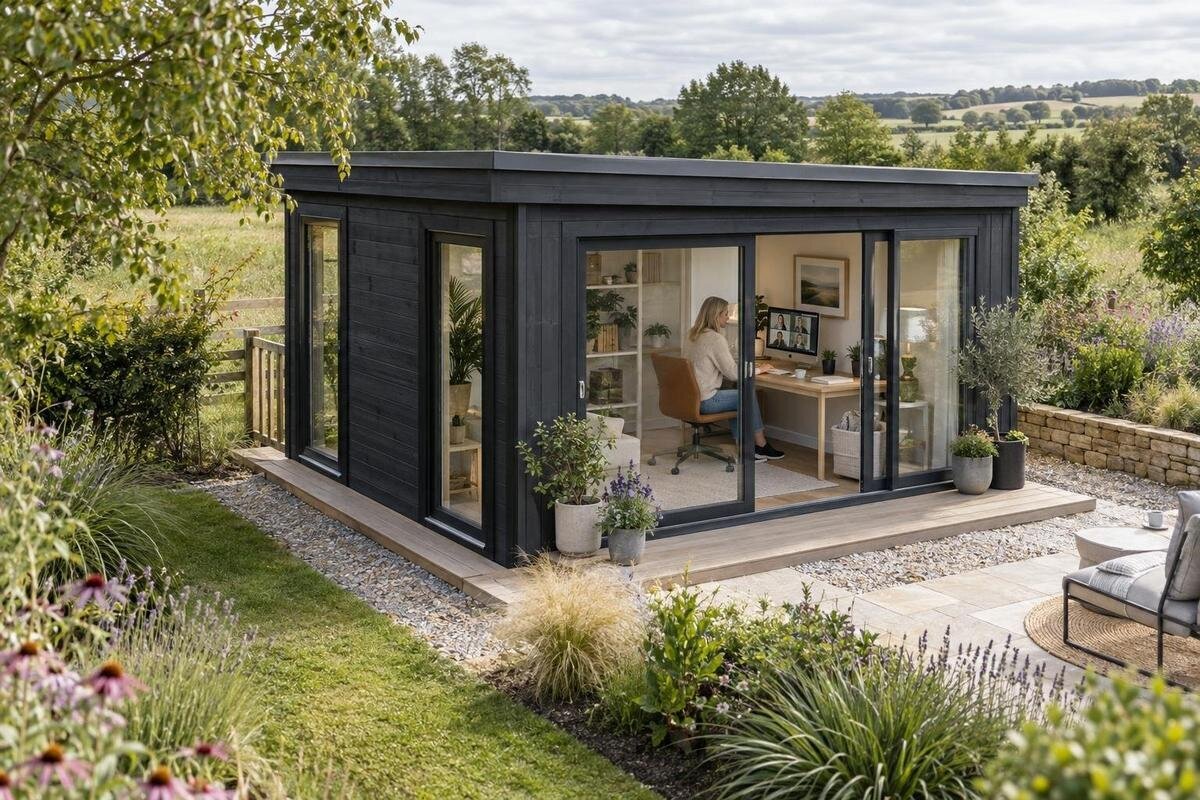
Garden house office planning
In a garden house office, the desk determines more than where you sit. Its position affects whether daylight falls across your work or reflects in a screen, how a webcam handles the brightest part of the room, and whether the furniture fits around the actual windows and entrance. Treat desk placement as a buying criterion: sketch the setup before choosing a layout, then verify the relevant dimensions and opening positions for the configuration you plan to order. That turns vague impressions from photos into practical questions you can answer before purchase.
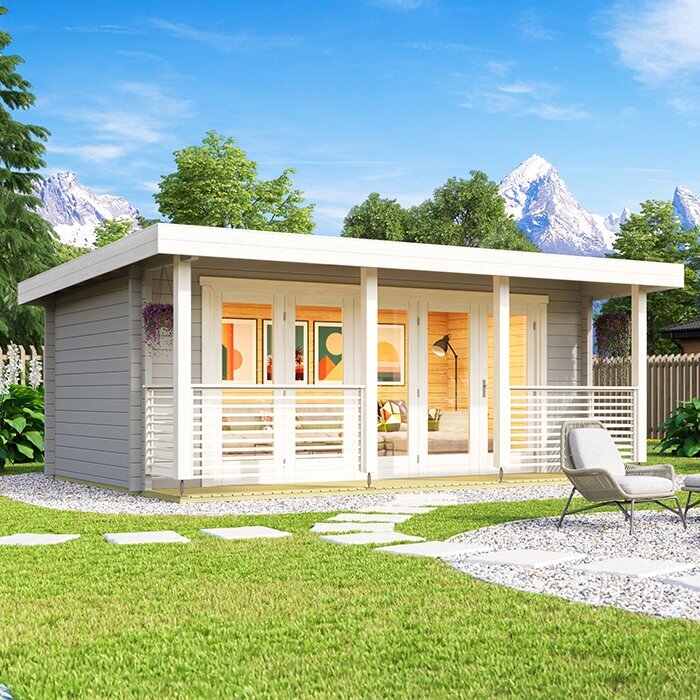
Map the desk before choosing a garden house
Treat the desk as a fixed element in the floor plan, not as furniture to squeeze into whichever corner remains. On a sketch, mark each window, entrance and other large opening, then add the desk, chair, monitor, task light and camera position. That makes the relationship between daylight, the screen and the background visible before you commit to a building. A paper layout is enough at first; when you compare options, replace rough measurements with the plan for the configuration you are considering. Leave unknown measurements open instead of assuming a styled photograph gives an accurate sense of scale.
Test two or three desk orientations on the same sketch. One may allow side light and a simple camera background; another may put a bright opening in your line of sight or a window behind your chair. Keep an ordinary route to the entrance clear, too, so a pulled-back chair does not obstruct daily access. Check the view from your seated position, not just from above, and note whether you can adjust the screen and camera independently. For Verdana 1 garden house, use the name only to identify the listing; compare any available floor plan and opening information for the configuration you are considering with your measured arrangement. Request missing details before deciding.
Observe daylight at the site during work hours
Observe the site at the hours you expect to work rather than judging daylight during a single convenient visit. Note when direct sun reaches the proposed desk wall, and whether it arrives in the morning, around midday or later. Trees, fences, nearby buildings and the changing height of the sun can shift the pattern over the year. Record the date, time and which areas brighten; if possible, note whether it was clear or overcast as well. If you cannot visit throughout the day, ask someone to note conditions at your usual work hours, and separate what you observed from what you are estimating.
Use those observations to compare possible window positions and desk walls, not to infer precise interior brightness from product photography. Orientation, exterior shade, glazing and surrounding surfaces all affect the light you experience, and details may differ between configurations. If Verdana 2 garden house is on your shortlist, look for plan and window information that applies to the version you intend to order; if it is not shown, ask for it. Do not treat a styled image as proof that daylight will reach a particular desk. Note how the building would sit on your site, and whether your plan depends on shade from a tree or structure that may change.
Place the screen to limit window glare
Screen glare often comes from a bright source in your field of view or reflected on the display, not simply from having a sunny room. If the floor plan allows it, position the monitor so the main window is to one side rather than directly in front of or behind you. Side light can brighten the work area without making the window the dominant view across the screen. Check from a seated position at the monitor’s normal height; an overhead drawing may look workable even when your viewing angle catches a reflection. If you use more than one display, consider whether the same position works for each.
Treat this orientation as a starting point, not a guarantee. A second window, a glossy screen, multiple monitors or a shifting sun angle can change the result, so test the position at more than one time of day. Decide whether the monitor can turn or move slightly while leaving the desk usable, and whether the keyboard and paperwork remain within comfortable reach. For Durano garden house, rely on whatever plan and opening-position information applies to the version you are considering, not on the model name, to judge whether side lighting is possible. If a window must remain in your view, include a compatible way to soften the light or change the screen angle in your plan.
Plan the camera view and video-call lighting
A webcam captures the light behind you as well as your face. A bright window directly behind your chair can cause the camera to expose for the background, leaving your face less visible; if possible, plan to face toward the window or sit with it off to one side. Direct sun in front of you can also create harsh or uneven light, so daylight alone does not guarantee a clear image. Aim for soft light on your face, and test the camera at the hours you usually take calls rather than judging the room when it is empty. If practical, use the same laptop or camera you expect to work with.
Check the full camera frame from your intended seat, including the wall, window edges, doorway and anything visible through the glass. A small shift in the chair or camera can change the background and how much bright area appears in view. Consider what the camera will show when you are seated and whether you need privacy from outside; that can affect which wall works best. When comparing a Veltor 1 garden house plan with your call needs, look for an arrangement that could support your preferred camera angle, then confirm it against the configuration you are considering. A quiet background can come from movable items or a camera adjustment; the building need not act like a dedicated studio.
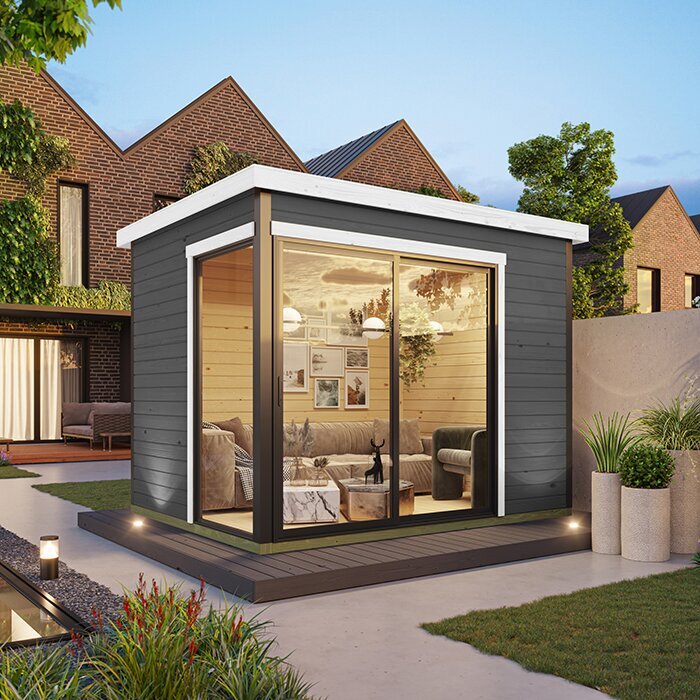
Measure the desk and chair against the floor plan
An advertised floor-area figure by itself does not show whether a particular desk fits. Measure the desk’s width and depth, then draw its footprint with the chair both in use and pulled back. Include the monitor stand, task lamp, drawers or storage you need, plus room to sit down and get up without a difficult turn. If you use a second screen or keep paperwork beside the keyboard, draw those too. Use actual interior dimensions from the plan where they are provided; if the drawing is unclear, ask for the relevant measurement instead of estimating from a photograph. A scale sketch also makes it easier to compare layouts.
Add your route from the entrance to the chair, and check that the desk does not obstruct access to a window or its covering. Leave some tolerance for furniture and wall details instead of making every measurement fit exactly on paper. The Orello 1 garden house is one listing you can compare using its documented information, but its name says nothing about clear floor area or whether your desk will fit. Confirm dimensions and opening locations for the configuration you are considering, then repeat the check with the chair pulled back and the screen at its intended angle. A fit that works only with the chair tucked away is not a useful workday layout.
Check window positions and light-control options
Window location is only part of the daylight question. Before buying, look for configuration-specific information about which walls have windows, their dimensions and positions, and how they open; do not infer those details from a product name or lifestyle image. Think about both diffuse daylight and periods when direct sun reaches the room. A desk near glass may feel bright at one hour and show reflections later, so compare alternative desk walls and consider whether the screen can move. The aim is not simply to maximize glazing, but to get light you can use without losing a workable screen and camera position.
Decide how you would manage excess light and privacy, and confirm what the selected order includes. Ask whether a compatible shade or curtain can be used with the actual window arrangement, where it would sit, and whether it would affect opening the window or placing the desk; do not assume a covering is supplied. If Modano 1 garden house is on your shortlist, review the window information for the configuration you intend to order and clarify any choices not described. A covering that gives privacy may also reduce useful daylight, so consider how it will work during calls as well as focused screen work.
Plan power and internet access near the desk
A strong visual plan can still fail if the desk has no practical route to power or internet. Locate existing outlets and the internet connection before settling on a desk wall; their positions may influence where you can place a monitor, task lamp, router and charging equipment. Include the devices you actually use, and map cables so they do not cross the main route to the chair or entrance. Think about whether a printer or other office equipment needs a nearby surface. Do not assume electrical or network fittings are part of a garden house order unless the applicable listing or documentation explicitly says they are.
Check product information for what is supplied and what is not. If a new outlet or other electrical work may be needed, have the proposed arrangement assessed by a qualified electrician rather than planning the installation yourself. Also test the internet connection where the desk would stand instead of assuming a nearby main home guarantees a usable signal; if necessary, ask a qualified network professional about the options. When comparing Veltor 2 garden house, review available plan and service information for the specific listing, then choose a desk position based on confirmed connection options rather than a guess.
Compare exact configurations, not product photos
Compare product listings by details that affect the office plan: floor-plan dimensions, exact window and door positions, the configuration shown, and which options or components are included. A gallery can show another viewpoint or furnished setup, so do not estimate room measurements from the apparent size of furniture in a photo. Keep a short list of missing facts, such as a plan measurement, window location or opening position, and get them clarified before ordering. If an answer changes where a desk can go, treat it as a selection criterion, not a minor detail to settle later. Make sure every detail refers to the version you are actually considering.
Keep model names separate from verified specifications in your notes. For example, Veltor 3 garden house identifies a product page; only information that applies to the configuration you are considering can answer questions about its layout or included features. Record which drawing or written answer you relied on, and make sure it refers to the selected version rather than assuming a similarly named listing shares its dimensions or windows. Comparing those concrete details helps you choose for the desk setup without attributing features to a name. If two configurations remain difficult to distinguish, request clarification before placing the order.
Test the proposed layout at full scale
Before ordering, recreate the proposed floor footprint at home with painter’s tape or paper. Mark the desk edges and chair pullback on the floor; use a sketch to note the window location, monitor and camera line. Sit in the planned position and look at the screen from your usual distance. This reveals awkward turns and blocked routes that a small plan may hide. If two desk walls are possible, test each separately, including the view behind you on camera and where the light comes from. Treat the exercise as a layout check, not an exact substitute for confirming the building’s dimensions and openings.
Repeat the daylight review at more than one work time where practical, because light that works in the morning may become direct sun later. You can test different screen angles in your mock-up, but remember that a home exercise cannot reproduce the exact light at another site. Use your site observations to judge the likely changes, and note each adjustment you would need: screen angle, window covering, task light or camera position. If the layout only works after several uncertain changes, keep those as unanswered purchase questions instead of assuming every one will be easy to solve. A phone photo from seated eye level can help compare alternative backgrounds.
Allow for changing tasks and daylight
An office setup needs to work across ordinary tasks, not just during a carefully staged video call. A laptop, larger display, paperwork and a call can each require a different screen angle or light balance. Choose a desk location that leaves some room to reposition the screen and camera without blocking access or forcing the chair into a tight corner. Keep task lighting and call equipment on the sketch as real objects, not afterthoughts. If you expect the garden house to serve another purpose at times, decide which office arrangement must remain undisturbed and how much space can be shared.
Set your priorities in order: a screen that is comfortable to view, daylight that can be managed during normal work hours, a camera view without a bright opening directly behind you, and enough clear space to sit and move. A particular site or window layout may require a compromise; decide which condition matters most to your work and identify a workable alternative before choosing a building. When the desk plan, window positions and camera view support the same arrangement, you are less likely to rely on constant adjustments or perfect light for every call. That is the practical test for a garden house office layout.
Frequently asked questions
Where should I place my desk in a garden house office?
When possible, place the monitor so the main window is off to one side, with daylight reaching your work area from the side. Check the screen from your seated position at different work hours; direct sun, another window or reflections can change what works.
How can I reduce screen glare?
Try a desk and monitor angle that keeps a bright window out of your direct view and screen reflection. Then consider whether a compatible window covering or movable task light could help. Test at more than one time of day, since a position that works in the morning may cause glare later.
Is a window behind me a problem on video calls?
It can create a bright background and make your face appear darker on camera. If possible, reposition the desk so the window is in front of you or off to one side, then check the image using the camera you plan to work with. Daylight alone does not guarantee even lighting.
Can I tell from a product photo whether a desk will fit?
No. A photo may show a different configuration or perspective and does not reliably show interior dimensions. Measure the desk, chair and equipment, then compare them with the plan and opening positions for the specific garden house configuration you are considering.
What should I verify before ordering a garden house for office use?
Confirm the applicable floor plan, window and door positions, dimensions, included components and any relevant power or internet information. Ask for missing details and make sure they refer to your selected configuration. Have any proposed electrical work assessed by a qualified electrician.
Good desk placement comes from fitting the work position to the site, windows and applicable floor plan—not choosing the brightest-looking photo. Compare daylight at your regular work hours, test screen and camera angles, and draw the real desk-and-chair footprint before you order. When the layout offers manageable glare, a usable call background and enough clear space, you have a stronger basis for choosing a garden house office.
