
Paint, Stain or Clear Finish for a Garden House?
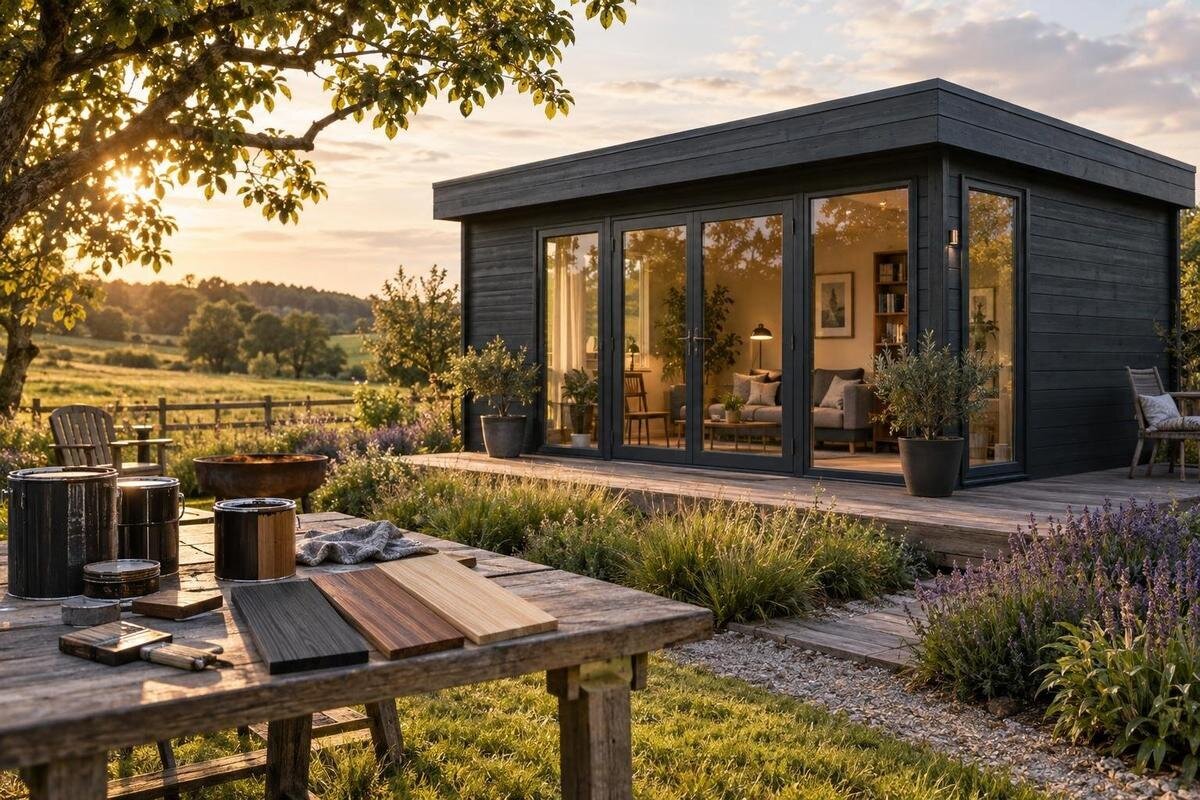
Garden house finish guide
Choosing paint, stain, or a clear finish for a garden house is a decision about appearance, care, and compatibility with the wood. Paint gives an opaque color; stains range from lightly tinted to nearly opaque; clear finishes keep more of the wood’s natural look visible. No option guarantees the same result or lifespan in every setting. The exact product, existing treatment, application, and exposure all matter. If you are comparing garden houses, confirm whether the exterior is untreated, pretreated, or already coated before buying a finish. This guide compares the options and explains what to confirm before ordering.
How paint, stain, and clear finish change the look
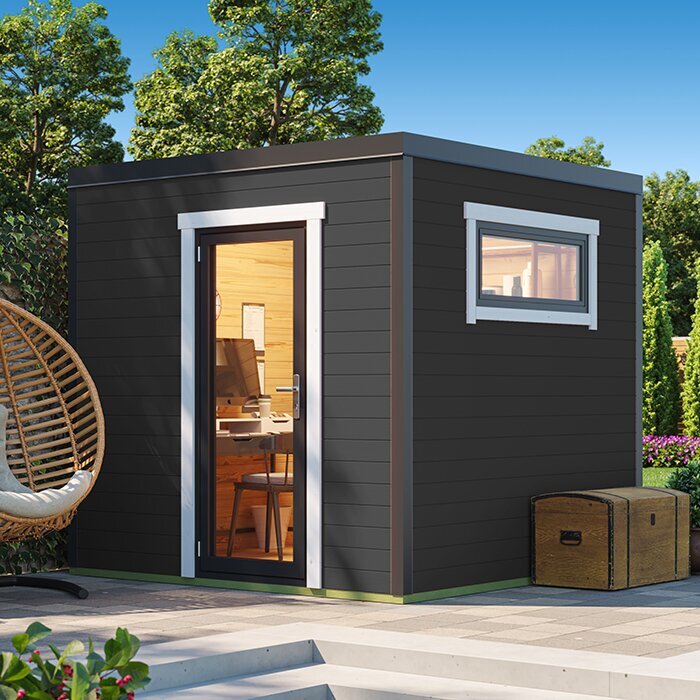
The three labels describe appearance more reliably than a fixed level of protection. Exterior paint is opaque: it largely conceals the wood’s original color and grain, while the boards’ physical texture may still show. Stain covers a range. Transparent and semi-transparent products leave more grain visible; solid-color stain can hide much of it. A clear finish keeps the wood’s natural variation prominent, though some formulas add a slight tint. Color, sheen, and texture depend on the wood and exact product, so these categories are a starting point, not a complete specification. Compare the exterior-use directions and sample appearance before choosing.
Think about the garden house as a large surface seen both from across the yard and up close. An opaque color can create a consistent overall look, while a transparent stain leaves more of the differences between boards on display. A clear coat does not make the wood uniform: knots, grain, and variations in tone remain visible. When reviewing the Verdana 1 garden house, use its product details or manual to establish the supplied surface and finish; photos alone cannot confirm those details. If a physical sample is available, compare it outdoors with the garden and nearby structures. A screen swatch cannot reliably show the final sheen or how color will read across a wall.
Paint for an opaque, color-led appearance
Paint is a practical choice when you want a defined color and do not need the wood grain to be a prominent feature. It can help a garden house coordinate with trim or nearby structures, and the color can make the building feel visually distinct or more integrated with its setting. An opaque coating covers much of the wood’s natural color variation, but it does not erase board texture, joints, or surface defects. Exterior paint is also intended to protect the surface when the product is suitable and correctly applied. It cannot make damaged wood sound or remove the need to inspect and care for the building.
The purchase question is whether the particular paint system is suitable for the garden house’s supplied wood and any existing treatment. Read the label for exterior wood use, compatible surfaces, primer requirements, coat count, and care instructions. Products differ, so do not assume that any outdoor paint is appropriate. For the Verdana 2 garden house, confirm the stated finish condition and coating recommendations in its documentation rather than inferring them from the model name. Paint may need renewal if the coating cracks, peels, or wears. Ask what the maker recommends when that happens: refreshing a failing film can require more than applying a quick touch-up.
Stain offers a range of wood-grain visibility
Stain is not one consistent level of coverage. A transparent product adds color while showing much of the grain; a semi-transparent stain leaves a colored wood pattern visible; a solid stain creates a more uniform surface and may look close to paint from a distance. Manufacturers do not always use opacity terms in exactly the same way, so check the specific product’s sample or color chart. The formula matters too. The word stain alone does not tell you how a product behaves on the wood, whether it forms a surface film, or what maintenance it needs. Look for directions that match exterior wood and the intended surface.
Wood can absorb color differently depending on the timber, its condition, and previous treatment, so a stain may not match a small digital swatch or a sample on different wood. Consider both the color and how much grain you want to remain visible. The details for the Durano garden house listing are a place to look for any stated finish information; if the supplied condition is not clear, ask before choosing a stain. Check whether the recommended system calls for a primer, sealer, or other product, and which exterior surfaces its instructions cover. The right stain is one whose appearance and maintenance directions suit the actual substrate.
Clear finish keeps natural wood variation visible
A clear exterior finish is an option when you want the wood itself to remain the main visual feature. It generally shows more of the grain and natural color than opaque paint, although some products add a slight warm or tinted cast. Clear does not necessarily mean colorless, nor does it mean every product offers the same protection. Formulas differ in sheen and additives; some include UV-protection features, which should be confirmed on the label. The transparent appearance is not proof that a finish is suitable for outdoor exposure. Check that its instructions specifically cover exterior use and the type of wood surface you plan to coat.
Clear finishes are less suited to creating a uniform color: differences in grain, age, and tone remain easy to see. Gloss or satin sheen can also change how the wood looks, so compare a sample after it has dried if possible. Find out how the manufacturer recommends inspecting and refreshing the finish; no single recoat interval applies to every formula and site. For the Veltor 1 garden house, use the listing or manual to confirm what finish condition is actually supplied before selecting a clear coat. If preserving visible grain matters more than concealing variation, clear may match your preference, provided you are also comfortable with the product’s care instructions.

Compare upkeep by product, not just finish type
Paint, stain, and clear finish do not have one universal maintenance schedule or aging pattern. Paint may chalk, crack, blister, or peel; stain may lose color or wear unevenly; a clear product may lose sheen or show changes in the wood beneath. These are possible signs to watch for, not a timetable. Exposure, wood condition, application, and product formulation all affect how a surface changes. Inspect the exterior periodically and follow the coating maker’s directions for cleaning and maintenance instead of relying on a fixed number of years or seasons that may not fit your conditions.
Before buying, look beyond the first application. Ask what the manufacturer recommends when the finish begins to wear, whether it can be refreshed with the same product, and what compatible products are approved. Find out whether future repairs are likely to blend with the surrounding surface and what preparation the product instructions call for. Changing from stain to paint, or from one coating system to another, may involve different work than renewing a compatible finish. These considerations affect the time and effort you are taking on. Treat a broad claim such as low maintenance cautiously unless it is supported by instructions for the exact product and surface.
Identify the garden house’s existing treatment
A new garden house is not automatically unfinished. It may be supplied untreated, pretreated, or with a finish already applied, and those terms can mean different things in different product descriptions. Establish what the exterior is made of and what has been applied before choosing another coating. For the Orello 1 listing, look for explicit finish information in the current product details or manual; the model name does not establish a particular treatment. If the supplied condition is unclear, ask the seller or manufacturer before ordering paint, stain, or clear finish. This information can determine which products are suitable and whether an additional coat is appropriate.
Compatibility matters because a coating is designed for particular surfaces and may not adhere or look as intended over an unknown finish. A penetrating stain, for example, may not behave as expected over a film-forming coating, and new paint may need a compatible primer or other preparation. Ask for the name of any existing treatment and the maker’s recommended products for use over it. If documentation is unavailable, seek advice from the supplier or coating manufacturer before buying a full quantity. A test area can help reveal color or appearance differences, but it does not replace guidance on product compatibility. A coordinated, documented system leaves less to guess.
Account for sunlight, rain, and the garden house’s location
The same finish can age differently on two sides of one garden house. Surfaces in prolonged direct sun may show fading or color changes sooner, while areas exposed to frequent rain, wind-driven moisture, or sprinkler splash may need closer attention. Trees can provide shade but may also keep a surface damp or drop debris. Consider where the building will sit, which surfaces are most exposed, and whether water regularly collects or splashes nearby. A coating is not a fix for leaks, recurring dampness, or drainage problems; those conditions need to be addressed separately from the choice of finish.
Choose a product labeled for exterior wood and check that its instructions cover the surfaces you intend to finish, including trim or other exposed parts where relevant. Do not assume a product recommended for one surface is suitable for every exterior component. For the Modano 1 listing, as with any model page, use the manual or seller’s written guidance to identify the supplied finish and applicable coating recommendations; an image does not establish weather protection. If the building will have substantial exposure, compare the manufacturers’ stated care and recoat guidance rather than relying on a generic ranking of paint, stain, and clear finish.
Compare color samples and estimate the right quantity
A color can look different on a full garden house than it does on a small online swatch. Screen settings, daylight, sheen, wood tone, and the number of coats all affect the result. If samples are available, view them outside beside the building or nearby trim. For a clear or transparent finish, use the same wood where possible, since a sample on a different timber may show a different tone. Compare samples after they have dried; a fresh coating can look different while wet. Keep a note of the exact product, color, sheen, and coat system so that a later touch-up has a clear reference.
Once you have settled on a finish, estimate the amount from the actual surface area and the product’s stated coverage, required coat count, and any primer requirement. Wood condition and porosity can affect how much product is used, so coverage figures are estimates rather than guarantees. Use published dimensions or measurements for the specific building, not a model number or photo. When reviewing the Veltor 2 garden house page, treat it as a place to check available product details, not a substitute for measurements or finish instructions. Confirm whether primer and topcoat are separate products and that the materials you buy are compatible.
Confirm finish details before placing the order
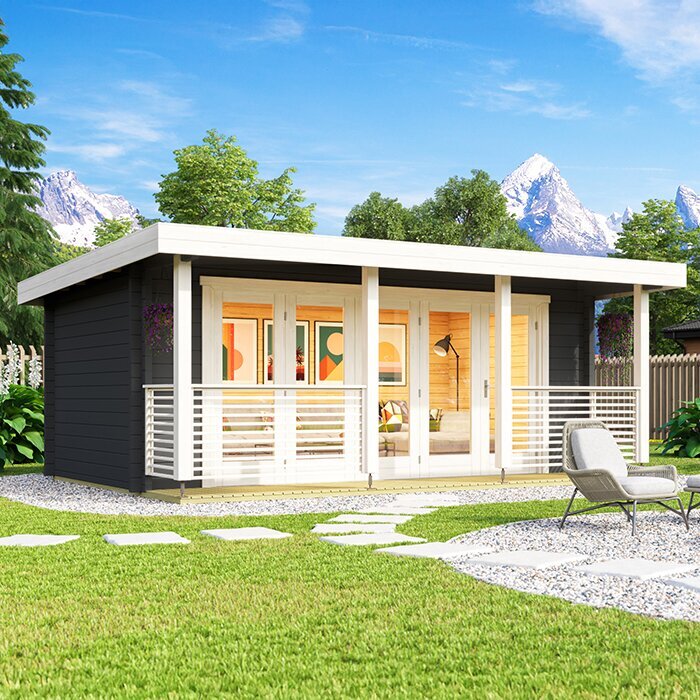
Before ordering a garden house, establish whether the configuration includes a factory-applied treatment or color and whether the exterior will arrive ready for another finish. Ask when the manufacturer recommends applying any additional coating. The instructions may specify whether work should happen before assembly, after assembly, or at particular stages, depending on the structure and finish system. Do not infer that timing from a photograph or assume every surface receives the same treatment. For the Veltor 3 listing, look for explicit information about the supplied finish and request clarification if the product details or manual leave it open. Knowing this before purchase helps you plan materials and work.
Request the care guide and written recommendations for exterior products, then keep the details together: finish type, product name, color, sheen, primer, coat count, and application directions. If you expect to handle touch-ups later, make a note of the recommended product and whether trim or other surfaces use a different finish. Check the stated coverage against the area you expect to coat before buying materials. If someone else will apply the finish, share the garden house’s instructions with them beforehand so the selected system matches the supplied surface. These are useful ordering details to settle in advance, not assumptions to fill in after delivery.
Match the finish to your priorities and upkeep plans
Three questions can narrow the choice: Do you want color to cover the wood, or should the grain remain visible? What treatment is already on the garden house? How much inspection and eventual recoating are you prepared to take on? Paint is the clearest option when an opaque, color-led appearance is the priority. Stain lets you choose among different levels of grain visibility. Clear finish emphasizes natural wood variation. None is the best choice for every building, because the exact product, surface, exposure, and maintenance instructions affect how well each option fits.
If you cannot answer what the wood is or what finish is already present, wait before buying a large quantity or choosing a topcoat. Compare the product instructions with the building’s stated condition, including surface compatibility, coverage, coat count, and ongoing care. A short written comparison of candidate finishes can make the tradeoffs easier to see: note the expected appearance, approved surface, required coats, and maintenance guidance. When those details suit both your preferred look and the time you are willing to spend on upkeep, the finish is a more considered choice than one made from color alone.
Frequently asked questions
Is paint more protective than stain on a garden house?
Not as a general rule. Paint and stain vary by formula, application, substrate, and exposure; stains also range from transparent to solid. Compare the exterior-use instructions and upkeep guidance for the specific products.
Does a clear finish protect wood from sunlight?
Some clear exterior finishes include UV-protection additives or a tint, but the level of protection varies. Check the product label for its stated exterior use and UV guidance rather than relying on the word clear.
Can I paint over a stained garden house?
It depends on the stain, its condition, and the paint system. Ask the finish manufacturer whether the products are compatible and what preparation or primer is required before buying a full quantity.
Should I apply a finish before assembling the garden house?
Follow the building maker’s instructions. The recommended timing can depend on the structure and the coating system, so ask which surfaces to finish and when rather than assuming one approach fits every model.
How much paint or stain should I buy?
Use the actual surface area, the product’s stated coverage, the required number of coats, and any primer requirement. Wood condition and porosity can affect use, so treat coverage figures as estimates.
The choice is clearest when you balance the look you want with the condition of the wood and the care a particular product requires. Paint prioritizes opaque color, stain gives you a range of grain visibility, and clear finish keeps natural variation in view. Compare specific product instructions rather than assuming a finish category guarantees a certain level of protection or upkeep. With the supplied surface and coating guidance understood, you can choose an appearance that also makes sense for the garden house over time.
