
Garden House, Summerhouse, or Log Cabin? What the Names Mean
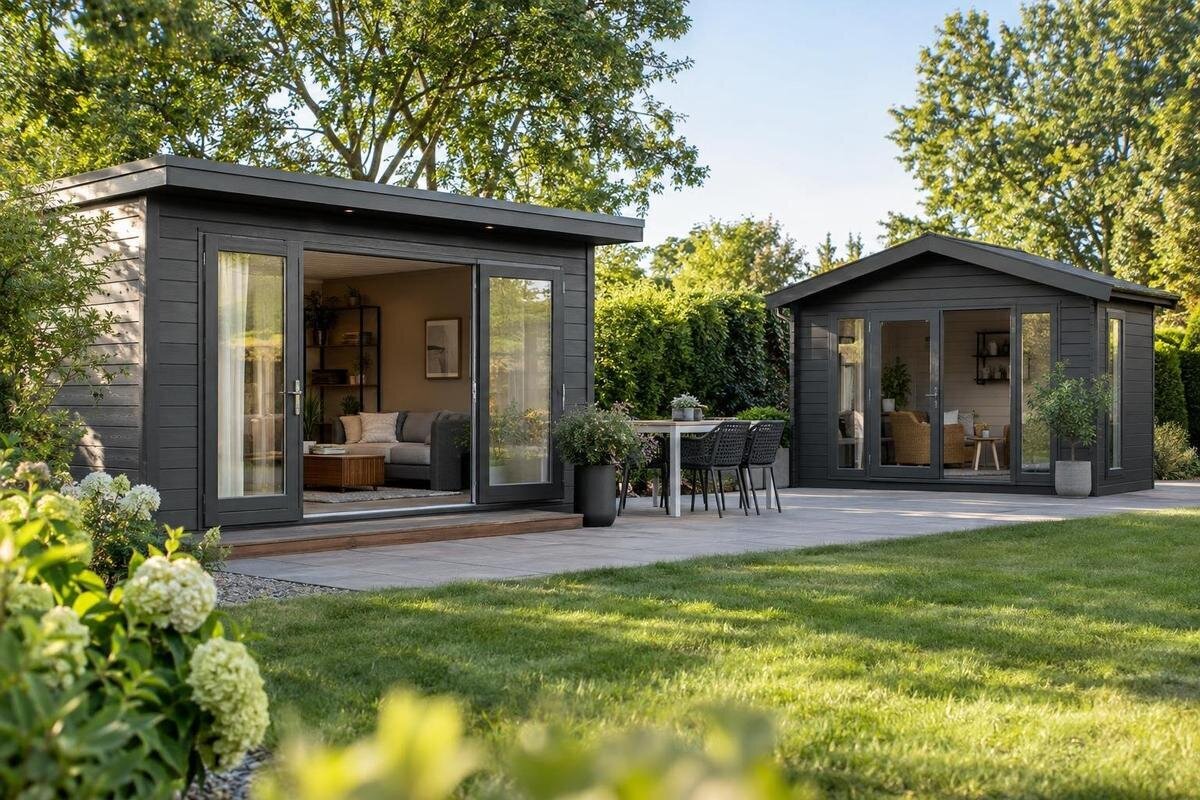
Garden building terminology
Searching “garden house vs. summerhouse vs. log cabin” can make the names sound like three sharply defined building types. They are better treated as overlapping labels: “garden house” is usually the broadest, “summerhouse” often emphasizes leisure or seasonal use, and “log cabin” may describe a log-style appearance or a particular construction approach. Retailers and homeowners do not always use the words identically. For a purchase, use the label to find candidates, then compare the documented design, materials, dimensions, included parts, and intended-use information. A name alone does not establish how a building can be used.
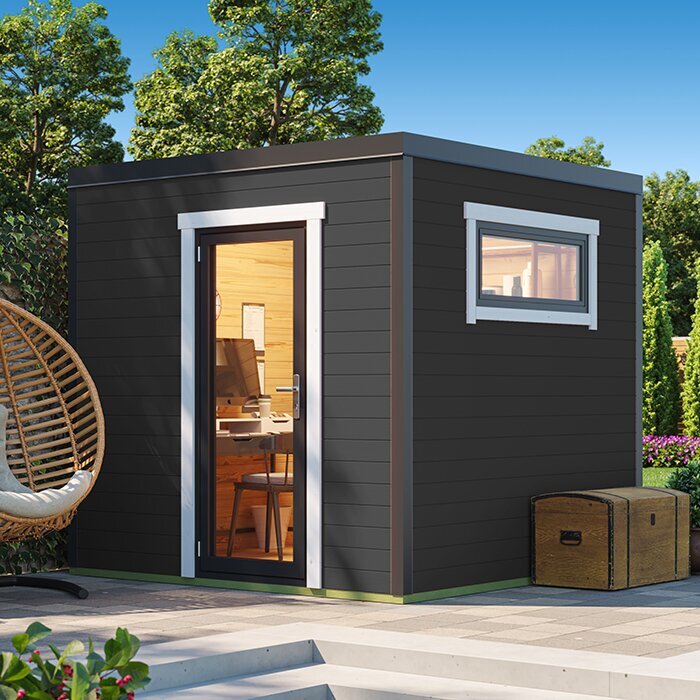
Why the names overlap
In everyday garden-building language, the three terms can describe different things: a product category, an intended atmosphere, or a construction style. Those ideas can overlap in one building. A retailer may file a model as a garden house, a buyer may call a similar space a summerhouse because they plan to sit in it, and someone else may say log cabin because of its wall profile. That does not necessarily mean anyone is using the word incorrectly. Product titles, catalog categories, and everyday conversation answer different questions, so the boundaries are often loose rather than a formal classification. The same person may use different terms in different conversations.
That overlap matters when you shop. A search limited to one phrase may miss listings placed under another label, while a decision based on the label alone can create expectations the description never promised. Notice whether a term appears as a category, product title, or informal description; those uses are not always interchangeable. A category name may be broad while a product title highlights one selling angle. Use names to find candidates, then compare written information and drawings. Treat a term as a clue about how the building is presented, not as a shared definition guaranteeing particular materials, comfort, or seasonal performance.
Garden house: the broadest everyday label
“Garden house” is generally the most flexible of the three phrases. In a catalog, it commonly works as an umbrella label for a detached building associated with a garden or yard, without specifying whether someone intends to relax there, pursue a hobby, do gardening tasks, or keep belongings. It can suggest a small room-like space, but that impression is not a specification. The word “house” does not by itself mean the structure is designed for living, sleeping, or permanent occupation. A category may also group models with different layouts and purposes.
When browsing, treat Garden House as the product category and read beyond it. The Garden House Verdana 1 page is one example of a model listed within that category; its name helps you locate the listing, but the category and model title do not answer questions about layout, dimensions, materials, or construction. Look for the product description and any drawings, then compare those details with your purpose. If a headline and detailed specification use different wording, note the discrepancy and ask which model and description apply to the order. Do not use the category label to infer how the building is fitted out.
Summerhouse: a name tied to leisure and season
“Summerhouse” usually emphasizes how someone expects to spend time in the building, rather than specifying a wall system. The word can suggest a seasonal retreat, somewhere to sit or entertain, or a leisure-oriented garden space. One retailer may use it as a category; another may use it as a descriptive name for a garden house. Its seasonal association describes a common impression, not a guarantee that the building is suitable only for warm weather—or that it will be comfortable in every season. The label alone says little about insulation, glazing, protection from the elements, or what furniture the layout can accommodate.
Turn the label into practical questions before comparing options. How will you use the interior: for a chair and a book, shared meals, a hobby, or a specific activity? Do you need space for furniture, clear circulation, privacy, daylight, or an accessible entrance? If several people will use the space, consider circulation as well as furniture. Check the published plan, door and window information, and any stated use limitations rather than assuming a leisure label describes the layout. A garden-house listing such as Garden House Verdana 2 can be assessed against a summerhouse-style brief only through documented details. The title is a search clue, not evidence that it meets a comfort requirement.
Log cabin: construction, style, or both?
“Log cabin” sounds more specific because it can point to both a cabin-like style and a way walls are made, but sellers do not always use it with the same precision. “Log” might describe substantial interlocking log elements, profiled boards that give a log-like appearance, or a rustic visual treatment. “Cabin” can evoke a compact retreat without establishing how the building is insulated, finished, or intended to be occupied. A wooden garden house and a log cabin are not automatically equivalent, and a wood description alone does not confirm log-wall construction. In some titles, “cabin” may be descriptive rather than a precise construction term.
If a particular log-cabin look or construction is important, look for an explicit construction description rather than relying on a product title. Check how the seller identifies the wall material, shape, and assembly; consult drawings or technical details for the points that matter, and ask for clarification if the wording is vague. A page named Durano wooden garden house identifies a garden-house model, but its title alone does not establish a log-wall system or any other unlisted construction detail. Treat “wooden,” “log,” and “cabin” as separate clues until the listing explains how they relate to that exact product.
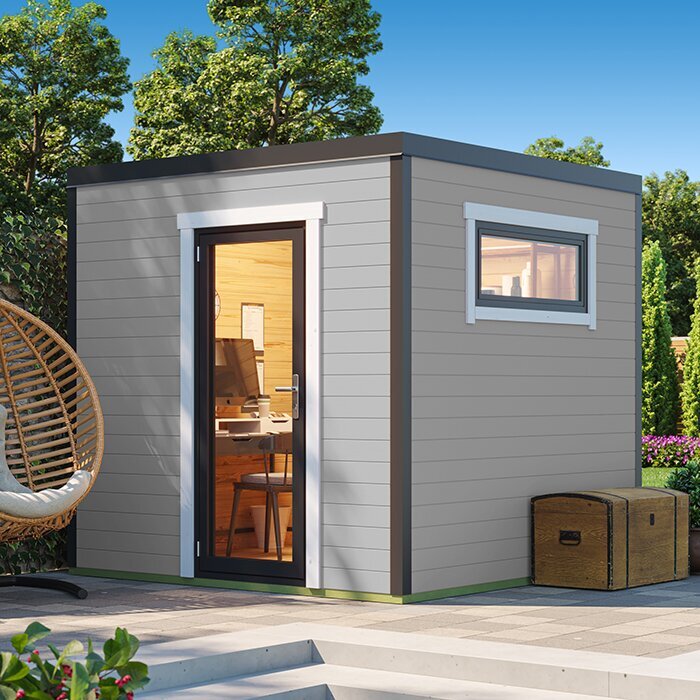
What the name cannot tell you
None of the three labels reliably tells you the building’s dimensions, wall thickness, insulation, glazing, roof or floor components, weather performance, or which parts are included. Nor does a name guarantee that a structure is suitable as a workspace, guest room, or year-round room. Those are separate questions that need specific product information. “Summerhouse” does not promise particular seasonal performance; “log cabin” does not automatically specify timber thickness or insulation; “garden house” does not settle whether the listed product suits your planned activity. Avoid filling gaps in the description with assumptions from category wording or photographs. Important distinctions may appear in version names, options, or separate documents.
Before comparing models, list the facts you need and check each candidate against the same fields. Use drawings for dimensions and layout, written material details for construction, and the inclusions list for supplied components; check whether measurements are internal, external, or defined another way. Note whether features are standard, optional, or excluded, including any floor, glazing, or hardware details relevant to your plan. Product identifiers such as Veltor 1 help keep pages and notes straight, but a model name is a reference, not a substitute for its specification. A short comparison sheet can mark details as confirmed, optional, or not stated. Resolve unclear points before ranking options.
Choose for the activity, not the label
Define the activity before settling on a name. A quiet place to read, a sheltered spot for garden breaks, a hobby area, and a place for equipment can create different priorities for access, light, privacy, floor space, and the way people move through the building. Write down what needs to fit, who will use the space, and how often, then see whether the product documents address those needs. Frequency can change what matters: occasional visits may call for different priorities from longer sessions. This avoids assuming that anything called a summerhouse is automatically comfortable for leisure, or that a garden house suits a task simply because the phrase is broad. Let the intended use set your comparison criteria.
Separate essential requirements from preferences. A suitable opening for moving planned items inside may be essential, while a particular appearance could be optional; a workspace may raise different questions from a sitting area. If drawings or options are provided for a model such as Orello 1, compare them against your own list without inferring a door type, capacity, or performance from its name or photographs. If your plan depends on utilities, a foundation, or structural conditions, ask a qualified professional what must be verified for that project. You can then remove candidates whose documented details leave an essential requirement unresolved.
Search with several terms, then compare
Search broadly, then narrow deliberately. Try “garden house” alongside “summerhouse,” “garden cabin,” or “log cabin,” because sellers may use different terms for related products. Add a real requirement—such as a desired footprint, a particular documented material, or an opening configuration—only when the listing provides a clear way to verify it. A search engine’s result title may not show every detail, and category filters reflect the retailer’s organization rather than a universal definition. Run alternative terms separately, too; not every site indexes synonyms. Keep the exact model and category in your notes so you can return to the right listing and distinguish similar names.
After collecting a shortlist, compare candidates side by side using the same fields: overall and interior dimensions where stated, wall and roof materials, door and window configuration, included components, and any intended-use information. Images help you understand visible appearance, but they cannot confirm a measurement, hidden material layers, or what arrives in the package. A listing such as Modano 1 is best treated as a model-specific page to inspect, not as proof of a feature inferred from its title. Record unknowns as questions rather than assuming one model matches another. A consistent comparison makes terminology useful for discovery without letting it make the final choice.
Match the order to the exact model
Before ordering, make sure the purchase documents identify the exact model and version you selected, not only a broad label such as garden house or summerhouse. Compare the order description with the product listing and any quote, drawings, or specification documents you relied on. Confirm the dimensions and materials relevant to your choice, the parts included, and whether options are included or sold separately. If two products have similar names, record their full designations and the selected version. That match-up is more useful than a category word when checking whether the item ordered is the one you intended. Keep a copy of the confirmed details with your order records.
Also verify practical terms that affect your project: what is included in the delivery, how the package is handled at the site, what assembly is expected, and what preparations the supplier requires. Do not infer delivery, installation, or foundation requirements from “cabin” or “house”; read the written terms and seek qualified advice on site or foundation questions where needed. If your notes refer to Veltor 2, pair that model identifier with the exact confirmed version and agreed specification. Where a listing and quote appear to conflict, ask for clarification in writing before ordering rather than assuming the shorter wording controls. The category name is useful shorthand, but order documents should be precise.
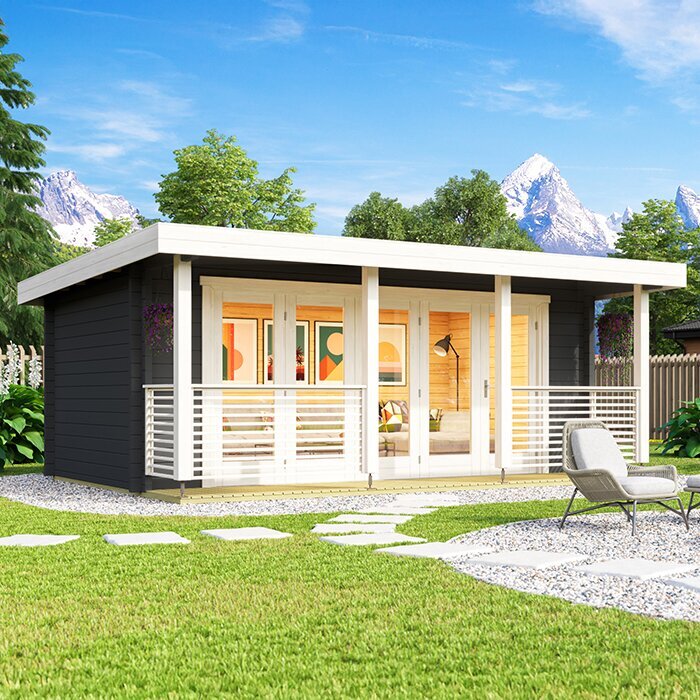
Describe the same building clearly
Clear wording helps when you discuss a shortlist with a seller, installer, household member, or anyone helping plan the site. Say both what you call the building and what you need it to do: for example, “a garden house for relaxing” or “a log-style building, if the construction details match the specification.” Then identify the product by its exact model and share the relevant drawing or written information. This prevents two people from using “cabin” or “summerhouse” differently while assuming they mean the same feature or function. It gives anyone reviewing the plan a concrete description rather than a vague category name.
In notes and emails, keep the retailer’s displayed name for identification, but put the facts that matter in a separate list. A model page such as Veltor 3 can be the reference, while your questions cover precise size, wall construction, included parts, or suitability for the intended activity. This helps if the title uses a broad term and the product information is more specific. Share the same version of the drawings and listing with everyone involved, and update your notes if the selected model changes; otherwise, a familiar nickname can continue to point to an earlier option. Use the retailer’s exact spelling or model number to avoid confusion.
When more than one name fits
Sometimes more than one name fits without contradiction. A garden house used as a summer retreat may be called a summerhouse in everyday conversation; a garden building whose documented walls use a log-style construction may also be described as a log cabin. Each term answers a different question: where the seller places it in a catalog, what role a buyer imagines for it, or how its construction or appearance is described. You do not need to force every candidate into one exclusive category when your goal is simply to browse or explain an idea. Using two terms can make the intended meaning clearer rather than less precise.
Use combined wording when it makes your meaning clearer, then be exact where a purchase depends on a fact. For browsing, search more than one term. For the decision, compare documented details with the activities and conditions you have in mind. For an order, use the exact model and written specifications. If the seller’s term differs from yours, ask what it means on that particular listing instead of assuming the label changes the product. That lets everyday language stay flexible while keeping the buying decision grounded in information you can verify. It also avoids expecting every retailer to sort similar listings in the same way.
Frequently asked questions
Are garden houses and summerhouses the same thing?
They can refer to overlapping kinds of buildings. “Garden house” is often the broader category label, while “summerhouse” more often emphasizes leisure or a seasonal retreat. Sellers may use either term differently, so compare the listing’s intended-use information, drawings, and product details instead of assuming the words define separate types.
Does “log cabin” always mean the walls are made from logs?
Not necessarily. Depending on the listing, it may describe a construction method, log-profile wall elements, or a visual style. Check the wall materials and construction description, and ask the seller to clarify if the exact build matters to your choice.
Does “summerhouse” mean the building can only be used in summer?
Not by itself. The term carries a common leisure or seasonal association, but does not state how a building performs in different conditions. Look for explicit product information on materials, insulation, and intended use, and ask about requirements the documents do not address.
Can a garden house be used as a workspace or guest room?
The category name alone cannot establish that. Check the model’s written intended-use information, layout, dimensions, and relevant features against your plan. If the use depends on utilities, structural suitability, or other professional considerations, have those specific requirements reviewed by a qualified professional.
Which name should I use when searching or ordering?
Search using several terms to find listings that retailers categorize differently. When comparing and ordering, use the exact model and version, together with written specifications and an agreed list of included items. A broad category label is useful for browsing but too vague to identify a specific purchase.
The three names are most useful as search clues: garden house is broad, summerhouse leans toward leisure or seasonal associations, and log cabin can signal a cabin-like style or construction. Because sellers and buyers use them flexibly, no label should decide the purchase on its own. Search with several terms, choose by documented details and planned use, and identify your final selection by its exact model and written specifications.
