
Heating a Garden House for Occasional Use: Options to Consider
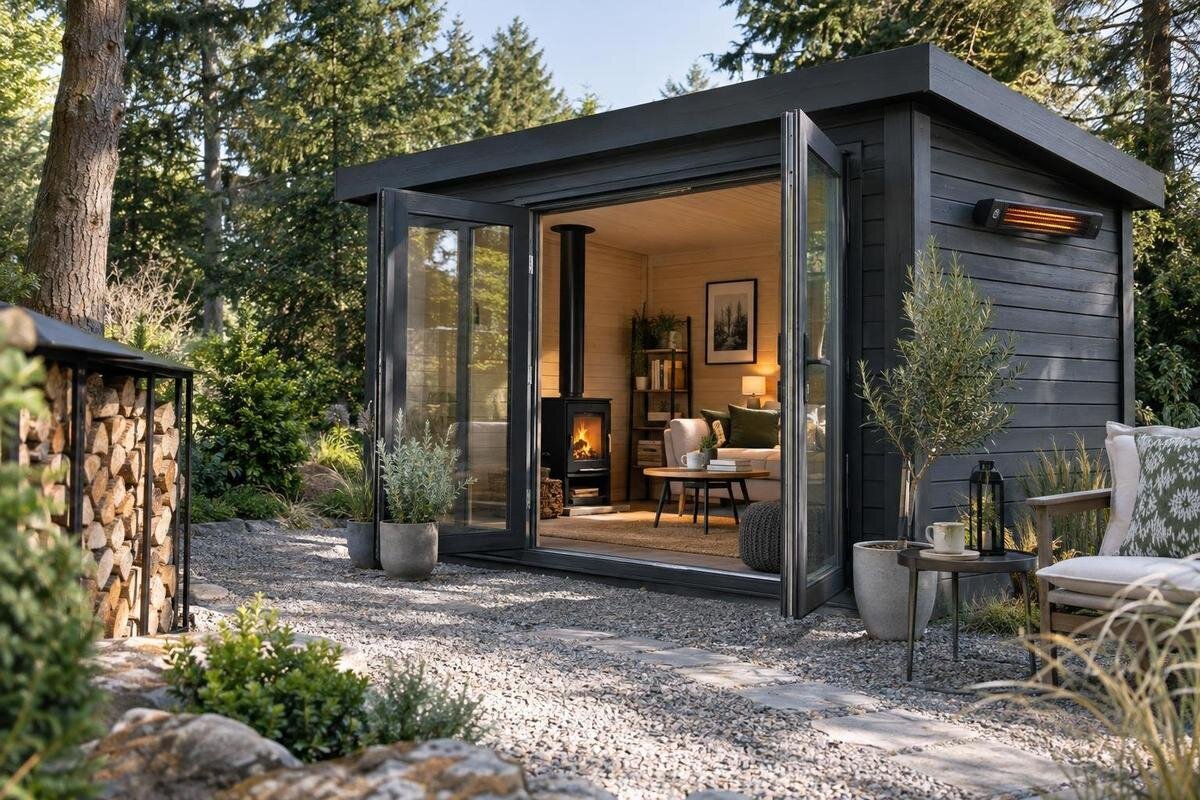
Garden house heating
Heating a garden house for occasional use is less about holding one temperature all week than about making the space comfortable on the visits you actually make. How quickly it warms, which area needs heat, what the building can retain, and what energy source is available all affect the purchase. A heater that seems suitable on a product page may not suit a particular garden house or routine, so plan around the building details and safe operation—not output alone. Use this guide to compare the main options, identify information to verify before ordering, and decide when an electrician or heating professional should assess the plan. The emphasis is occasional visits, not a promise of year-round room comfort or a substitute for product instructions.
Before you buy 1
Define what occasional use means
Define occasional use in practical terms before comparing equipment. A garden house used for a few focused hours on weekends has a different heating brief from one used for a full day of entertaining, even if both are visited infrequently. Note how long you stay, how many people need to be comfortable, whether they sit still or move around, and whether the door is often open. Someone reading at a desk may prefer steady warmth across the occupied area; a person doing active tasks may care more about taking the chill off one zone. Those are different outcomes, not just different heater sizes.
Also decide what ready to use means for you. Are you willing to arrive early and wait for the room, or does it need to feel comfortable soon after you arrive? Is the system expected to run only while someone is present, or does your plan assume remote preheating? Do not assume any device is safe to operate unattended; follow its instructions and get professional advice for the exact system. Write down the season, visit length, likely outdoor conditions, occupied zone, and acceptable warm-up delay. That brief makes comparisons meaningful and avoids buying around a vague wish for a cozy room.
Set a realistic warm-up expectation
A building that has been unheated between visits may begin with cold surfaces as well as cool air. The time to reach a comfortable feel depends on outdoor weather, building size, air leakage, insulation, and the heater's location and type. A burst of heat at the occupied spot is not necessarily the same as bringing the whole room to an even temperature. If visits are short, decide whether local comfort is enough; if several people use the full space, plan for a longer warm-up and broader distribution. Product labels alone cannot promise an arrival-to-comfort time, and adding a stronger device cannot resolve unknown building characteristics.
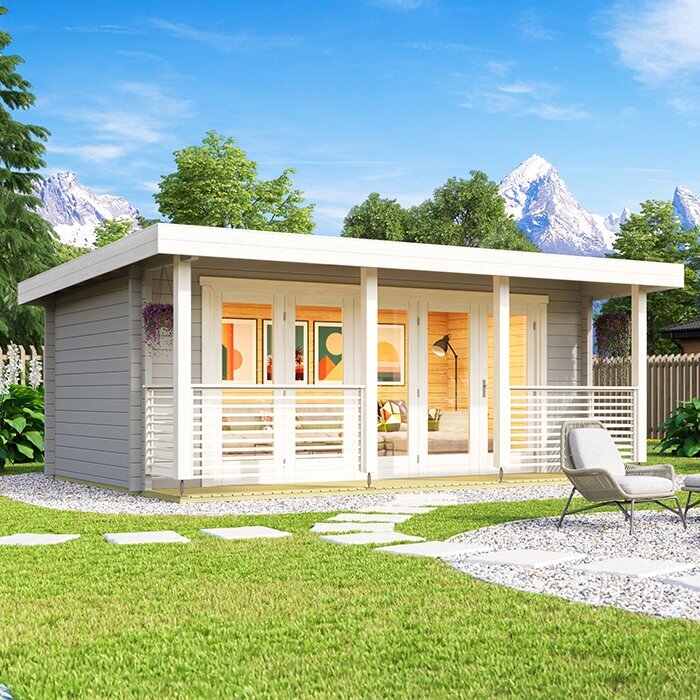
Before choosing, find the building's actual dimensions and any stated thermal or construction information, then compare those details with the heater manufacturer's guidance. If that information does not let you judge the expected result, ask a qualified heating professional rather than relying on a generic room-size estimate. Use the Verdana 1 garden house listing as one model to research: its name and images do not establish insulation, airtightness, or warm-up time. A realistic arrival buffer may matter just as much as heater choice for a space used sporadically; include it in the plan rather than assuming instant warmth.
Before you buy 2
Compare portable and fixed electric heat
Portable electric heaters can suit buyers who want to move heat near the occupied area and store the unit between visits; they still take up floor space and depend on a suitable electrical supply. Think about storage when the garden house is not in use, moving the unit in and out, and whether cords or controls interfere with the room's ordinary purpose. A fixed electric heater gives the room a planned heating point and may simplify routine operation, but it brings decisions about mounting, controls, service capacity, and installation. Neither type is automatically better for occasional use. Portability helps only if there's a suitable place to position the unit; a fixed unit helps only if its location and operation suit the plan.
Compare the entire setup, not just the appliance. Ask a qualified electrician whether the available service and intended outlet or connection can support the heater you are considering; the appearance of an outlet does not show its circuit capacity. Include storage or mounting needs on the floor plan, along with furniture and the route people use through the room. If you are assessing the Verdana 2 garden house page, compare the layout details actually published with a proposed heater location. The house listing does not confirm wiring, outlet placement, or electrical suitability, and an improvised connection is not a substitute for an assessment. Resolve any service question before placing the order.
Choose the kind of comfort you need
Radiant and convective heaters create different kinds of comfort. A radiant unit directs heat toward people and nearby surfaces, so it may suit occupants who remain in a defined area; it does not necessarily warm every part of the room evenly. A convective heater warms surrounding air, which may suit a need for broader room warmth, though the result still depends on the building and how heat circulates. Some appliances add a fan or offer different controls. Compare noise, thermostat behavior, response, and the area the manufacturer's instructions say the device is intended to serve, rather than relying on a generic label. The distinction helps clarify what you want the equipment to do during a short visit.
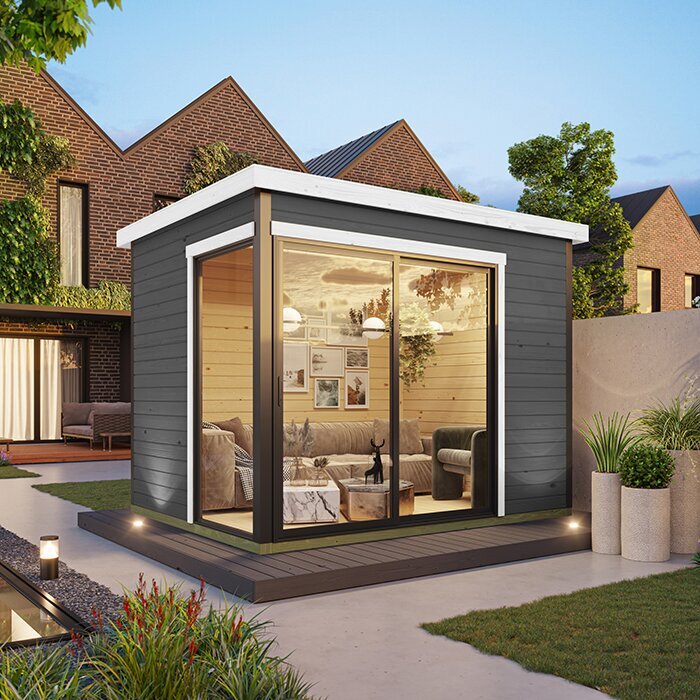
Map the furniture before settling on a type: a chair, desk, and frequently used path may make one heating zone more practical than another. A heater's useful reach can be affected by furniture, partitions, openings, and where people spend time. If visitors move between areas, localized warmth may not meet the brief; if they remain seated, heating an unoccupied corner may be unnecessary. For the Durano garden house listing, use only dimensions or layout details actually shown to check whether a localized zone fits your arrangement. If you want an evenly comfortable room, have the specific heater and building assessed together instead of assuming one device will cover both aims.
Before you buy 3
Check the garden house's thermal details
Heating performance is tied to what happens at the walls, roof, floor, windows, and doors. Insulation, air leakage, glazing, and how well components fit can change how quickly a room loses heat; ventilation also has to remain appropriate for the building and appliance. A higher-capacity heater is not a substitute for understanding the building envelope, and a heater selected from floor area alone can miss important differences between two garden houses. Ask what construction and thermal information is documented for the model. Separate a stated property from a general description or photograph, which may show appearance without proving heat retention.
If a listing does not state a thermal property, treat it as unknown instead of inferring it from a wall's appearance or a model label. Check the building's assembly and intended-use instructions, and ask the supplier what is documented about the shell, doors, and windows. The Veltor 1 garden house page can be part of a shortlist, but only verified details should inform your heating decision. Consider whether the stated design and construction match the kind of warmth you expect, not simply whether a heater can be added. If heat retention is central and information is unclear, ask the building supplier or a qualified professional before ordering; don't buy an appliance to compensate for an unanswered construction question.
Size the system from actual building information
Choosing heater capacity is a sizing question, not a guess based only on a catalog square-foot range. Usable floor area matters, but so can ceiling height, the number and type of openings, insulation, air leakage, local outdoor conditions, desired indoor feel, and how quickly you expect the room to warm. Those factors interact, so a generic online calculator or a label written for a different kind of room may mislead. Gather the actual building specifications and ask a qualified heating professional to assess the demand for the specific site and use. You do not need to calculate the load yourself; the point is to provide the right building facts.
Before requesting that assessment, note whether you will heat the whole room or just a defined seating or work area, how often doors open, and whether the building will be heated from a cold start. Use dimensions on the Orello garden house listing only if they are explicitly stated; do not infer room size or demand from a photograph. Give the professional the intended visit schedule as well as building details, because brief use and a slow warm-up have different practical consequences from steady occupancy. This can help avoid paying for a unit that fails to meet the intended comfort or choosing one unsuitable for the available system.
Before you buy 4
Confirm electrical access and heater placement
Electrical access should be resolved before you commit to an electric heater. Find out whether the garden house already has suitable power, what connection the proposed equipment requires, and whether the route to a wall-mounted or portable unit can be planned without improvisation. A qualified electrician can check the existing service and explain any work needed; do not judge capacity by socket shape or assume an extension cord makes an appliance compatible. If other outdoor equipment shares the supply, mention it when arranging that assessment. If adding or changing a connection affects where the house is positioned or assembled, make that decision before the building order is finalized, not after furniture and finishes are in place.
Check the heater maker's requirements for indoor use, placement, mounting, clearances, moisture exposure, supervision, controls, and maintenance before choosing a model. Requirements differ by appliance, so this is a reason to compare documentation, not a generic installation recipe. When considering the Modano garden house page, treat the listing as identification of a house, not evidence of electrical capacity or an approved heater location. A written plan should show that the chosen unit, power source, and room arrangement work together, with a qualified professional resolving uncertainty before purchase or installation. If any required condition cannot be met, choose a different setup rather than improvising.
Treat fuel-burning heat as a specialist choice
Gas, propane, and wood-burning equipment introduce issues electric options do not: fuel storage, combustion air, exhaust or venting, carbon monoxide, and fire-safety clearances. The safe answer depends on the exact appliance and garden house, so do not choose this route from a general article or heater label alone. Never assume that a patio, camping, or outdoor heater is suitable in an enclosed garden house. Check the unit's stated intended use and consult a qualified professional who can assess the proposed appliance and building. This is particularly important where the building's ventilation or layout is not intended for a combustion appliance.
Raise the question while choosing the house, not after it is assembled. A qualified installer can explain what the appliance requires, whether the building documentation supports it, and whether ventilation, fuel arrangements, clearances, or local approvals need attention; requirements vary, so avoid relying on a DIY interpretation. The Veltor 2 garden house listing does not by itself establish suitability for any fuel-burning heater. If a professional cannot confirm a safe, compatible setup, compare another heating approach or revise the plan before ordering rather than trying to adapt the building later. Keep all decisions tied to the exact equipment and intended use.
Before you buy 5
Compare layouts with the heating plan in mind
House layout affects heating in everyday use. Compare usable floor dimensions, ceiling space, door and window positions, and the areas where people will sit or work. A large glazed area or frequent opening may change heat loss and how comfortable a particular seat feels, but the effect depends on actual construction and site. Ground the plan in published measurements and details instead of assuming that two garden houses with similar appearances have the same thermal behavior. The heater also has to fit the room without making its main use awkward: an attractive layout is only useful if the proposed heating zone and furniture can coexist.
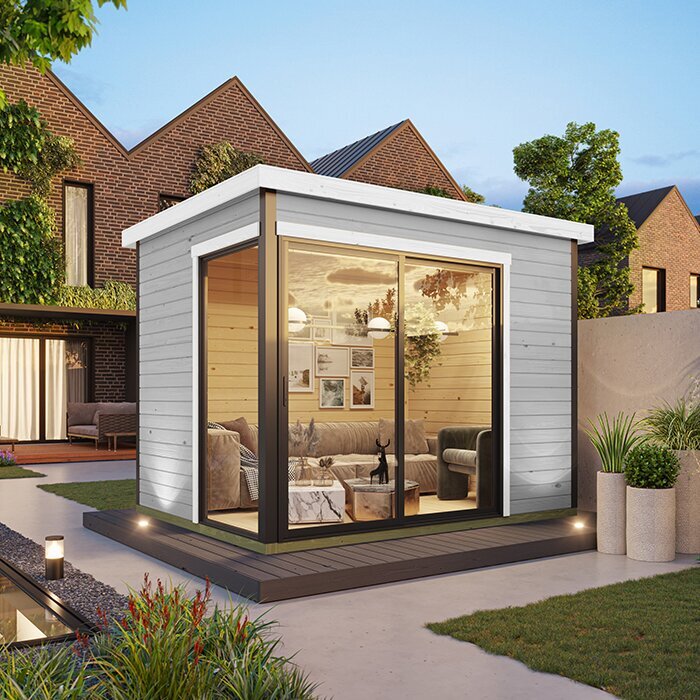
Make a simple comparison sheet for each shortlisted garden house: documented dimensions, insulation or other thermal details if supplied, openings, intended occupancy, power access, and the heater's requirements. Note unknowns separately so an unverified feature does not silently become part of the decision. For a model such as the Veltor 3 garden house page, compare only the information actually provided with alternatives; do not assume that different versions share the same layout or construction. This is especially useful when the heating plan depends on a particular wall, corner, or occupied zone. It also makes supplier questions specific and easier to resolve before ordering.
Include the full setup in the order decision
Order sequence matters because the building site, assembly plan, and heating plan can affect one another. Before placing the garden-house order, confirm the documented footprint and placement requirements, delivery access, what assembly is included, and which parts or services are separate. Then decide where the heater is intended to go and whether an electrician or installer needs to review the location before the house is assembled. Follow the building maker's instructions for the site and assembly, but do not treat them as confirmation that a later heating installation is suitable. Resolve questions with the relevant supplier or professional while changes are still straightforward.
Compare the full ownership cost and effort without relying on a made-up energy estimate: the heater, any professional assessment or installation, fuel or electrical use, maintenance, and the time needed to warm the room on each visit. If operating costs matter, use the actual equipment information and a realistic estimate of run time rather than a generic figure. Ask the seller or installer to identify separately purchased equipment and responsibilities, and retain manuals for both the garden house and heater. An occasional-use plan is a good fit when its routine is clear—who operates the system, how long warm-up may take, and what happens when the visit ends. Those details belong in the purchase decision as much as the building's appearance.
Frequently asked questions
What is the best heater for a garden house used occasionally?
There is no single best option. The right choice depends on whether you need warmth in one occupied spot or across the room, how the building retains heat, what power is available, and how long you can wait for it to warm. Compare electric options against those needs; treat fuel-burning equipment as a specialist decision.
Can a portable electric heater warm a garden house quickly?
It can provide heat when used according to its instructions, but how quickly the space feels comfortable depends on its size, insulation, air leakage, heater type and location, and how cold the building is when you arrive. Compare the manufacturer's guidance with the garden house's actual details; don't assume a portable unit will warm the whole room evenly.
How do I choose the right heater size?
Don't rely on floor area or an online rule of thumb alone. Gather the garden house's documented dimensions and construction details, then have a qualified heating professional assess the specific building, location, and use pattern. Make clear whether you want localized warmth or a comfortable room, and how quickly you expect it to warm.
Can I use a patio or propane heater inside a garden house?
Don't assume an outdoor, patio, or camping heater is suitable for an enclosed space. Check the appliance's stated intended use and have a qualified professional assess the exact heater and building, including combustion, exhaust, ventilation, and safety requirements before buying or using it.
Can I leave the heater running when I'm away?
Don't assume unattended operation is acceptable. Follow the heater's instructions and get advice about the specific system and installation. If your plan depends on remote or timed operation, confirm that the equipment is designed for that use and that a qualified professional considers the setup appropriate.
Heating a garden house for occasional use works best when the choice reflects your visit pattern and the building's documented capabilities. Decide whether the priority is warmth in one occupied spot or comfort across the room, then verify the construction, dimensions, power source, and operating instructions for the exact setup. If the plan involves electrical work or combustion, bring in the relevant professional before ordering or assembly. Treating heating as part of the garden-house purchase helps set realistic expectations for each visit and avoids leaving essential decisions until after delivery.
