
How to Care for a Hot Tub’s Wooden Exterior
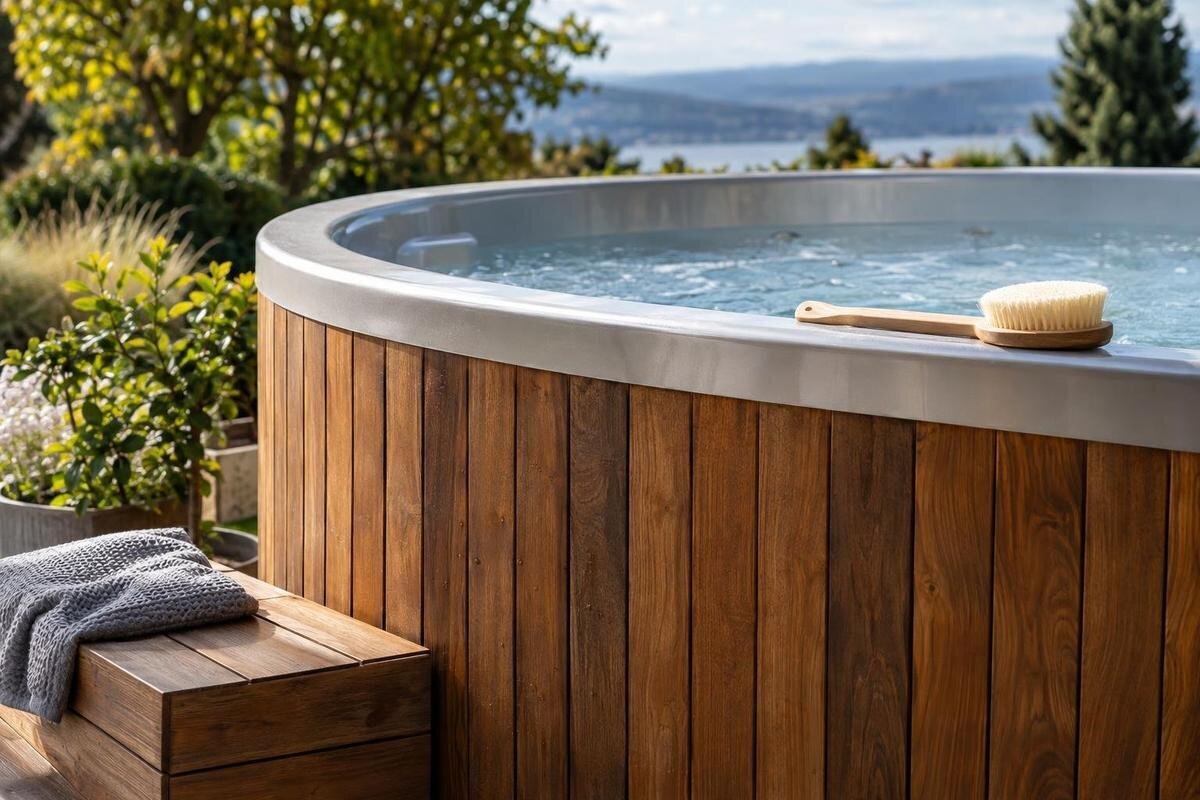
HOT TUB CARE
An unsuitable cleaner or coating can alter a hot tub’s exterior, and a wood-like appearance is not enough to identify what is there. Exterior panels may be solid wood, veneer, composite, or another finished material; even confirmed wood can carry a factory finish that changes its care requirements. Begin by identifying the exact surface and finish, then use instructions for that model. If you cannot confirm either, pause before cleaning aggressively or applying oil, stain, sealer, or a repair product. This guide is about the outside cabinet only, not the shell or spa water.
Identify the Exterior Material and Finish
Use the owner’s manual, specification sheet, or written manufacturer guidance for the exact model. Look for a direct statement about the exterior cabinet or cladding, not only a general product description. Solid wood, veneer, composite, and wood-look surfaces are different constructions; a printed grain or warm color does not prove that a panel is wood. Check that the material description refers to the exterior panels, not just decorative trim or an accessory. If you own or are considering the Bloomcabin Hot Tub Cove 2, ask specifically about its panel material and existing finish. The model name identifies the product, but does not establish either detail.
Treat the material and its finish as two separate questions. A wood species, if identified, does not by itself tell you whether the panel is sealed, stained, painted, oiled, or left untreated. Those finishes can call for different care, so do not infer a coating from color or sheen. For a used tub, look for the original paperwork and ask the previous owner what products have been applied, including dates and product names if available. A replacement panel may have a different finish from the original, so ask about it separately. If the finish history is unknown, tell the manufacturer before cleaning or recoating. A treatment intended for bare timber may not suit a factory-finished surface, and layering an unknown product can make later care harder to assess.
Inspect for Discoloration, Cracks, and Finish Wear
Inspect the exterior visually before deciding that it needs a particular cleaner. In even daylight, look across each panel and around corners, joints, trim, ends, and lower edges. Note areas that look lighter or darker, uneven fading, streaks, spots, or a change in sheen. Check more than one panel where possible; a single patch may not represent the condition of the whole cabinet. Discoloration can have several causes, including dirt, exposure, moisture, or a changing finish, and appearance alone does not establish which one applies. Record where it occurs and whether it is new rather than scrubbing a patch to test a guess. A wider photo shows its location, while a close-up captures surface detail.
Look separately for cracks in the finish and cracks in a board, lifted or peeling coating, splintering, gaps that have changed, loose-looking trim, or places where the underlying material appears exposed. Those observations are not a diagnosis: a mark in a topcoat may not mean the wood is split, and a surface line does not show whether a repair is needed. Note which side or panel is affected and compare it with nearby areas, but do not poke, pry, or scrape to investigate. Photograph anything that seems to be spreading or recurring. If a panel feels loose, a crack is growing, or the finish is coming away, ask the manufacturer what to do rather than trying a repair product.
Follow the Manufacturer’s Cleaning Instructions
Use cleaning directions written for the confirmed exterior material and exact model. Find the section for the cabinet or outer panels; instructions for the acrylic shell, cover, or spa water do not automatically apply to the exterior wood. Read the complete direction before starting, including any named cleaner, approved cloth or brush, dilution, rinse or drying step, and surfaces to keep clear. If the manual distinguishes routine dust removal from stain removal, follow the relevant section instead of combining methods. Keep the product label and manual available while cleaning so you can match the intended surface and use the specified process. If a panel has been repaired or replaced, check whether its care instructions differ from those for the original exterior.
If the care document is missing or does not name a method, ask the manufacturer or authorized support contact rather than borrowing advice for decks, fences, or outdoor furniture. Provide the model and, if available, serial number, along with a photo of the exterior and any finish label. For the Haven 6 hot tub, request directions that identify the exterior material they cover. Ask which cleaner and tools are permitted and whether special rinsing or drying steps apply. Test a small area only if the manufacturer explains where and how to do so. A general claim that a cleaner is wood-safe does not establish compatibility with your finish.
Cleaner and Tool Compatibility
Cleaner compatibility and tool compatibility are separate checks. A product marketed for wood or outdoor use may not suit the particular species or factory finish on a hot tub; similarly, a tool gentle on one panel can scratch or wear another. Use only the cleaner and tools the model-specific directions allow. Do not assume that household detergent, bleach, solvent, an abrasive pad, a stiff brush, or a pressure washer is acceptable because it worked elsewhere. Pressure washing and sanding are not default options: use them only if the manufacturer explicitly approves the method for that exact exterior and provides any conditions. Avoid substituting a tool simply because it appears similar to one named in the instructions.
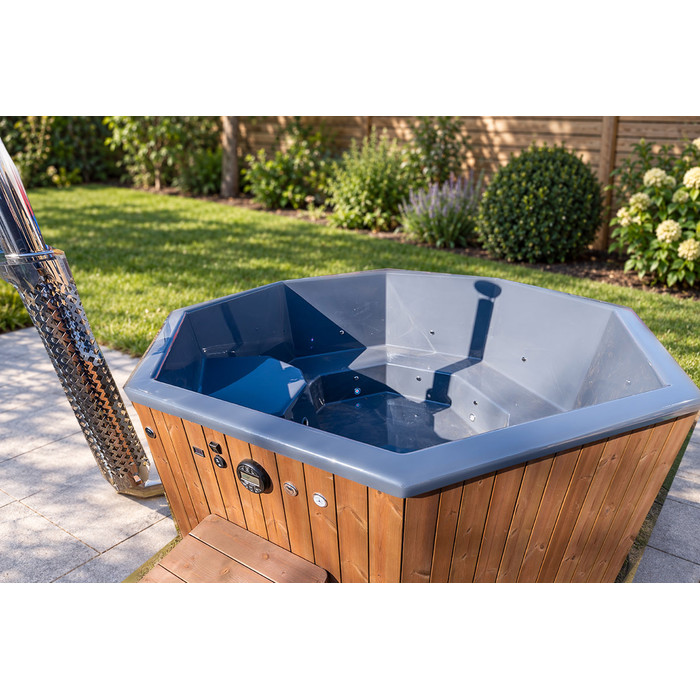
Read product labels for their intended surface, but do not treat a label alone as proof of compatibility. Match the exact product name and any dilution or contact-time directions against the hot tub manufacturer’s guidance; do not mix cleaners or add a second product to speed the job. If you are comparing the Fjord 8 hot tub with other options, include permitted cleaning tools and products in your upkeep comparison. For an existing tub, record what you use and stop if you notice an unexpected change such as color transfer, clouding, or a new patchy appearance. Report the product and the change before trying another cleaner.
Check Compatibility Before Applying a Wood Treatment
Wood treatments include products sold as oils, stains, sealers, preservatives, or finish restorers, but the category name does not establish whether they belong on a hot tub exterior. First confirm that the panel is actually wood, then find out whether it has a factory finish and whether the manufacturer requires, permits, or prohibits additional treatment. A product intended for a bare deck may change the color or sheen of a coated cabinet, fail to match an existing layer, or make future care less straightforward. Labels such as natural, protective, and outdoor use are not a substitute for model-specific instructions. Do not treat visible fading as automatic proof that the surface needs another coat or choose a product by species or appearance alone.
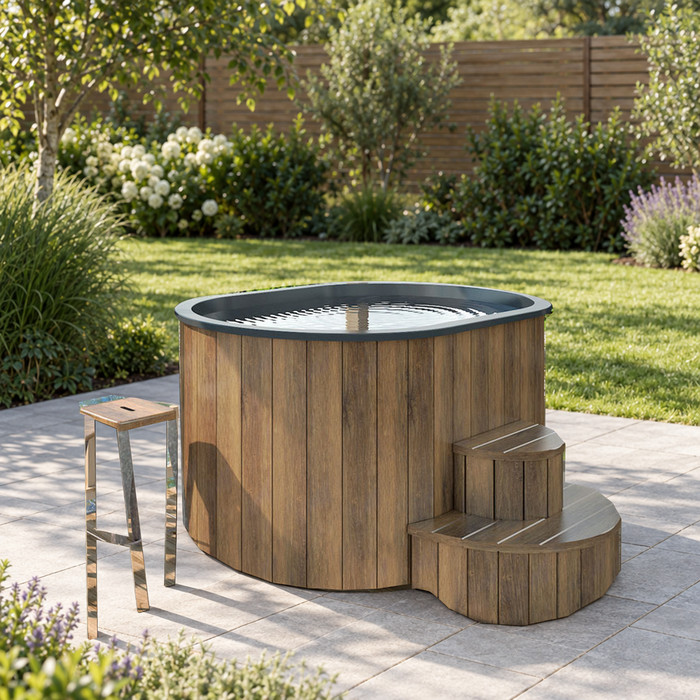
Before using any treatment, ask about the exact finish and proposed product, including permitted preparation, reapplication intervals, and surfaces that must not be coated. For a purchase such as the Bloomcabin Hot Tub Aurora 10, establish whether exterior treatment is needed before adding supplies to your shopping list. Ask whether cleaning is required beforehand and whether treatment affects warranty coverage or service options. Do not sand, strip, seal, or refinish simply because a general outdoor-wood guide recommends it. If you have already applied an unidentified product, save the container or photograph the label and tell support before adding another layer.
Separate Finish Wear from Panel Damage
When documenting a questionable area, distinguish what you can see on the finish from what appears to involve the panel itself. Is a line confined to the coating, does it extend across a board, or does one panel sit differently from its neighbors? These details help explain the concern without assuming a cause. Do not press on a crack or fill it to find out whether it is harmless. A photograph may not resolve the distinction either, so ask whether an inspection is needed when the extent is unclear. Describe a soft-looking area, lifted edge, or exposed material in those terms rather than labeling it rot or structural damage.
Timing also helps distinguish a change in appearance from a possible finish reaction. Note whether a mark appeared after cleaning or treatment, which product touched that area, and whether neighboring panels changed too. If you bought a used Cove 2 hot tub, include any known work by the previous owner rather than assuming the finish is original. Avoid painting over, caulking, sanding, or patching an uncertain area before the recommended repair is clear; an added material can conceal the condition you need assessed. If coating is flaking in several places, report the extent instead of removing it to make the panels look uniform.
Know When to Ask About Repairs or Refinishing
Contact the manufacturer before trying to fix the exterior if the material or finish is uncertain, the same stain returns, a board is split, a panel shifts, coating peels, or a mark expands. Ask sooner when a previously sound area changes quickly or when it appears that moisture may be getting behind an exterior panel; appearance alone cannot tell you what is happening underneath. The point is not that every crack requires replacement, but that the appropriate response depends on the panel and finish. If the tub is secondhand or has been treated before, share that history instead of requesting instructions for an assumed original surface. If warranty coverage applies, check its terms before arranging work.
Send the model and serial number, close-up and wider photographs, when the change appeared, and the name of any cleaner or coating already used. Ask whether an approved care step is appropriate, an inspection is needed, or a service professional should handle the work. If repair is recommended, request the specified repair material and finish. Share that guidance with anyone you hire rather than accepting a standard deck-restoration approach. Prospective buyers comparing the Bloomcabin Hot Tub Haven 6 model can also ask how exterior repair inquiries are handled and what support is available, without assuming that a particular repair method or service is included.
Determine Care Intervals from the Manual
Do not set one calendar for every wooden hot tub exterior. Separate the intervals for inspection, routine cleaning, and any approved treatment: they may not be the same, and treatment may not be required at all. Use the schedule in the exact model’s manual where it is provided. If the instructions give a method but no interval, ask the manufacturer how often to repeat it instead of borrowing a schedule from deck stain or outdoor furniture care. Keep the answer with the manual so you can refer to it later. More frequent application is not automatically better, especially when the existing finish or treatment history is uncertain.
Exposure can affect how quickly an outdoor surface changes. When asking about timing, describe direct sun or shade, rain or snow exposure, any shelter, and how often the panels get wet or dirty. These details help the manufacturer interpret an interval; they do not create a universal recoating formula. If you are considering the Bloomcabin Hot Tub Fjord 8, ask how its exterior-care guidance applies to your intended location. For a tub you already own, record each permitted cleaning or treatment and any changes between them. If appearance changes before the suggested interval, ask whether the process needs adjustment rather than simply applying another coat.
Compare Exterior Upkeep Before Buying
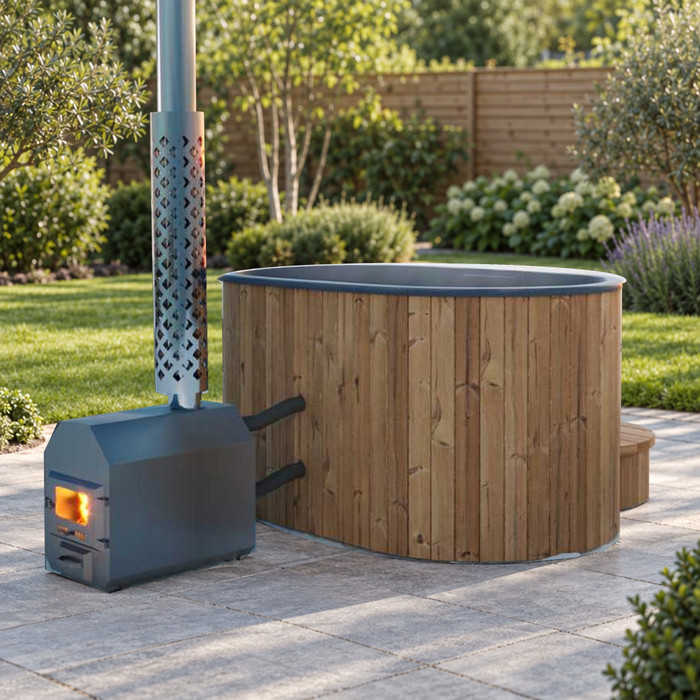
Before buying, ask for a care guide for the specific exterior, not a general page about hot tub maintenance. Compare the cabinet material; any stated wood species and factory finish; permitted cleaners and tools; treatment requirements; and care intervals. Ask how fading, cracks, or finish wear are handled and whether replacement panels or authorized repairs are available. When reviewing the Aurora 10 product listing, use these questions to identify what you still need to learn from the seller. Product photographs can help you compare appearance, but they cannot establish the material, finish, or maintenance requirements.
Then compare the upkeep in terms that matter to you: routine time, number of approved products, whether the finish needs periodic attention, and whether professional service is recommended. Ask what the manufacturer considers routine care versus repair, and what happens if the finish is left untreated. If upkeep involves materials, paid labor, or replacement panels, request the relevant requirements and price estimates from the seller or service provider; costs vary with the product, work, and location, so a generic number is not useful. Also ask whether the recommended products are easy for you to obtain. If answers are unavailable, treat that uncertainty as part of your decision rather than assuming upkeep is negligible or demanding.
Keep a Record of Exterior Care
Keep a short record once you know the approved process. Write down the model and serial number, confirmed panel material, finish description, manual version or support response, and any permitted cleaner or treatment. Add the date of each cleaning, treatment, or repair and the product name; keep its label or receipt if available. A dated wide photo and a close-up can show how an area changes, while a brief note about where it sits on the cabinet makes the comparison easier. Include any uncertainty, such as an unidentified product used by a previous owner, so you do not accidentally repeat it. This record is more useful than relying on memory when a mark reappears or a finish starts to wear.
Update the record when you buy a used tub, learn about a prior coating, or have a panel repaired or replaced. Instructions for an old finish may not describe the new surface, so ask what care applies after the work and retain the technician’s details. Note which panel was changed so future questions do not rely on the original specification alone. Keep earlier information rather than replacing it; the sequence of products and repairs may matter when a finish changes again. If you sell the tub, pass along this history with its care instructions so the next owner knows what is on the exterior.
Frequently asked questions
How can I tell whether my hot tub exterior is real wood?
Check the manual or product documentation for an explicit description of the exterior panels and finish. A wood-like grain, color, or product photo is not enough to confirm the material. If the information is unclear, ask the manufacturer to identify the surface.
Can I use deck cleaner or a pressure washer on the exterior?
Only if instructions for your exact hot tub model and exterior material explicitly permit that product or method. Advice for decks and fences does not establish compatibility with a hot tub’s panels or finish. Ask the manufacturer if the care instructions do not say.
Should I oil or seal a wooden hot tub exterior?
Do not apply a treatment based only on the surface looking faded or dry. Confirm that the exterior is wood, identify its existing finish, and ask the manufacturer whether a specific treatment is permitted or required.
How often should I clean or treat the exterior?
Use the interval in the model-specific care instructions. Cleaning, inspection, and treatment may have different intervals, and a treatment may not be required. If no interval is given, ask the manufacturer rather than adopting a schedule for outdoor furniture or decking.
What should I do if a board is cracked or the finish is peeling?
Photograph the area and note whether it is changing, then contact the manufacturer or authorized support for model-specific advice. Avoid sanding, filling, or applying another coating until you know what material and finish are present and which repair method is approved.
Good wood care is mostly a matter of avoiding assumptions. Identify the material and finish before choosing a cleaner, note what changes during inspection, and keep treatment decisions tied to the manufacturer’s instructions for that exact exterior. When damage or an unfamiliar coating leaves room for doubt, a clear photo and product history make the manufacturer’s answer more useful. That approach protects the finish without committing to an unsupported cleaning or refinishing routine.
