
How to Grow Fig Trees in a Greenhouse
Bloomcabin growing guide / United States
How to Grow Fig Trees in a Greenhouse
A fig under glass succeeds when its appetite is designed: sunlight and warmth in generous supply, roots and branches held within purposeful edges, and every ripe fruit within easy reach.
01 / The boundary thesis
The greenhouse does not make a fig manageable. It makes management more consequential.
The useful promise
A greenhouse gives a fig a warmer shoulder season, shelter from cold rain, and a drier harvest window. In cooler American regions, that extra protected heat can be the difference between a late crop that colors and one that remains hard when fall arrives.
But a fig is naturally vigorous, broad-leaved, and capable of turning a modest glazed room into shade. Treat it as a fruit tree with a finite room, not as a houseplant with fruit. The best arrangement starts with a deliberate root volume, a framework kept below the ridge, an irrigation line you can inspect, and a path wide enough to harvest without brushing sap-covered leaves.
A well-ventilated Classic Aluminum Greenhouse gives that plan a durable architectural setting: light, roof ventilation, integrated drainage, and a structure that can be configured around the mature canopy rather than only the young plant.
02 / Choose for your climate, not the catalog photograph
One crop may be enough. Two are a welcome possibility.
Choose a named common fig cultivar sold for fresh fruit and suited to your local season. Common figs generally set edible fruit without pollination; do not assume that every fig type does. Smyrna-type and some related figs have different pollination requirements and are poor choices for a simple home greenhouse.
Last season’s wood{
Breba crop
Breba figs form on shoots that grew the year before. They can arrive early and be especially valuable where autumn turns cool quickly. Their weakness is exposure: winter injury, a late freeze, or hard dormant pruning can remove much of this first crop before spring even begins.
In a cold-winter location, use the greenhouse primarily to protect the framework and to accelerate spring. In maritime or short-summer areas, favor cultivars known locally for early fruit rather than chasing the promise of a huge second harvest.
Current season’s growth{
Main crop
The main crop forms on new growth. A greenhouse can encourage that growth, but too much nitrogen, too much water, and too much unpruned headroom can produce leaves and long shoots at the expense of timely ripening. The goal is not maximum extension; it is mature, well-lit fruiting wood carrying fruit that can finish before light and heat decline.
For much of the United States, adaptable home-garden choices may include Brown Turkey, Celeste, Chicago Hardy, Black Mission, or regional favorites. Availability and performance vary sharply by climate, so ask a nearby Extension office, specialty nursery, or experienced local grower which cultivars finish reliably under your conditions.
A practical reading of the wood: smooth green or brown shoots from last year may carry brebas; new shoots emerging after spring support the main crop. Before removing a branch, identify which crop you may be cutting away.
03 / The central spatial decision
Set the root boundary before the fig sets its own.
Figs do not need to be starved to fruit, and root restriction is not a magic switch. It is a way to keep a vigorous tree proportionate to a greenhouse. A defined root zone also makes watering, feeding, repotting, and eventual renovation far more legible.
For most home greenhouses, choose either a substantial container or a purpose-built, lined planting chamber. Open greenhouse soil is possible only where the building has generous volume and you are ready to prune assertively for the life of the tree. A fig that escapes into surrounding ground can become impossible to balance with a domestic-sized canopy.
Below the limestone line: three root rooms
Large container
Restricted bed
Open soil
Large container
Portable and fully bounded. Use a free-draining mix, generous drainage holes, and a pot large enough to buffer summer watering. Root-prune and refresh mix on a planned cycle.
Restricted bed
A masonry or durable liner-defined chamber offers more thermal mass and root room while preserving a fixed edge. Include drainage, an irrigation point, and a clear method for renewal.
Open soil
The highest-vigor option. Use only with deep, free-draining soil, ample roof height, and a pruning plan that keeps permanent wood low and reachable.
04 / Position and access
Plant for the grown tree.
Place the fig where it receives the clearest available light but does not block the door, roof vent controls, or circulation route. In a freestanding greenhouse, that is often toward the sunniest long side, trained as a low fan or open goblet. Keep the trunk far enough from glazing that leaves can move without constantly pressing against hot glass.
Measure from the floor to the eaves and ridge before buying the tree. Your intended finished height should sit comfortably below the lowest structural line, with room to reach over and around the canopy. A greenhouse is not improved by a tree that requires a stepladder at every harvest.
For project planning, review Bloomcabin’s custom aluminum greenhouse guidance and the greenhouse design options available in the USA. Think of floor area, roof volume, doors, ventilation, shelving, and irrigation as one composition rather than isolated upgrades.
05 / Framework pruning
Keep the permanent tree calm; let the fruiting wood work.
Train early. A low trunk with three to five well-spaced scaffold branches, or a fan tied to a suitable wall or support, gives light and access without asking the tree to become an architectural column. Remove suckers you do not need for renewal and direct growth outward, not toward the center aisle.
A simplified greenhouse framework
This is a planning silhouette, not a rigid botanical formula. The aim is a low, open crown with reachable scaffold branches and enough leaf cover to protect bark from sudden exposure.
- Permanent scaffoldKeep these limbs low, strong, and spaced. Renew a tired framework gradually, rather than cutting the entire tree hard in one season.
- One-year shootThis may carry breba fruit. Inspect it before winter cutting; heavy dormant pruning can sacrifice the early crop.
- Current extensionThis drives main-crop potential. In summer, shorten only runaway shoots that shade fruit, obstruct ventilation, or claim space you cannot maintain.
- Safe reduction pointCut back to a healthy outward-facing side shoot or bud. Avoid leaving long, blind stubs. Remove dead, damaged, rubbing, and inward-growing wood first.
Use winter for structural work while the tree is dormant, then use a light hand in summer. If a cultivar’s breba crop matters in your climate, preserve enough healthy previous-season wood. If the greenhouse is crowded, solve the framework first; do not respond with repeated indiscriminate tipping that creates a dense hedge of weak shoots.
06 / Water, feeding and controlled vigor
Give the roots a steady rhythm, not a feast.
Spring
As buds break, resume regular watering. Water deeply enough to moisten the root zone, then let the upper surface begin to dry before the next irrigation. Start only modest nutrition if growth is weak or the tree is container-bound.
Summer
Hot glasshouse days may require frequent checks, particularly for containers. Drip irrigation or a slow, measured hand watering is preferable to erratic flooding. Vent early so the tree does not transpire furiously in stagnant heat.
Late summer into fall
Maintain consistency while fruit swells and ripens, but do not push late lush growth with high-nitrogen fertilizer. The goal is ripe fruit and wood that can harden, not a new flush of soft shoots.
Dormancy
With leaves down and growth stopped, water sparingly. Roots should not turn dust-dry for months, but a cool dormant fig uses little water.
Automated ventilation is particularly useful when a greenhouse is empty during the hottest part of the day. See Bloomcabin’s overview of smart greenhouse ventilation and climate options when planning a system that can respond before heat accumulation becomes extreme.
07 / Fruit retention
Do not blame pollination first.
Most common fig cultivars grown by home gardeners are self-fruitful and do not need a pollinating wasp to make edible fruit. Confirm the type when you buy; this single decision avoids an elaborate greenhouse mystery later.
When a suitable common fig drops small fruit, look first at stress and timing: abrupt root drying, poor light, an overloaded young tree, unstable heat, a recent repot, pest pressure, or a crop that simply cannot mature in the remaining season. A greenhouse helps, but it cannot create late-season sun or erase a cultivar’s maturity schedule.
Resist the urge to thin every tiny fig. Instead, keep the tree balanced, remove clearly damaged fruit, and concentrate on an even root-zone moisture pattern, good light penetration, and a cultivar appropriate to your regional calendar.
08 / Glasshouse summer
Heat is useful. Trapped heat is not.
Figs enjoy warmth, but an enclosed greenhouse can exceed the useful range quickly. Open roof vents and doors early on bright days, create a route for air to enter low and leave high, and add shade only when leaves scorch or the root zone cannot keep pace. A small circulation fan can prevent a still, humid pocket around dense foliage, but it should supplement—not replace—real vent area.
Keep the canopy off the glass. Remove a few strategic inward shoots rather than stripping leaves wholesale; leaves are the engine that ripens fruit and also shade tender bark. Keep fallen figs and old leaves picked up, especially during humid weather, so pests and souring organisms have fewer places to build up.
09 / Harvest chamber
Read posture and texture, not color alone.
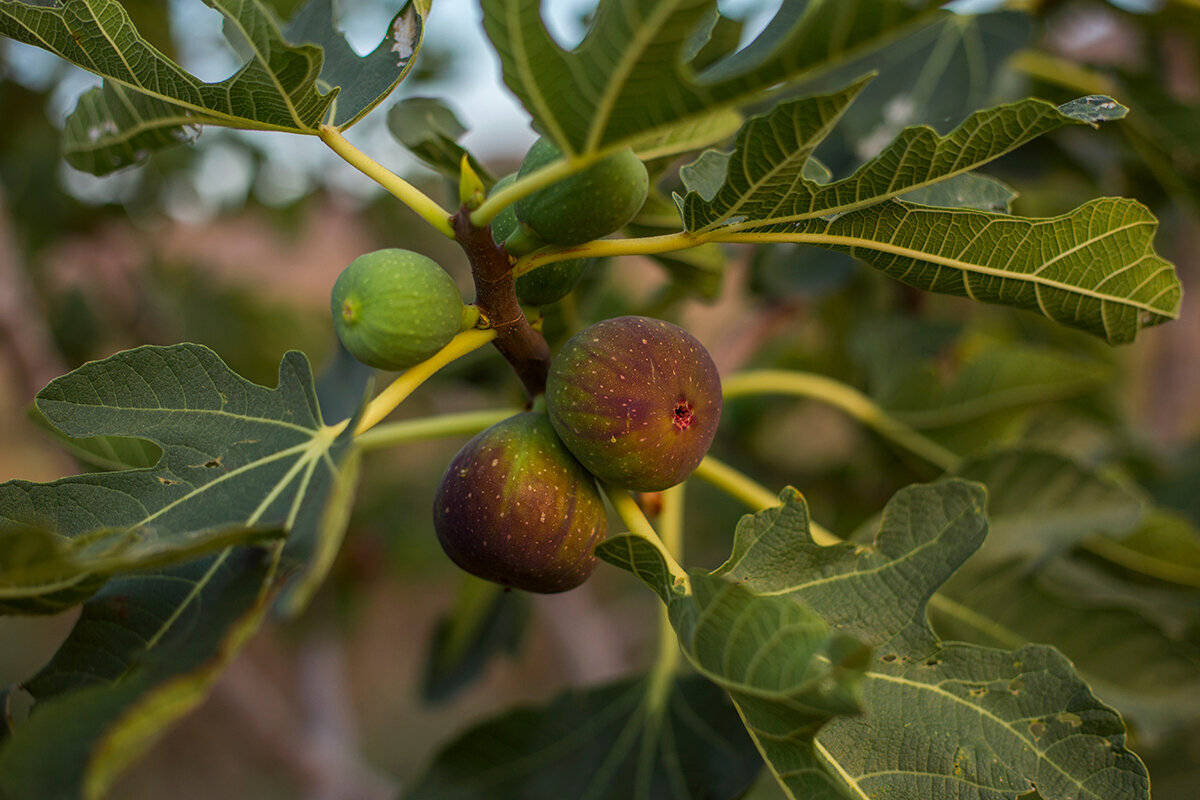
Skin color varies by cultivar. A ripe green fig may remain green; a dark fig may never look perfectly black. Instead, read the whole fruit: swelling, softening, a neck that bends, and diminishing milky latex at the stem are more useful signals. Figs do not improve much after picking, so harvest in several passes.
1 / Upright
Hold
Firm body, tight neck, fruit held upright. Leave it on the tree.
2 / Swelling
Watch
Fruit enlarges and begins to yield slightly. Maintain even watering.
3 / Drooping
Pick
Neck softens and bends; fruit feels supple. Lift and twist gently with a short stem attached.
4 / Split
Use now
A small split can be delicious if clean and sound; discard fruit that smells fermented, leaks, or attracts insects.
Latex caution
Wear gloves and long sleeves for pruning or heavy harvesting. Fig leaf and shoot sap can irritate skin and, with sun exposure, may cause a phototoxic reaction. Wash sap away promptly, avoid sunlight on exposed skin, and seek medical advice for a significant reaction. Handle fruit gently and harvest in the cool part of the day when possible.
10 / The winter wall
Let a deciduous fig rest.
A fig is deciduous. Leaf drop is not a greenhouse failure; it is the beginning of a useful maintenance season. Once dormant, inspect the framework, remove dead or diseased wood, clean up fruit debris, check for scale on twigs, and make measured structural reductions.
In cold regions, protect the root zone and permanent wood from severe freezes. A minimally heated greenhouse, insulation around a container, or temporary frost protection may be enough depending on the local minimum temperature and cultivar. Do not stimulate tender late growth with fertilizer or heavy irrigation as winter approaches.
Keep airflow available on mild days and avoid a constantly wet, stagnant house. Winter is also the ideal moment to assess whether the tree has outgrown its assigned room and needs root pruning, repotting, or a more decisive framework renovation before spring.
11 / Problem niches
Diagnose the pattern before changing everything.
Fruit drop
Check cultivar suitability, sudden dryness, recent root disturbance, low light, and whether the crop was set too late to mature. Correct the stress pattern; do not respond with a fertilizer surge.
Splitting
Usually a water-management and weather issue. Reduce severe dry-to-wet swings, improve drainage, ventilate after humid weather, and harvest ripe fruit promptly.
Spider mites
Look for stippling, fine webbing, and stressed foliage in hot, dry, stagnant conditions. Isolate badly affected plants nearby, rinse where appropriate, and improve ventilation before selecting any labeled treatment.
Scale
Inspect one- and two-year wood during dormancy. Small, attached scale covers and sticky residue merit close attention. Pruning, sanitation, and correctly timed horticultural products labeled for the site can be part of an integrated approach.
Rot or sour fruit
Remove split, leaking, fermented, or insect-damaged figs at once. Improve harvest frequency and airflow. Do not leave fallen fruit under the canopy.
Weak ripening
Thin congestion, lower the tree if it shades itself, stop pushing nitrogen, and reconsider cultivar timing. In short summers, a protected breba crop may be more dependable than waiting for a late main crop.
When pesticide use is warranted, select only products labeled for your location and crop, follow the label exactly, and observe preharvest intervals. Start with identification and cultural correction; enclosed greenhouses reward careful monitoring more than reflex spraying.
12 / Annual calendar
A repeatable fig year.
Exact timing shifts from Florida to the Pacific Northwest, from a heated greenhouse to an unheated one, and from cultivar to cultivar. Use this as a sequence of observations rather than a date-specific prescription.
| Season | Observe | Act |
|---|---|---|
| Late winter | Dormant framework, scale, pot condition, cold damage. | Clean, prune structurally with restraint, repot or root-prune if planned, and test vents and irrigation. |
| Spring | Bud break, preserved breba figs, new shoot direction. | Resume watering gradually, guide selected shoots, remove obvious dead tips, and avoid overfeeding. |
| Early summer | Heat accumulation, fruit set, canopy density. | Vent early, maintain even moisture, train or lightly shorten obstructive extension growth, and inspect for mites. |
| Late summer | Fruit swelling, ripeness sequence, split risk. | Harvest often, keep sanitation exact, maintain steady irrigation, and avoid forcing fresh late growth. |
| Fall | Main crop finish, leaf color, night temperatures. | Remove spoiled fruit, reduce watering as growth slows, and protect the root zone before hard cold arrives. |
| Winter | Leafless structure and room for next year. | Plan the canopy, ventilation, access route, and root boundary before growth begins again. |
13 / FAQ
Questions from the greenhouse path.
Can a fig tree stay in a greenhouse year-round?
Yes, provided it has adequate sun, ventilation, a defined root zone, and enough room to be pruned and harvested safely. In colder regions, an unheated greenhouse may extend the season but may not prevent all freeze damage; assess your local minimum temperatures and cultivar tolerance.
Do greenhouse figs need pollination?
Most common fig cultivars intended for home gardens set edible fruit without pollination. Some fig types require specialized pollination, so buy a named common fig cultivar unless you have a very specific reason and the correct pollination system.
How large should a greenhouse fig container be?
Choose a pot that gives the tree a stable, generously drained root zone without creating an unmanageable canopy. Many mature greenhouse figs work well in the 20- to 30-gallon range, but the better question is whether you can water, inspect, root-prune, and move around the mature tree comfortably.
Should I prune my fig tree hard every winter?
Usually not. Remove dead, damaged, rubbing, or poorly placed wood, then make reductions to keep the framework low. Heavy winter pruning can remove breba-bearing wood and may encourage a rush of vigorous shoots that shade the greenhouse.
Why is my fig growing leaves but not ripening fruit?
Common causes include excessive nitrogen, too much root room for the greenhouse volume, heavy shading from its own canopy, irregular watering, inadequate late-season heat, or a cultivar that ripens too late for your area. Simplify the framework and correct the strongest stress or vigor issue first.
What greenhouse features matter most for a fig tree?
Prioritize roof height, usable floor area, doors wide enough for supplies and harvest access, controllable ventilation, and a stable base. Bloomcabin’s greenhouse FAQ is a useful starting point for base and installation questions; the finished structure should serve the mature tree, not only its first season.
14 / Sources and further reading
Continue with regional knowledge.
Fig performance is local. The following Extension, university, integrated pest management, and scientific resources informed this guide and are useful companions when matching a cultivar and care plan to your climate.
- UC IPM, Cultural Tips for Growing Fig: https://ipm.ucanr.edu/home-and-landscape/cultural-tips-for-growing-fig/
- UC IPM, Fig Home and Landscape guidance: https://ipm.ucanr.edu/home-and-landscape/fig/
- University of Florida IFAS Extension, The Fig: https://edis.ifas.ufl.edu/publication/MG214/pdf
- Oregon State University Extension, Mediterranean Tastes You Can Grow at Home: https://extension.oregonstate.edu/sites/extd8/files/documents/12846/mediterraneanedibles-morgan.pdf
- UC ANR, Figs from the UC Master Gardeners of San Luis Obispo County: https://ucanr.edu/site/uc-master-gardeners-san-luis-obispo-county/figs
- UC IPM, Fig Scale management information: https://ipm.ucanr.edu/agriculture/fig/fig-scale/
- PubMed, photoactive compounds in fig leaf and shoot sap: https://pubmed.ncbi.nlm.nih.gov/6744838/
Plan the enclosure around the tree
Give your fig a boundary it can thrive within.
Choose greenhouse volume around root management, canopy reach, venting, and the simple pleasure of picking ripe fruit without negotiating a thicket. A carefully planned structure turns fig growing from a seasonal scramble into a composed, productive ritual.
Explore the Classic Aluminum Greenhouse