
How to Grow Green Beans in a Greenhouse
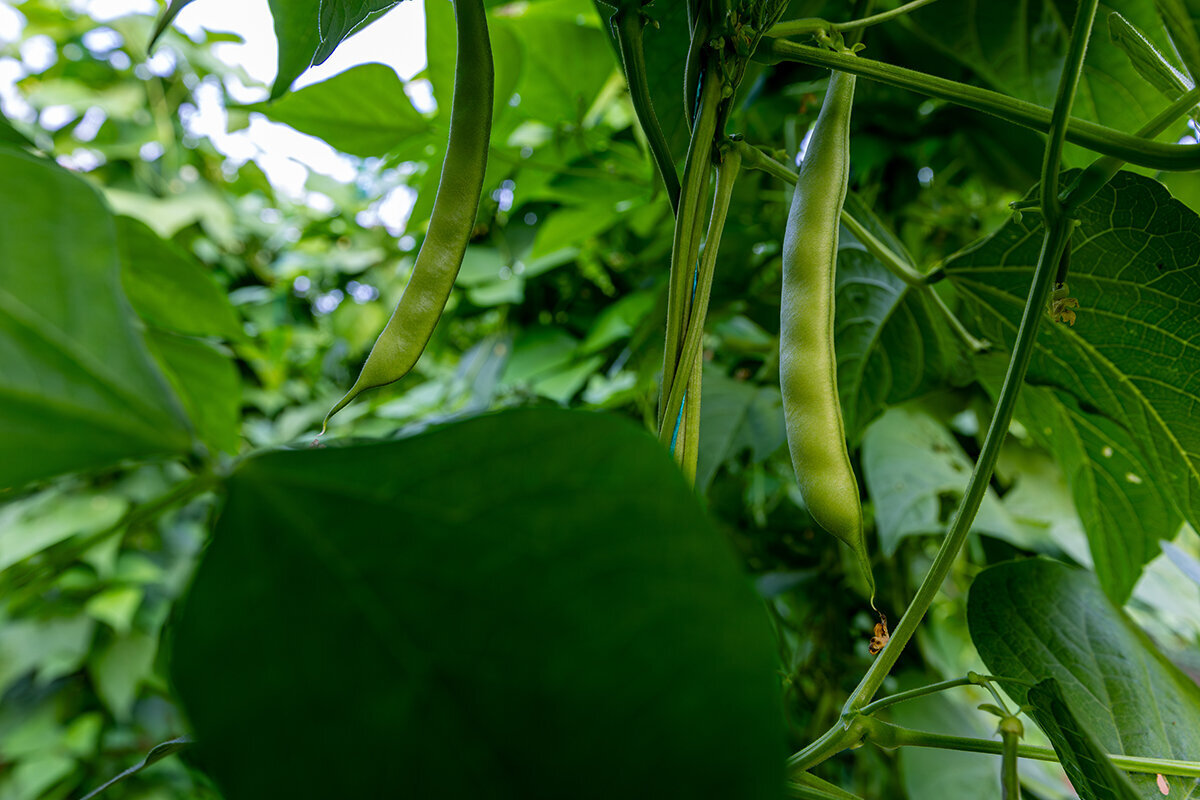
Bloomcabin field manual 14 · protected vegetable growing
How to Grow Green Beans in a Greenhouse
Green beans are not difficult under glass. They are exacting, though, about the signals they receive: warm soil to start, a clear route for growth, moving air through bloom, moisture without saturation, and a grower who harvests before the plant decides its work is finished.
Choose your circuit
Select bush beans for quick, low, concentrated crops and flexible succession sowing. Select pole beans for a longer vertical harvest, fewer plants, and a greenhouse wall or bed that can carry a purposeful support system.
01 / operating principle
A greenhouse gives beans a longer working day—not permission to overheat.
Greenhouse beans make particular sense where spring soil stays cold, summer rain keeps outdoor foliage wet, or the first fall frost arrives before a later sowing has earned its crop. Under cover, you can warm the bed earlier, shelter young plants from wind, direct water to the roots, and extend the picking season after outdoor nights begin to cool.
A greenhouse is also an amplifier. It amplifies warmth, light, evaporation, humidity after irrigation, and the consequences of crowded planting. A bean crop that would simply pause outside can shed flowers inside a closed structure during a bright 90°F afternoon. The objective is not a sealed, permanently warm room. It is a well-routed growing environment that gives roots steadiness and lets heat and humid air leave before plants object.
For US gardeners, the useful season varies widely. In the Upper Midwest or Northeast, protected growing can make an early-summer sowing more reliable and can extend a late crop if the greenhouse is protected from frost. In hot Southern and Southwest gardens, the greater advantage is often venting, shade, irrigation discipline, and timing a late-summer or fall crop away from peak heat. Local frost dates still govern the calendar; the greenhouse makes the margins of that calendar more usable.
Roof ventilation, practical shading options, and a layout with genuine walking room are growing equipment, not decorative extras. See Bloomcabin’s aluminum greenhouse information when planning the environmental controls around a productive vegetable crop.
02 / habit selection
Choose the plant’s architecture before you choose the variety name.
Low circuit
Bush beans
- FootprintLow, broad, reachable.
- SupportUsually none.
- TimingQuick first crop.
- HarvestConcentrated flush.
- PlacementSunny, ventilated edge.
Same crop · different routing
Vertical circuit
Pole beans
- FootprintNarrow below, tall above.
- SupportStrong strings or net.
- TimingLater to begin.
- HarvestLong, continuous run.
- PlacementBack bed or end wall.
Choose bush beans when you want a compact crop that is ready relatively quickly, when preserving is part of the plan, or when a clear succession schedule matters more than one long harvest. Most bush varieties form low, spreading plants and make a generous but defined flush. A second sowing two to three weeks after the first is the simplest way to turn that flush into a longer household supply.
Give bush beans room rather than packing them into a dense green carpet. Their support requirement is light, but their leaves still need an air route. In a greenhouse, a broad low bay or the front edge of a bed is often ideal because you can inspect both sides, water at soil level, and avoid trapping humidity in the middle of the planting.
Choose pole beans when height is available and you want sustained picking from a smaller root-zone footprint. They take longer to arrive, but they can keep flowering and producing for an extended period when support is secure, the plants are easy to reach, and heat does not interrupt flower set.
Install strings, netting, or another vertical system before sowing. Pole beans can twine around supports, but they should not be expected to solve an improvised structure after their roots are established. A back bed, sunny end wall, or side that does not shade shorter crops is usually practical. Keep vines out of roof-vent and doorway routes.
03 / sowing terminals
Start with a warm, open root zone.
1Warm soil.
2Direct sow.
3About 1 inch deep.
4Leave clearance.
5Moist, not soaked.
Direct sowing is the normal choice for snap beans. In a greenhouse, that means resisting the temptation to plant just because the air feels pleasant at noon. Put a thermometer 2–3 inches into the root zone in the morning. Beans perform best once soil and air temperatures are above 60°F, and favorable germination is commonly described in the 65–85°F range. Cold seedbeds can bring slow emergence, weak stands, seed rot, and a crop that never catches up cleanly.
Plant most bean seed roughly 1 inch deep. Sow a little shallower in a heavy or slow-draining medium, and let the seed packet settle the final detail for the named cultivar. A useful greenhouse baseline is about 4 inches between bush-bean seeds. Pole beans commonly take 4–8 inches within the row, depending on support and expected vigor. Keep 24–30 inches between bush rows where the bed permits, and reserve a real access edge for inspection and picking.
Work a fertile, well-drained bed with mature compost incorporated beforehand, then let soil-test results—not enthusiasm—determine additional fertilizer. Beans form a partnership with nitrogen-fixing bacteria only after a healthy root system develops. They are not a crop that benefits from being pushed with high-nitrogen feed. Too much nitrogen often creates lush foliage at the expense of flowers and pods. If the bed is new or has never grown beans, a properly matched legume inoculant may be useful when applied according to its label.
Water the seed zone after planting, then maintain even moisture until emergence without turning the bed into a saturated holding tank. Gardeners with short seasons sometimes start beans in deep cell modules, but the advantage is modest unless early conditions are truly cold. If you do start them indoors, transplant while roots are young and keep the root ball intact. In most home greenhouses, waiting for a warm final bed is more dependable than trying to hurry the crop.
04 / greenhouse routing
Make every vine, vent, and picking face reachable.
Beans should never become a living wall between you and the rest of the greenhouse. Their architecture is part of crop health: a vine you can reach is a vine you will pick; a canopy you can see through is a canopy you can inspect; and a bed that does not block the door or roof-vent corridor is easier to cool on difficult days.
In a compact greenhouse, put pole beans on the north side where possible, so their vertical mass does not shade low crops to the south. If orientation makes that impractical, place the tallest crop on the side least likely to shadow the main growing area. The governing rule is simple: preserve the path of light and your own path through the house.
Overhead route planTall crop · low crop · clear route
Pole-bean bed
Vertical support
Vent corridor
Bush-bean block
Door + path
Keep the central route open.
Pole beans earn the tall zone because their crop is easier to manage when you can see the strings, reach both sides of the row, and pick without stepping around another crop. A single row at the back of a 30–36-inch-wide bed is often enough for a small greenhouse. Fix supports before seedlings climb, using a frame-safe arrangement that will not shift under wet foliage and mature pods.
The greenhouse itself should support this choreography. A Classic Aluminum Greenhouse gives serious home gardeners a flexible rectangular format for beds, central access, roof vents, and a dedicated vertical-growing edge. If you are comparing proportions, glazing, ventilation choices, and model formats, Bloomcabin’s aluminum greenhouse FAQ is a useful companion to the crop plan.
05 / water, feed, air
Three controls that should work together.
Beans want an even root-zone rhythm, not a feast-or-famine cycle. In a greenhouse, rainfall does not correct missed irrigation, and the warm boundary layer around a dense canopy can hide dry soil below. Inspect before watering. A trowel, a finger test several inches down, or a simple moisture meter tells you more than the surface color of compost.
Water
Water deeply at soil level rather than frequently misting the surface. Increase attention from flowering through pod sizing, when moisture stress reduces yield and pod quality. Drip irrigation or a carefully aimed hose keeps leaves and flowers drier than overhead watering. Yet consistent does not mean constantly wet: saturated media excludes root-zone air and makes disease management harder.
Feed
Start with compost and a soil-test-informed bed. Beans have a modest fertilizer requirement compared with fruiting greenhouse crops such as tomatoes. If leaves are pale and growth is weak despite correct moisture and warmth, investigate fertility and pH through a local extension service before adding repeated nitrogen. Excess nitrogen delays flowering and turns a productive bean row into an ornamental thicket.
Airflow
Vent early, before the greenhouse becomes hot. On mild days, a cracked roof vent may be enough; on bright or humid days, pair roof vents with the door or a lower opening to create an exchange path. Small circulating fans can help in still corners, but they do not replace actual ventilation. Aim for gentle canopy movement, not a wind tunnel that dehydrates young plants.
Canopy
Guide pole-bean stems to their support while young. Do not strip foliage aggressively; leaves power the crop. Instead, remove damaged leaves, growth lying persistently on damp soil, and the occasional congested shoot only where this truly improves access and drying. With bush beans, correct spacing is more useful than late attempts to prune your way out of crowding.
06 / thermal breaker
Flower set is the circuit most likely to trip.
Beans tolerate summer warmth, but flowering is vulnerable. Hot days and nights can cause blossoms to abort and reduce yield. Treat temperature as a response cue, not a number to watch passively.
Below 60°FSlow
65–85°FWorking
86–89°FAct early
90°F+Set at risk
01 · Vent
Exchange air.
Exchange air.
02 · Shade
Reduce peak sun.
Reduce peak sun.
03 · Water
Steady roots.
Steady roots.
04 · Watch
Check bloom.
Check bloom.
Once the greenhouse reaches the high 80s, open roof vents fully and establish a lower exit through the door or another opening. Do this early: it is easier to prevent a temperature spike than to recover from one after the structure has stored heat. At 90°F and above, blossom drop, poor pollen performance, weaker pod set, and more culls become more likely—especially when nights also remain hot.
Use temporary exterior shade cloth or a suitable greenhouse shading system during peak sun rather than creating permanent gloom. Water early enough that plants enter a hot period with an evenly moist root zone, but avoid wetting foliage late in the day. On a hot forecast, close the greenhouse at night only when cold protection is genuinely necessary. Bloomcabin’s guide to custom aluminum greenhouses offers useful context for designing ventilation and shading controls into a growing space from the outset.
07 / fault-finding manual
Read the symptom by where it appears.
Not every imperfect bean is a disease, and not every yellow leaf calls for fertilizer. Pause, inspect the whole plant, then trace the likely cause through moisture, airflow, temperature, and pests. Remove and discard heavily diseased material rather than composting it inside the greenhouse.
LeafCurling, sticky growth, bronzing
Likely signals: Aphids commonly cluster on soft growth and may leave sticky honeydew, curled leaves, and visible cast skins. Spider mites are more likely in hot, dry conditions; they create stippling, bleaching, bronzing, and sometimes fine webbing beneath leaves.
First response: Inspect undersides twice weekly. Rinse small aphid colonies with a firm stream of water when foliage can dry quickly, and remove badly infested leaves. For mites, correct drought stress and improve airflow. Use soap or horticultural oil only when labeled for edible beans and according to directions.
FlowerDrop or little pod set
Likely signals: Heat is the first suspect in a greenhouse, especially when blooms coincide with bright weather above about 90°F. Excess nitrogen, low light from overcrowding, and inconsistent moisture can also encourage abundant vines with disappointing pod set.
First response: Record maximum and minimum temperatures for several days, vent earlier, add temporary shade if appropriate, and check soil moisture at root depth. Do not answer flower drop with a strong nitrogen feed. Once the environmental signal is corrected, new flowers can resume the crop.
PodTough, bumpy, bent, sparse
Likely signals: Tough or bulging pods are usually a harvest-timing issue: seeds have started to enlarge. Stringy texture, uneven filling, or misshapen pods can also reflect heat or water stress during rapid development. Chewed or skeletonized leaves nearby may point to bean leaf beetles or Mexican bean beetles.
First response: Pick more frequently, ideally every two to three days during the peak. Stabilize irrigation, harvest in the cool morning, and inspect foliage for insects rather than assuming a nutrient deficiency. Choose resistant cultivars where a recurring disease is known in your garden.
Root & stemWilt, soft lesions, white fuzz
Likely signals: Wet soil, dense foliage, and stale air create favorable conditions for diseases such as white mold. Look for water-soaked lesions, wilt above a stem infection, cottony white growth, or black hard structures called sclerotia. White mold can survive in soil and debris for years.
First response: Remove infected plants promptly and clean up fallen petals and crop debris. Improve spacing and venting, use drip rather than overhead watering, and do not immediately replant beans or another susceptible crop into the same contaminated bed. If symptoms are uncertain, use your state extension diagnostic service rather than guessing.
08 / harvest feedback loop
Pick tenderBefore seed bulges.
Clear mature podsRenew flowering.
Pick early.
Pick often.
Pick often.
Check both sidesFind hidden pods.
Cool quicklyProtect quality.
Harvest snap beans when pods are smooth, crisp, and before individual seeds create pronounced bulges. A good pod should bend and snap cleanly. Removing mature pods tells the plant that seed production is not complete, directing energy toward more flowering rather than allowing hidden pods to finish seed. Check both sides of each row, lifting foliage gently; pole beans are particularly skilled at concealing oversized pods behind their leaf curtain.
For bush beans, harvest may begin in one generous wave. A second sowing two to three weeks after the first turns that burst into a longer season. Pole beans are different: regular picking can keep them productive until cold or unmanageable heat stops them. Walk the route every other day at peak production, carrying a shallow basket so pods are not crushed. Cool beans soon after harvest and use, freeze, or preserve them promptly.
09 / crop removal and soil reset
End the circuit cleanly, then give the bed a new assignment.
When production slows and plants are no longer making worthwhile new flowers, cut stems at soil level. Healthy roots can remain briefly to decompose, but remove visible pods, yellow leaves, dropped flowers, and support ties. If there has been white mold, bacterial blight, or another serious disease, pull the entire crop—including roots where practical—and dispose of it in household trash according to local guidance rather than adding it to a home compost pile.
Beans are legumes, but do not treat them as a free fertilizer delivery system for the next crop. Their nitrogen contribution is variable and much of the benefit is tied up in the plant material you harvest or remove. Add finished compost as needed, test the bed periodically, and rotate away from beans where disease has appeared. Cool-season lettuce, greens, radishes, or a non-legume cover crop can be a useful next circuit depending on your greenhouse calendar.
Close-down checklist
- +Strip supports and wash reusable clips, netting, and tools before storing them.
- +Remove fallen pods and spent blossoms from paths, bed edges, and beneath staging.
- +Inspect soil drainage before the next crop; correct compacted or persistently wet zones rather than covering them with new compost.
- +Review the season: which venting day, irrigation interval, or variety choice made the greatest difference?
- +Plan the next crop around light and height, not simply the empty space left by beans.
For a broader look at greenhouse layouts and configuration possibilities for American gardens, visit Bloomcabin’s guide to aluminum greenhouses for American gardens.
10 / greenhouse bean FAQ
The practical answers, before the next sowing.
Can you grow green beans year-round in a greenhouse?
Not usually without supplemental heat and light. Beans are tender warm-season plants that need bright conditions. A greenhouse can extend the season substantially, but winter production in much of the United States requires sufficient daytime light, frost protection, and environmental control to keep plants actively growing. In a lightly heated home greenhouse, treat beans primarily as spring-through-fall crops.
Are bush beans or pole beans better for a small greenhouse?
Choose pole beans when you have reliable vertical support and want the longest picking season from a narrow root-zone footprint. Choose bush beans when you need a quick crop, prefer a low bed, or want staggered sowings. In a very small structure, one neat pole-bean row often uses space more elegantly than several crowded bush rows, provided it does not shade everything else.
Do green beans need hand pollination in a greenhouse?
No. Common snap beans are generally self-pollinating and do not normally require hand pollination. Poor pod set under glass is more often a temperature, moisture, light, or canopy-management issue. Improve ventilation and avoid extreme heat before assuming pollination is the problem.
How often should greenhouse beans be watered?
Water according to the root zone, weather, plant size, and container or bed volume—not a fixed daily schedule. Check several inches down. Keep soil evenly moist, particularly while plants are flowering and filling pods, but preserve enough air in the root zone. Hot, sunny days may require frequent attention; cool, cloudy stretches may not.
Why are my bean plants all leaves and no beans?
Common causes include too much nitrogen, inadequate light from crowding or shade, and heat during flowering. Check whether the greenhouse exceeded 90°F, whether flowers are dropping, and whether the bed received a rich nitrogen feed. Correct the environmental trigger and avoid adding more high-nitrogen fertilizer.
Can I grow green beans in containers inside a greenhouse?
Yes, especially bush beans, but use a sufficiently large container with drainage and a stable moisture routine. Pole beans need a heavy pot and support anchored securely rather than relying on the container alone. Containers dry much faster than in-ground beds under glass, so they reward close observation and drip irrigation.
Sources & further reading
Technical references behind this field manual.
- University of Maryland Extension — Growing Beans in a Home Garden
Spacing, succession planting, fertilizer guidance, watering, harvest stage, and bean types. - University of Minnesota Extension — Growing Beans in Home Gardens
Planting timing, support installation, water needs, common pests, disease symptoms, and heat-related flower loss. - Utah State University Extension — How to Grow Beans
Warm-soil requirements, germination range, soil preparation, fertility, and planting depth. - University of Minnesota Extension — White Mold in the Garden
White mold identification, sanitation, spacing, and moisture reduction. - University of Maryland Extension — Mexican Bean Beetle
Identification and garden-management context for a common bean foliage pest. - Penn State Extension — High Tunnel Production
Protected-culture principles, temperature swings, and ventilation considerations.
Master switch
Give your bean crop a greenhouse designed for its chosen route.
Whether your plan calls for compact blocks of bush beans or a high-performing wall of pole beans, configure the structure around the essentials: ventilation, a clear working path, light, and dependable vertical space. The result is not simply more shelter—it is a calmer, more productive growing system.
Explore the Classic Aluminum Greenhouse