
How to Reduce Hot Tub Heat Loss and Operating Costs
Hot tub energy guide
Heat loss is one part of an outdoor hot tub’s energy use, but a higher bill does not point to one obvious cause. Heat can escape from the uncovered water surface, a poorly fitting or deteriorated cover, the tub enclosure, and connected equipment. Moving air can increase that loss. Weather, the heating system, settings, use, and local energy prices all affect what you pay. Inspect first, then evaluate a change using measured energy use, your current energy rate, and a dated local quote where needed. That approach is more reliable than assuming a particular cover, insulation upgrade, or setting will deliver a fixed saving.
Where Hot Tub Heat Escapes
Heat moves from warmer water and equipment toward cooler surroundings through conduction, convection, and radiation. With the cover open, evaporation from the water surface adds another route for heat to leave. A closed cover reduces direct exposure, but it does not stop heat transfer: energy can still pass through the cover and its edges, the tub shell or cabinet, the base, and connected plumbing. Which path matters most varies with construction, temperature differences, wind, time uncovered, and cover condition. Seasonal cold snaps and warmer shoulder-season days can expose different dominant paths, so one observation is not a permanent diagnosis.
Separate heat lost between sessions from energy used while the water is exposed or brought back to its operating temperature. A higher bill may reflect a colder billing period, a higher setting, longer uncovered periods, more frequent use, a changed energy rate, or equipment that is not operating as intended. Refills or maintenance that replaces water can also alter heating demand. The bill may include circulation or other functions rather than heating alone. Compare similar periods and confirm what your monitoring or bill measures before blaming insulation; weather or a routine change can look like equipment trouble.
Check Cover Fit and Condition
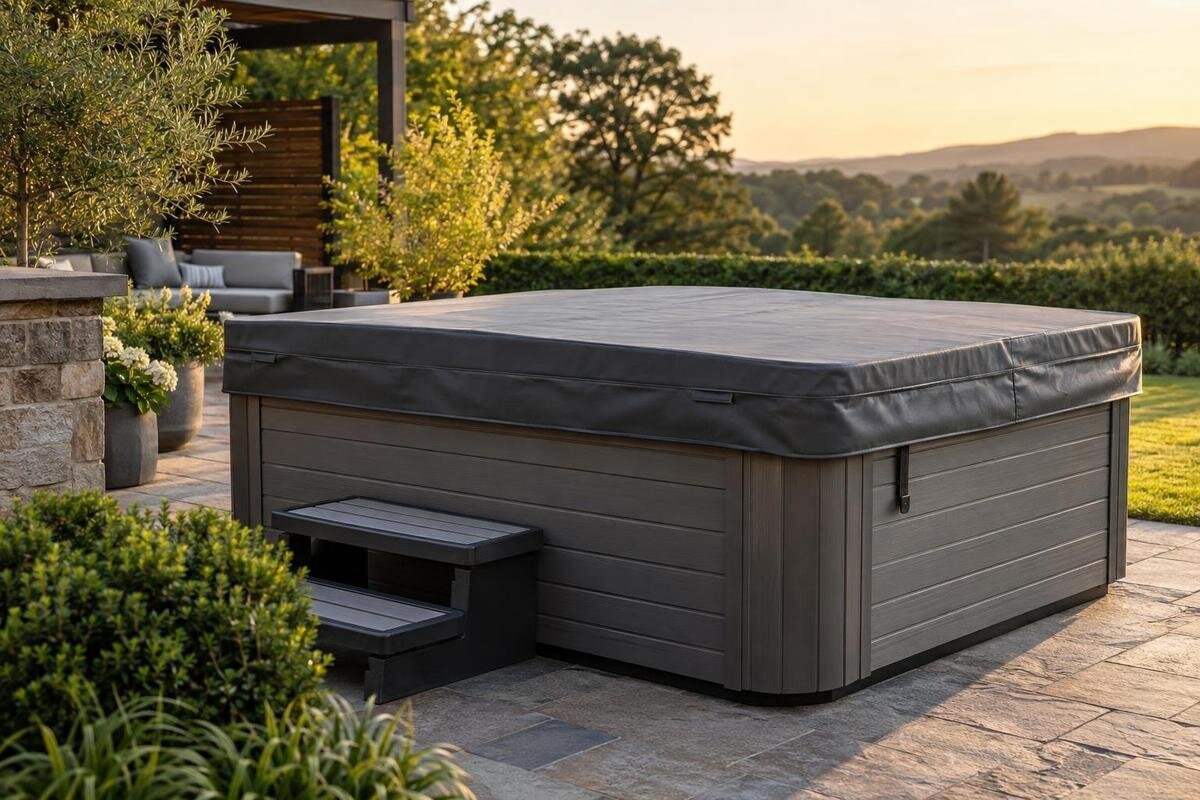
Inspect the cover when it is closed, using the manufacturer’s normal procedure. Look around the full perimeter, including corners and long edges, for uneven seating, a visible gap, a torn or separated seam, damaged edge material, or a section that lifts or shifts. Check fasteners or retainers only if the cover uses them, and compare the fit with its instructions; covers do not all use identical edges or hardware. Notice whether a gap is persistent or appears only in gusts. A small visual gap does not prove a specific energy loss, but repeated gaps or loose contact are reasons to ask about repair or correct replacement.
Also note whether the cover has sagged, holds standing water, or seems unusually heavy to handle. Those observations can warrant a supplier’s inspection, but they do not measure heat retention. Condensation or surface wear alone does not prove that the insulation has failed. Photograph the closed perimeter, record any damage and the date, then compare what you see with the manufacturer’s care guidance. For a tub such as the Bloomcabin Hot Tub Cove 2, include the exact model information with your repair or replacement inquiry. Ask the supplier to confirm fit rather than choosing a cover from a general description or visual resemblance.
Review Insulation and Heating-System Records
Look for the owner’s manual, purchase paperwork, installation records, and service notes that describe the tub’s construction, insulation, and heating system. Useful questions include where the insulation is located, what is documented about it, whether work has been done, and whether the heater and controls are operating as intended. Do not assume that all tubs use the same cabinet, base, plumbing layout, or insulation package. If you are considering the Haven 6 hot tub, request current written construction details and keep them with your comparison notes. Distinguish details about the model as supplied from records of later repairs or alterations to an individual tub.
If records are missing, contact the manufacturer, retailer, or a qualified spa technician with the exact model and any identifying information they request. Ask what is documented about the heater type, energy input, operating modes, and standby use, and what inspection could identify an actual fault. Do not open equipment compartments or add material inside a cabinet based on a generic suggestion: an undocumented alteration may affect service access or the intended arrangement. If service records list only general work, ask what was inspected or changed. A qualified professional can assess suspected insulation gaps, leaks, plumbing damage, or heater problems and explain what the proposed repair addresses.
Assess Wind Exposure Around the Tub
Moving air carries heat away from exposed surfaces, particularly while the water is uncovered, and can make an existing cover gap more apparent. Observe the tub in the conditions when you most often use it. Note whether there is steady airflow, whether the cover shifts, and whether the location is sheltered at one time of day but exposed at another. Record how long the cover stays off as well as the weather. These observations can identify a possible contributor, not quantify heat loss. The effect of wind depends on the tub and cover as well as the site, so do not assign a percentage of the bill to wind without measured evidence.
Close and secure the cover as its instructions specify after use. If you are considering a screen or another change around the tub, check the manufacturer’s documented clearances, equipment access, and drainage requirements first, and ask an appropriate qualified professional whether the proposed placement is suitable. Do not improvise a tight enclosure just to block air. When evaluating the Bloomcabin Hot Tub Fjord 8 for a particular site, describe the exposure you have observed and request model-specific placement guidance. Separate questions about suitable placement from claims about energy savings: the latter need performance evidence relevant to the conditions you expect.
Consider Temperature and Usage Habits
Changing a temperature setting can change heat loss: all else equal, a smaller difference between water temperature and outdoor temperature reduces the rate at which heat moves out. That principle does not establish an appropriate setting for every tub or guarantee a bill reduction. A lower setting may affect how quickly the water reaches the desired temperature before use, and energy-saving modes vary by system. Follow the manufacturer’s operating guidance, and do not assume that switching the heater off is suitable. If you use a setback, include the time and energy needed to warm the water before use in your comparison.
Before changing a routine, record the existing setting, when the cover comes off, how often and how long the tub is used, and any long idle periods. Then consider a routine that fits actual use, such as closing the cover promptly after a session and avoiding unnecessary time with the water exposed. The effect depends on how much the pattern changes, the season, temperature, and the tub’s heat retention. Change one routine at a time and keep other factors as steady as practical. Tracking the result turns a plausible habit improvement into a test rather than an assumption.
Establish a Useful Energy Baseline
Build a baseline before spending on equipment. Use the most tub-specific energy record available for your heating system: a dedicated measurement or monitoring feature if one is already provided and documented, or a measurement method identified by a qualified professional. A whole-home utility bill can be too broad to isolate one tub, and billing-period totals may include other major changes. Confirm the system’s energy source and recorded units instead of assuming every hot tub is electrically heated. For a prospective purchase such as the Aurora 10 hot tub, request energy-use figures with their stated operating conditions so you can judge whether they offer a useful comparison.
Alongside energy, log the setting, when the cover was open, how often and how long the tub was used, outdoor conditions, and any operating-mode changes. Choose a period that captures ordinary use rather than an unusually quiet week, and write down the start and end dates. If a measurement includes circulation or other functions, note that it is a total-use figure rather than heating-only data. Avoid changing the setting, cover, and routine all at once; otherwise, you will not know which change affected consumption. A dated record is more useful than a precise-looking estimate built from guessed inputs.
Estimate Savings and Upgrade Payback
Translate a measured energy difference into dollars using the rate that applies to the energy you actually use. For an electric system, identify the variable per-unit charges on your current utility bill and note whether the price changes by time or usage tier. For another fuel, use the matching billed units and variable cost. Separate charges that stay the same from those that change with consumption; only the latter belong in a savings estimate. Rates and quotes vary locally and change over time, so date the utility bill or tariff and the local upgrade quote instead of relying on a general average.
A basic estimate is measured energy reduction multiplied by the applicable variable rate over the same period. For a retrofit, compare an annualized bill change with the full installed quote, including necessary labor and related charges. Simple payback is the installed cost divided by the estimated annual reduction, but it is meaningful only when that reduction is credible. Do not extrapolate one unusual month across a full year without considering seasonal weather and use. If you are comparing an upgrade with replacing the tub with a Cove 2 model, keep the purchase costs separate from the energy comparison and use consumption evidence for each option.
Choose Between Routine Changes and Equipment Upgrades
Use the evidence to choose a response rather than assuming the most expensive fix will help most. If your log shows long uncovered periods, test a routine change first. If the cover has a visible defect or does not seat as intended, ask about repair or a compatible replacement for the exact tub. If records or an inspection point to insulation or heater issues, request a diagnosis and quote before authorizing work. For a Bloomcabin Hot Tub Haven 6, identify the model in that request and ask the supplier to connect each proposed repair or upgrade to the problem it is intended to address.
Compare each option by the documented problem it addresses, written compatibility, quoted parts and labor, measured or documented energy-use results, and the period over which those results were observed. Do not apply a brochure percentage to your bill unless the test conditions and your circumstances are comparable. If there is no documented performance and no plausible defect to correct, the savings case is unproven. A routine change is easier to reverse, while equipment work can involve more expense and professional assessment; neither guarantees a lower bill. Choose the least costly option that is supported by the observed cause and useful evidence.
Compare Heat-Retention and Energy-Use Evidence
Ask what a heat-retention or energy-use claim actually measures. Useful documentation identifies the exact tub or component, the measurement method, energy source and units, test period, water target, outdoor conditions, cover state, usage pattern, and comparison baseline. For an insulation or cover comparison, ask whether the tested component was compatible with the same model and how the reported improvement was calculated. A broad phrase such as energy efficient is not a number you can convert into a bill saving. A result from another climate, use pattern, or equipment setup may not predict your own.
Compare like with like, and distinguish a rated input from energy used over a representative period; they are different quantities. Ask whether figures are measured or projected and whether they describe a component or a complete tub. When requesting performance information for the Fjord 8 hot tub, ask for those distinctions alongside the figures, rather than accepting a number without its measurement context. If a seller cannot provide a relevant test, ask whether a qualified technician can measure your existing system before and after a change under comparable use. Otherwise, leave the projected saving unknown rather than applying a percentage to a whole-home bill.
Confirm Compatibility and Measure the Result
Before ordering a cover or insulation-related part, confirm the exact model and any relevant version information, written compatibility, and what the work will change. Ask whether the proposed work preserves manufacturer-directed access and normal operation, and whether a qualified installer is needed. For the Bloomcabin Hot Tub Aurora 10, use the full model name in the order inquiry and have the supplier identify the compatible part in the quote. A product name, photo, or number in a name does not establish dimensions or construction. Resolve any uncertainty about fit before ordering rather than relying on appearance.
After a change, repeat the same dated log for a comparable period: energy units, setting, use, cover-open time, and outdoor conditions. Use the same measurement method and change one thing at a time where possible. If weather turns warmer, use falls, or rates change, separate those effects from the equipment result instead of crediting the upgrade with the full bill difference. Record maintenance or water replacement during the comparison, too. A result that is unclear may mean the suspected heat-loss path was not dominant, or that conditions varied too much to decide; either way, keep the readings and compatibility notes for the next decision.
Frequently asked questions
Will lowering the set temperature always lower my bill?
A lower water temperature generally means a smaller temperature difference from the surrounding air, which can reduce heat loss when other conditions stay the same. The bill effect depends on use, weather, the heating system, and how often the water must be warmed for a session. Follow the tub’s operating guidance; there is no universal setting or guaranteed saving.
Is it cheaper to switch a hot tub off between uses?
Not necessarily. The result depends on the tub, outdoor conditions, how long it will be unused, and the energy needed to bring the water back to the desired temperature. Check the manufacturer’s instructions for any setback or off mode, and compare measured energy over similar periods rather than assuming that either approach costs less.
Will a new cover pay for itself?
A new cover pays for itself only when accumulated energy savings cover its installed cost. A cover that fits correctly may address a documented fit or condition problem, but savings depend on the original cover, tub, weather, use, and the replacement’s verified performance. Confirm compatibility and compare a dated quote with measured or well-documented energy data.
Can I add insulation around the tub myself?
Do not open equipment compartments or add material based on a generic suggestion. Changes may affect service access or the tub’s intended arrangement, and an apparent gap may not be the main source of heat loss. Ask the manufacturer or a qualified spa professional to identify the issue and confirm whether a proposed change is suitable.
How can I tell whether a change saved money?
Record energy use, temperature setting, cover-open time, use, and outdoor conditions before and after the change. Compare periods with similar weather and activity, use the same energy units, and apply the current variable rate from your bill or fuel provider. Date the rate and upgrade quote, and treat a result as uncertain if the periods are not comparable.
The most credible cost reduction follows a demonstrated cause: a cover that needs attention, a documented insulation or equipment issue, or a routine that does not match actual use. Keep dated before-and-after notes and compare them using the same energy units and a current local rate. If a proposed upgrade cannot be tied to a diagnosed problem or comparable performance evidence, treat its potential saving as unproven rather than guaranteed.
