
How to Keep a Glazed Garden House Comfortable in Summer
SUMMER COMFORT
Glazing brings daylight and a view into a garden house, but direct summer sun can make the interior brighter and warmer than expected. Comfort depends on where the building sits, when the glass receives sun, which parts can open, how the room is arranged, and when you plan to use it. Planning summer comfort in a glazed garden house belongs in the purchase decision as much as in a summer routine. Compare the intended site with the actual product information, and plan for shade and airflow before ordering rather than relying on a photograph or a model name to reveal specifications.
How summer sun changes a glazed room
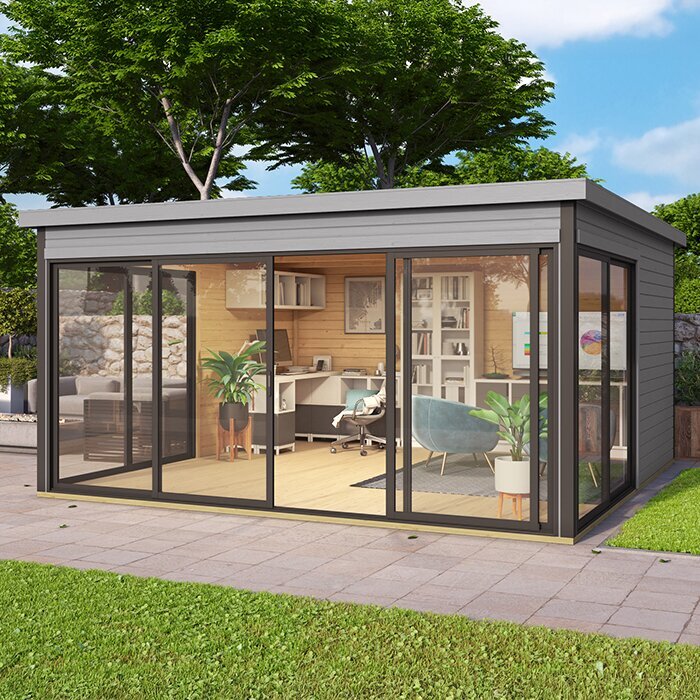
A glazed garden house behaves differently from an open patio. Sunlight passing through glass can warm interior surfaces, and that warmth may linger when the space is enclosed or airflow is limited. How noticeable it feels depends on the glazed area and direction, nearby shade, outdoor conditions, openings, and what happens inside. A bright morning does not predict a comfortable late-afternoon work session, and no compass direction is best for every yard. Separate the issue you want to solve: direct glare, warmth at a seat, or a stuffy feeling after the sun shifts. Each points to a different buying question.
Before comparing models, note which side of the intended building would receive sun and when it reaches the places where you plan to sit or work. Use current product information to confirm which sides are glazed and where openings sit; photos can show a particular angle without answering those questions. When reviewing the Verdana 1 garden house, check its own published configuration instead of inferring it from the name or an image. Record what is not stated so you can ask the retailer before choosing a layout. A simple sketch with a compass direction and a few time notes makes the comparison easier.
Choose a site by observing shade through the day
Visit the planned location at more than one time of day, especially during the hours the garden house will be occupied. Note when direct sunlight reaches the footprint, when nearby buildings or trees cast shade, and whether the view from your likely seat is bright or comfortable. Sun position changes through the year, and a tree's shade moves as the day passes; current canopy may not give the same cover in every season. A single midday visit can miss glare that matters at breakfast or late afternoon. If possible, take notes or photos from the same viewpoint on several visits rather than trusting one snapshot. Note planned changes to nearby trees or structures, too; do not count on shade that may not remain.
Shade is only one part of siting. Keep the footprint, entrance route, and room needed for doors or windows to operate in mind; a shaded corner may not work if the building cannot face the right way or access becomes awkward. Compare your site sketch with the exact configuration before committing. For the Verdana 2 garden house, verify the product's actual glazed sides, entrance position, and any operable elements instead of transferring assumptions from another model. Ask the retailer if orientation, layout, or available options are unclear.
Compare the actual glazing, not just the product photo
Product photos and broad descriptions such as bright or airy do not tell you how the glass arrangement will work for summer use. Check the stated position and extent of glazing, whether any section opens, and what the model documents say about the glazing itself. If the supplier provides performance figures, ask what component or configuration they describe; numbers from different specifications may not be comparable. Also check compatibility before assuming that film or an added shade can be used. The point is not to calculate an exact indoor temperature, but to compare documented details and identify which unknowns could change your choice.
Build a short comparison sheet for each candidate: glazed faces, operating panels, door location, published dimensions, shade compatibility, and unanswered questions. Mark items as confirmed, unavailable, or needing clarification so a possible feature is not mistaken for one included with the order. For the Durano garden house or another listing, use its own current information; a similarly named variant may not share the same arrangement. A front-facing photo can also leave side panels or opening details unclear. If a fact is essential to your decision but absent, ask the retailer for the relevant specification or drawing before ordering.
Plan usable airflow through the building
Airflow can help a room feel less stagnant, but an open door alone does not guarantee that air will move through the space. The result depends on which openings actually operate, where they are, outdoor conditions, wind, and whether furniture blocks them. A route for air to enter and leave is more useful than counting openings without considering their positions. Check whether you can use those openings conveniently during the hours you expect to be there, and whether opening the building makes sense in the weather at that time. Ventilation complements shade; it does not erase direct sun or always make outdoor air cooler.
When reviewing the Veltor 1 garden house, consult that model's own information to establish which elements open and where; do not infer an airflow route from the model name or an illustration. Sketch furniture and daily movement around them so a chair, storage unit, or open door will not make access awkward. A portable fan moves air around a room but does not remove the sunlight entering through glass. If you plan fixed electrical equipment, have a qualified professional confirm an appropriate setup rather than improvising wiring.
Decide how you will control direct sun
Decide what balance of daylight, view, and protection from direct sun you want. Exterior shade can intercept sunlight before it reaches the glass, while an interior blind can reduce brightness and glare; these approaches are not necessarily equivalent for heat management. Think about when shade is needed, whether it should be adjustable, and how much view you are willing to cover. A tree or neighboring structure may already shade part of the site, but coverage shifts with the sun and season. Base the choice on observed exposure, not on an assumption that a curtain alone will keep the space comfortable.
Before purchase, check whether the chosen building permits the shade method you have in mind and whether compatible accessories or attachment points are documented. Do not assume a generic blind, film, awning, or canopy can be fitted safely or without affecting the product; ask the supplier or a qualified installer if compatibility is unclear. If comparing the Orello 1 garden house, make that inquiry against its exact model information rather than relying on a photo or details from a different version. Consider whether you need shade for a short period of direct sun or for longer use, and how you will adjust it as daylight changes.
Arrange the interior for your planned activities
Sketch the interior around a real task, not an empty floor. Place a chair, table, work surface, or hobby setup where direct sun and glare are less likely to interfere at the hours you plan to use it, while leaving a clear route to the entrance and usable openings. If you work on a screen, consider whether bright glass will be behind or opposite your usual position; try the view from seated eye level rather than deciding from outside. Plan for the number of people who will use the room, since a layout that works for one person may feel crowded when others join.
Use the dimensions and layout published for the exact model to check furniture clearances; exterior measurements do not necessarily equal usable interior space. Include equipment in the plan too: lamps, computers, and other devices can contribute heat during long sessions, and their makers' clearance and use instructions still apply. For the Modano 1 garden house, verify its actual plan and dimensions before deciding that a preferred desk or seating arrangement will fit. If the listing leaves an important point unanswered, get clarification before ordering rather than relying on a perspective photo. A movable seat or table can also give you options if the sun falls differently through the day.
Match the building to your summer schedule
Write down when and how the space will be used. A spot for brief morning coffee has different priorities from a daily afternoon office, a craft room, or a gathering place for several people. Note the usual time, length of use, activity, and number of occupants, then rank what matters most: shade at a particular hour, a view, daylight, an opening that is easy to reach, or room for furniture. If different people will use it, consider their preferred seats too; one side may receive direct sun while another stays shaded. This list separates essential features from nice-to-haves and keeps a dramatic photo from standing in for a real use plan.
Plan a flexible summer routine as well as a building. You might reserve concentration-heavy tasks for hours when the room is naturally more comfortable, use available shade, and open the building when outdoor conditions make that useful. If a warm spell makes the space uncomfortable, move the activity rather than assuming every glazed room can be improved in the same way. When comparing the Veltor 2 garden house, take your intended schedule to the exact product information and check the details that support it. Ask about anything the listing leaves unclear, especially if it affects a routine you cannot easily change.
Verify model details before placing an order
Before placing an order, gather current documents for the precise model and variant: stated dimensions, glazing arrangement, operable parts, included components, assembly guidance, care requirements, and any documented shade accessories. Check what is included and what must be sourced separately; a photo may contain styling or surroundings that are not part of the order. Compare like-for-like configurations, and make sure the documents correspond to the option you intend to buy. For the Veltor 3 garden house, verify its own current product information instead of carrying over details from a different Veltor option. If a summer-comfort feature matters, get a clear answer before committing.
Also confirm the site-preparation information, delivery access, assembly arrangements, and the order terms shown by the retailer. Draw the intended footprint using published dimensions, then check gates, paths, overhead clearance, and space to position materials. Requirements for foundations, utilities, or permits can depend on the product and location, so consult manufacturer guidance and, where needed, a local building professional or authority; do not guess. Include any extra work or accessories in the overall budget, and do not assume that a shade, fan, or other item in a photo is included. Keep the final selection tied to the exact model and order record.
Test the site before you commit
An on-site trial can reveal exposure issues before you buy. Mark the planned footprint on a simple drawing using verified dimensions, then set a chair where the main seat or desk would go. Visit at relevant times and note direct sun, reflected glare, existing shade, and whether nearby structures change the view. Repeat on more than one day if practical; clouds and shifting weather can alter what you observe. This exercise does not reproduce a glazed, enclosed room, but it helps identify when the plot receives sun and which activities may need shade. Check the walking route too, not only the seat.
Keep a brief log rather than relying on memory: time, weather, direction of direct sun, location of shade, and planned use. Compare that record with each candidate's verified glazing and opening layout, then list the remaining unknowns. If you cannot observe the plot before ordering, ask someone familiar with it to describe exposure or visit at the hours you care about. A sketch of glass, seating, and access makes questions more specific. You are checking the fit between the site and a purchase, not predicting an exact indoor temperature from an outdoor visit. Note whether a comfortable spot depends on a temporary source of shade.
Adjust your routine as the season changes
After the garden house is in use, learn its pattern gradually. On a sunny day, notice when the room becomes bright or warm, which seats remain comfortable, and whether available openings are practical for your routine. Try using shade or openings at different times, changing one thing at a time so you can tell what helps. Weather varies, so one day is not a permanent verdict. If a task feels unpleasant during a particular part of the day, moving it or adjusting the schedule may be more practical than expecting a fixed arrangement to work in every condition. Keep notes on what worked.
Keep adjustments within product guidance. Use and maintain glazing, opening hardware, and any approved shading according to the applicable instructions, and keep furnishings from obstructing access. Before adding film, changing glazing, attaching an external shade, or introducing fixed equipment, verify compatibility with the manufacturer or a qualified professional. These are product- and site-specific decisions, not universal do-it-yourself rules. Revisit your observations as the season changes: sun angles, tree cover, and the way you use the room can shift. If an opening or shade is awkward to use, treat that as useful feedback about the original plan.
Frequently asked questions
Does a glazed garden house always get too hot in summer?
No. Direct sun can add warmth and glare, but the result depends on the glass area and orientation, surrounding shade, openings, outdoor conditions, and when you use the room. Two similar-looking buildings can feel different on different sites. Compare the exact product details and observe your intended location instead of treating glass area alone as a comfort forecast.
Will opening the door keep a garden house cool?
Not necessarily. An open door helps only when the layout and outdoor conditions allow useful air exchange; wind, the position of other openings, and obstructions all matter. If the outdoor air is warmer than the room, opening the door may not make the interior cooler. Check what actually opens, and consider airflow alongside shade rather than as a substitute for it.
Which direction should the glazed side face?
There is no best direction for every yard. Decide when you expect to use the room, then observe when direct sun reaches the planned glazing and where shade falls. Morning and afternoon use can create different priorities. Choose an orientation that fits your schedule, site access, and the building's documented layout rather than following a compass rule alone.
Can an interior blind control summer heat?
An interior blind can reduce brightness and glare, but it is not automatically equivalent to shade that intercepts sunlight before it reaches the glass. Check that the method you want is compatible with the building and glazing. Choose based on the balance of view, daylight, and sun control you need, and verify any product-specific requirements before ordering.
What should I verify before ordering a garden house?
Confirm the exact model and variant, stated dimensions, glazed sides, operating openings, included items, assembly and site-preparation guidance, and compatibility of any planned shade. Compare those details with your site's exposure, access, and intended use. Ask the retailer about missing information, and consult a qualified professional for site-specific foundation, electrical, or installation questions.
Summer comfort comes from the fit between the site, the building's documented glazing and openings, your shade plan, and the way you intend to use the room. Observe the plot at the hours that matter, compare information for the exact model, and resolve important questions before ordering. Then pay attention to how the space behaves as the season changes. That approach cannot promise one fixed indoor condition, but it can help you choose a garden house whose layout and use match your expectations.
