
Outdoor Garden Planter Boxes: How to Choose, Set Up, and Plant Them

Bloomcabin · Raised-bed guides
Outdoor Garden Planter Boxes: How to Choose, Set Up, and Plant Them
Choose outdoor garden planter boxes by what they’ll sit on. Use an open-bottom raised bed on suitable prepared ground, or choose a planter with a soil-holding base and drainage designed for your hard surface. Then check whether you can reach the planting area, provide enough rooting space, and get water to it easily.
Start with the surface
Use an open-bottom frame on suitable prepared ground. For paving or decking, look for a container designed to hold soil and manage drainage there.
Leave room to work
Measure for the person tending the bed as well as the bed itself. Try reaching to the middle before choosing a width.
Measure twice for different reasons
When comparing outdoor garden planter boxes, use listed dimensions to screen for fit and verified inside dimensions to calculate fill.
Plan the planting first
Choose crops using mature size, rooting needs, site light, and local planting guidance before you commit to a layout.
Before comparing outdoor garden planter boxes, pick the spot and name what you’d like to grow there. A strip along a fence and a square plot you can walk around may offer similar planting area, but they won’t be equally easy to weed or harvest. A sunny paved corner presents a different question: what will hold the soil and where will the water go?
Bloomcabin’s outdoor garden planter boxes in this guide are open-bottom frames for prepared ground. Use the listed US specifications to compare shapes, materials, and wall heights. Before you order soil or lay out crops, confirm the current model details and measure the usable space inside the assembled frame.
01
Match the base to what’s under the bed
Outdoor garden planter boxes contain or define a growing area outside, but the word “box” doesn’t tell you what’s underneath. An open-bottom raised bed is a set of walls with prepared ground beneath it. A self-contained planter has a base that supports the growing mix. If you are shopping from a photo, check the base specification rather than trying to infer it from the walls.
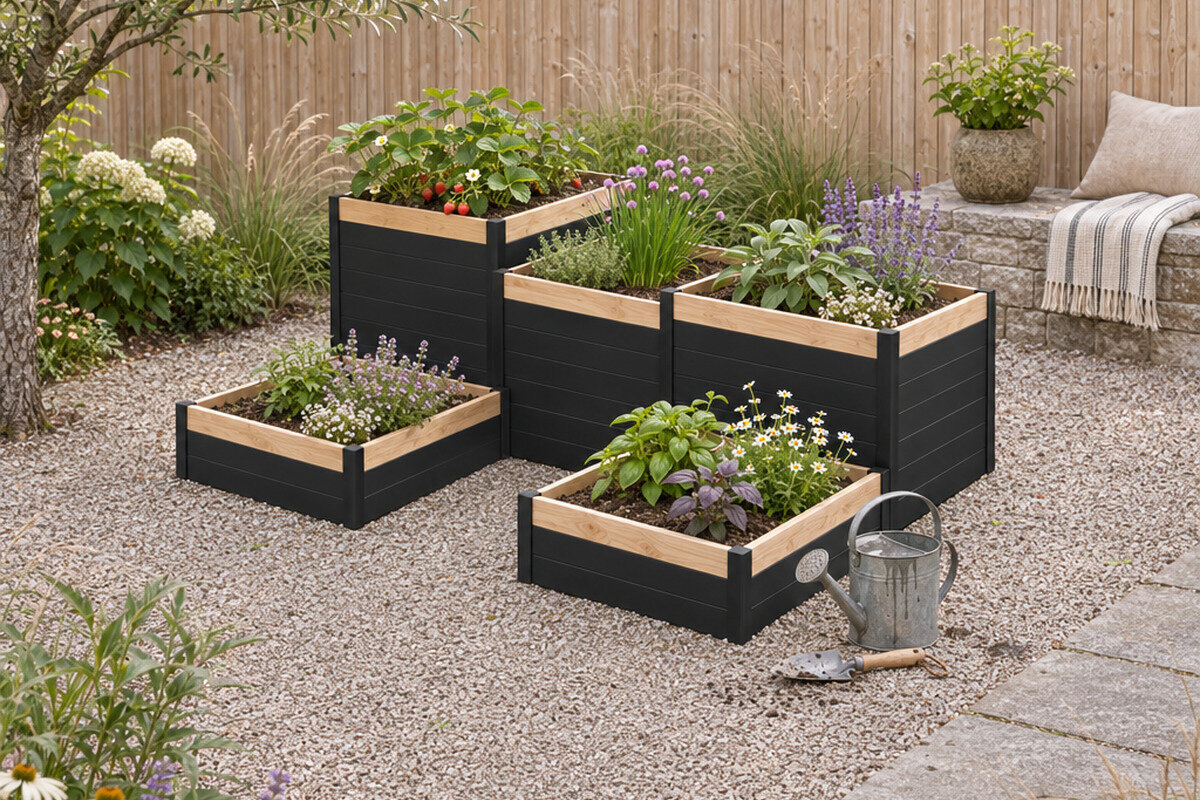
The Bloomcabin outdoor garden planter boxes shown here are raised-bed frames supplied unassembled, with no floor panel. They suit a gardener who has suitable ground and wants a defined planting strip, a standalone plot, or several bays for separate plantings. The edge makes the planting area easy to mark out, but it doesn’t make questionable ground safe for food crops or fix a spot where water routinely collects.
If the only available site is a paved patio, look first at outdoor garden planter boxes intended for that surface. Ask what retains the soil, how runoff exits, and where the water will go. Don’t assume a liner turns a floorless frame into a supported planter. If the location is a deck or balcony, verify what the surface can support before committing to a filled container.

02
Measure the working space, not just the footprint
Mark the outside edges of the bed and the paths you’ll use to tend it. For outdoor garden planter boxes beside a fence, try a one-sided reach test: stand where the path will be and see whether you can reach the far edge comfortably. On a freestanding bed, test from both sides. Leave space where you’ll actually stand or kneel to harvest, not just a gap you can squeeze through.
A narrow strip and a square bed can give you the same nominal planting area but put it in different places. Bloomcabin’s narrow aluminum model measuring 78.74 × 19.69 inches and its 39.37 × 39.37-inch square aluminum bed each list 10.76 square feet. The strip follows a long edge; plan to work the square from at least two opposite sides. Those figures describe nominal footprints and planting areas, not verified clear dimensions inside the walls.
For outdoor garden planter boxes with multiple bays, check where the dividers and openings fall. The double aluminum bed’s 78.74 × 39.37-inch nominal footprint contains two nominal 39.37 × 39.37-inch bays, not one uninterrupted strip. The U-shaped models have five planting bays and a nominal 39.37 × 39.37-inch access notch. Trace the approach to that notch and see whether you can turn or set down a watering can there. The notch is working space, not planting area.
While the outline is marked, observe which parts of the site are shaded and at what times, then compare that with the crops’ light needs. Check that a hose or watering can can reach the bed without crossing a route you need to keep clear.

03
Choose wall height and material separately
When comparing outdoor garden planter boxes, read wall height as a frame dimension, not a promise about rooting depth. For example, the narrow Classic aluminum model has a 39.37 × 19.69-inch nominal footprint and 3.94-inch walls. At that height, the frame adds only a shallow layer above the site, so check the soil below as part of the crop decision. With taller walls, check the fill level you’ll actually use and whether you can reach comfortably over the rim.
The narrow Accoya fusion bed has the same nominal footprint and 23.62-inch walls. Only the top 3.94 inches of each wall are Accoya wood; the lower 19.69 inches and the corner posts are aluminum. The Classic aluminum models use aluminum wall panels and corner posts. If you’re choosing between these outdoor garden planter boxes for a particular finish or rim height, check both the material arrangement and the dimension drawing rather than relying on the model name.
Keep three measurements separate: rim height above the site, how deep you intend to fill the frame, and how much suitable soil a plant’s roots can use. The second can be less than the first because the fill need not reach the rim. The third can extend below an open base if the underlying soil is suitable and roots can penetrate it. If those conditions are uncertain, don’t count the ground beneath as usable depth.

04
Prepare the ground, assemble, and measure for fill
Before assembling outdoor garden planter boxes on soil, inspect the marked site. Look for low spots or evidence of persistent pooling after rain. If you’re unsure about the ground’s prior use or whether it’s suitable for growing food, get local guidance before filling. Moving the outline at this stage is easier than relocating a filled bed.
Bloomcabin supplies these frames unassembled. Read the instructions for your exact model, check the parts against its list, and prepare the ground as directed. After assembly, check the frame’s position and access while it’s still empty. Make sure the side you planned to work from is open and, on a divided bed, that the bays are arranged as expected. Use only the assembly and site preparation methods specified for the kit.
For outdoor garden planter boxes with a rectangular bay, multiply the verified internal length, internal width, and intended fill depth. Convert all three to feet first to get cubic feet. For a divided layout, work bay by bay and add the results, using the intended fill depth for each. Don’t calculate from the outside rectangle or automatically fill to the listed wall height.
Confirm which growing material suits your crops and bed type before ordering. If you buy bags, compare the calculated volume with the volume printed on each bag. If you order in bulk by the cubic yard, divide cubic feet by 27. Decide where the bags or bulk material will go before filling so the pile doesn’t block your working path.

05
Lay out crops by mature size and harvest access
Plan outdoor garden planter boxes around plants you want to harvest or see, not around how many seedlings fit on shopping day. Pick a short crop list, check mature spacing on seed packets or plant labels, and draw the usable interior of each bay. Place tall plants or supports where they won’t shade shorter plants that need the light or block the side you use to tend the bed.
In a narrow bay, put crops you pick frequently where they’re easy to reach from the path. In a divided layout, consider grouping plants with similar care needs rather than assigning one bay to “herbs” and the other to “vegetables” by default. If you want salad greens beside herbs, check that their light, watering, and seasonal needs fit the same spot before committing space to both.
The layout of outdoor garden planter boxes doesn’t determine when to sow. Check your local extension planting guidance and the seed packet to decide whether to sow directly or transplant. If you started tender plants indoors, acclimate them before moving them out. Keep a note of what you planted and where; when you harvest a patch, you’ll know how much room you have and can check whether there’s time to plant something else.

06
Build a care routine you can keep up
Get to know how quickly your outdoor garden planter boxes dry rather than copying a fixed watering calendar. Soil in a raised bed can dry before the ground beside it. Check moisture where the roots are growing and account for the crop’s stage. Keep a closer eye on a newly sown section than on a neighboring patch of established plants, and direct water toward the soil near the plants.
Mulch can help curb weeds and slow moisture loss where it suits the crop. Keep the paths usable so you can check the far corners without stepping into a bay. If growth looks poor, take a closer look before adding fertilizer or reaching for a treatment. Note which plants are affected, check moisture, and use crop guidance and soil-test information to decide whether feeding is appropriate.
Use the first season to see whether the layout of your outdoor garden planter boxes makes everyday jobs easy. If you keep putting off harvesting a far corner, move frequently picked crops nearer the path next time. If carrying water is a chore, fix the route or watering setup before adding another bay.

07
Hypothetical example: fit one bed into an eight-foot plot
Hypothetical worked example: A gardener has a 96 × 96-inch patch of suitable ground and wants to grow leaf lettuce and a few herbs. They’ve checked the light against their crop choices and want 24 inches of working space on every side. That’s their personal working clearance, not a universal recommendation. Subtracting 48 inches from each site dimension leaves a maximum bed footprint of 48 × 48 inches.
Of the outdoor garden planter boxes they’re comparing, the 39.37-inch square aluminum bed fits on paper, while the 78.74-inch-long narrow bed and the 78.74-inch-long double bed don’t fit that reserved footprint. Centered, the square leaves about 28.3 inches per side based on the nominal dimensions. The gardener marks the outline, checks the current model specifications, and tries reaching to the center from opposite sides before ordering.
For an illustration of the soil calculation, assume the assembled bay measures 36 × 36 inches inside and the gardener plans a 12-inch fill depth. Those are hypothetical inputs, not Bloomcabin specifications. The calculation is 3 feet × 3 feet × 1 foot, or 9 cubic feet. The gardener would substitute the actual measurements before buying mix, then check local timing and seed-packet spacing before planting. The same approach works for other outdoor garden planter boxes: rule out bad fits with outside dimensions and use inside measurements only once you’re planning the fill.

Questions readers ask
Can outdoor garden planter boxes go on a deck or balcony?
Look for a container intended for that surface, with a base that holds the growing mix and a way for excess water to escape. Verify the filled weight, what the surface can support, and where runoff can go before buying. The open-bottom Bloomcabin beds in this guide are specified for prepared ground; a floor or deck installation is not documented in the supplied specifications.
Do taller outdoor garden planter boxes always give roots more room?
No. A taller wall can hold a deeper layer of fill, but roots have access only to the growing material and underlying soil they can actually penetrate. Compare the planned fill depth and the condition of the ground below it with your crop's needs. Also check how high you will need to lift soil or reach over the rim.
Can I estimate soil from a U-shaped kit's overall dimensions?
Use the internal dimensions and planned fill depth of each bay instead. The overall rectangle includes the access notch, which takes no soil. If bays have different fill depths, calculate them separately before adding the volumes.
Make the site work before you buy
The best fit is the bed you can reach, water, and plant without working around the site. Mark out where your outdoor garden planter boxes and paths would go, test your reach, and verify the base and dimensions. Once those checks pass, use the model instructions to set up the bed and local crop guidance to decide what goes in it.
Find a raised bed for your plan
Compare layouts and check the dimensions on the product page.
