
Plants for Garden Beds: What to Grow and How to Set Up the Bed

Bloomcabin · Raised-bed guides
Plants for Garden Beds: What to Grow and How to Set Up the Bed
Choose plants for garden beds that fit the light, season, and space you can reach. Leaf lettuce and radishes are a starting point for a cool-season salad bed; basil or compact bush beans are options for a sunny, warm-season planting. Check the variety’s label and your local planting window before buying, then choose a frame that gives those crops enough room.
Start with two or three varieties
Choose plants for garden beds that you’ll use or enjoy, then check their mature size and growing season.
Measure inside and out
Measure planting space inside the frame and leave room outside it to reach the center.
Check below the frame
Wall height, fill depth, and total rooting depth are three different measurements.
Let conditions set the timing
Use local guidance to decide when to plant and soil moisture to decide when to water.
Choosing plants for garden beds is easier when you plan for the harvest you want. A small bed used for salad greens has a different job from one used for cooking herbs or cut flowers. Pick that job first so you don’t buy more varieties than the space can hold.
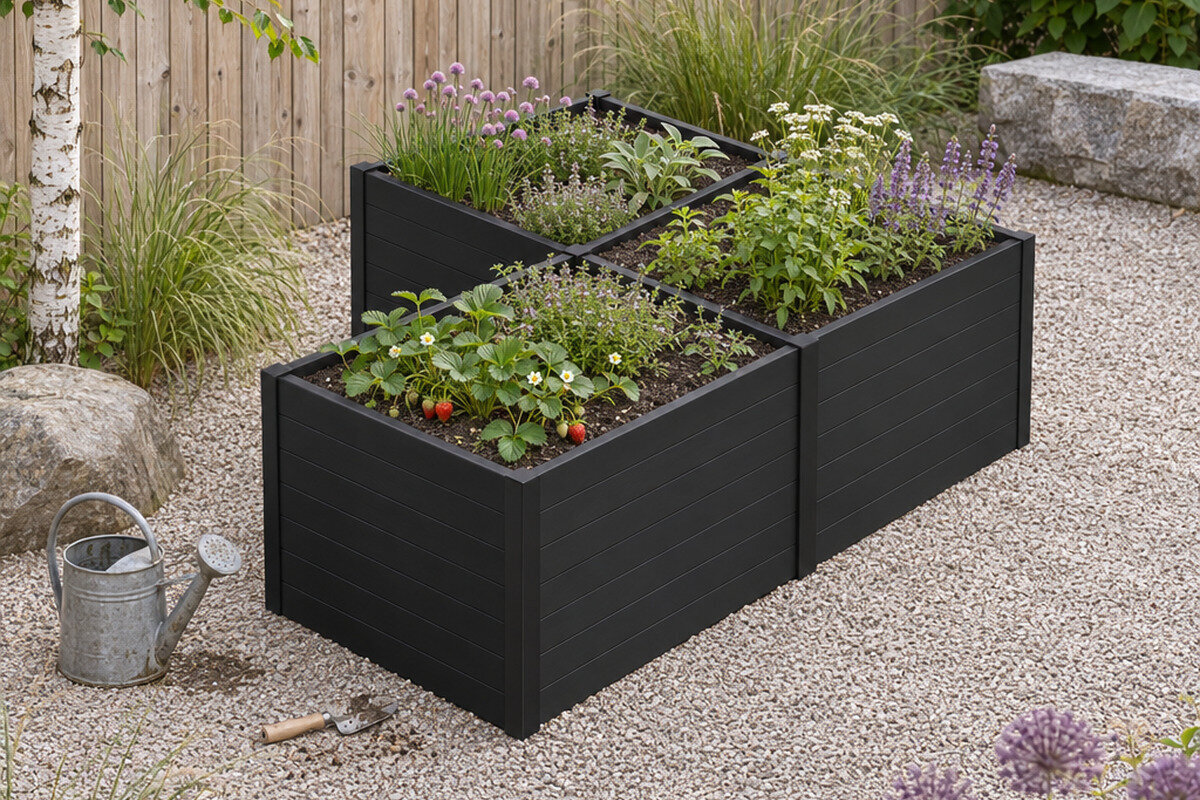
This guide takes you from a site check to a planting sketch, using open-bottom Bloomcabin raised beds as examples. The same crop-selection method works for an existing in-ground bed; the frame and fill steps apply when you’re setting up a raised one.
01
Check what your site can support
Before you buy plants for garden beds, look at the spot in the morning, around midday, and later in the afternoon. Mark where the house, fence, or trees cast shade, then compare that pattern with the light requirements of your candidates. Check how you’ll get water there, too. If the only route for a hose runs through a gate or across a busy path, work out that route before settling on the site.
A framed raised bed holds growing soil above the surrounding grade. The Bloomcabin examples here are open-bottom frames supplied unassembled: they sit on prepared ground and have no floor panel. This type suits a gardener who wants a defined planting area and has suitable ground beneath it. It isn’t the same as a self-contained planter for a paved spot, and the frame alone won’t fix persistent drainage trouble or make potentially contaminated ground suitable for growing food.
When a spot won’t support the plants for garden beds you had in mind, change the crop list or move the bed before spending money on fill. For example, if a fence shades the strip you wanted to use, compare a more open site with varieties whose labels suit the light you actually have. Put the bed where you can comfortably tend it after the plants fill out, not just where the empty frame fits.

02
Build a crop list around how you’ll use the bed
Sort your candidates by what you want from the bed. For salads, consider leaf lettuce and radishes if their local planting windows overlap. For summer cooking, consider basil and a compact bush bean variety if your light and season suit both. If you want flowers rather than food, start with a compact annual such as a dwarf zinnia in a spot that meets its label requirements. These are starting combinations, not a list of plants that will work in every yard.
When choosing plants for garden beds, read labels for the specific variety rather than relying on the crop name. Two varieties sold as the same vegetable can take up different amounts of room. Write down mature size, final spacing, and whether the plant will need support. Draw the space each will occupy at maturity, including any area that foliage or a support would take away from your access path.
Group plants for garden beds by how you’ll tend and harvest them. Put frequently picked leaves near the side you walk past most often. If one variety grows taller than its neighbors, sketch where it could cast shade and move it before planting. You don’t have to fill every gap on day one. If the crop list doesn’t fit at the recommended spacing, drop a variety or save it for a later planting window.

03
Pick a frame you can reach across
For plants for garden beds along a fence or path, compare a narrow strip with a square bay. The Narrow Aluminum Raised Garden Bed has a nominal 39.37-by-19.69-inch footprint, one compartment, a nominal planting area of 5.38 square feet, and 3.94-inch walls. It’s a candidate for a small row of greens or herbs over suitable prepared soil. That short wall is a border, not a promise of enough rooting space by itself.
The Square Aluminum Raised Garden Bed has a nominal 39.37-by-39.37-inch footprint, one compartment, a nominal planting area of 10.76 square feet, and 15.75-inch walls. It gives you more room for a mixed layout if you can work from opposite sides. Mark the nominal outline on the ground and try reaching the middle from where you’ll actually stand. Leave enough room to kneel, carry a harvest container, and turn without stepping into the bed.
If you want a narrow footprint with a taller wall, the Narrow Accoya Raised Garden Bed has the same nominal footprint as the shallow narrow model and 23.62-inch walls. Its upper 3.94 inches are Accoya boards; the lower walls and corner posts are aluminum. That’s a different wall construction, not an all-wood bed. A taller frame at the same footprint generally means more fill if you intend to fill it higher, not more surface area for plants for garden beds. Check the current US listing and instructions for your exact configuration before purchase.

04
Prepare the ground and measure before ordering fill
Set out the frame location and access paths before opening bags of soil. Read the instructions for the exact product, prepare the ground as directed, and assemble with the specified parts. Check for surface obstructions and resolve concerns about the underlying site before filling. If you chose plants for garden beds on the assumption that roots could grow below the frame, make sure the ground is suitable for that use rather than counting it automatically.
Measure the actual interior length and width after assembly. The product’s nominal footprint helps you reserve space outside the frame; it doesn’t tell you the exact area available for planting. Measure fill depth from the base of the bay to the soil level you intend to maintain, following product instructions. That number can be less than wall height, and it doesn’t include any usable soil below the open base.
For a rectangular bay, convert the inside length, inside width, and intended fill depth to feet, then multiply to get cubic feet. For a multi-bay bed, calculate each rectangular bay separately using its own measurements and add the results. Leave dividers and access notches out of the calculation. Use your crop list to check whether you’re providing the growing depth needed by the plants for garden beds you selected; for help choosing a suitable fill, ask your local Extension office about your site and crops rather than copying a universal soil recipe.

05
Work through one bed on paper first
Hypothetical worked example: One square bed for salads. A gardener choosing plants for garden beds wants leaf lettuce and radishes, has a site with suitable light and soil, and can reach a square aluminum frame from two opposite sides. Suppose the assembled bay measures 38 by 38 inches inside and its planned fill depth is 12 inches. These are assumptions for the example, not verified internal dimensions or a recommended fill level for the product.
At those measurements, the fill estimate is (38 ÷ 12) × (38 ÷ 12) × 1, or about 10 cubic feet. The gardener would check the actual dimensions and allowed fill level before ordering and use the volume on the bag label to work out how many bags to buy. There is no need to use the nominal 10.76-square-foot planting area in this calculation.
Suppose the lettuce packet calls for 8 inches between plants and 12 inches between rows. On the 38-inch sketch, two rows 12 inches apart can hold four lettuce plants each, with centers at 7, 15, 23, and 31 inches along each row. If the rows sit 8 and 20 inches from one edge, a proposed radish row at 32 inches is 12 inches from the nearest lettuce row. Check the radish packet and the actual varieties before committing: if the two crops need more separation or don’t share a sowing window, skip the third row or use that space later. This is how to turn a list of plants for garden beds into a plan you can check before sowing.

06
Plant to the variety’s instructions
Once you have a layout, use your local Extension planting calendar to decide when each crop goes in. Some plants for garden beds are sown in place; others may go in as transplants. Check the packet or label for the variety’s sowing depth, spacing, and planting method. If you raised tender transplants indoors, follow local guidance for gradually exposing them to outdoor conditions before setting them out.
Mark the rows and transplant positions before opening packets or taking plants out of their pots. Start from a fixed edge so your measurements match the sketch. If the instructions call for sowing closer together and thinning later, record the final spacing next to the row label. That makes it easier to tell the difference between a correctly sown row and one that still needs thinning.
Write down the variety and planting date on a tag or a simple map. This is particularly useful if your plants for garden beds go in at different times: an empty strip may be a deliberate space for a later sowing, not a gap to fill now. Keep the map handy until you know which parts of the bed you can reach without brushing against mature plants.

07
Use the first planting to improve the next one
Check the actual soil before deciding to water. Newly sown rows and established plants for garden beds don’t necessarily need attention at the same time. Compare an exposed edge with the soil farther inside, and note what happens after rain rather than assuming every part of the bed got equally wet. When watering is needed, direct it toward the roots. Where mulch suits the crop and its stage, it can help retain moisture and suppress weeds.
If one group declines while the rest looks fine, check that part of the bed before treating everything. Look for differences in shade, moisture, crowding, or visible damage. Identify the likely cause before applying a treatment, and base fertilizer decisions on soil-test results and crop guidance rather than adding feed whenever leaves look pale.
At the end of the planting window, write down one thing you’d change. Perhaps the plants for garden beds were a good match for the season but the harvest row was too far from the path. Move that row in the next sketch rather than replacing a crop you liked. If you repeatedly couldn’t reach the center, keep the convenience of a small crop list and rethink the frame width or path before expanding.

Questions readers ask
What are good plants for garden beds if I have room for only two crops?
If your local planting window suits both, try leaf lettuce and radishes for a salad bed. If you prefer herbs, choose two varieties you use regularly whose mature sizes and growing needs fit the same space. Plan for the full-grown plants, not the size of the seedlings you bring home.
Is a wall just under 4 inches tall enough for a vegetable bed?
It depends on the crop and the soil below. An open-bottom frame that shallow is largely a border if you need roots to extend into prepared ground. Check crop-specific rooting needs and usable soil depth before choosing it. If the ground below is unsuitable, don’t count it as growing space.
Can I use one of these open-bottom frames on a patio?
The listed Bloomcabin frames have no floor and are specified for prepared ground. Their specifications don’t establish patio or deck suitability. If hardscape is your only option, look for a container intended for that setting and verify drainage and the surface’s ability to support the filled weight.
Settle the layout before buying fill
Before you buy your plants for garden beds, sketch where each variety will go at its final spacing. Then check the frame, the soil beneath it, and the path you’ll use to reach it. If the plan needs more room than you have, grow fewer varieties rather than squeezing them in.
Find a raised bed for your plan
Compare layouts and check the dimensions on the product page.
