
How to Shade a Garden House With a Large Glass Front
Garden house planning
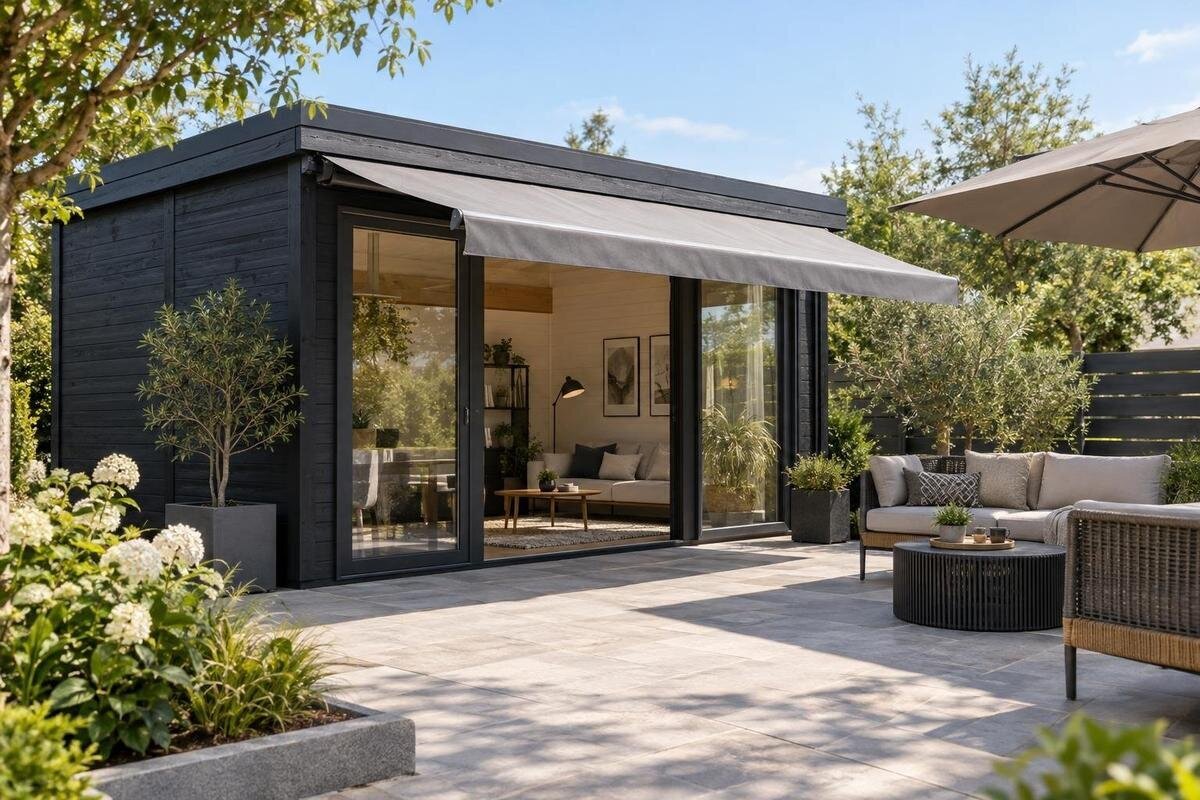
When planning shading for a garden house with a large glass front, begin with the hours you want to use the room and the light that actually reaches it. Broad glazing can preserve daylight and a garden view, yet a beam of direct sun or a bright reflection may make one seat or work area uncomfortable. The right treatment is not automatically the darkest or largest one. It should address the source and timing of glare while keeping the opening usable and the outlook you value. A practical choice comes from observing the site, measuring the glazing, and checking how the shade can be mounted—not from judging a product image alone.
Map when and where sun reaches the glass
Spend time in the garden house at the hours you expect to use it, or mark those hours on a site plan if construction is still ahead. Note when a direct beam reaches a chair, desk, screen, or floor, and whether reflections from paving, water, or another bright surface create a second source of glare. The affected area may be only one side of the glass front. Record the time, approximate direction of the sun, and what you were doing; a few observations on clear days are more useful than a single midday snapshot. If the room will serve several purposes, include each usual seating or work position in your check.
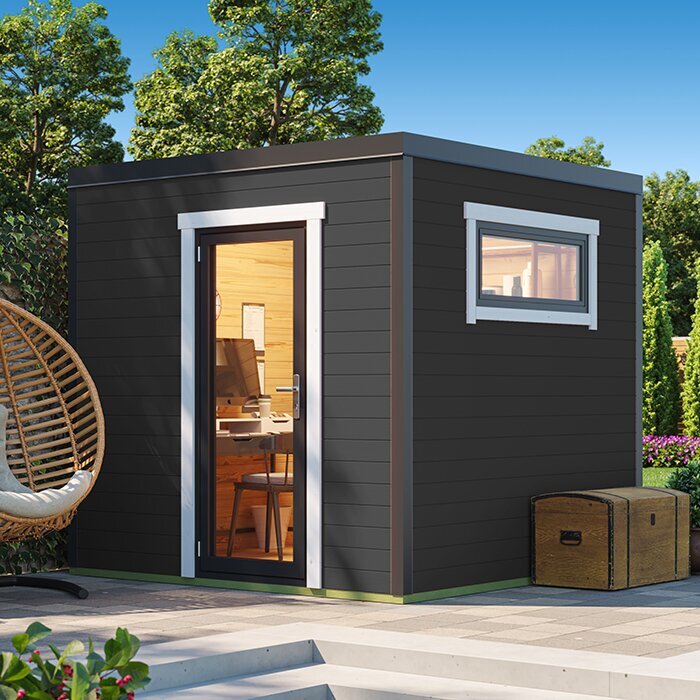
Sun direction is only part of the picture. Low morning or evening sun can enter beneath an overhang, while a shade positioned above the glass generally addresses higher sun more effectively than low-angle glare. The actual result depends on the building and site. Trees, fences, neighboring structures, and the garden house roofline can shift the pattern, and leafy shade changes seasonally. If you compare a candidate such as the Verdana 1 garden-house page, note any orientation or glazing dimensions the written page actually provides. A photograph cannot establish where the house will sit or when your site receives direct sun. Avoid choosing by compass direction alone; nearby obstructions and intended seating matter too.
Choose between exterior and interior shading
Exterior shading sits before the glass and can intercept direct sun before it passes through the glazing. Possible approaches include a retractable awning, an exterior roller screen, or a louvered panel. Depending on the material and how open it is, a screen may retain more of the view than a solid panel. Outdoor treatments also face wind, rain, dirt, and repeated exposure. Check the shade maker’s stated use conditions, maintenance needs, and mounting requirements; do not assume an accessory designed for a sheltered window belongs on an exposed garden house. A fixed treatment also shades only the angles its position allows.
An interior roller shade, blind, or curtain is protected from outdoor weather and may be easier to reach, but sunlight has already passed through the pane. It can still reduce glare and help control the view; its effect on incoming heat is not the same as blocking sun outside. A layered setup can combine exterior protection for strong sun with an interior treatment for privacy or softer daylight, provided both can operate without colliding. On the Verdana 2 product page, check whether any shade or mounting accessory is explicitly listed as included. Do not infer what comes with a garden house from an image alone. Compare hardware and upkeep as well as the fabric.
Keep moving doors and shade hardware clear
First establish which parts of the glass front are fixed and which open. A shade across an entire front may suit fixed glazing, but a moving panel needs free travel and access to its handle. Sliding or folding doors may have tracks and space where the panels gather; swinging doors need room for the door leaf. A single wide covering can look simple, while separate panels may let you shade only the area catching sun. Neither arrangement is automatically better: the right choice depends on the door layout, control position, and how often you pass through the opening. Mark the fully open position on a plan before comparing treatments.
Ask the shade seller whether a proposed system is intended for the opening type, how it retracts, and whether its brackets or controls reduce usable clearance. If the garden house is not yet assembled, use documented door details for initial planning, then confirm the actual opening before ordering a custom treatment. Read the Durano page for the door and glazing details it actually states; if those details are unclear, ask rather than infer them from the product name or a rendered view. A shade should not solve the glare problem by making ordinary access awkward. Check that you can reach its controls with the doors in their usual positions.
Measure the panes and mounting space
Measure the glass you intend to cover, not just the outside of the garden house. Record the width and height of each pane or distinct section, note the frames and mullions, and decide whether the shade will sit inside a recess, on the face of the frame, or farther out. Those positions have different clearances and may require different finished dimensions. Include a sill, trim, roof edge, or nearby wall where it affects the selected mount. For a divided or irregular front, one overall width can conceal several separate fit questions. A simple sketch with labeled sections is useful when you request a quote. If an opening is uneven, measure at more than one point and follow the shade provider’s measuring method.
Check the operating space too. Handles, door tracks, hinges, lights, and furniture can conflict with a shade or its controls. Note whether the control will be reachable without blocking the glass or doorway; the details depend on the system you choose. If you use the Veltor 1 listing for comparison, rely only on dimensions stated on the page, then measure the installed glazing separately. The building’s overall footprint is not the shade width, and a product image is not a measuring diagram. For custom sizing, ask the shade provider which measurements it needs and who is responsible for confirming them.
Set the balance between daylight and view
Decide how open you want the room to feel before choosing a material. A light-filtering fabric may soften a hard beam while retaining more daylight; a denser or opaque treatment may block more of the view and darken the room. A mesh or screen can preserve a partial outlook, but openness and privacy vary with the weave, color, lighting, and viewing angle. Labels such as sheer, solar, or blackout are not enough by themselves to predict what you will see from inside. Ask for the available light-control information and compare material samples at the glass rather than relying on a product name. Consider glare, the garden view, and privacy together.
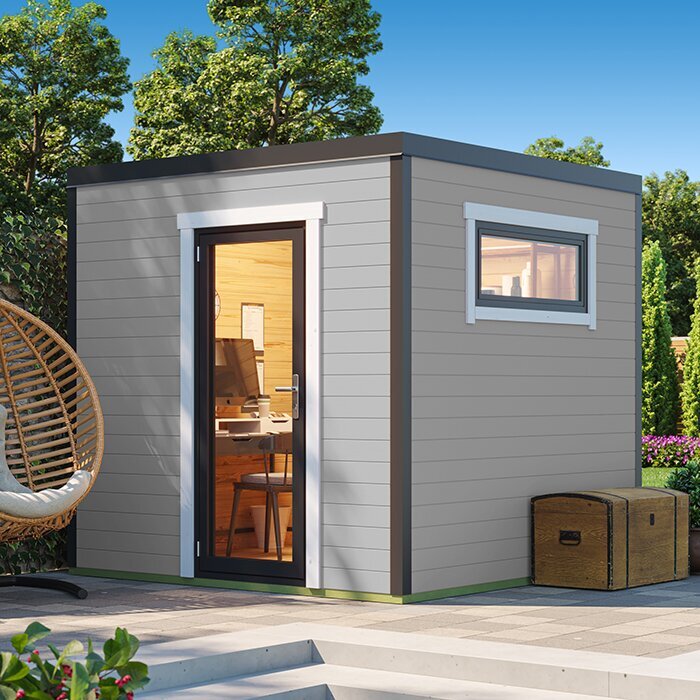
Assess a sample from the place where you normally sit, especially at the hour that caused trouble. Check whether the garden remains visible, whether the material creates a distracting pattern, and whether the room still feels bright enough for its intended use. If privacy matters after dark, ask specifically about visibility when the inside is brighter than outside; a semi-transparent material does not guarantee concealment in every lighting situation. If the Orello 1 product page is among the house designs you are considering, treat its imagery as a visual reference only. It cannot establish the transparency or glare performance of a shade fabric. A partial or adjustable treatment may leave unaffected sections clear.
Account for seasonal sun and outdoor exposure
Think about the season and direction of the light, not only today’s conditions. The sun sits at different heights over the year, and leaves on nearby trees can appear or disappear, so a fixed overhang or panel may leave gaps during the hours you care about. An adjustable shade offers flexibility; a fixed treatment needs less operation but gives you fewer ways to respond to changing light. The tradeoff depends on how often you use the garden house, whether you want to preserve daylight at other times of year, and how much upkeep you accept. Avoid choosing a permanent solution based on a single season’s observations.
Outdoor conditions matter just as much as sun. An exterior fabric or screen may face gusts, rain, falling debris, and dirt. Ask the maker what conditions it is intended for, when it should be retracted, and how it should be cleaned. Do not assume a garden-house roof or overhang can carry an added shade without confirmation. When reviewing the Modano 1 page, use any provided elevation or glazing details to understand the design, but do not estimate shade coverage from a perspective image. If placement or mounting requirements are unclear, confirm them with the garden-house and shade suppliers before ordering.
Plan for privacy as well as glare
Shade and privacy are related, but they are not interchangeable. A treatment that reduces glare can still leave clear sightlines from a path or neighboring seating area, and a screen that hides a view from one angle may offer little privacy from another. Map the places people might look in from, along with where you sit inside, and consider daytime and evening use separately. At night, a brighter interior can change what is visible through a semi-transparent shade. Ask about privacy under those conditions rather than relying on a label such as privacy screen. If the garden view matters most, cover only the problem area or choose an adjustable option.
Think of the glass front in zones: a section facing a close sightline may need more coverage than the center looking toward the garden. Ask whether separate sections can be operated independently and whether the controls remain accessible. A full-width shade may be straightforward, but it can also cover a view that was not causing discomfort. When comparing the Veltor 2 listing, use only the stated layout to mark possible sightlines; verify the actual garden-house position and nearby views on your property. For a room used for reading, work, or meals, priorities may differ across the same front. Compare samples from the relevant seats and at the times privacy matters.
Confirm mounting, controls, and maintenance
Before choosing an exterior shade or a heavy interior system, confirm how it can be supported. A garden-house wall, trim board, or roof is not automatically intended to carry added hardware, and drilling through a frame can affect the building or glazing. Ask the garden-house supplier which locations, if any, are suitable for attachments, and have a qualified installer assess uncertain fixing or wind exposure. Do not guess at fasteners or load capacity from an image or outside measurement. For a powered shade, confirm with a qualified professional that the product and building can accommodate the planned controls and power. This guide does not cover electrical work.
Let operation and care influence the purchase as much as appearance. Decide whether you want a shade that can be raised completely, adjusted in stages, or left in a set position; check that its control is reachable without blocking doors or furniture. Ask what cleaning is permitted, whether fabric or parts can be replaced, and how the system should be protected when not in use. Before choosing a shade for a design such as the Veltor 3 garden-house page, get written confirmation of the suitable mounting surface and the shade’s requirements rather than assuming every model uses the same fixing points. If the house and shade come from different suppliers, ask each to confirm compatibility.
Check what the shade order includes
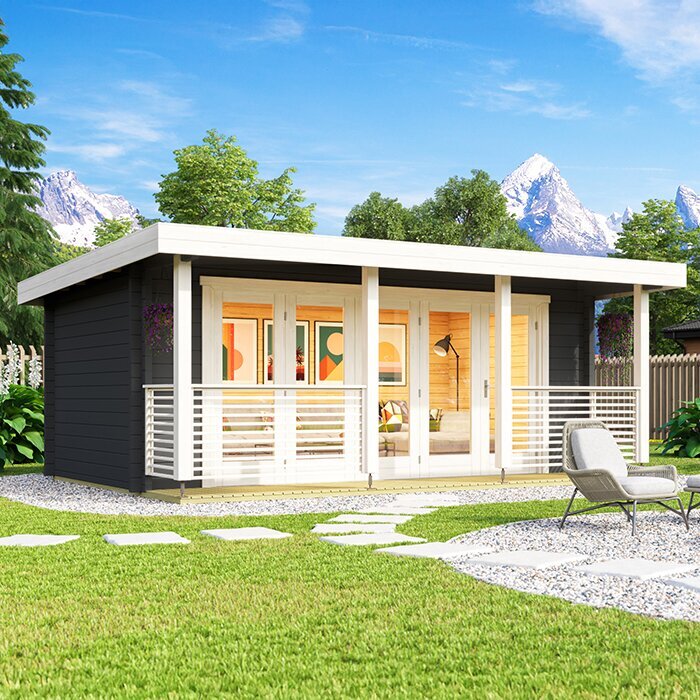
Treat the garden house and shade as separate purchase decisions unless the written order explicitly bundles them. Confirm whether the quoted treatment covers all panes, one selected section, or the full opening, and whether fabric, tracks, brackets, controls, measuring, and installation are included or priced separately. Ask for the finished width and height, mounting method, material, operating instructions, and any stated exposure limits in writing. If the shade is custom-sized, read the seller’s measurement, cancellation, and return terms before confirming; do not assume a standard treatment can be altered later without cost. If two proposals differ, compare whether each covers the same problem area and hours of sun.
Compare complete proposals on equivalent terms. A lower quoted figure is not a useful comparison if one option omits hardware, needs a separate installer, or covers less glass. Also consider cleaning, access for maintenance, and possible replacement of fabric or mechanisms; a simple system may be a better buy if it matches the actual problem and is easier to operate. Ask the house seller and shade provider to identify any compatibility assumptions between the two. Do not assume an accessory shown in marketing material is part of the sale; obtain a written list of included items. Keep the product description, final measurements, and answers together so the order can be checked against what you intended.
Test samples in the actual light
Before committing to a fixed material or custom width, test the effect as realistically as possible. If samples are available, hold them near the glass without attaching anything that could damage the surface. Look through each one from your usual seat, both toward the garden and toward the source of glare; repeat in bright and softer light. If the garden house is not built yet, compare samples against the proposed glazing in the planned orientation or ask the supplier for relevant product information. A small sample cannot reproduce every angle, but it can rule out a fabric that feels too dark, too open, or visually distracting. Compare more than one opacity if possible.
Write a short order checklist: the glass sections to cover, inside or outside mounting, clearance for every moving door, desired view and privacy, operation, suitable fixing points, included components, and maintenance. Note the hours when the shade needs to work so a seller can explain whether the proposed coverage addresses those conditions. If you are unsure whether full or partial coverage is right, consider a reversible or adjustable approach only if it is compatible with the building and its exposure. Avoid drilling, applying film, or ordering custom parts until the relevant suppliers have confirmed fit and compatibility. That sequence helps avoid paying for coverage where it is not needed.
Frequently asked questions
Is exterior shading better than an interior shade?
Exterior shading intercepts sunlight before it passes through the glass, so it can be more effective at limiting direct sun. An interior shade can still reduce glare and control the view, and it is less exposed to outdoor weather. Compare mounting requirements, exposure, upkeep, and how much daylight you want to keep.
How do I shade a glass front with moving doors?
Identify which panels move and how they open before choosing a treatment. Check that the shade, track, and controls will not block the doors, handles, or access through the opening. Separate shades for fixed sections may be an option, but confirm the arrangement with the shade supplier.
How can I keep the garden view while reducing glare?
Compare samples at the glass from the place where you usually sit. A more open or light-filtering material may preserve more of the view, while a denser treatment may block more light. The exact result depends on the material and lighting, so do not rely on a product label alone.
Can window film replace a shade?
Film is a permanent choice compared with a removable or adjustable shade, and it can change how the glass looks. Before considering it, ask the garden-house and glazing suppliers whether the specific film is compatible with the glazing and what limitations apply. Do not assume every film is suitable for every pane.
Will shading keep a garden house cool?
Shading can reduce direct sun and glare, but it cannot guarantee a particular indoor temperature. The result depends on the glazing, the sun exposure, the shade’s coverage and the building itself. Ask the relevant suppliers what performance information they can provide for the specific arrangement.
For a large glass front, a good shade choice addresses the hours when direct sun causes trouble, fits around any moving doors, and preserves the daylight and view you want. A brief sun log, accurate measurements, confirmed mounting details, and a sample of the material will usually make the tradeoffs clearer than a product image. Treat the garden house and its shade as separate parts of the order unless the written listing says otherwise.
