
US Window and Door Tax Credits, Rebates and Grants

US window and door incentive guide
A window or door project usually begins with an operational decision: should the kitchen window swing out, should a patio opening slide or fold, and which rooms are actually being renovated? That scope comes before incentives. In the United States, a tax credit, utility rebate, weatherization service, loan, and grant are different routes with different administrators, timing, paperwork, and eligibility. None should be treated as a discount already attached to a product. List each opening, its intended operation, and whether the work is replacement, an addition, or part of a broader energy upgrade. Then build a budget that works without assumed assistance while researching programs that may apply. This protects the design brief, prevents ordering ahead of required approvals, and makes discussions with installers, program offices, and tax advisers more productive.
Separate the opening choice from the funding question
Begin with the opening’s job, not a potential rebate. A fixed picture window, operable casement, roof window, entry door, and wide patio door address different needs for ventilation, access, furniture movement, daylight, and circulation. Create a room-by-room schedule recording the existing opening, desired operation, swing or panel clearance, nearby furnishings, and surrounding wall work. For example, a living-room view may call for a fixed window, while an adjacent opening intended for ventilation needs an operable alternative. Do not assume visually similar products serve the same purpose or require identical supporting documents.
Once the scope is stable, ask for quotes that identify each opening instead of using one broad window-and-door allowance. Confirm whether removal, installation, water-management work, trim, finishes, disposal, and repairs discovered after removal are included. These are construction-scope questions, even if a program later requests itemized costs. Assistance may change the eventual out-of-pocket amount, but it should not decide whether a window opens inward, outward, or not at all. Choose the configuration that works for the home, then determine whether the documented project fits a program’s published process.
Know the names before comparing offers
Tax credits, rebates, grants, loans, and weatherization are not interchangeable. A tax credit is handled through a tax filing and may depend on the taxpayer, installation year, and official tax rules. A rebate can be administered by a utility, state, locality, or program partner and may require enrollment, preapproval, an inspection, or designated documentation. A grant is assistance for a defined applicant group or purpose. A loan is financing that must be repaid, even when listed beside energy-improvement resources. Identify the administrator and funding type before comparing an offer with a supplier quote.
For low-income households, weatherization is a route to investigate before purchasing, not an assumed reimbursement afterward. USA.gov directs households to state weatherization and energy-efficiency assistance resources, while the federal Weatherization Assistance Program uses a locally delivered application process for eligible households USA.gov weatherization assistanceWeatherization Assistance Program. These sources do not establish that a selected replacement window or door will be approved or that every applicant will receive assistance. Ask the local administrator how assessment works, when an application must be made, which measures may be considered, and whether contractor choice is restricted.
Review the complete opening
Put the federal 2025 deadline in the right place
Federal information can remain visible after the relevant period has ended, so check the date and administering agency rather than relying on an old article, advertisement, or savings calculator. The IRS states that the Energy Efficient Home Improvement Credit was available for qualifying improvements through 2025. Do not include that federal credit in the budget for a window or door newly installed in 2026 IRS Energy Efficient Home Improvement Credit. Historical qualification rules also do not establish eligibility for any Bloomcabin product, state program, utility rebate, or local assistance route.
If work was completed in an earlier tax year, keep that historical tax question separate from a new buying decision. Retain dated invoices, payment evidence, installation records, and any product documents a qualified tax professional considers relevant. For proposed work, ask the adviser which tax year controls and which current IRS guidance applies to your circumstances. A seller cannot determine personal tax eligibility. This distinction prevents a buyer from choosing a product after reading an outdated credit summary and later discovering that the installation year, taxpayer, expense, or exact improvement did not fit the rule being described.
Research local incentives as a verification exercise
State, utility, city, county, and community programs can have different service boundaries and requirements. Start with the official customer-program pages for your electric or gas utility, then check the state energy office and relevant local housing or government agency. Record the program name, administrator, application dates, eligible property types, account requirements, and contact information. If a search result leads to a contractor or marketing site, use it only to locate the official administrator. A program appearing in search results is not necessarily open, funded, or available at the project address.
Give the administrator a concise project description, such as replacement windows and one outswing exterior door at an owner-occupied home. Ask whether an application is required before signing, ordering, paying a deposit, or starting work. Confirm whether the process changes for rental, multifamily, or new-construction projects and whether it requires an assessment, participating contractor, inspection, audit, or preapproval. Request written clarification when possible. If eligibility cannot be confirmed before purchase, keep the schedule flexible and budget without the assistance. The product supplier can provide accurate order information, but only the administrator can decide whether the project follows its program rules.
Build a quote that supports a real comparison
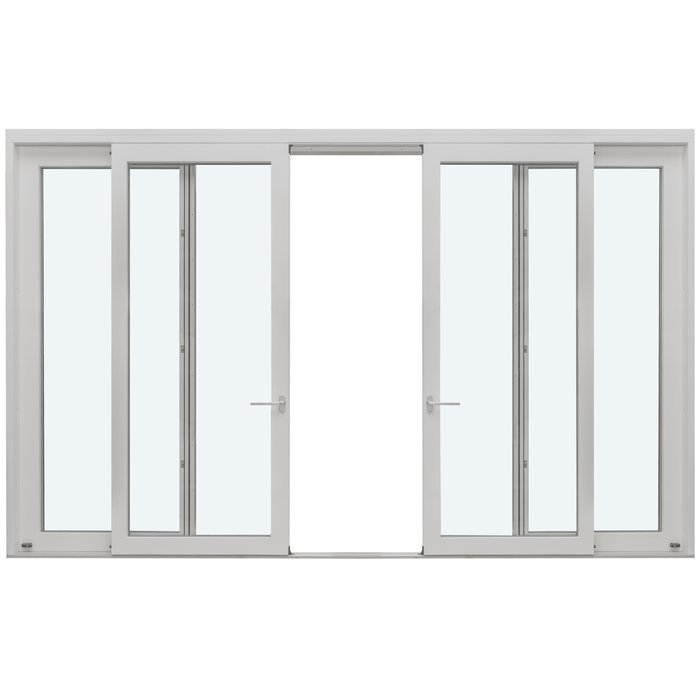
A useful quote allows the same scope to be compared across options. For each opening, list location, quantity, intended size, configuration, operation, frame color, decorative bars if desired, hardware finish, screens where relevant, and handedness or panel arrangement. Record glass choices when finalized rather than leaving an undefined allowance. A two-panel opening is not automatically comparable to a single-panel opening merely because the overall width is similar. For patio access, a Patio Life sliding patio door provides a reference for discussing a panel that travels along its track instead of occupying a swing zone.
Separate the units from site work such as structural changes, wall repairs, interior trim, electrical relocation, access equipment, and water-management details. Before work begins, ask the program administrator whether invoices must itemize labor and materials in a particular way. Do not change an accurate invoice afterward merely to resemble program wording. Build the procurement file from the first quote: preserve the signed scope, approved revisions, final order confirmation, dated payments, installation records, and requested photographs. Accurate records help manage the construction project even if an incentive is denied, exhausted, or ultimately not pursued.
Match door operation to the available space
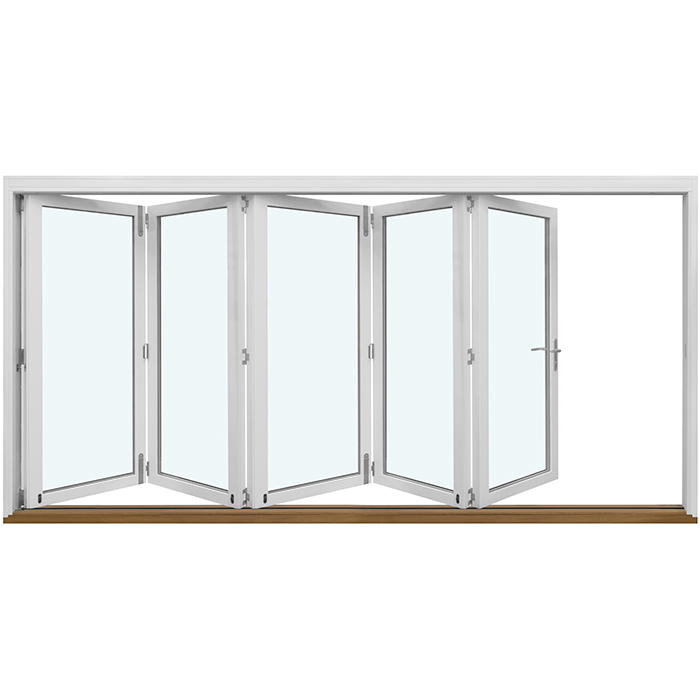
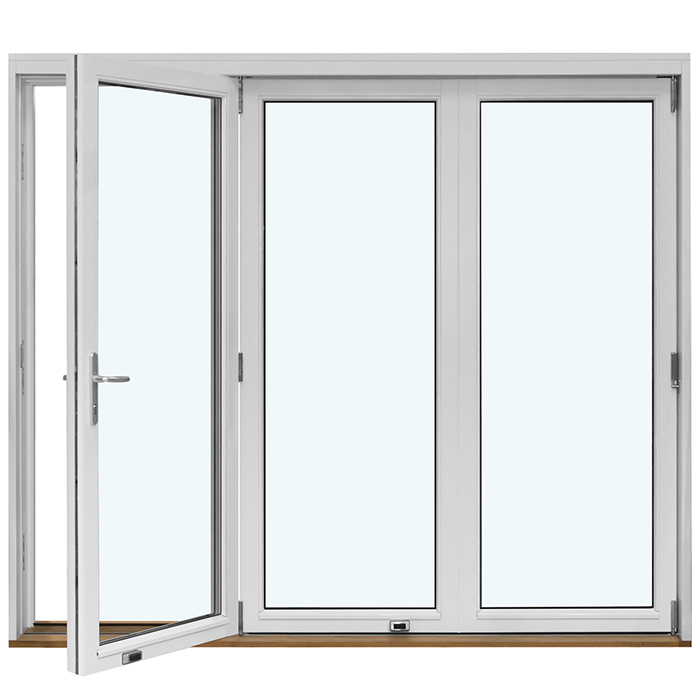
A swinging exterior door needs clearance on its swing side, while a sliding door preserves that area but creates a different operating layout. Folding panels can form a broad connection when open, yet their panel movement and stacked position must work with the patio, furniture, steps, and circulation. Mark these conditions on a plan instead of judging from memory. A outswing bifold door is an alternative to a slider rather than a like-for-like substitute. Compare how each configuration affects daily movement, usable wall area, exterior clearance, and access to the opening.
Have the project professional inspect the existing opening and review installation responsibilities before ordering. Discuss the surrounding wall, threshold relationship, adjacent finishes, intended operation, and any site investigation still needed. Compare a base option with an alternative using the same surrounding-work assumptions. Do not attach an unconfirmed rebate to the more ambitious version merely to make it appear affordable. If assistance is later approved, the comparison will still show which configuration best meets household needs. That is more reliable than selecting the largest opening first and trying to fit uncertain funding around it.
Review the complete opening
Use window operation to refine the scope
Give each room a specific ventilation, access, and cleaning review. An outward-opening top-hinged unit differs in daily use from a side-hinged casement; a top-hinged outward-opening window should therefore be evaluated by its named operation and the conditions around the opening. For a bedroom, bathroom, kitchen, stairway, or upper-level room, ask the qualified project professional to identify applicable project requirements and site constraints before finalizing size or operation. Do not copy dimensions, ventilation targets, or compliance statements from an unrelated online example. Locally adopted requirements and actual building conditions need project-specific review.
A combined arrangement may provide both an uninterrupted view and an operable area without making every glazed section open. A combination window can be considered when discussing how fixed and operable sections work together. Request a drawing that shows sightlines, sash divisions, hardware, and decorative-bar alignment rather than relying on a shorthand description. Ask who will operate the window, how often it will open, what lies outside it, and whether furniture limits access. These questions produce a coherent decision even when no incentive applies and give an administrator a consistent description if documentation is later requested.
Keep performance evidence and eligibility separate
If a program requests performance documentation, obtain its exact checklist before ordering. Ask which document format it accepts, whose name must appear, whether the record must identify the ordered configuration, and when it is submitted. A statement about a general product family may not answer a question about the installed unit. Do not infer a rating, certification, climate suitability, or incentive eligibility from a title. The super-low-Uw outward-opening passive house window name identifies the listed configuration, but it does not by itself prove eligibility under a federal, state, utility, or local offer.
Keep the official program rules saved on the date checked, correspondence with the administrator, the accepted quote, order confirmation, invoices, payment records, installation information, and final product documents in one evidence folder. Label versions so an early design quote cannot be mistaken for the final order. If a feature changes, ask whether the revision affects the application before proceeding. This discipline remains useful without an incentive because it reduces ambiguity among the homeowner, supplier, installer, program administrator, and adviser. Every document should describe the actual project rather than the funding result the buyer hopes to receive.
Plan around confirmation rather than urgency
A funding deadline and a construction schedule are separate clocks. Identify the last application date, when written approval is issued, whether work can begin before approval, and what event counts as completion. Allow time for design choices, site review, measurements where appropriate, order confirmation, installation planning, and required program steps. Bloomcabin windows and doors have a 5-year warranty. Delivery is typically 4–6 weeks, subject to order confirmation. These business terms do not imply that a program will reserve funding, approve an application, or accept a purchase made before its process is completed.
Do not let a possible rebate force an unsuitable product or rushed deadline. A hurried exterior-door order may overlook swing clearance, finish coordination, or required wall work. Conversely, delaying necessary work solely for a rumored future program can leave an opening problem unresolved. Ask the administrator for written timing instructions that apply to the proposed application route, then select a realistic purchase date. If the answer remains incomplete, plan conservatively. The controlling evidence is the official program information applicable when the household applies, not a general summary saved months earlier or a contractor’s recollection of another customer’s project.
Make the decision from a no-incentive baseline
Place a no-incentive baseline beside any potential-assistance scenario. The baseline should include the complete installed scope, site work identified by the project team, and financing costs if applicable. In the second scenario, keep assistance marked as pending until its administrator confirms it. This avoids comparing a basic design at full cost with an upgraded design after subtracting an assumed rebate. The household can decide whether a replacement such as an outswing panel entry door is preferred on its operation, appearance, and project fit rather than because an uncertain amount was informally removed from the price.
Before authorizing the order, review the opening schedule, colors, decorative bars, operation, scope boundaries, installer responsibilities, program status, and required records. Decide who retains each document and what happens if the application is denied or available funding is exhausted. If a contractor claims participation in a program, verify that relationship with the administrator rather than relying on a logo or verbal assurance. Select windows and doors that suit the home and baseline budget, and pursue only assistance routes whose requirements have been checked. Treat approved assistance as a documented outcome, not a sales promise.
Questions US buyers ask
Can I claim a federal window or door tax credit for a 2026 installation?
Do not assume so. The IRS states that the Energy Efficient Home Improvement Credit was available for qualifying improvements through 2025, so it should not be advertised for new 2026 installations IRS Energy Efficient Home Improvement Credit. Ask a qualified tax professional about your circumstances and the official guidance applicable to the relevant tax year.
Are utility rebates the same as federal tax credits?
No. A utility rebate is a separate program with its own administrator, service territory, application timing, documents, and possible inspection requirements. A tax credit is handled through the tax system. Verify a utility offer with the utility or named administrator before ordering; an old promotion or product category does not establish eligibility.
Can weatherization assistance pay for my chosen windows?
Not automatically. The Weatherization Assistance Program serves eligible low-income households through a locally delivered application route Weatherization Assistance Program. It does not guarantee that replacement windows will be selected as an approved measure, that a specific product will be accepted, or that every applicant will receive assistance. Contact the appropriate local application route before purchasing.
Should I apply before signing a window or door contract?
Ask the specific administrator before signing, ordering, paying a deposit, or starting work. A program may require preapproval, an assessment, a participating contractor, or particular completion documents. Obtain the answer in writing when possible. Until requirements are confirmed, budget as though no incentive will be received and keep the quote accurate.
What paperwork should I save while researching assistance?
Save dated official rules, application correspondence, the itemized quote, approved revisions, final order confirmation, invoices, payment records, installation information, and the exact product documents requested by the administrator. Keep versions organized if the design changes. The administrator, not the seller, decides which records are acceptable and whether the completed project qualifies.
Next steps
A sound US window and door incentive strategy is deliberately conservative. Define the project by operation, room use, and complete installation scope; create a budget that does not depend on assistance; then verify every possible tax credit, rebate, grant, loan, or weatherization route with its administrator. For 2026 work, do not rely on the federal Energy Efficient Home Improvement Credit that the IRS describes as available through 2025 IRS Energy Efficient Home Improvement Credit. Keep accurate records, obtain project-specific professional advice where needed, and make the product decision independently of unconfirmed funding. The result remains workable whether assistance is approved, unavailable, or unsuitable.
Official US sources
Sources checked September 9, 2026 2026-09-09
- Energy Efficient Home Improvement Credit — United States federal
- Home weatherization and energy efficiency assistance — United States federal and state referrals
- Weatherization Assistance Program — United States federal program, locally delivered
