
What Does It Cost to Heat a Wood-Fired Hot Tub?
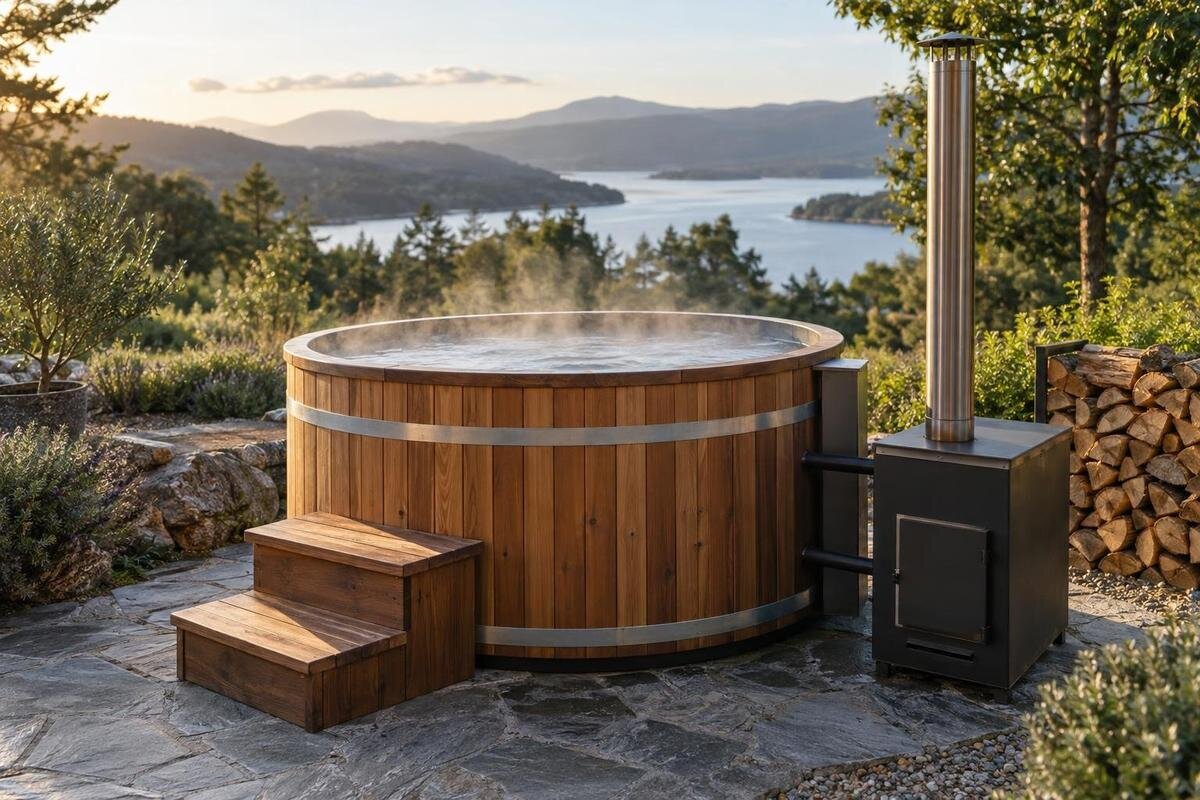
Wood-fired hot tub heating costs
A wood-fired hot tub does not have one dependable firewood price per soak. The cash cost depends on how much wood a session uses and what that same amount costs from a local supplier. Separate the first heat-up from any extra wood added after the water reaches the chosen temperature, then record both using matching units. The arithmetic is simple; getting a useful quantity and a current, comparable price takes care.
What to include in a session’s firewood cost
Set a clear boundary before calculating: this is the cost of firewood assigned to one heating session, not the full cost of owning a hot tub. Include wood used to bring the water from its recorded starting condition to the chosen temperature, plus any additional wood fed afterward to maintain it during the soak. State whether a session means a cold fill through the soak or simply using water that was already warm; those are not comparable heat-ups. Keep installation, site preparation, purchase price, repairs, water, routine care, and labor outside the firewood figure.
Decide how to account for charges attached to the wood. For out-of-pocket fuel cost, include what you actually paid and allocate delivery or required handling fees across the usable quantity in that order. If you are comparing advertised wood prices, show delivery and tax separately instead. Do not charge a full delivery fee to every session if one load serves many; spread it across the recorded amount. A listing such as Bloomcabin Hot Tub Cove 2 identifies a catalog model, but its name alone does not establish a wood-heater configuration, water capacity, or fuel consumption. Verify those details separately before attaching a session cost.
Use matching units in the session-cost formula
The calculation works only when the purchase and the amount used are expressed in the same unit. Record the supplier’s quoted price and unit, the quantity bought, and the quantity of that batch fed to the heater during the session. Then calculate: session wood cost = (total wood cost ÷ quantity purchased) × quantity used. If you buy by weight, track weight in pounds; if you buy by an agreed volume, track that same volume. A bag, bundle, rack, face cord, and full cord are not interchangeable labels. Ask what the seller means by the unit before dividing or converting.
Volume-based quotes need particular care because firewood is stacked with gaps, and different stacking patterns can change the measured pile. A common full-cord reference is 128 cubic feet of stacked wood. If a seller quotes that unit and your measured use is V cubic feet stacked on the same basis, the cost is the full-cord price × (V ÷ 128). Use that conversion only when the quote covers the defined volume and your session measurement is comparable. If the seller quotes an undefined rack or face cord, ask for dimensions first. When preparing an estimate for Bloomcabin Hot Tub Haven 6, keep the seller’s unit definition beside your fuel record so the calculation can be checked later.
Water volume and temperature determine the size of the heat-up
Water volume and the temperature change are major inputs to heat demand. Under otherwise comparable conditions, warming more water takes more heat than warming less, and a larger gap between starting and target temperatures takes more than a smaller gap. That gives you the direction of the effect, not a universal firewood-per-gallon rule: the heater configuration, weather, and heat retention affect how much heat reaches the water. Use the volume at your intended fill level, not a visual guess or a number inferred from a model name. A confirmed operating volume or a recorded fill measurement is a more useful input.
Record the starting water temperature, the chosen target, and whether the tub begins cold, partly warm, or already at the target. These are different heating situations even if the soak lasts for the same amount of time. Keep fill level and temperature readings with each fuel log; otherwise, a low-use session may simply have started with warmer water. Use the same measurement approach from one trial to another. If you are considering the model on the Fjord 8 product page, put its confirmed operating volume beside those temperature assumptions in your worksheet. This keeps the amount of water being heated distinct from the temperature increase you want to achieve.
Weather and firewood condition affect fuel use
Outdoor conditions affect how much heat stays in the water. Colder air and wind can increase heat loss; so can the time water remains uncovered and the length of the soak. How well a particular setup retains heat matters too, but do not assume details that are not documented for that configuration. Compare fuel records only when conditions are reasonably similar, or note the differences and treat them as separate cases. A cold-weather start and a shorter soak on a mild day are not controlled tests of the same setup. The goal is to estimate your own use, not to produce a universal figure.
Record the firewood as carefully as the weather. Species or wood mix, split size, and moisture condition affect how much useful heat a given weight or volume can provide. A damp load can behave differently from dry, seasoned fuel. Ask the seller what species or mix is being sold, how its condition is described, and whether any moisture information is available; a label alone may not explain how it was assessed. Test with the batch you expect to buy rather than applying one wood type’s result to another. When evaluating Bloomcabin Hot Tub Aurora 10, keep the intended fuel batch in your comparison notes and confirm that it matches the fuel guidance for the exact heater configuration.
Calculate session cost from a local firewood quote
A useful local calculation needs a location, a quote date, and a defined quantity. The price a buyer pays depends on the seller, wood type, unit, and whether pickup, delivery, or other charges are included. An undated national figure would not show what a nearby supplier is charging. This guide does not provide a dated local quote or a measured session-burn record for a specified setup, so it does not assign a dollar cost per soak. Instead, the worksheet below shows where your purchase price and session measurements belong. Its result will apply to those inputs, not to every wood-fired hot tub or every U.S. location.
Use T for the total price of a clearly defined purchase lot, Q for the quantity bought, and q for the quantity from that same lot used in one session. The allocated cost is (T ÷ Q) × q. Take T from a dated local receipt or written quote, divide by the stated lot quantity, then multiply by the amount recorded in your session log. Enter your own values rather than relying on sample numbers. Keep delivery and tax either inside T or as separate line items, and use the same approach in every comparison. For a worksheet associated with the Cove 2 listing, label the setup and quote date clearly so you can distinguish a changed wood price from a changed fuel quantity.
Measure initial heating separately from temperature maintenance
A useful session log has at least two fuel entries. Initial heating covers wood fed from the recorded starting condition until the water first reaches the chosen temperature. Maintenance covers any additional wood fed afterward to keep the water near that temperature during the soak. Record where the first phase ends, the amount used in each phase, and how long the water is held at the target. If the target is not reached, note that it was a partial heat-up rather than comparing it with a completed session. This separation shows whether most of your firewood goes into warming the water or maintaining it.
Measure unlit wood in a way that matches the purchase unit: weigh the selected splits before firing if the batch was bought by weight, or track the same measured stack volume for a volume purchase. Distinguish wood set aside for the session from wood actually fed to the heater. Note any unburned wood remaining afterward, and use a consistent accounting method between trials rather than treating all wood brought to the tub as consumed. Follow the equipment’s operating instructions rather than changing the routine to chase a lower figure. When reviewing the Haven 6 product page, confirm the operating information for your configuration, then identify that configuration in the log so each measurement has a clear reference.
Compare hot tubs using the same assumptions
Before comparing candidates, verify facts for each exact setup: whether a wood-fired heater is included or optional, the documented heater configuration, normal operating fill volume, and any stated guidance on wood type or fuel loading. Do not assume every catalog model uses the same heater, or that a number in a model name signals capacity. If a product page does not answer these questions, ask the retailer or manufacturer for written specifications and relevant operating guidance. Without those inputs, applying the same firewood formula to different equipment can produce a misleading comparison.
Use consistent assumptions for each comparison: operating water volume, starting and target temperatures, weather, cover use, and time held at temperature. A product-specific test should record those details beside the initial and maintenance fuel amounts. Where operating volumes differ, show the difference rather than presenting the sessions as identical heating tasks. If you have no test data, label the result as a planning estimate based on your assumptions, not a measured performance claim. Keep the worksheet for the Fjord 8 product listing separate from those for other candidates, with each model’s confirmed specifications and the conditions used in its estimate.
Turn session costs into a realistic fuel allowance
Build a use-based allowance only after separating initial heating from maintenance. If each planned use begins from a similar condition, multiply the representative initial-heating cost by the number of heat-ups. Add maintenance fuel only for sessions when you expect to hold the water at temperature, using the logged maintenance cost for comparable soaks. In words, a seasonal wood budget is the planned number of cold starts times the average cold-start fuel cost, plus the planned number of held sessions times their average maintenance cost. If one soak follows another without a new heat-up, do not count a cold start that did not occur.
Include the same wood-purchase fees used in the per-session figure, but keep installation, site preparation, repairs, and ongoing care outside this heating total. If you buy a large load, allocate its delivered cost across its usable quantity rather than adding the entire load price again each month. Compare the projected allowance with how often you realistically expect to use the tub and the local quote you can obtain. Dividing an annual total by twelve creates a planning average, not an even monthly bill. For a budget associated with the Aurora 10 listing, show the assumed number of heat-ups and held sessions alongside the total, so you can adjust the allowance if your expected use changes.
Avoid common errors in firewood estimates
Some shortcuts make a per-session estimate look cheaper or more precise than it is. Dividing a cord price by a guessed number of logs mixes a volume unit with a count. Comparing pounds burned with a price per stacked cubic foot mixes weight and volume. Converting between them requires information about the exact lot, including its wood and moisture condition, so avoid the conversion if you lack those data. Treat a seller’s rack, face cord, or bundle as its stated quantity, not as an automatic fraction of a full cord. Ask for dimensions or package weight that lets you compare like with like.
Check the finished calculation for double-counting and omissions. A delivery fee should not appear both inside the wood’s unit price and again as a separate session charge. Likewise, a total that includes only wood added during the soak leaves out the initial heat-up. Reconcile the initial-heating and maintenance entries with the session total, then check that both use the same price basis. Keep the quote date and purchase details with the calculation so a later price update does not overwrite the conditions behind an earlier result. This final check separates an arithmetic mistake from a genuine change in wood price, fuel use, or heating conditions.
Decide whether firewood costs fit your budget
Wood-fired heating may fit your budget when the local price, the amount burned in your own sessions, and your expected frequency add up to a total you are comfortable paying. Cash price is not the only consideration: storing a suitable quantity, arranging pickup or delivery, and spending time managing fuel may matter to your household even though they are not part of the firewood calculation. Decide which are cash expenses and which are convenience or time costs, then keep those categories separate so the comparison remains clear.
Before choosing between setups, seek a dated quote for the wood you would actually buy and a verified heater and fill-volume specification for each candidate. If product-specific burn data are unavailable, a measured session on the exact configuration is more useful than borrowing a figure from an unrelated tub. Compare trials under conditions close to your intended use, keeping the initial and maintenance amounts separate. If the result is near your spending limit, plan around a conservative observation from comparable sessions rather than assuming the least fuel-intensive one will be typical. That gives you a personal estimate without pretending there is a universal U.S. price per soak.
Frequently asked questions
Is there a typical amount of firewood for one heating session?
There is no dependable amount for every tub and session. Water volume, starting and target temperatures, weather, heat retention, the heater configuration, and the firewood all affect use. Measure the wood used with your setup rather than treating a number from another tub as a benchmark.
How do I calculate cost if firewood is sold by the cord?
Divide the price of the defined amount by the amount purchased, then multiply by the comparable amount used. A common full-cord reference is 128 cubic feet of stacked wood, but confirm the seller’s unit and measure your use on the same stacking basis before converting.
Should I count wood added after the water reaches temperature?
Yes. Record it separately as maintenance fuel, then add it to the initial heat-up cost for the session total. Separating the amounts helps you compare a cold start with a soak that begins in already-warm water.
Can I compare a price by weight with a price by volume?
Not reliably without information about the exact lot. Weight and stacked volume are different units, and the relationship varies with the wood and its moisture condition. Use the same unit for the purchase price and session quantity, or get a measured weight for the lot you are using.
What should a local firewood quote include?
Record the seller and location, quote date, wood type or mix, quantity and unit, and whether the price includes delivery, handling, and tax. Ask what an unclear term such as rack or face cord means before using it in a calculation.
A reliable session figure comes from two things: a dated local quote and a measured amount of wood used with a defined setup. Keep first heating separate from temperature maintenance, then base your allowance on the sessions you actually expect to have. That gives you a practical fuel budget without confusing it with installation, maintenance, or the wider cost of owning a hot tub.
