
Window U-Values Explained: Uw, Ug, and Uf

Window buying guide
A window replacement rarely starts as a debate about one decimal point. You may be deciding whether a bedroom needs an operable sash, whether a picture-window opening should remain fixed, or whether a patio-facing wall needs more daylight without making the room uncomfortable. U-values matter in each case, but only when you know which part of the window they describe. Uw is the thermal performance of the window as a complete assembled unit; Ug isolates the glass; Uf isolates the frame. Reading those labels correctly prevents a common mistake: choosing on an attractive glass value or frame claim, then assuming it represents the entire installed window. Start with opening operation and the scope of the project, then use whole-window data to compare like with like. The result is a more defensible choice for a single replacement, an addition, or a coordinated whole-home order.
01 / Define the opening
Begin with how the window must work
Before comparing U-values, define what the opening has to do. A fixed unit can prioritize view and daylight because it has no operable sash, while an opening window introduces hardware, seals, and moving junctions that belong to the complete assembly. A room may need ventilation, convenient access to an exterior space, or simply a broad uninterrupted glass area. Those functional choices should come first; thermal data then helps compare feasible designs rather than replacing design judgment. For example, a living-room view opening and a kitchen window may share a visual style yet call for different operations. Treat them as separate product decisions even when their exterior color, interior finish, and glass appearance are coordinated.
A fixed window is a useful starting point when the brief is light, view, or a non-opening companion beside an operable unit. Its product title identifies it as fixed, not its exact Uw, glazing build-up, frame construction, or suitability for a particular opening. Request those details rather than inferring them from the absence of a sash. If ventilation is necessary, compare an operable alternative on its own whole-window figure and do not assume the fixed unit’s result transfers. For a mixed facade, make a schedule that lists every opening separately: location, rough opening, operation, intended glass treatment, decorative bars, and required performance information. That schedule exposes where a single generic U-value has concealed meaningful differences.
What a U-value is actually measuring
A U-value expresses the rate at which heat passes through a building element under specified test or calculation conditions. In practical comparisons, a lower U-value indicates lower heat transfer through that stated component or assembly. It is not a comfort score, a measure of air leakage, a solar-control rating, or a promise of utility-bill results. Indoor comfort also depends on window orientation, shading, glass area, heating and cooling design, room airflow, installation quality, and how the space is used. A U-value is therefore valuable precisely because it answers one defined question, not every question about a window.
US literature may use the term U-factor, and quotations can also show U-values in different unit conventions. Do not compare figures until you confirm the units and the evaluation basis. The safest approach is to ask the supplier to identify the unit, the applicable conditions, the product dimensions, and whether the figure is whole-window, glazing-only, or frame-only. A number with no label is not comparable data. Similarly, a claimed “low U” description is only a direction, not a specification. Record the number with its prefix, such as Uw or Ug, plus the exact configuration. That small discipline makes conversations with designers, installers, and suppliers much clearer.
02 / Identify the value
Uw is the whole-window comparison
Uw refers to the window as an assembled product. It brings together the thermal contribution of the glazing, the frame, and the glass edge or spacer region in a weighted calculation for a defined window size and arrangement. That is why it is usually the most relevant U-value for a buyer comparing complete windows. It reflects the fact that a real window is not a sheet of glass alone. A broad frame, multiple sash boundaries, divided sections, or changes in glass proportion can alter how the final assembly performs, even if the selected glazing is unchanged.
Ask for Uw on the configuration you plan to order, not merely a representative family value. A single-sash casement, a two-sash window, and a combination arrangement can have different glass-to-frame proportions and perimeter lengths. The same applies when a product is resized: the balance of glazing and frame may shift. When looking at a single-sash outward-opening casement window, clarify the intended overall size, opening orientation, selected glass, and whether the reported Uw is tied to that configuration. This is not an attempt to chase a perfect number in isolation. It is a way to ensure that two proposals describe comparable finished products rather than different samples.
Ug describes the center of the glazing
Ug is the U-value of the glazing unit, commonly focused on the central glass area away from the edges. It helps explain the thermal role of the glass package and can be especially relevant when a design has a very high proportion of glass. But it does not include the full frame contribution, nor does it stand in for the edges where glass meets the spacer and frame. It should be read as one component of the story. A strong Ug can be an encouraging input, but it is not proof that the assembled window will have the same result.
This distinction becomes visible when comparing a large fixed pane with a smaller, heavily framed opening unit. The glass package may be identical, so Ug may be the same, but the two units may not have matching Uw because their proportions and boundaries differ. Decorative choices can also matter to the requested evidence. Decorative bars applied to the surface are not the same thing as glass-dividing bars, and neither should be assumed to leave whole-window data unchanged. State whether the design is without decorative bars, uses decorative bars, or uses glass-dividing bars. Then ask whether the published Uw corresponds to that exact visual configuration.
03 / Compare configurations
Uf puts the frame in the picture
Uf describes the thermal behavior of the frame portion. It is useful for understanding why the frame cannot be dismissed when choosing a window. Frame width, geometry, material system, reinforcement, sash construction, and junction details can all affect the frame’s contribution, but no single one of those features gives a buyer enough information to predict a whole-window result. The frame is also the place where operation, drainage strategy, hardware, appearance, and durability requirements meet. A narrow sightline or a particular color preference should be evaluated alongside, not instead of, the completed unit’s Uw.
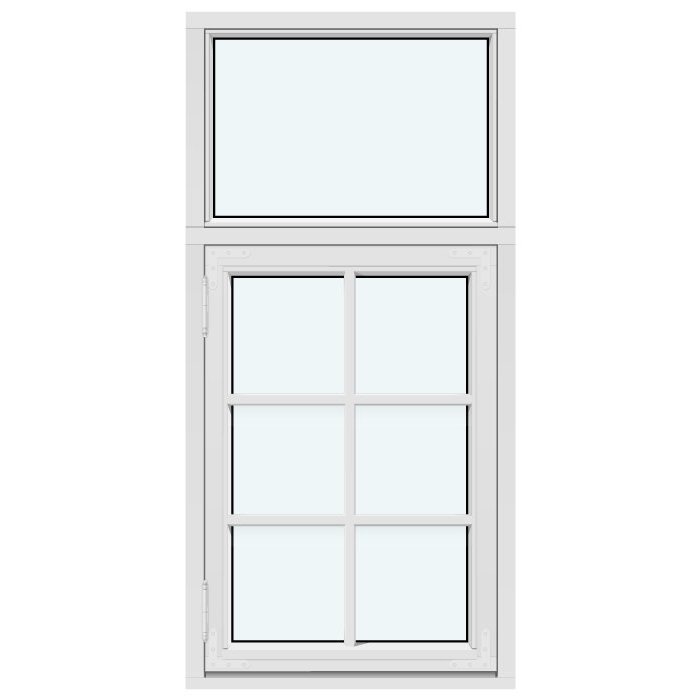
Use Uf as supporting information when comparing frame systems, especially where framing occupies a substantial share of the window. It is not normally a substitute for whole-window comparison. A two-sash outward-opening casement window has an additional meeting area and two operable sections compared with a single-sash design; ask for its own Uw rather than trying to calculate it from Uf and Ug you found separately. Discuss the desired opening pattern early, including furniture clearance and how the sash will be used. That preserves function while allowing the supplier to provide performance information for the right format.
Why the three figures do not simply average
Uw is not normally the simple average of Ug and Uf. The glass and frame do not occupy equal areas, and the edge-of-glass zone has its own effect. The calculation accounts for the relative areas and relevant linear junctions under the stated method. This is why two windows with the same Ug and similar frame descriptions can produce different whole-window values. Changing the window’s width or height can change the relative share of frame. Adding a divider, introducing another sash, or changing a fixed-and-operable composition can also change the geometry that the whole-window calculation represents.
Avoid doing back-of-the-envelope math from partial figures to make a purchase decision. Instead, request a configuration sheet that names the product, overall dimensions, operation, glass selection, decorative-bar choice, and Uw. If you are designing a grouped opening, ask whether the figure applies to each individual unit or to the combined assembly. A combination window title signals a combination arrangement, but it does not reveal the dimensions, component layout, or performance value of a particular order. Identifying those boundaries prevents an individual-unit number from being presented as though it described a larger joined composition.
04 / Confirm the order
Size and layout change the comparison
Window size is more than an architectural dimension when reviewing Uw. Larger units may contain a greater proportion of glazing, while smaller units can have proportionally more frame. Neither pattern automatically makes one option preferable; it simply means the declared size is part of the data. Compare candidates at the sizes you actually plan to use whenever possible. A value reported for a standard sample can be informative, yet it may not settle the decision for a narrow bathroom opening, a tall stair landing, or a wide living-room elevation.
Layout deserves the same care. A broad fixed opening beside a smaller operable sash, a pair of opening sashes, and a shaped top section are different assemblies. With a triangular and angled fixed window, confirm how the requested shape and dimensions are defined in the performance discussion instead of applying a rectangular window’s figure by analogy. In a remodel, measure the existing opening and survey interior obstructions before settling on operation and size. In new construction, coordinate the intended window schedule with the wall design and qualified project professionals. Thermal comparison is most useful once the proposed geometry is no longer a moving target.
Compare complete proposals, not sales phrases
A reliable comparison table has one row per proposed window and columns for room, operation, dimensions, product configuration, glass option, frame option, decorative-bar treatment, Uw, data basis, and quotation status. Add visual priorities such as color and sightline, plus practical requirements such as cleaning access and exterior clearance. The purpose is not to reduce the project to a spreadsheet. It is to reveal whether one proposal is missing the information that makes its U-value meaningful. A low number attached to an unspecified sample should remain provisional, not become the deciding factor.
For an operable high-wall location, a top-hinged outward-opening window may be among the configurations considered. Confirm how it will be reached, opened, and cleaned, then seek its specific whole-window information. Do not let a general glass description override these daily-use questions. Also separate quoted product performance from installation scope. A window can be correctly specified on paper while the project still needs careful decisions about opening preparation, interfaces with the wall, flashing approach, and interior and exterior finishing. Discuss those items with the appropriate qualified professionals for the project rather than assuming any product value describes the completed wall opening.
05 / Coordinate the project
Keep thermal value separate from other priorities
Lower heat transfer is one legitimate goal, but it may share the decision with daylight, privacy, view, solar exposure, sound concerns, security preferences, operation, historic appearance, and budget. Each topic requires its own questions. A U-value does not tell you how much direct sun a room receives, how a finish will look in changing light, whether a sash clears a walkway, or whether the proposed installation detail fits the existing wall. A balanced brief states the order of priorities. For example: retain a wide view first, allow controlled ventilation second, and compare whole-window Uw among designs that meet those needs. If the brief specifically targets exceptionally low whole-window heat transfer, a super-low-Uw outward-opening Passive House window can be evaluated as an alternative, but the product name alone does not establish the value, size, glazing, or suitability for your order.
Roof openings make the separation particularly clear. A pivoting roof window is identified by its pivoting operation and roof-window use, but its exact glazing, dimensions, water-management interfaces, and performance information must be established for the selected order. Ask the supplier which information applies to the proposed size, and consult qualified design and installation professionals about the roof and project interfaces. For any location subject to unusually exposed conditions or special project requirements, avoid assuming that a general product listing answers every suitability question. Bring the location, opening details, and project scope into the conversation before final selection.
Turn the specification into an order-ready decision
Before approving an order, read the product description line by line. Verify the count of units, handing or opening direction, dimensions, frame color, glazing choice, decorative-bar description, hardware selection, and each stated performance figure. Match the Uw label to the same configuration, not to a nearby option in a brochure. If the project includes both fixed and operable windows, do not allow one favorable result to become a blanket figure for all openings. Ask for clarification in writing when a term is unclear, particularly where an option changes the physical makeup of the window.
Plan the sequence as well as the specification. Take final site measurements at the appropriate stage, settle design selections, obtain an order confirmation, and coordinate the delivery and installation plan with the people responsible for the work. Bloomcabin windows and doors have a 5-year warranty. Delivery is 4–6 weeks, subject to order confirmation. Those are useful planning facts, not substitutes for confirming the details of a particular order. Keep the final schedule, quotation, drawings, and performance documents together. They form a practical record of what was selected and make later questions about a single opening much easier to resolve.
Frequently asked questions
Which value should I use when comparing complete windows?
Use Uw when the decision is between complete window configurations. It represents the assembled window for a stated size and setup, incorporating glazing, frame, and edge contributions. Still verify the dimensions, operation, glass option, and decorative-bar treatment. A Uw reported for another configuration may not describe the window you will order.
Is a lower Ug always better for the whole window?
A lower Ug indicates lower heat transfer through the stated glazing area, but it is not a whole-window result. Frame area, edge effects, sash arrangement, and dimensions also contribute to Uw. Compare Ug when evaluating glazing choices, then return to Uw to compare the completed window assemblies on a consistent basis.
Can I compare Uf from one frame with Uw from another window?
Not as though they were equivalent figures. Uf describes the frame component, while Uw describes the complete assembly. Uf can help explain frame performance, but it cannot establish how a finished window compares without the glazing, edge, size, and layout information. Request whole-window data for both proposed configurations instead.
Do decorative bars affect a window’s U-value?
They can be relevant to the exact configuration being evaluated, especially when the treatment changes the window’s construction or divides the glass. Do not assume that decorative bars, glass-dividing bars, and a window without decorative bars share one Uw. Describe the intended treatment clearly and ask whether the supplied whole-window value applies to it.
Does a U-value tell me whether a window is right for my project?
No. It addresses heat transfer under stated conditions, not every design or installation question. Also review operation, dimensions, glass appearance, solar exposure, cleaning access, wall interfaces, and the project’s applicable requirements. A qualified professional can help coordinate the chosen product with the specific building and installation scope.
Next steps
Uw, Ug, and Uf become useful once each is kept in its proper role. Ug helps you discuss glazing, Uf helps you understand the frame, and Uw is the principal figure for comparing complete window configurations. Start by choosing the operation and layout that serve the room, then ask for whole-window information matching the actual size and options. Document fixed and operable units separately, identify decorative-bar choices accurately, and keep thermal data alongside practical installation and design questions. That approach avoids misleading shortcuts and gives you a clean basis for a confident, order-ready window decision.
