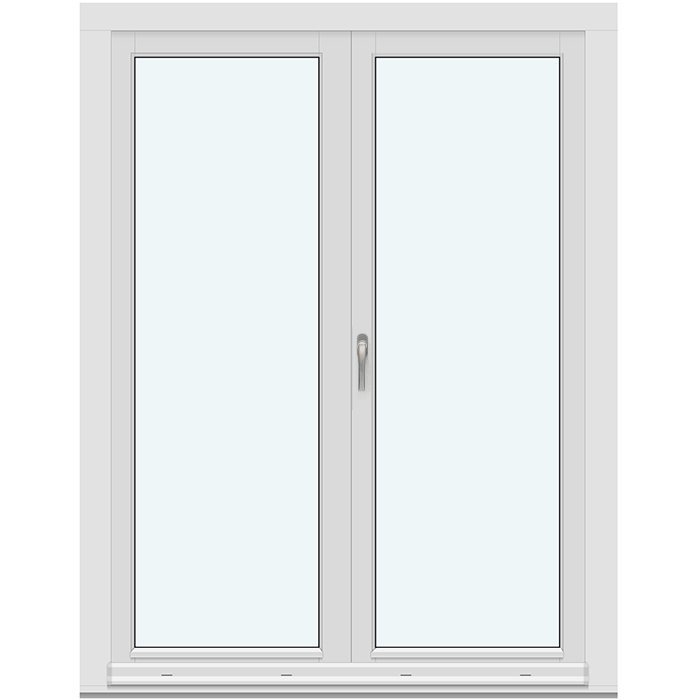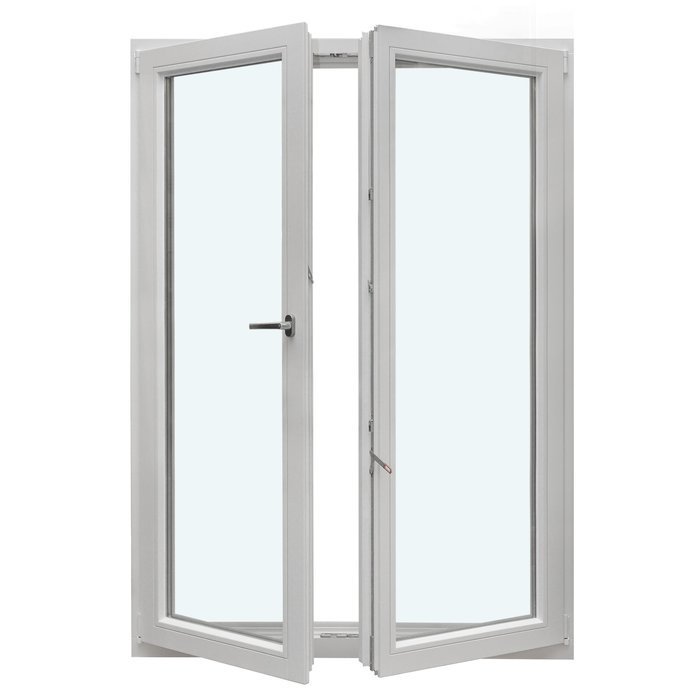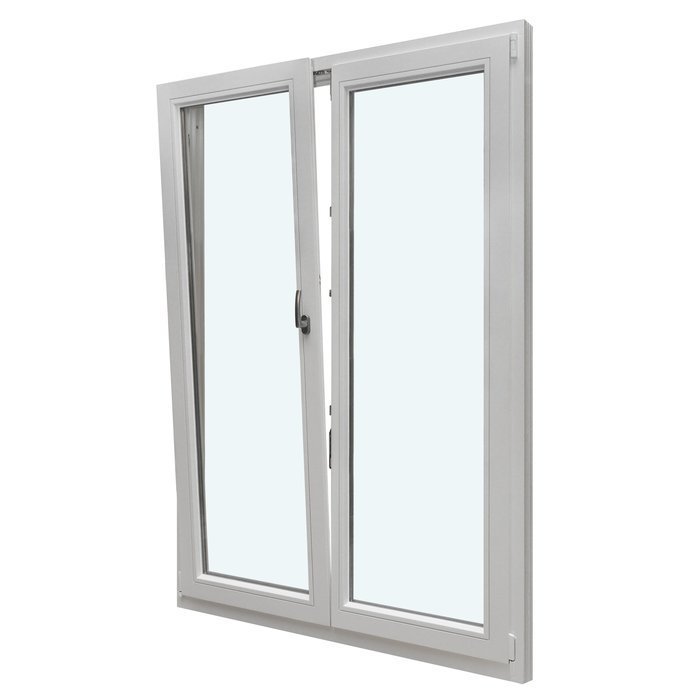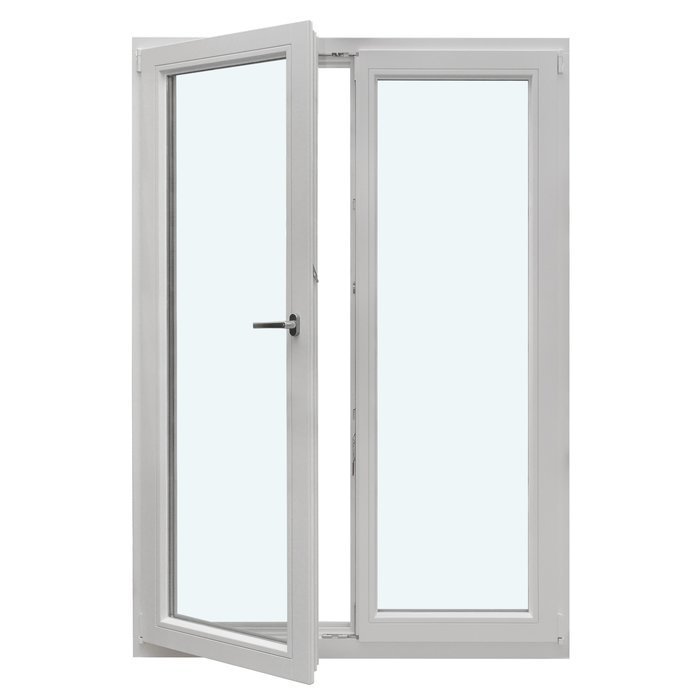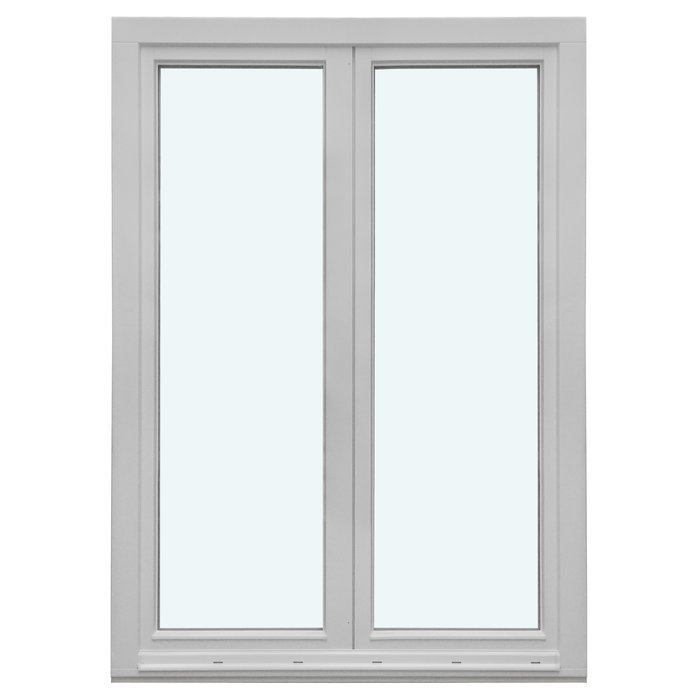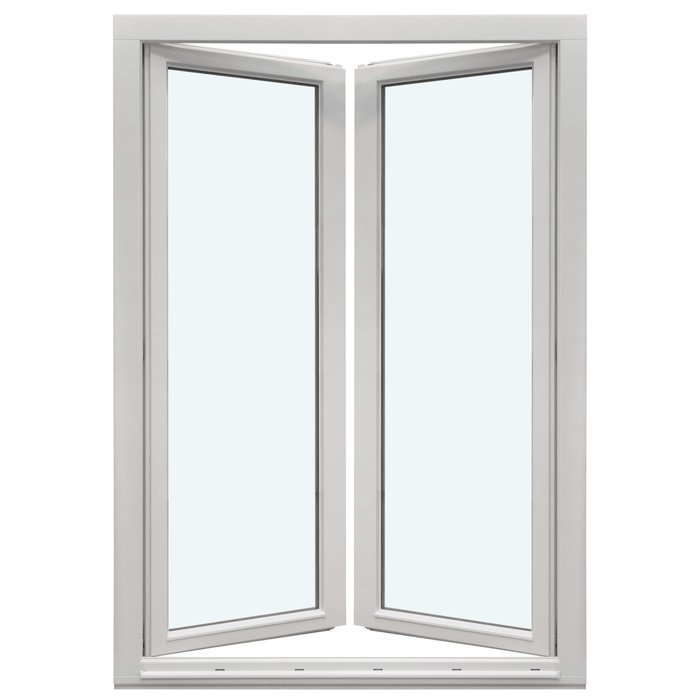


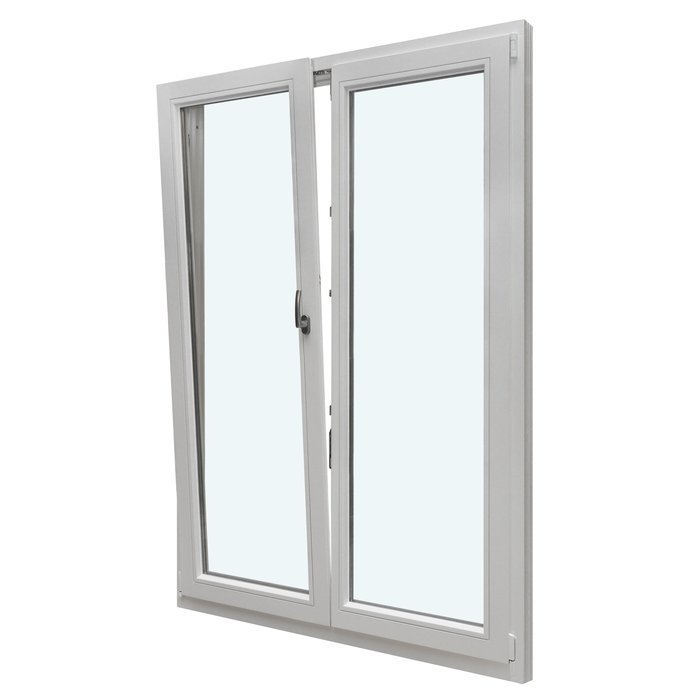
Bloomcabin 2 In-Swing Door Leaves Without Decorative Bars. 2 In-Swing Door Leaves Without Decorative Bars combines a balanced double-door format with clear, uninterrupted glazing. Both leaves open inward, while the bar-free design creates a simple visual connection between the room and outdoor space.
Why choose this Bloomcabin design?
Without decorative bars, the two glazed leaves create an uncluttered appearance. Daylight and outdoor views remain the focus, giving the double door a calm, understated character.
Two inward-opening leaves establish a symmetrical double-door composition. The operating direction is suitable for rooms planned with enough interior space to accommodate the open leaves.
The energy-efficient design supports a comfortable indoor environment and helps maintain a pleasant transition between the living area and the patio throughout the seasons.
A natural choice for patios, garden-facing rooms, and living areas where a balanced in-swing door and an uninterrupted glazed appearance suit the architectural plan. 2 In-Swing Door Leaves Without Decorative Bars — Balanced proportions make it easier to coordinate the design with the architecture and the intended appearance of the facade. Paired leaves create visual balance.
Customer reviews 
Flexible payment options Flexible and secure payment methods are available.
Configure now Configure this two-leaf in-swing patio door for your project. For help contact our team.
Type: Inward-opening door leaf that tilts;
Warranty: 5 years;
CE: Yes;
Material: Pine, aluminum-clad pine, oak, or aluminum-clad oak;
Glazing: 2- or 3-pane insulated glass unit with heat-reflective coating, warm-edge spacer (CHR), and argon gas;
Glazing seals: Silicone;
Hardware: Roto Frank;
Mounting holes: 14 mm;
Frame: 78 x 82 mm; with aluminum cladding: 90.6 x 82 mm;
Door leaf: 78 x 82 mm; with aluminum cladding: 90.6 x 82 mm;
Bloomcabin Patio Doors
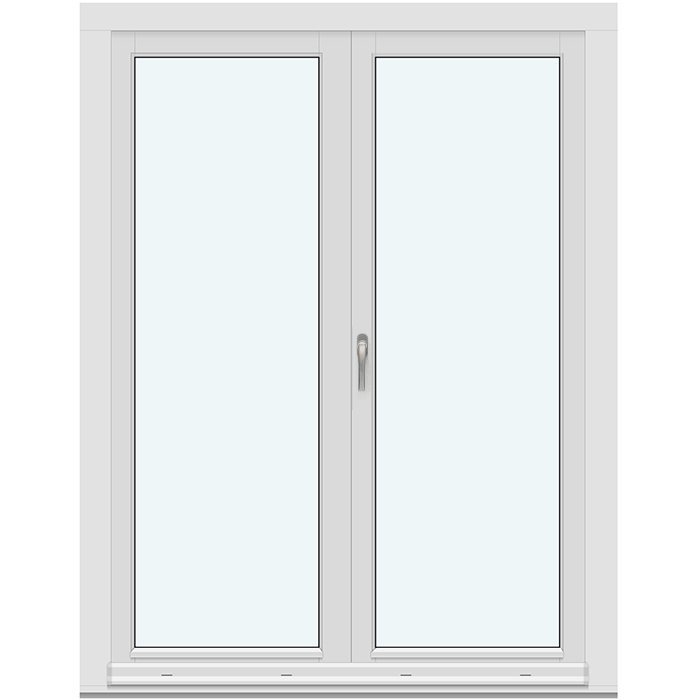
Two-Panel Inswing Patio Doors
Choose a made-to-measure two-panel patio-door composition in timber or aluminum-clad timber, with insulated glazing and a selection of clearly named bar patterns.
Opening function
Inward-opening door leaf with tilt function
Material selection
Pine, aluminum-clad pine, oak, or aluminum-clad oak
Glazing construction
Insulated glass with heat-reflective coating, warm-edge spacer, argon gas, and silicone seals
Conformity
CE marked
Two-Panel Inswing Patio Doors combine two inward-opening, tilt-capable door leaves in a made-to-measure format. They are well suited to projects where the interior layout can accommodate the opening movement. Select the material, color, handle, two- or three-pane insulated glazing, and bar pattern to create a configuration that fits your opening and architectural style.
Choose pine, aluminum-clad pine, oak, or aluminum-clad oak. The insulated glass unit includes a heat-reflective coating, a CHR warm-edge spacer, argon gas, and silicone glazing seals. Available designs range from two glazed leaves without decorative bars to patterns with horizontal glass-dividing bars or horizontal and vertical decorative bars. When planning your doors, consider the intended opening, the clear interior area required for inward movement, and the relationship between the selected pattern and nearby architectural lines.
01
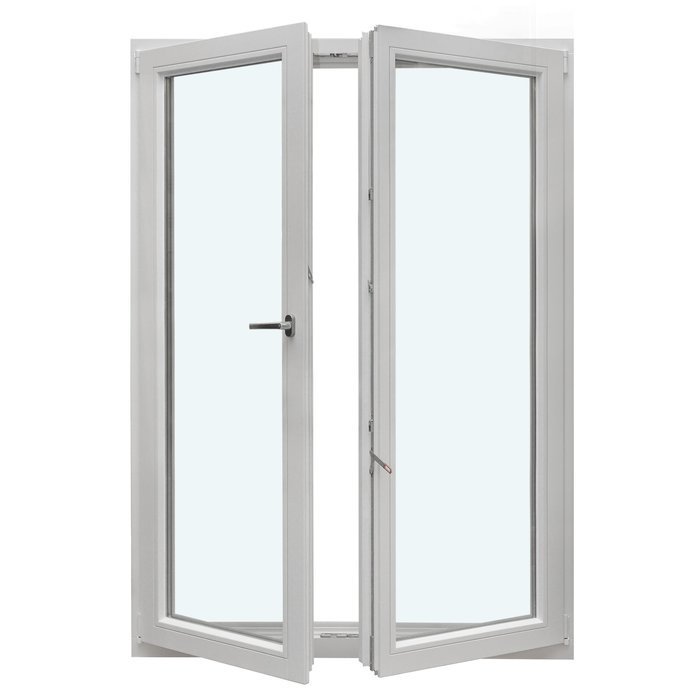
These patio doors have two inward-opening, tilt-capable leaves. Their operation should be considered as part of the interior layout, especially where furniture, curtains, lighting, plants, or circulation routes sit close to the opening. Planning this area early helps you decide whether inward movement is a comfortable match for the room and its everyday use.
Think about how people move through and gather near the doorway. A dining area may need clearance around chairs, while a living room or studio may require careful placement of furniture and equipment. Evaluate the doors as moving elements within the room rather than only as a feature viewed from the exterior.
The tilt function provides an additional door-leaf position alongside inward opening. When comparing this product with an outswing or sliding design, begin with the movement that works best for your intended opening and surrounding floor area. You can also select the handle, allowing this visible detail to support the wider material, color, and design choices.
A practical layout accounts for where people pass, pause, or place objects near the doors. Keep the intended movement area clear and include any nearby fixed features in your project notes. Because sizing is made to measure, discuss the final two-leaf configuration in relation to your specific opening rather than relying on assumed proportions.
02
The doors are available in pine, aluminum-clad pine, oak, or aluminum-clad oak. Pine and oak provide the two timber options, while the clad versions combine the selected timber with aluminum cladding. Material, color, and handle are separate decisions, giving you a clear way to build the configuration around both construction and appearance.
In the unclad construction, the frame component measures 78 x 82 mm and the door-leaf component also measures 78 x 82 mm. With aluminum cladding, the frame component and door-leaf component each measure 90.6 x 82 mm. Mounting holes are 14 mm. These are component dimensions, not the overall made-to-measure size of the complete doors or the dimensions of the building opening.
Roto Frank hardware is specified for the doors, and silicone is used for the glazing seals. The product is CE marked and covered by our five-year warranty. Together with the stated material and glazing options, these details provide a clear basis for comparing the construction with other patio-door types.
Overall sizing is available on a made-to-measure basis. In your inquiry, label every measurement according to what it represents and distinguish the intended opening from any existing frame, trim, sill, or surrounding finish. We can then discuss the requested size together with your material, glazing, pattern, color, and handle choices as one coordinated configuration.
03
The doors use a two- or three-pane insulated glass unit with a heat-reflective coating, a CHR warm-edge spacer, argon gas, and silicone glazing seals. These components form the specified glazing construction and apply independently of the visual bar pattern selected for the door leaves.
Consider the pane configuration as part of the complete door brief. Separately, decide how much visual subdivision you want across the glazed areas. A design without decorative bars creates a quieter composition, while glass-dividing or decorative bars introduce a more defined pattern. Keeping these choices separate makes your preferred configuration easier to communicate.
Silicone glazing seals are a distinguishing specification of these inswing doors. The related outswing patio doors, Sliding Doors, and Fixed Window use black rubber glazing seals, while the Round Fixed Window uses black silicone. Keep this distinction in mind when comparing products that otherwise offer similar two- or three-pane insulated glazing components.
Approach the glazing choice from both a construction and design perspective. Select the two- or three-pane unit, then choose whether the elevation should remain without decorative bars or use one of the available horizontal or combined horizontal-and-vertical patterns. Record the pane configuration and complete pattern name separately in your inquiry.
04
The available patterns give you several ways to organize the appearance of the two door leaves. The least subdivided option is “2 In-Swing Door Leaves Without Decorative Bars.” It keeps the focus on the glazed areas and the overall two-leaf composition, making it a useful choice for a visually restrained design.
Glass-dividing patterns begin with “2 door leaves with 1 horizontal glass-dividing bar.” Further options provide two, three, or four horizontal glass-dividing bars across the two inward-opening leaves. Select the number according to the degree of horizontal subdivision you want, and identify the option as a glass-dividing-bar design in your inquiry.
Decorative patterns include two inward-opening leaves with either two or three horizontal decorative bars. You can also choose two horizontal and one vertical decorative bar, or three horizontal and one vertical decorative bar. These arrangements offer a distinct alternative to the glass-dividing patterns and introduce both horizontal and vertical lines where selected.
Compare the patterns with nearby architectural features such as trim, wall divisions, shelving, or other repeated lines. A simpler pattern can keep the composition quiet, while additional horizontal or vertical elements create more articulation. Once you have chosen, include the complete design name in your inquiry so similar bar arrangements are not confused.
05
A made-to-measure product begins with a clear understanding of the intended opening. Before contacting us, identify exactly what you have measured and where each measurement was taken. An opening in new construction, an opening prepared during renovation, and an opening that still contains an existing door can each produce different reference points. Do not combine measurements from different surfaces under one unlabeled figure. Clear labels help keep the building opening distinct from frames, finishes, trim, and other surrounding elements.
Because the leaves open inward, examine the interior area through which they are intended to move. Look at permanent features and everyday objects, including walls, cabinetry, radiators, switches, curtain arrangements, furniture, and primary walking routes. This is not a claim that any particular obstacle will always prevent use; it is a practical assessment of your own room. The goal is to identify possible conflicts early and communicate them when discussing the planned configuration.
Also consider the surfaces around the opening. Note whether the surrounding floor and wall finishes are complete, planned, or likely to change. If measurements were taken before a finish was added, state that plainly. Photographs or drawings may help you explain the context during an inquiry, but written dimensions should still be labeled. Avoid estimating a finished opening solely from the apparent size of an existing product, since visible trim may not show every relevant boundary.
Finally, view the opening as part of both an interior and exterior composition. Record any nearby lines you want the door pattern to acknowledge, but keep those aesthetic references separate from the actual measured boundaries. If you are uncertain which point a dimension represents, describe the uncertainty rather than silently changing the label. A concise measurement record, supported by context about inward movement and surrounding finishes, creates a stronger starting point for a made-to-measure discussion without turning preliminary information into an assumed final specification.
06
The two-leaf format creates a broad glazed composition that can remain without decorative bars or be organized with one of the named patterns. Horizontal elements establish a repeated rhythm, while the available combinations of horizontal and vertical decorative bars add another direction to the design. Choose according to the visual relationship you want with the surrounding architecture.
Material has an equally important influence on appearance. Choose pine or oak for a timber construction, or aluminum-clad pine or aluminum-clad oak when you prefer the corresponding clad construction. Consider how the selected material will relate to nearby windows, trim, wall finishes, flooring, and other visible surfaces around the opening.
Color choice is available and can be coordinated with the material. You might connect the doors with adjacent trim, create contrast against the wall, or repeat a color used elsewhere in the project. Bring your preferred color direction to the inquiry and confirm the available choices rather than selecting from the appearance of an online image alone.
The handle is another selectable and visible detail. Consider it together with the material, color, and bar pattern so the complete door composition feels coordinated. A useful visual brief therefore identifies four items separately: the preferred material, color direction, handle choice, and complete design-pattern name. Roto Frank remains the specified hardware brand.
07
The related outswing patio doors open outward rather than inward. The standard single-panel and two-panel versions are available in pine, aluminum-clad pine, oak, or aluminum-clad oak, while the historic-style versions are offered in pine or oak. Each uses two- or three-pane glazing with a heat-reflective coating, a CHR warm-edge spacer, argon gas, and black rubber seals. SPILKA and ASSA hardware with a three-point locking mechanism is specified for these related patio doors. Compare the number of leaves and outward movement with the two inward-opening, tilt-capable leaves of this product.
The related two-panel outswing patio doors include an asymmetrical configuration with a minimum overall size of 1080 mm. In that configuration, the passive leaf or panel measures 381 mm and increases proportionally with the overall size at a 2:1 ratio, with the narrower element represented by 1. Their design choices include two outward-swinging leaves without decorative bars, options with one to four horizontal glass-dividing bars, and panel arrangements with decorative bars. These details make the related products worth reviewing when outward operation or an asymmetrical two-part composition better suits the intended opening.
The related outswing exterior door provides another outward-opening option. It is available in pine, aluminum-clad pine, oak, or aluminum-clad oak and can use a panel, glazing, or both where included in the selected design. Its panel is made from MDF with a central aluminum sheet and anti-warping rods, and ASSA three-point locking hardware is specified. Sliding Doors offer a different operation: a door leaf moves laterally to the side. They use GU hardware and are available in the same four timber and aluminum-clad timber material choices, with two- or three-pane insulated glazing.
For an opening that does not need to operate as a door, compare the two fixed-window formats. Fixed Window is non-operable and available in pine, aluminum-clad pine, oak, or aluminum-clad oak, with a rectangular format and several decorative-bar or glass-dividing-bar patterns. Round Fixed Window is also non-operable but is offered in pine or oak and includes round-specific decorative arrangements. Both use two- or three-pane insulating glass with a heat-reflective coating, CHR warm-edge spacer, and argon gas. Review their distinct shapes, materials, seals, component dimensions, and patterns before coordinating them with doors elsewhere in the project.
Single-Panel Outswing Patio Doors, Historic-Style Single-Panel Outswing Patio Doors, Two-Panel Outswing Patio Doors, Historic-Style Two-Panel Outswing Patio Doors, Outswing Exterior Doors, Sliding Doors, Fixed Window, Round Fixed Window.
08
Start by identifying the product exactly as Two-Panel Inswing Patio Doors. Then prepare a short description of the project and the role of the doorway. State whether you are planning for new construction, renovation, or replacement context, without assuming that the context itself determines the final configuration. Include labeled measurements of the intended opening and explain the surfaces from which they were taken. If finishes are still planned, mention that in the same note.
Next, record your material preference: pine, aluminum-clad pine, oak, or aluminum-clad oak. Add your color direction as a separate line so it is not mistaken for the material choice. Follow that with your preferred handle choice or the handle characteristics you would like to discuss. Do not list the hardware brand as though it were an alternative selection; Roto Frank is the specified hardware for the product.
Choose the insulated-glazing configuration you want to discuss, then identify the design using its full supplied name. Exact wording is particularly useful because glass-dividing bars and decorative bars are different named types. If you are deciding between patterns, list the specific candidates rather than describing them loosely as “bars.” You can also mention nearby architectural lines that influence your preference, while keeping those aesthetic notes apart from measured opening information.
Before sending your inquiry, check that every measurement has a unit and a clear label, and that material, color, handle, glazing, and pattern are listed as separate choices. Add concise notes about nearby interior features that may affect inward movement. This final review helps us understand the requested configuration without treating preliminary project information as a finished specification.
Product Questions
Yes. Made-to-measure sizing is an available purchase choice. Provide measurements of the intended opening when you inquire, and distinguish between opening measurements and any existing frame or trim measurements so the dimensions can be discussed clearly.
Yes. Color choice is available. Because the selected material influences the visible surfaces, it is useful to consider material and color together rather than treating color as an isolated decision.
Yes. Handle choice is available, so you can consider the handle alongside the material, color, and selected bar pattern. Confirm the available handle options when you inquire. Roto Frank is the specified hardware brand for the doors.
You can choose a design without decorative bars, a pattern with one to four horizontal glass-dividing bars, or one of the specified decorative arrangements. Decorative options include two or three horizontal bars, as well as two or three horizontal bars combined with one vertical bar. Use the complete pattern name in your inquiry so we can identify your preferred design accurately.
The two door leaves open inward and have a tilt function. When assessing the intended location, allow for the inward movement and consider nearby furniture, curtains, walls, cabinetry, and walking routes.
Pine, aluminum-clad pine, oak, and aluminum-clad oak are specified material choices. Your decision can take account of the appearance you want and whether you prefer a timber surface or an aluminum-clad timber construction.
The doors are available with a two- or three-pane insulated glass unit. Both configurations include a heat-reflective coating, a CHR warm-edge spacer, argon gas, and silicone glazing seals.
Yes. The collection includes single-panel and two-panel outswing patio doors, historic-style outswing patio doors, outswing exterior doors, sliding doors, and fixed windows. Compare the operating type and the specifications on each product page before deciding which format best suits each opening.
Tell us about your intended opening, preferred material, color direction, handle choice, glazing configuration, and design pattern. We will use those details to discuss a made-to-measure Two-Panel Inswing Patio Doors configuration with you. Include clear opening measurements and any visual priorities so the conversation can stay focused on the choices that matter to your project.