
3x6 Raised Garden Bed: Dimensions, Soil Capacity, and Fit

Bloomcabin · Raised-bed guides
3x6 Raised Garden Bed: Dimensions, Soil Capacity, and Fit
A 3x6 raised garden bed usually means a frame about 3 feet wide by 6 feet long. That rectangle is 18 square feet, but it's only 18 square feet of planting space if those are the clear inside dimensions. To work out how much soil to buy, you also need the depth you intend to fill.
Confirm what 3 × 6 measures
A 3x6 raised garden bed usually means 3 feet wide by 6 feet long. The label alone doesn't tell you which edges were measured.
Measure the right rectangle
Use outside dimensions for fit, inside dimensions for planting area, and the planned soil depth for volume.
Test your reach
With two-sided access, the midpoint of a 36-inch span is 18 inches from either edge. One-sided access can nearly double the reach.
Price the actual fill
A hypothetical 70-by-34-inch interior filled 10 inches deep needs about 13.77 cubic feet of soil.
If you're choosing a 3x6 raised garden bed for a particular spot, make two sketches before you buy: one of the outside frame and its access gaps, and one of the inside planting space and fill depth. The first shows whether you can install and work around it. The second shows how much planting space you get and how much soil you'll need.
Keep the listing dimensions beside your site measurements in inches. Convert to square feet or cubic feet only after you've picked the right measurements for the calculation. The walkthrough below uses one hypothetical frame to show how a few inches of wall thickness or a change in fill level can alter the order.
01
Decode the size before comparing listings
In a US garden listing, a 3x6 raised garden bed usually means a bed about 3 feet wide and 6 feet long. Confirm the units in the dimensional drawing or specifications. Three feet is 36 inches and six feet is 72 inches. To convert a listing from inches to feet, divide each measurement by 12 and keep the original inch figures for checking fit. Rounding a measurement to the nearest foot can hide several inches that matter next to a fence or between fixed borders.
Next, find out whether the seller uses 3x6 raised garden bed to describe the outside footprint, the planting opening, or simply the nominal size. If the frame is exactly 36 by 72 inches outside, it occupies an 18-square-foot rectangle before you add paths. If those same figures describe the clear inside opening, you have 18 square feet of planting surface, but the frame will take up more room outside.
A third number on a 3x6 raised garden bed listing may describe wall height, but read the labels rather than assuming the dimensions are given in a particular order. A drawing that marks length, width, and height is more useful than a title alone. If a title says 3 × 6 but a drawing gives different dimensions, use the labeled drawing for planning and resolve any discrepancy before ordering.

02
Separate planting space from the outside footprint
For a one-bay 3x6 raised garden bed, measure the clear inside length and width where the soil surface will sit. For a rectangular opening, multiply the two measurements in inches, then divide by 144 to get square feet. Measure between the inner wall faces, not across the top of the rim. Use a different pair of measurements for the site: the outermost points of the installed frame, including any parts that project beyond the walls.
If you're comparing a 3x6 raised garden bed with a divided model, look at the clear dimensions of each bay. Two beds with similar overall areas may offer quite different lengths of uninterrupted planting space. Add the usable areas of the individual bays rather than counting the divider as planting surface. For a shape with a walkway notch or cutout, the rectangle around the whole frame includes space that isn't planted.
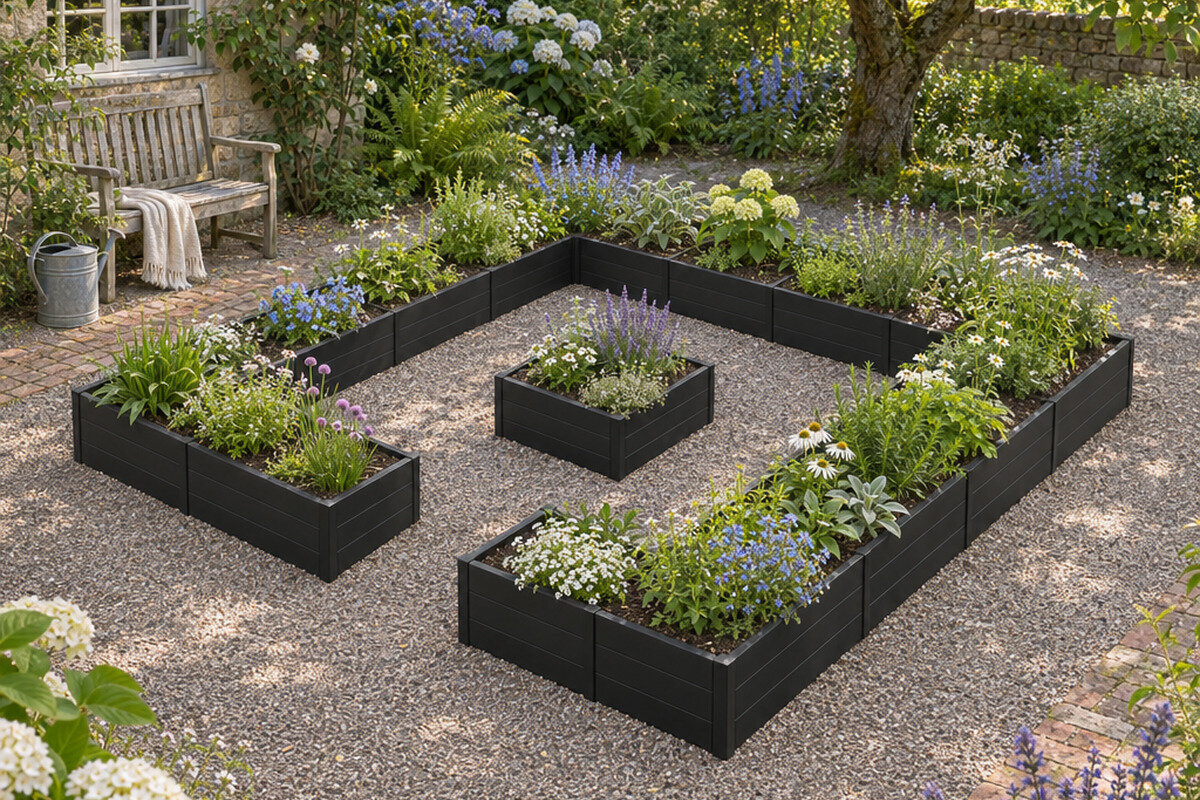
Bloomcabin’s Double Aluminum Raised Garden Bed 78.74×39.37×11.81 in illustrates why the bay count matters. Its listed nominal footprint is 78.74 by 39.37 inches, and a central divider separates two nominal 39.37-by-39.37-inch bays. It is not an exact 72-by-36-inch model: its nominal footprint is 6.74 inches longer and 3.37 inches wider. Those figures help screen it for fit, but they aren't verified clear interior measurements for a soil order.

03
Distinguish wall height, fill depth, and rooting depth
Wall height, fill depth, and rooting depth answer different questions. Wall height tells you how tall the sides are. Fill depth is the distance from the bottom of the space you're filling to the planned soil surface. If a 3x6 raised garden bed has 12-inch walls and a level bottom even with their lower edge, a soil surface 2 inches below the rim gives you 10 inches of fill, not 12. If the existing ground sits higher or lower inside the frame, measure from that actual starting level.
With an open-bottom frame over suitable ground, roots may extend below the soil you add. Don't include that underlying ground in the volume you're buying, and don't count it as usable rooting depth without checking its condition. A frame on a hard surface has no underlying garden soil to draw on. Confirm that the frame is intended for the surface, check how it drains, and don't assume a floor or liner is included.
When choosing the height of a 3x6 raised garden bed, start with what you intend to grow and where the bed will sit. Check seed or plant instructions and local extension advice for crop needs. Then decide how much soil depth you need within the frame and what the ground underneath can actually contribute. That sequence is more useful than choosing a wall height from the footprint alone.

04
Check the longest reach from the paths you’ll use
The width of a 3x6 raised garden bed matters most where you work from its long sides. Across a clear 36-inch planting span, the center is 36 ÷ 2 = 18 inches from either inside edge if both long sides are open. With just one long side available, the far planting edge is 36 inches from the near inside edge. Those are spans across the soil, not measurements from where your feet will be. The wall, rim, and distance you stand back all add to the reach.
Use the intended rim height when you mock up a 3x6 raised garden bed. Mark the near edge, centerline, and far edge, then try reaching them from the path without stepping into the planting area or bracing yourself on the frame. Test the middle of the 6-foot run, not just the corner nearest you. From either short end alone, that midpoint is about 36 inches away along a clear 72-inch span, before you account for any sideways reach.
Oregon State University Extension recommends choosing a width that lets you reach the center. If your mock-up falls short, first see whether opening the second long side solves the problem. If that side must stay against a fence, compare narrower options or reserve that location for a bed you can work entirely from the front.

05
Turn the measured interior into a soil order
To estimate soil for a rectangular 3x6 raised garden bed, multiply the inside length in inches by the inside width in inches and the planned fill depth in inches. That gives cubic inches. Divide by 1,728 for cubic feet because 12 × 12 × 12 = 1,728. Divide the cubic feet by 27 for cubic yards. For divided beds with rectangular bays, calculate each bay using its own usable measurements and fill depth, then add the volumes. Don't use the overall bounding rectangle of a complex kit.
Hypothetical worked example: Assume a 3x6 raised garden bed measures exactly 72 by 36 inches outside, with straight walls that take up 1 inch on each side. The clear interior is 72 − 2 = 70 inches long and 36 − 2 = 34 inches wide. Its planting area is 70 × 34 ÷ 144 = about 16.53 square feet. At a 10-inch fill depth, the volume is 70 × 34 × 10 ÷ 1,728 = about 13.77 cubic feet, or 0.51 cubic yards rounded. These are illustrative dimensions, not Bloomcabin specifications.
Cross-check the result by multiplying the planting area, about 16.53 square feet, by 10 ÷ 12 feet of fill. That also gives about 13.77 cubic feet. Each additional inch of fill in this hypothetical 3x6 raised garden bed adds about 1.38 cubic feet. If the soil is sold in 1.5-cubic-foot bags, 13.77 ÷ 1.5 is about 9.18 bags, so round up to 10 whole bags for the calculated volume. A half cubic yard, by contrast, is only 13.5 cubic feet, just short of the estimate. Check the seller's available increments before rounding the order.

06
Measure the frame and its working space together
A 3x6 raised garden bed can fit in a space on paper and still leave too little room to work. Measure the clear site width and length at the tightest points. Add the working gaps to the frame dimensions in the corresponding direction: long-side paths add to the overall width, and space beyond the short ends adds to the overall length. Check the route to the site too, using actual package or component dimensions if you plan to carry the kit through a narrow gate.
Hypothetical fit check: Take the same 72-by-36-inch outside frame and assume you want 24 inches of working space along each long side, 18 inches at one end, and 12 at the other. The planned space for the 3x6 raised garden bed is 36 + 24 + 24 = 84 inches wide and 72 + 18 + 12 = 102 inches long, or 7 feet by 8 feet 6 inches. In a clear 86-by-104-inch spot, that leaves just 2 inches of spare space across each overall dimension. These gaps are example choices, not minimum walkway widths.
Mark the whole outline of the 3x6 raised garden bed and its paths on the ground. Open nearby gates, walk the route with whatever you use to move soil, and see whether you can get to the sides you plan to use. If the width is tight, don't erase a path on the sketch without retesting reach. Fit is also separate from site suitability: check that the spot has appropriate light for your crops and convenient access to water.

07
Verify the missing measurements before buying
Before you order a 3x6 raised garden bed, write down the exact model and three numbers that will drive the decision: the maximum outside dimensions, the usable planting dimensions for each bay, and the fill depth you plan to use. Label each figure as confirmed, measured, or estimated. A nominal footprint can help you narrow the options, but if it is close to the site's limit, get the maximum outside measurements rather than relying on the rounded name.
If a 3x6 raised garden bed listing gives only outside measurements and wall height, ask for the clear inside length and width and confirm the base design. You can keep evaluating the site's fit while those answers are pending, but wait to place a precise soil order. If you already have the kit, follow its assembly instructions, then measure the assembled interior before filling it. That is especially useful when the ground level or the profile of the walls makes the usable depth hard to read from a diagram.
For a deck, balcony, or other constructed surface, verify that the bed is intended for that installation and have the surface's ability to support the filled setup checked by a qualified professional. The footprint tells you whether there is room for the frame; the volume tells you how much fill it holds. Neither tells you what the surface can support.

Questions readers ask
Does a 3x6 raised garden bed always have 18 square feet of planting space?
No. Eighteen square feet is the area of a rectangle that measures exactly 3 by 6 feet. If those measurements describe the outside of the frame, the walls take up some of that space. If they describe the clear inside dimensions of one rectangular bay, then the usable area is 18 square feet.
What if a 3x6 raised garden bed listing gives wall height but no fill depth?
Use wall height to compare the frames, not to finalize a soil order. Confirm the depth from the inside bottom or existing ground to your intended soil surface. If you plan to leave space below the rim, that gap is not part of the fill volume.
Can a 3x6 raised garden bed go against a fence?
It can be a workable location if the frame fits, you can assemble it there, and you can reach the planting area from the open sides. Test the far edge near the middle of the bed, where access from either end helps least. If you can't reach it comfortably, leave a path behind the bed or choose a narrower frame.
Use the right measurement for each decision
Use the outside dimensions of a 3x6 raised garden bed to check fit, the clear inside dimensions to find planting area, and the actual fill depth to calculate soil. If a listing leaves any of those unclear, confirm the missing measurement before you commit space or buy fill.
Find a raised bed for your plan
Compare layouts and check the dimensions on the product page.
