
Black, Green, or Natural Aluminum: Choosing Greenhouse Color
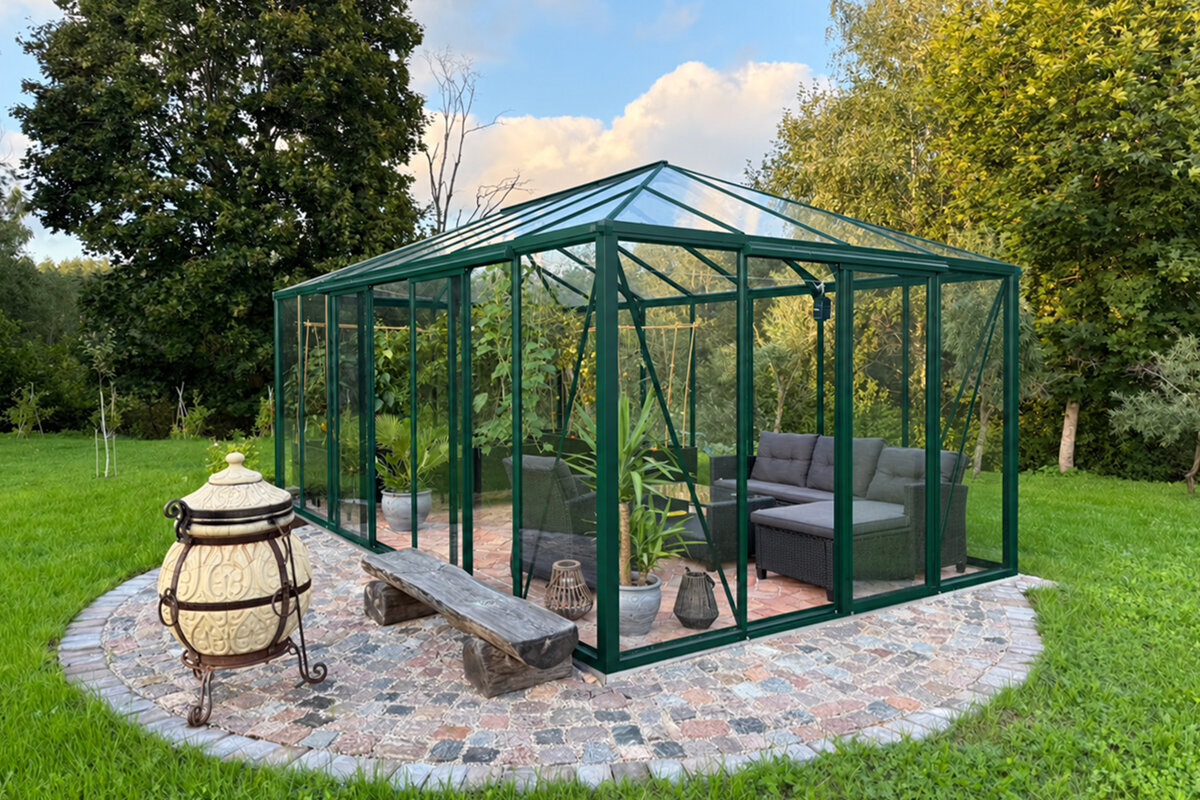
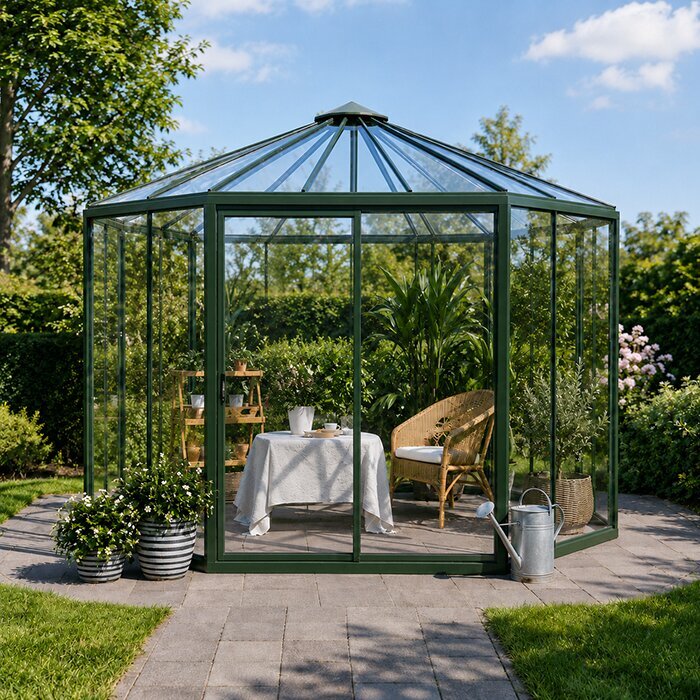
A greenhouse is a working garden structure, but it also has a strong visual presence. Its frame creates a precise outline against foliage, sky, fencing, and exterior walls. Choosing black, green, or natural aluminum early helps you decide whether that outline should recede, echo an existing architectural detail, or become an intentional focal point in the landscape.
Color is separate from size, glazing, ventilation, and layout, yet it affects how all of them are perceived. A dark frame can make glass panes read as a crisp grid. Green can soften a freestanding structure among shrubs. Natural aluminum brings a lighter, more utilitarian character that may suit contemporary materials, active growing areas, or a garden where the structure itself is part of the design language.
Use real surroundings rather than isolated product images as your guide. Look at the house trim, roof tone, hardscape, fence color, mature evergreens, and winter views. Then consider the greenhouse from indoors as well as outdoors. The right finish is usually the one that still feels appropriate after plants are dormant, containers are stored away, and the garden is less forgiving.
Stage one
Start with the house, not the catalog
The house is usually the largest and most permanent color influence on the site. Notice window frames, gutters, brick undertones, siding, roof shingles, and exterior lighting rather than relying on the front-door color alone. Black can create a clean link to charcoal or bronze details. Green may suit painted trim or a softer heritage palette. Natural aluminum can look composed alongside pale render, concrete, galvanized elements, and cool-toned stone.
Distance changes the decision. A greenhouse close to the house becomes part of its exterior composition, so contrast and coordination matter more. Farther down the yard, planting and boundary materials take over. View the proposed location from the kitchen, patio, driveway, and any upper-story windows. A finish that feels subtle at the garden edge may appear surprisingly assertive when framed by an interior view.
Photograph the location on an overcast day and a bright day; both reveal different relationships between frame, glass, and surrounding surfaces.
Bring together small samples of siding, pavers, fencing, and planters before deciding which greenhouse finish creates the calmest overall composition.
For a freestanding structure that can echo those details, explore a freestanding standard Classic greenhouse in the finish that supports your home's exterior palette.
Stage two
Decide whether the frame should recede
A greenhouse can either be a garden destination or a nearly absorbed part of the scenery. Green generally has the strongest ability to merge with vegetation, particularly where hedges, trees, and layered borders form the background. It is often forgiving in informal gardens because the frame shares the color family of living material. That does not make it invisible; its geometry still brings welcome order among looser planting.
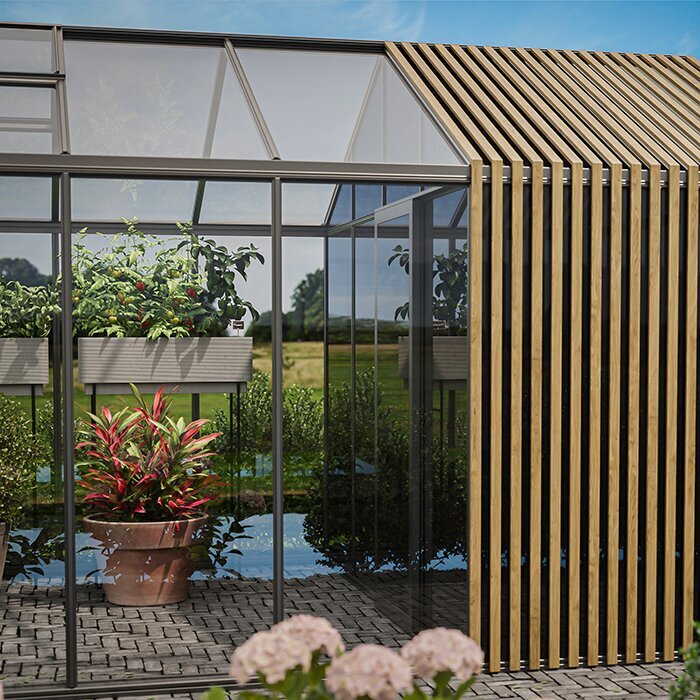
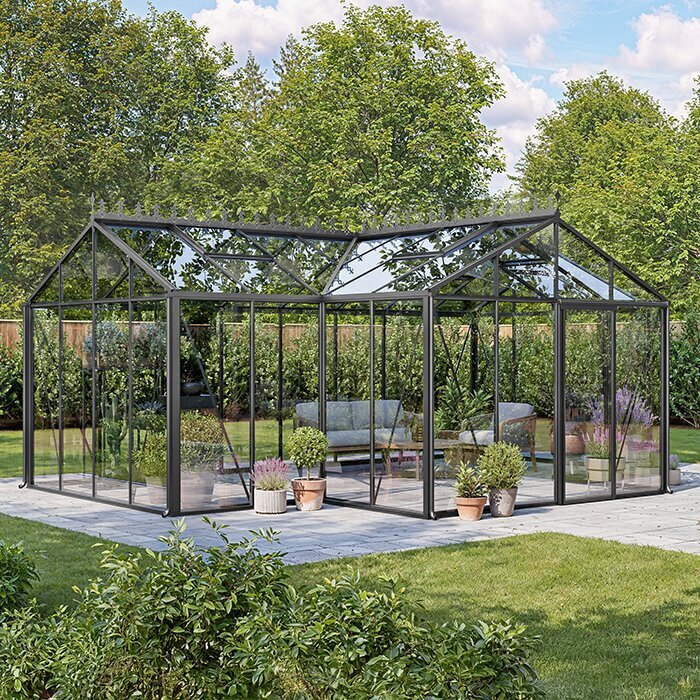
Black does the opposite with more intention. It outlines the greenhouse and can make its shape legible from a distance, even through busy foliage. This is useful when you value symmetry, want to create a focal point at the end of a path, or have repeated dark accents nearby. Natural aluminum sits between those approaches, reflecting its surroundings without trying to imitate either architecture or foliage.
Choose green when mature planting will surround several sides and you would rather notice flowers, foliage, and seasonal texture first.
Choose black when the greenhouse should anchor an axis, terrace edge, or formal garden room with a clear visual outline.
When the structure is integrated beside a wall, consider a wall-attached full-size regular Lean-To greenhouse whose finish can either blend with or deliberately contrast the facade.
Stage three
Read color through every season
Summer is an easy season for almost any greenhouse finish because abundant leaves and flowers soften the frame. The more revealing test is late fall and winter. Bare branches, dormant beds, exposed mulch, and low-angle light make the structure more visible. Black may read elegant and emphatic against a pale winter garden. Green can remain sympathetic to evergreens, while natural aluminum can feel bright and restrained in subdued light.
Also consider the colors that arrive temporarily: spring bulbs, terracotta pots, seed trays, outdoor furniture, and stored tools. A neutral frame gives these changing elements room to speak. Black provides a strong boundary around them. Green makes a natural bridge, but a particular shade may matter more near painted fences or green siding. Look for a finish that works with the garden’s quiet months, not only its peak display.
Walk the site after rainfall or during low winter sun to see how reflective glass and the frame appear under less flattering conditions.
If your background changes dramatically through the year, favor a finish that relates to permanent materials rather than seasonal blooms.
A well-proportioned year-round standard Classic greenhouse can become a garden feature when its frame color suits the dormant as well as growing landscape.
Stage four
Use black for architectural definition
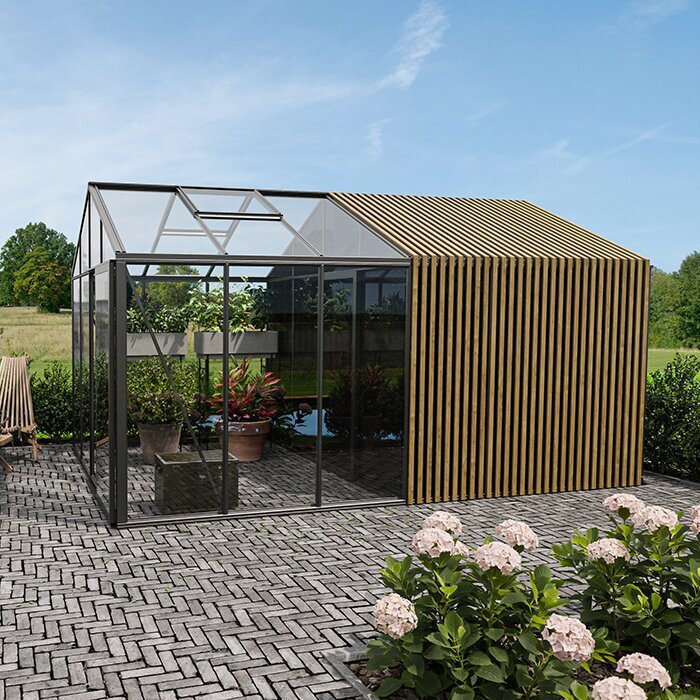
A black greenhouse has a composed, graphic quality. The dark frame clearly separates panes and emphasizes roof lines, doors, and repeated divisions. It can feel particularly at home near black-framed windows, dark-painted woodwork, steel railings, or contemporary outdoor kitchens. In a traditional setting, black can also offer a restrained contrast when surrounding masonry, gravel, and planting are lighter or more textural.
The trade-off is visibility. Black rarely disappears, especially against light walls, open lawn, snow, pale fencing, or a bright sky. That can be exactly the point, but it deserves an intentional plan. Repeat the tone elsewhere through a planter, light fixture, furniture frame, or gate hardware. A few connected details often make a dark greenhouse read as part of the property rather than an isolated object.
Use black to reinforce strong geometry where straight paths, clipped hedges, or rectangular patios already organize the garden.
Avoid choosing it solely from a close-up image; assess the proposed structure at the viewing distance where you will see it most.
Beside dark window frames or a bold facade, a architectural full-size regular Lean-To greenhouse can extend that architectural rhythm into the garden.
Stage five
Use green to connect with planting
Green greenhouse frames have a long association with productive and ornamental gardens because they work naturally beside foliage. They can soften the transition between an engineered structure and an established border, especially where roses, climbers, shrubs, or trees create a deep green backdrop. In cottage, country, and traditional landscapes, this finish often feels settled rather than newly introduced, allowing the greenhouse to support the garden’s character quietly.
Not every green will coordinate with every painted surface, so distinguish between blending with plants and matching a building. Vegetation contains many greens and changes constantly; a frame need not duplicate any one leaf color. If the greenhouse is near a green fence, shed, or trim, compare undertones outdoors. The goal is usually a comfortable relationship, not an exact match that can look forced or reveal slight differences.
Green is particularly useful where planting will partially screen the lower frame without hiding the greenhouse’s useful access and light.
Keep nearby painted greens limited and considered; several competing shades can make a calm garden composition feel unexpectedly busy.
For a planting-led focal point, a green standard Classic greenhouse can sit comfortably among borders while retaining its clear garden presence.
Stage six
Consider natural aluminum as a design choice
Natural aluminum is not an unfinished compromise; it has its own clear visual character. Its light metallic tone can complement concrete, pale brick, gravel, zinc-colored accessories, stainless steel, and weathered timber. It often suits gardeners who appreciate a straightforward working structure and want the growing activity inside to provide the color. The frame can feel clean and unobtrusive without trying to disappear into either foliage or dark architecture.
This finish also deserves attention in relation to light. Against a bright wall or open sky, it may read quietly. Against deep evergreen planting or a dark-stained fence, its lighter lines can be more noticeable. That contrast can be appealing when you want a greenhouse to look fresh and precise. Evaluate it beside permanent materials, including handles, outdoor fixtures, and nearby metal edging, rather than treating it as a neutral that automatically matches everything.
Natural aluminum can create a balanced link between silvery hardware, pale hardscape, and the reflective quality of greenhouse glass.
Use surrounding texture—timber grain, stone, gravel, and planting—to keep a light metallic frame visually grounded in the garden.
Against pale masonry or contemporary materials, a natural aluminum full-size regular Lean-To greenhouse can maintain a light, practical connection to the house.
Stage seven
Coordinate the whole garden palette
A greenhouse finish works best as one layer in a wider outdoor palette. List the colors that will remain after a garden refresh: walls, fences, paving, decking, sheds, gates, furniture, raised beds, and planters. Then identify the dominant temperature. Warm brick, cedar, and buff stone may welcome a different relationship than gray siding, bluestone, and cool concrete. The greenhouse does not need to match every item; it needs to make the strongest elements feel intentional together.
Limit visual competition around the greenhouse entrance. If you choose black, nearby containers may look best in simple earthy or dark tones. With green, terracotta and natural wood often bring warmth without fighting the foliage connection. With natural aluminum, black planters or weathered timber can provide useful definition. Let colorful annuals and productive crops be the flexible layer, rather than asking the frame to coordinate with every seasonal choice.
Repeat one neighboring material or color in modest details near the greenhouse to establish a visual conversation without creating a staged look.
Review proposed pots, paths, and storage pieces together; accessory colors can either clarify the finish choice or undermine it.
A freestanding garden centerpiece standard Classic greenhouse gives you a distinct garden centerpiece around which paths, planters, and planting can be coordinated.
Stage eight
Make the final choice on site
Before ordering, return to the location with a short list rather than an open-ended preference. Hold finish samples vertically when possible, because a greenhouse frame is seen upright, not like a tabletop. View them beside the house, at the planned path approach, and from the room with the most frequent sightline. Morning shade, midday brightness, and evening shadow can all alter the apparent contrast between a frame and its background.
Practical choices still matter alongside appearance. Think about future repainting of fences, planned additions, new hardscape, and whether the garden will become more planted or more architectural over time. If two finishes feel equally appropriate, choose the one that complements the elements least likely to change: the house exterior, major masonry, and mature trees. Confirm the current product options in the quotation and review any installation considerations for your site.
Make a simple three-view decision: from indoors, from the main outdoor seating area, and from the path where guests first approach.
Choose for the long-term setting, not a single season’s containers or temporary furniture, because those are the easiest elements to change later.
For a close-to-home installation, review a close-to-home full-size regular Lean-To greenhouse alongside the wall color and existing exterior details before finalizing the finish.
Comparison
Black, green, and natural aluminum compared
These finishes can all work beautifully, but they create different visual priorities. Use this comparison as a starting point, then test your preferred options against the actual house, planting, and hardscape. The most successful choice is cohesive from the viewpoints that matter most to you.
| Finish | Overall effect | Works especially well with and watch for |
|---|---|---|
| Black | Crisp, graphic, and architectural | Dark trim, metal accents, and formal layouts; high contrast against pale surroundings |
| Green | Soft, garden-led, and traditional | Borders, hedges, mature trees, and painted wood; competing greens on adjacent structures |
| Natural aluminum | Light, practical, and understated | Pale masonry, gravel, concrete, and weathered timber; greater visibility beside dark backdrops |
| Black | Creates a clear focal point | Symmetrical paths and defined outdoor rooms; may dominate a small open yard |
| Green | Allows planting to lead visually | Informal gardens and layered planting schemes; can feel less connected to modern facades |
A five-step color selection process
Treat the finish decision as a small site study, not a final click made indoors. This sequence helps separate lasting visual evidence from passing preferences and gives every household decision-maker a shared way to compare options.
01
Map permanent colors
Photograph the house, roof, fencing, hardscape, and mature planting. Note which materials will probably remain unchanged for several years.
02
Choose a visual role
Decide whether the greenhouse should blend into vegetation, extend the house architecture, or provide a distinct garden destination.
03
Compare outdoors
Review finish samples in the proposed location during different light conditions. Stand back to judge contrast at realistic viewing distances.
04
Test nearby accents
Place representative planter, furniture, gate, or path samples beside your preferred finish. Look for a relationship, not a perfect match.
05
Confirm the wider plan
Consider future landscaping, facade work, and outdoor additions. Request current product details and make the final choice for the long-term site.
Greenhouse color checklist
Use this checklist before you settle on black, green, or natural aluminum. It focuses on the visual evidence that is easiest to overlook when viewing a greenhouse only in an isolated image.
01. I have viewed the proposed finish beside the actual house exterior, not only against a screen or printed brochure.
02. I know whether the greenhouse should recede into planting or become an intentional focal point in the garden.
03. I have considered winter views, when borders are sparse and the frame becomes more visually prominent.
04. I have checked the finish from key indoor windows, outdoor seating, approach paths, and the street where relevant.
05. I have compared neighboring fence, shed, gate, and hardscape colors for undertones and visual competition.
06. I have allowed seasonal flowers, containers, and furniture to remain secondary rather than dictate the permanent frame choice.
07. I have considered how mature trees, hedges, and planned planting will change the background around the structure.
08. I have confirmed current finish availability and discussed site-specific installation questions through the appropriate planning process.
Frequently asked questions about greenhouse color
Is black the best greenhouse color for a modern home?
Black can be an excellent choice for a modern home when dark window frames, railings, lighting, or trim already establish that color language. It gives the frame strong definition. However, natural aluminum may be more harmonious with pale concrete, light siding, or a quieter minimalist scheme. Compare both at the actual location.
Does a green greenhouse disappear into the garden?
Green usually blends more gently with foliage than black or natural aluminum, particularly against hedges and mature shrubs. It will not disappear completely, because the glazing and frame geometry remain visible. That is often beneficial: the structure still has presence, but planting remains the dominant visual story.
Will natural aluminum look too industrial in a backyard?
Not necessarily. Natural aluminum can feel refined and light when paired with timber, gravel, brick, planting, and well-chosen containers. It may look more utilitarian beside heavily industrial materials or an uncoordinated collection of metal accessories. The surrounding palette and level of garden care influence the result substantially.
Should my greenhouse match my window frames exactly?
An exact match is not required and can be difficult to achieve across different materials. Aim instead for a convincing relationship. A black greenhouse can echo dark windows, while green can provide a softer garden counterpoint. Consider the house’s overall tones, scale, and distance from the greenhouse rather than one detail alone.
Does frame color change how large a greenhouse appears?
It can affect perception. Black tends to make the structural grid more legible, which can emphasize form and make a greenhouse feel more intentionally present. Green can soften those lines against vegetation. Natural aluminum often has a lighter visual weight, though contrast with the background still determines how noticeable it appears.
Do I need approval to choose a particular greenhouse color?
Requirements can vary by location, property type, placement, and local design controls. A color choice may matter more in visible or regulated settings, but you should not assume a particular outcome. Check with the relevant local authority and, where applicable, your homeowners association before making commitments.
Explore greenhouse styles
Choose the finish that supports the whole setting
Black, green, and natural aluminum each offer a valid way to place a greenhouse in the landscape. Black creates definition and architectural continuity. Green lets planting take the lead. Natural aluminum brings a lighter, practical clarity. None is automatically right without the context of the house, the garden, and the views you live with.
Start with permanent materials, assess the site through the seasons, and decide how visible you want the structure to be. A thoughtful finish choice turns a greenhouse from an added object into a natural part of the outdoor environment. Bloomcabin can help you explore a greenhouse direction that fits your visual priorities.
Compare greenhouse forms and finishes with your house, planting, and long-term garden plan in mind.
