
Botrytis in a greenhouse: clear the invitation before it becomes gray mold.
Greenhouse health / United States
Botrytis in a greenhouse: clear the invitation before it becomes gray mold.
Gray mold is rarely a random event. It is a disease of opportunity: a spent petal held against a leaf, a bruised tomato shoulder, a pruning wound that stays damp, a crowded canopy cooling into condensation after sunset.
Botrytis cinerea is widespread, and its familiar gray, fuzzy sporulation can arrive quickly when susceptible tissue and surface moisture meet. The useful response is not panic spraying. It is a composed sequence: identify the tissue, contain it, remove it, dry the greenhouse, then protect the crop with an appropriate prevention plan.
Tonight's principle: nothing dead, damaged or wet should be left pressed into the crop as the house cools.
First response / do this before diagnosis becomes debate
Move quietly. Remove deliberately.
A fuzzy patch does not always prove Botrytis, but tissue showing classic gray spores, soft collapse or a spreading lesion deserves careful handling. Disturbing it with an open basket, a vigorous shake or a wet hose can spread spores farther through the house.
- 01
Pause routine crop work.
Do not prune, harvest or brush through surrounding plants until you have dealt with the suspect area. - 02
Bag at the plant.
Place a bag or lidded container beside the plant before cutting. Enclose diseased material rather than carrying it exposed. - 03
Cut beyond obviously affected tissue.
Use clean, sharp tools; remove the spent flower, fruit or leaf and any visibly collapsing tissue attached to it. - 04
Read the greenhouse, not just the lesion.
Look for overnight condensation, wet foliage, stagnant corners, crowded leaves and debris below the bench.
For a strong baseline layout that makes daily ventilation and access easier, see Bloomcabin's USA greenhouse setup guide. The goal is a house you can inspect closely, clean efficiently and air out without moving plants every time weather changes.
Recognition / do not name every mold Botrytis
Read the pattern before choosing the response.
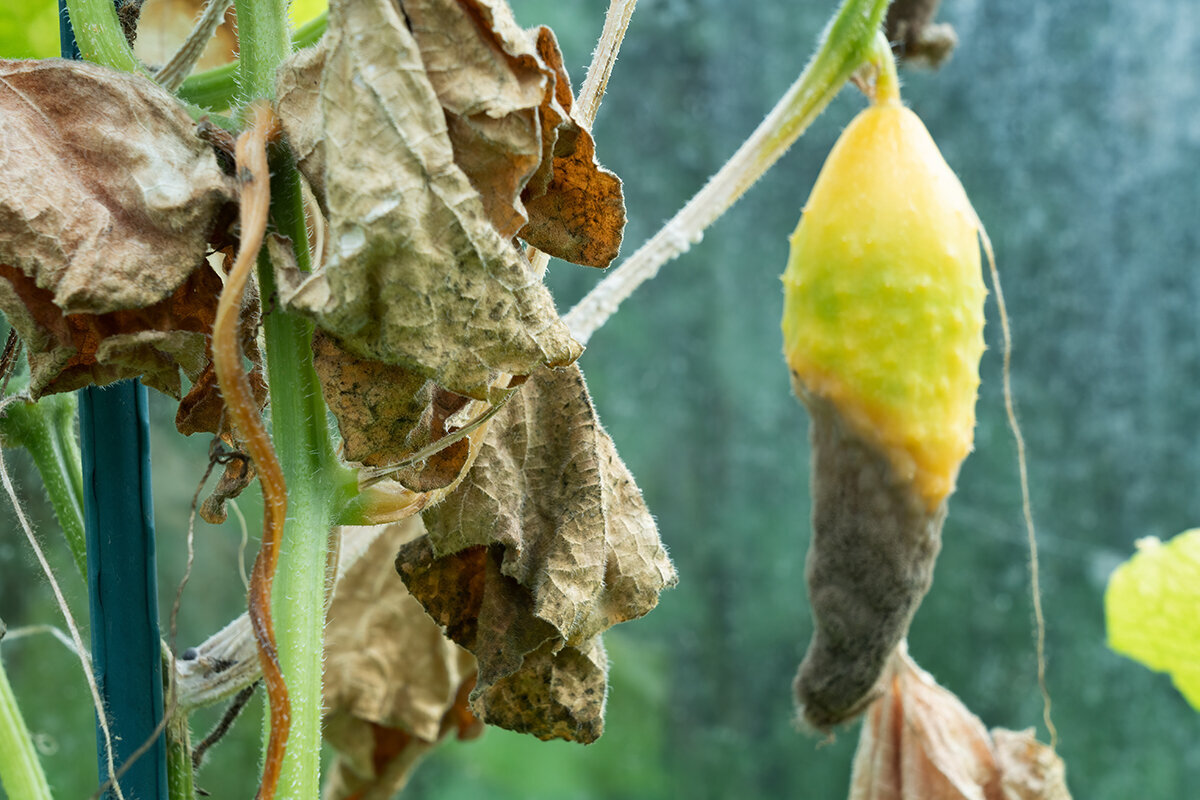
Gray mold commonly appears as dusty gray to gray-brown fuzzy growth on infected flowers, leaves, stems or fruit. But ordinary aging, other surface molds, cold injury and root-related decline can look alarming from a distance. Look at the tissue, its location and what changed in the greenhouse during the previous few days.
More consistent with gray mold
Fine gray, fuzzy sporulation on soft or dead tissue; blighted blossoms; brown lesions expanding from an old flower, wound or damaged fruit; or a stem lesion that begins where foliage, a clip or a petal has stayed wet.
Gray spores are a strong clue, especially when the disease begins on aging tissue and moisture has lingered. They are not a license to skip careful confirmation.
Collapse without visible fuzz
Water-soaked, brown or tan tissue can precede obvious sporulation. It may also indicate another rot, physical injury, chilling, root trouble or bacterial disease. Check whether the plant is affected at the crown, roots, leaf margins or just one wound.
If valuable plants, transplants or a food crop are involved, isolate the sample and ask your county Cooperative Extension office or a diagnostic laboratory for help.
Ordinary senescence
A dry, faded blossom or a yellowing lower leaf is not automatically infected. It becomes a Botrytis opportunity when it remains trapped in a wet, shaded canopy or adheres to fruit and foliage.
The practical distinction is simple: healthy aging tissue is removed as routine grooming; suspicious, soft or fuzzy tissue is contained and removed as sanitation.
Plant opportunity map — markers indicate risk sites, not proof of infection.
1 / Spent flowersFading petals can hold moisture against young fruit, leaves or stems.
2 / Leaf contactCrowded leaves stay shaded, cool slowly and dry poorly after watering.
3 / Pruning woundsFresh cuts deserve dry air and clean handling, not prolonged dampness.
4 / Fruit scarsCracks, insect feeding and bruises create vulnerable points, particularly in humid weather.
5 / Fallen debrisLeaves, petals and dropped fruit on benches or floors can keep producing inoculum near the crop.
6 / Stem lesionsBrown or tan lesions around a wound, clip or dying leaf should be inspected promptly.
Why the fungus gets in
Botrytis prefers the places a well-run greenhouse has already learned to notice.
Botrytis is often described as a weak pathogen because it readily colonizes old, injured and dying plant tissue. That does not make it harmless. Once it establishes itself on a dead blossom, wounded stem or soft fruit, spores can move by air currents, splashing water, hands, clothing and tools.
In a home greenhouse, the risk sites are usually visible before the disease is. Tomatoes may collect flowers in leaf axils. Cucumbers may press broad leaves together. Geraniums, fuchsias, begonias and other flowering plants may retain faded blooms. Strawberries may hold petals and ripening fruit in the same damp pocket. These are invitations, not inevitabilities.
- Inspect after a cool, cloudy run. The greenhouse may not look humid at noon, yet the crop may have been wet from dusk into morning.
- Handle dry plants first. Save any suspect area for last, then clean tools and hands before returning to healthy plants.
- Keep the floor and bench line visible. A clean, open surface makes fallen petals and fruit impossible to ignore.
The decisive interval / sunset to dry leaf
Humidity matters. Surface wetness tells the sharper story.
Relative humidity is a useful signal, but it is not the whole diagnosis. Plants can be at risk when leaves, blossoms and stems remain wet as their surfaces cool to the dew point. Condensation on greenhouse glass is therefore not merely a housekeeping issue; it is evidence that the house has crossed into a moisture condition worth correcting.
Late afternoon
Sunset
Night
Early morning
After sunrise
Water with time to dry
Finish irrigation early enough that splashes and wet surfaces can dry before cooling begins. Target the root zone rather than washing foliage.
Temperature falls
Glass, foliage and metal cool quickly. Dense canopies and corners often lose heat and airflow first.
Condensation risk rises
Moist air reaches a cool surface. Leaves may become wet even without obvious drips or a high daytime humidity reading.
Break the wet spell
Use a measured combination of heat, venting and circulation appropriate to your weather so plant surfaces begin drying.
Verify, then reset
Inspect interior foliage, not only the glass. Persistent moisture calls for an adjustment to spacing, watering timing or air movement.
There is no single universal number of wet hours that predicts infection in every crop, cultivar and temperature range. Use the clock as a management habit: avoid creating a long, cool, wet period around susceptible tissue. Cornell notes that preventing condensation on plant surfaces is central to greenhouse Botrytis control.
A greenhouse designed with readily operated roof ventilation gives the daily climate routine a better foundation. The Classic Aluminum Greenhouse includes roof windows, with automatic opener options available for gardeners who want a more responsive ventilation setup.
Spacing
Leave air corridors, not decorative gaps.
Space pots and grow bags so leaves do not permanently interlock. Train tomatoes and cucumbers promptly, remove leaves that rest on the floor or press against damp surfaces, and make room around flowering plants before their canopy closes. A small circulation fan is useful for reducing stagnant pockets, but it should move air gently across the crop rather than blast one plant continuously.
Irrigation
Water the root zone and protect the evening.
Use drip irrigation, a watering wand directed at the media, or another method that minimizes leaf wetness. Watering early in the day gives foliage time to dry; watering late in the day can turn minor splashing into an overnight problem. Do not compensate for a humid, cloudy week with the same irrigation rhythm used during a bright, hot spell.
Pruning
Do the clean work while plants are dry.
Prune and harvest when foliage is dry, with clean tools, and avoid excessive wounds. Make a crop pass for dead flowers and yellowing leaves before you make a larger shaping cut. If you work through several plant groups, begin with the healthiest block and finish in the area with suspected disease.
Seasonal shift
Expect trouble when light and drying power drop.
Across much of the United States, late fall, winter and damp spring weather can make a greenhouse feel deceptively calm while the crop stays wet longer. A bright summer house needs shading and ventilation; a cool-season house needs enough managed heat and air exchange to avoid the still, saturated conditions that favor gray mold.
For broader climate-control planning, revisit Bloomcabin's greenhouse layout, planting and care guide, especially its practical notes on roof vents, door openings and gentle circulation.
Sanitation / the route matters
Do not carry the problem through the crop.
Removal is most effective when it is contained from the moment you find the tissue. Think of the route as a short corridor from plant to sealed waste, rather than a tour around the greenhouse with an open trug.
Dead flowers, diseased leaves and spoiled fruit should not be left beneath benches, tossed just outside the door or placed in an indoor compost bucket near the crop. They remain a potential source of spores.
At plant→
Cut→
Contain→
Exit→
Reset
At the plant
Bring a bag or closable container to the affected plant before cutting.
It limits handling and prevents loose tissue from brushing healthy leaves.
The cut
Remove diseased, soft or visibly sporulating tissue with a clean, sharp tool.
A clean cut is easier to inspect and avoids tearing a larger wound.
Containment
Place material directly into the bag. Seal or close it before leaving the area.
Do not shake it, set it on a bench or transport it in an open harvest basket.
Exit
Take waste out of the greenhouse promptly and dispose of it according to local waste practice.
Do not maintain a decaying waste pile immediately beside vents or doors.
Reset
Remove residue from tools, then clean and disinfect them with a product used according to its label. Wash hands before handling healthy plants.
Physical cleaning comes first; a disinfectant cannot reliably work through clinging plant debris.
Build this habit into weekly care rather than saving it for an outbreak. A greenhouse with clear bench surfaces, accessible walkways and durable fittings is easier to maintain as a working garden. Explore Bloomcabin's greenhouse design options when planning a structure around the way you actually grow and clean.
Treatment / prevention after correction
Products can support a program. They cannot replace a dry, clean house.
Once Botrytis is active, start by removing infected tissue and correcting the conditions that allowed it to progress. Fungicides and biological products are best considered as part of an integrated program for protecting remaining healthy tissue under continuing risk, not as a way to reverse rotted plant material.
Work order A
Use cultural control as the first treatment.
- Remove old flowers, infected fruit, dead leaves and debris promptly.
- Reduce surface wetness with earlier irrigation, ventilation, heat when appropriate and gentle air circulation.
- Increase spacing and avoid wet, compressed pockets in the canopy.
- Inspect neighboring plants and the bench below the outbreak site.
Work order B
Choose any pesticide by the exact crop and label.
- Confirm the product is registered for your state and labeled for the specific crop, site and disease.
- Follow the label for application method, protective equipment, ventilation, re-entry interval and pre-harvest interval.
- Rotate fungicide groups when repeated applications are needed; do not rely on one mode of action.
- Never apply a product simply because it is labeled for another ornamental, vegetable or outdoor use.
Biological options: preventative, specific and label-led.
Some greenhouse programs use biological products containing beneficial microorganisms or plant-derived materials as preventive tools. Their usefulness depends on the exact formulation, crop, timing and environmental conditions. They typically perform best before disease becomes established and alongside sanitation and moisture management. A biological product is not automatically appropriate for edible crops, organic production or every greenhouse crop; verify the label and any certification requirements you follow.
Conventional fungicides: a management decision, not a default reflex.
Where a labeled fungicide is justified by crop value and continuing disease pressure, select it with resistance management in mind. Botrytis is known for developing resistance when the same chemistry is used repeatedly. Avoid improvised tank mixes, off-label rates and calendar spraying without an identified risk period. Your local Extension educator can help translate a disease diagnosis into a crop-specific plan.
US label rule: pesticide labels are legally enforceable directions. Read the entire label before purchase and before application; it determines whether the product may be used on your crop in a greenhouse, as well as its rate, ventilation directions, required protective equipment, restricted-entry interval and harvest restrictions.
If you are still setting up your growing space, consider how vent access, glazing choice, walkways and room for circulation equipment work together. The Bloomcabin Classic Aluminum Greenhouse is designed with roof ventilation and an integrated structure that supports a clean, considered greenhouse routine.
Recovery / verify rather than hope
A greenhouse is recovering when new susceptible tissue stays clean, the crop dries reliably after irrigation and the work surfaces remain free of fallen petals, leaves and fruit.
For the next 72 hours
Inspect the original site and nearby plants daily. Remove any new suspect tissue immediately. Check the undersides and interior of a dense canopy, not only the show-facing leaves.
For the next week
Record when condensation appears and when it clears. If it regularly remains into the morning, change one practical variable: irrigation timing, spacing, airflow or managed heat and venting.
For the next crop cycle
Choose cultivars and crops suited to your space, establish a weekly grooming pass, and make floor and bench cleanup part of every harvest or pruning session.
For seasonal organization and everyday greenhouse upkeep, browse the Bloomcabin USA greenhouse journal. A better routine is usually more valuable than a more complicated routine.
FAQ
Questions gardeners ask when gray mold appears.
Can I save a plant with Botrytis gray mold?
Often, yes—if the infection is limited and you act early. Remove affected tissue carefully, clean the immediate area, improve drying conditions and monitor closely. Discard a severely colonized plant or fruiting structure when removal would leave little healthy tissue or when spores are already widespread. Infected tissue itself will not recover.
Does lowering humidity alone prevent Botrytis?
No. Lower humidity is helpful, but surface wetness, condensation, poor air movement, dead flowers, wounds, crowded foliage and debris all contribute. The central objective is to avoid long periods in which susceptible plant surfaces remain cool and wet.
Should I mist or spray plants to wash gray mold off?
No. Washing foliage can spread spores and extend leaf wetness. Remove affected material instead, then correct irrigation and ventilation. Any pesticide or biological application must be a product specifically labeled for your crop and greenhouse use, applied according to its directions.
Can infected greenhouse debris go in my home compost?
Avoid carrying active, sporulating material through the greenhouse or keeping it near the structure. Hot, professionally managed composting can destroy many pathogens, but most home piles do not heat evenly or reliably enough to make that a dependable Botrytis-control practice. Contain and remove infected material according to your local disposal options.
Why do I see gray mold after a cold night even though I did not water?
As temperatures fall, plant surfaces and glazing can cool below the dew point. Moisture in the greenhouse air can then condense on leaves, flowers and stems. The next morning, inspect inside the canopy and adjust the evening-to-morning balance of irrigation timing, ventilation, circulation and heat management.
Sources & further reading
Authoritative guidance for diagnosis and crop-specific decisions.
Botrytis management depends on the plant species, production method, local weather and the exact product label. These university Extension and US EPA resources are a strong starting point for deeper, crop-specific planning.
- Cornell University Greenhouse Horticulture — Botrytis Blight
- NC State Extension — Botrytis Blight of Greenhouse Ornamentals
- Penn State Extension — Bedding Plant Diseases: Gray Mold
- University of Maryland Extension — Botrytis in High Tunnel Tomatoes
- University of Minnesota Extension — Gray Mold in the Flower Garden
- US Environmental Protection Agency — Introduction to Pesticide Labels
- Penn State Extension — Assessing the Risk of Disease in Greenhouses
Before nightfall
Clear the vulnerable tissue before dusk.
The most elegant greenhouse habit is also one of the most effective: leave the house dry, open around the crop and free of aging material that can become tomorrow's gray mold.
Explore the Classic Aluminum Greenhouse →- 01
Lift spent blooms.
Remove petals and fading flowers before they settle into foliage or fruit clusters. - 02
Check for wet interiors.
Look inside dense canopies, beneath leaves and near glass—not only at the center aisle. - 03
Restore a little breathing room.
Separate touching pots, train growth and keep pathways clear for air and inspection. - 04
Take contained waste out.
Seal suspect material and leave no open pile of diseased debris in or beside the greenhouse.
