
Budget vs. Premium Greenhouse: What Costs More Over 10 Years?
Greenhouse buying guide
The short answer
A budget greenhouse may cost less to acquire, but its long-term value depends on how well its materials, fittings, and layout suit the site. If frequent small repairs, limited parts access, or a short-lived setup would interrupt how you garden, the lower starting cost can lose its appeal.
A premium greenhouse is not automatically the right purchase. It tends to justify greater investment when durability, repairability, visual integration, and regular use matter to you. Compare the whole ownership picture, including preparation and upkeep, rather than treating the frame price as the complete cost.
01
Start with the site
Exposure, drainage, access, and nearby structures influence what a greenhouse will demand from you over time.
02
Price the ownership plan
Include foundation work, useful accessories, seasonal care, likely repairs, and possible changes to how you grow.
03
Favor serviceable choices
Clear product information and replaceable components can be more valuable than features that are difficult to maintain.
Budget vs. Premium Greenhouse: The Real Cost Over 10 Years
A low-cost greenhouse can be a sensible choice when the site is sheltered, expectations are modest, and the owner is comfortable with routine adjustments. A higher-specification greenhouse can make more sense when it will be a visible, heavily used part of the garden. The useful question is not which category is universally better, but which ownership pattern matches your plans.
Ten years is a practical lens because it exposes the costs that are easy to overlook at checkout. Think beyond the frame and panels: base preparation, ventilation, shelving, cleaning, worn seals, replacement glazing, and the time needed to keep everything operating smoothly. A greenhouse that is easy to care for may feel more economical even without a lower initial outlay.
This guide compares long-term value without assigning prices or promising payback. Use it to create a more complete brief before requesting a current quotation. It will also help you distinguish features that genuinely support your growing routine from upgrades that may look appealing but add little value on your particular site.
01 · Ownership lens
Look beyond the opening quote
The headline price is only one line in a ten-year greenhouse budget. Before comparing models, list every decision that allows the greenhouse to work as intended: preparing a level base, creating a clear route for installation, adding growing surfaces, and managing water nearby. These elements can differ sharply by property, so they should be evaluated separately from the structure itself.
A premium purchase may bundle a more considered design language or stronger material impression, while a budget option may leave greater responsibility with the owner to select and fit supporting elements. Neither route is wrong. The important comparison is between complete, usable setups with similar growing goals, not between a bare entry model and a fully equipped alternative.
Separate the greenhouse quote from groundwork, access improvements, tools, interior organization, and the accessories you will actually use.
Ask whether each proposed feature solves a recurring gardening need or simply makes the first specification look more impressive.
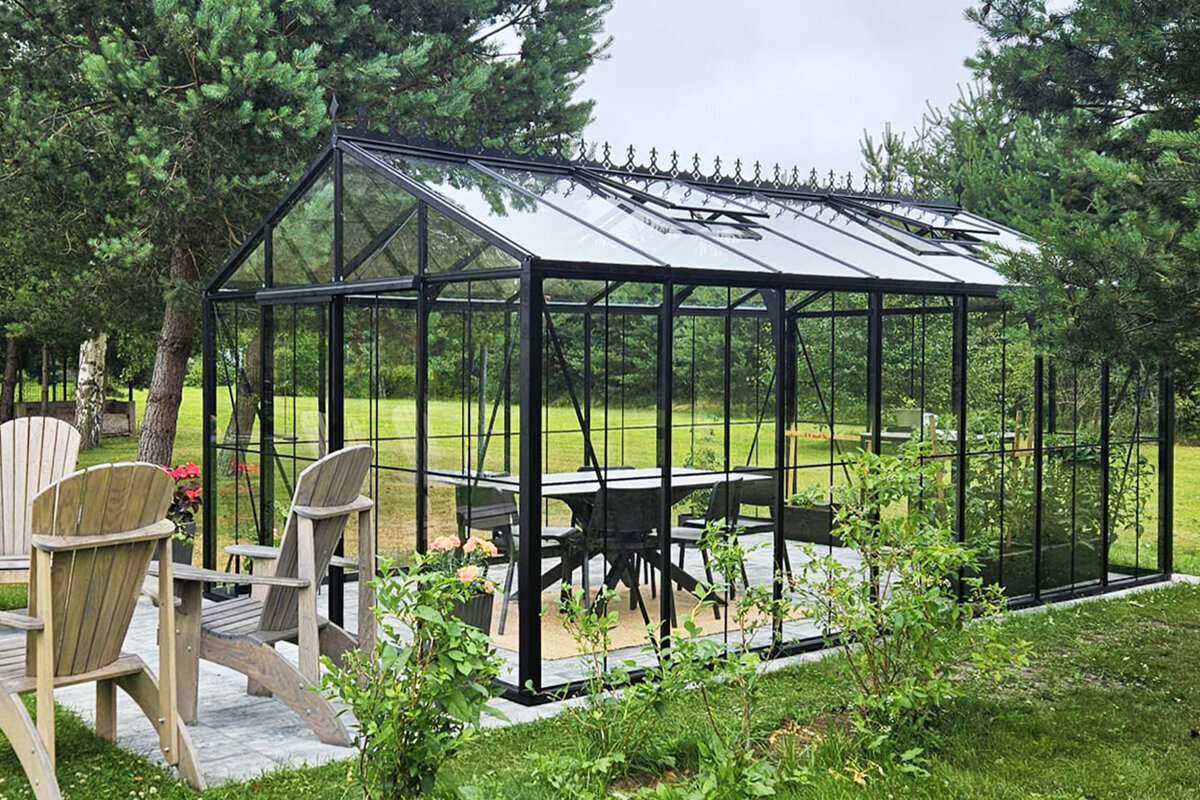
For a freestanding starting point, explore a standard Classic greenhouse and build your comparison around the setup you would genuinely use.
02 · Site and structure
Construction affects everyday effort
Frame profiles, joints, doors, vents, glazing retention, and finish all shape the ownership experience. They influence how confidently the greenhouse can be cleaned, adjusted, and inspected through changing seasons. A structure that feels straightforward to understand is easier to look after, especially for an owner who prefers routine gardening over repeated troubleshooting.
Site conditions magnify these differences. Wind moving around a fence, water collecting after storms, branches overhead, and an uneven patio edge can all create demands that were invisible in a product photo. Assess the proposed location before deciding that a basic specification is sufficient, or that a more substantial one is necessary. The site should lead the brief.
Walk the location after rain and in strong breezes to notice drainage paths, debris sources, exposed corners, and awkward access.
Check door clearance, working room around the structure, and where pots, hoses, compost, and harvested produce will travel.
Where a house wall shapes the layout, consider a full-size regular Lean-To greenhouse as part of a site-specific plan.
03 · Maintenance reality
Small upkeep tasks add up
Every greenhouse needs attention. Cleaning glazing improves light, clearing gutters and thresholds helps avoid blocked drainage, and checking moving parts can catch minor issues early. The long-term distinction is often not whether maintenance exists, but how accessible the relevant parts are and whether the required tasks fit comfortably into your normal garden routine.
Budget-minded buyers should be honest about their appetite for seasonal work. A lower initial expenditure may be worthwhile for a hands-on gardener who enjoys maintaining a structure. For someone with limited time, mobility concerns, or a garden used mainly for relaxation, choosing details that simplify cleaning, opening, and organization may carry more practical value.
Create a seasonal care list covering cleaning, fastener checks, ventilation adjustments, drainage, and removal of leaves or accumulated debris.
Keep gentle cleaning tools and a record of product details so routine care and future parts identification remain straightforward.
Compare accessible growing spaces in a Classic greenhouse with standard proportions when ease of routine care is a priority.
04 · Repairability
Replacement parts protect value
Damage and wear do not necessarily mean the end of a greenhouse. What matters is whether individual components can be identified and replaced without turning a small issue into a major rebuild. Save product documents, assembly information, and clear photos after installation. Those records can make a future conversation about a panel, seal, fitting, or moving component far more efficient.
When comparing options, ask how the design is organized rather than assuming all greenhouses are equally repairable. Look for clear component naming, understandable assembly logic, and a supplier able to explain what support information is available. A slightly higher upfront choice can be easier to live with if it reduces uncertainty when ordinary wear eventually appears.
Keep installation documents, photographs of the completed frame, and a file of any replacement component information in one accessible place.
Inspect seals, catches, panels, and hardware after severe weather, then address small concerns before they affect neighboring components.
For a wall-side growing area, review a regular full-size Lean-To greenhouse with future access and servicing in mind.
05 · Growing use
Match capacity to your habits
A greenhouse has better long-term value when it supports the way you actually garden. Seed starting, tender plant storage, tomatoes, cut flowers, propagation, and a place to pause all require different amounts of circulation space and different interior priorities. Buying too small can prompt a later upgrade; buying far larger than your habits justify can create cleaning and organizing work that never pays you back.
Map a normal busy day before selecting a size or format. Where will trays sit? Can you reach the back without moving everything? Is there room to water without soaking stored supplies? These practical questions often reveal whether the appealing budget option is adequately sized or whether a more considered layout would remain useful through evolving seasons.
Count the trays, pots, and tools used at peak season, then reserve clear pathways rather than filling every available surface.
Plan for changes in your gardening interests, but avoid paying for specialized capacity with no realistic place in your routine.
A well-organized standard Classic greenhouse for growing can make capacity easier to judge before you commit.
06 · Installation planning
A sound start limits surprises
Installation quality is part of the cost story, whatever greenhouse category you choose. A suitable, level foundation and careful assembly help the structure perform as designed. Rushing this stage to protect the initial budget can create alignment, drainage, or access problems that remain irritating long after the first season. Obtain advice appropriate to the product and site before work begins.
Also consider who will handle each stage. Delivery access, safe handling, foundation preparation, assembly, electrical work, and water supply may involve different people and schedules. Confirm responsibilities in writing with the relevant providers. If you are unsure whether local approvals or neighborhood restrictions apply, check with the appropriate local authority before committing to placement or construction.
Measure access from the street to the final location, including gates, steps, tight turns, surface changes, and temporary storage space.
Decide early where drainage, water collection, power, and nearby planting will sit, so later additions do not compromise access.
A site beside the home may suit a full-size regular Lean-To greenhouse layout when the wall and foundation can be planned together.
07 · Appearance and adaptability
Visual fit has lasting value
A greenhouse that belongs in the garden is more likely to be kept, used, and cared for. Consider its relationship to the house, planting style, hardscape, and sightlines from indoor rooms. This is not merely an aesthetic concern: a structure placed where it feels welcome is often easier to reach daily and more likely to become part of a lasting routine.
Premium does not have to mean elaborate, and budget does not have to mean temporary-looking. Focus on proportion, finish, glazing appearance, and how the form sits within the available space. Choose a design you will still enjoy seeing after the novelty fades. Future adaptability also matters if beds, paths, or an outdoor seating area may change around it.
View the proposed footprint from main windows, seating areas, and garden approaches at different times of day before finalizing placement.
Leave room for external cleaning, planting, and repairs instead of treating the greenhouse perimeter as unusable leftover space.
For a timeless focal point, look at a standard Classic greenhouse design in relation to the wider garden composition.
08 · Decision confidence
Compare value, not labels
The terms budget and premium are useful shorthand, not reliable verdicts. A carefully chosen straightforward greenhouse can offer excellent value, while an expensive specification can disappoint if it ignores the site or owner’s needs. Compare like with like: usable size, foundation assumptions, access, ventilation approach, interior needs, care expectations, and the availability of understandable product support.
Finish with a realistic ten-year ownership plan. Identify what you can maintain yourself, what may require outside help, and what information you want from the supplier before purchase. Review any written warranty terms, exclusions, care requirements, and scope carefully rather than relying on a general label. For insurance questions, ask your own insurer how your policy treats the proposed structure.
Request a current, itemized quotation and check which elements are included, optional, owner-supplied, or dependent on your site.
Choose the option whose maintenance and repair responsibilities you understand, rather than relying on the budget or premium label alone.
To compare a house-side option thoroughly, start with a house-side full-size regular Lean-To greenhouse and ask questions specific to your property.
Budget and premium: a practical comparison
These categories overlap, and details vary by product and configuration. Use this table as a discussion tool when reviewing current options. The strongest choice is the one that creates a workable greenhouse on your site, with upkeep and support expectations you can realistically meet.
Initial specification
Prioritizes essential structure and immediate affordability.
May emphasize finish, design detail, or expanded configuration choices.
Site preparation
Still requires a suitable, level, well-planned foundation.
Also depends on careful foundations and thoughtful placement.
Routine care
May suit owners comfortable with hands-on seasonal maintenance.
May prioritize details that feel easier to access and manage.
Repair planning
Check component identification and future support information carefully.
Check the same items; higher cost alone proves nothing.
Growing experience
Can work well for focused, modest growing routines.
May offer a more tailored space for frequent use.
Build your ten-year comparison
Use these steps before requesting quotations. They turn a vague budget-versus-premium debate into a clear brief based on your garden, your growing plans, and the level of upkeep you are prepared to take on.
01
Define the job
Write down what you will grow, when you will use the space, and whether storage, potting, or seating must fit inside.
02
Survey the location
Measure the footprint, access route, clearances, drainage patterns, sun, shade, and exposure before comparing greenhouse configurations.
03
List complete costs
Separate the structure from foundation work, installation, interior equipment, water arrangements, and any professional help you expect to need.
04
Ask service questions
Request clear information about care guidance, component identification, replacement-part processes, and what written product terms apply to your purchase.
05
Review yearly effort
Imagine cleaning, watering, ventilating, checking fittings, and organizing the greenhouse each season. Select the ownership workload you can sustain.
Questions to ask before you decide
Take this list to your planning meeting or use it while comparing product information. Good answers should be specific to the greenhouse configuration and the conditions at your own property.
01. Is the proposed footprint level, accessible, and clear of drainage problems, overhanging branches, and congested pathways?
02. Does the usable interior space fit peak-season plants, tools, and safe circulation without turning every visit into rearrangement?
03. What foundation preparation is appropriate for this greenhouse and site, and who is responsible for each stage?
04. Can you identify the routine cleaning, inspection, and adjustment tasks you will perform through a typical year?
05. How will you store product documents, installation details, and photographs needed to identify components later?
06. Which accessories support your stated growing routine, and which are attractive additions with limited practical use?
07. Have you checked local authority requirements or restrictions that could affect placement, size, or construction plans?
08. Have you asked your insurer whether the intended greenhouse should be disclosed or affects existing coverage?
Frequently asked questions
Does a premium greenhouse always cost less over ten years?
No. A premium greenhouse may bring qualities that are valuable for regular use, appearance, maintenance, or repair planning, but those benefits depend on the model and your needs. A simpler greenhouse can represent better value when it suits a sheltered site, a focused growing plan, and an owner who is comfortable with its care requirements.
What costs are most often missed when buying a greenhouse?
Buyers often focus on the structure and overlook foundation preparation, access, installation labor, interior staging, water management, and the time required for seasonal cleaning. The cost of correcting a poorly planned location can also matter. Build a complete project list before comparing quotations, then ask which elements are included and which remain your responsibility.
How can I judge greenhouse quality without relying on price?
Look at the clarity of the product information, the logic of the design, access for cleaning and inspection, and the availability of understandable guidance for care and components. Then assess the proposed greenhouse in relation to its location. A well-matched product and a well-prepared site are more meaningful than a price category on its own.
Should I plan for replacement parts before I buy?
Yes. You do not need to expect repairs, but it is sensible to ask how components are identified and what information you should retain. Keep assembly materials and photographs once installed. This preparation supports more efficient problem-solving if normal wear, accidental damage, or a future adjustment creates a need for a particular part.
Do I need a permit for a greenhouse in the United States?
Requirements can vary by municipality, property, location, size, and local zoning or building rules. Do not assume that a greenhouse is exempt because it is a garden structure. Before ordering or preparing a foundation, contact the relevant local authority and review any homeowners association rules that may apply to your property.
Will homeowners insurance cover my greenhouse?
Coverage, limits, deductibles, and disclosure requirements depend on the insurer and policy. A greenhouse should not be assumed to be covered in the same way as a house or other outdoor structure. Describe the planned structure, location, and value to your insurer, then request confirmation of the applicable terms in writing.
Explore greenhouse options
Choose the ownership experience you want
The real budget vs premium greenhouse comparison is about commitment over time. Start with a suitable site, an honest picture of how you grow, and a complete list of preparation and care responsibilities. That process makes it easier to recognize a low-cost option that is genuinely sufficient and a more substantial option that offers meaningful long-term value.
Bloomcabin can help you explore greenhouse formats while you refine the brief. Bring measurements, photographs of the site, and a list of your priorities to the conversation. A clear plan will lead to a more useful quotation and a greenhouse you are more likely to enjoy season after season.
Compare greenhouse formats with your site, growing routine, and long-term care plan in mind.
