
How to Control Humidity in a Greenhouse
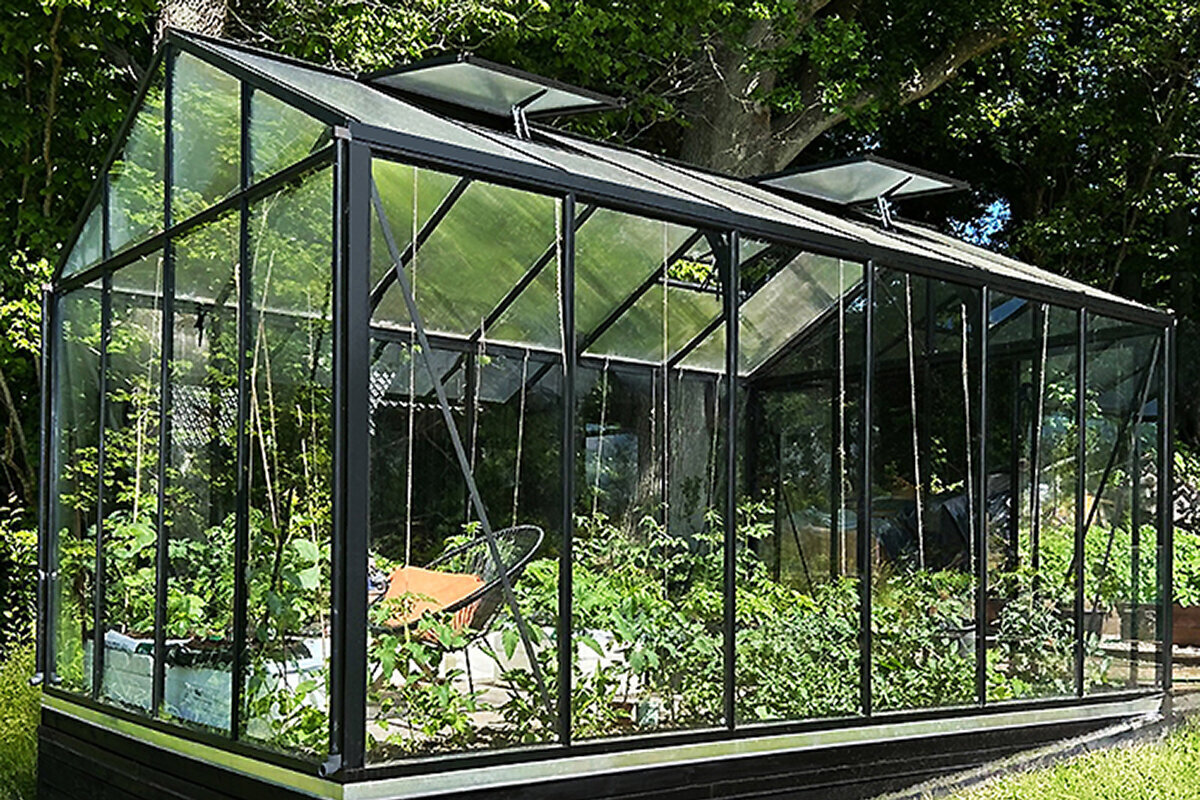
Greenhouse climate guide • USA
How to Control Humidity in a Greenhouse
Humidity is one of the most important parts of greenhouse climate control, yet it is easy to misunderstand. The goal is not to chase one “perfect” percentage all day. The practical goal is to prevent long periods of stagnant, near-saturated air, keep leaves from staying wet for hours, and create a climate that changes gradually rather than swinging from hot and dry to cold and dripping with condensation.
For U.S. gardeners, the challenge varies dramatically by region. A greenhouse in coastal Washington may struggle with cool, damp mornings, while a greenhouse in Arizona can become extremely dry and hot by afternoon. A Midwest greenhouse can experience both problems in the same week. This guide explains the principles that work across climates and shows how to adjust them to your local weather, greenhouse design, crop load, and season.
In this guide
What greenhouse humidity really means
Most home greenhouse sensors show relative humidity, usually abbreviated RH. Relative humidity describes how close the air is to saturation at its current temperature. That temperature part matters. If the amount of water vapor in the air stays the same but the air cools, relative humidity rises. If the air keeps cooling until it reaches the dew point, the air becomes saturated and water begins to condense on cooler surfaces.
This is why a greenhouse can look perfectly dry at 3 p.m. and be covered in droplets the next morning. Plants release moisture through transpiration, damp soil and trays evaporate water, and warm daytime air can contain that vapor without visible condensation. After sunset, the glazing, metal frame, leaves and air cool. Relative humidity climbs, and the coldest surfaces may fall below the dew point. Moisture then appears as condensation.
Key idea: humidity control is not only about removing water. It is also about managing temperature, air exchange and circulation so that moist air does not sit against cold leaves and glazing long enough to condense.

Why humidity builds up inside a greenhouse
A greenhouse is designed to create a protected growing environment, so moisture can accumulate faster than it does outdoors. Plants themselves are a major source. Water absorbed by the roots moves through the plant and is released from leaf pores as water vapor. The more foliage you have, the larger the moisture source becomes. A greenhouse packed with mature tomatoes in July behaves very differently from the same structure holding a few seed trays in March.
PlantsDense foliage continuously adds water vapor through transpiration.
WateringWet soil, standing water, damp paths and overhead irrigation add moisture directly.
Cooling airNighttime temperature drops push relative humidity upward and can trigger condensation.
Other contributors include uncovered water containers, poor drainage, leaks, wet tools and staging, and irrigation late in the day. Closing every vent tightly in cool weather can make the problem worse because the moisture has nowhere to go. At the opposite extreme, opening everything at the wrong time can rapidly chill plants without effectively drying the canopy.
The University of Minnesota Extension recommends lowering humidity and leaf wetness for gray mold management by increasing ventilation, avoiding overhead irrigation and maintaining adequate plant spacing. Those recommendations illustrate an important point: the disease risk is often tied not simply to a number on a hygrometer, but to how long leaves stay wet and how stagnant the crop canopy becomes.
Is there one ideal greenhouse humidity percentage?
No single RH percentage is ideal for every crop, stage of growth, temperature and time of day. Seedlings, tomatoes, cucumbers, herbs, succulents and overwintering ornamentals do not all want the same environment. A fixed number can therefore create false confidence. A reading that is acceptable for one crop at a warm daytime temperature may be risky if the greenhouse cools sharply overnight and condensation forms on foliage.
Use the crop’s own production guidance when a precise target is important. For a mixed hobby greenhouse, focus on the bigger signals: avoid persistent condensation, prevent leaves from remaining wet for long periods, keep air moving through dense foliage, and investigate repeated periods when RH remains very close to saturation.
Better question than “What percentage should I target?”
Ask: “Are my leaves dry, is air moving through the crop, and will the greenhouse cool below the dew point tonight?” Those questions lead to better decisions than chasing a single number.
Ask: “Are my leaves dry, is air moving through the crop, and will the greenhouse cool below the dew point tonight?” Those questions lead to better decisions than chasing a single number.
How to measure humidity correctly
A basic digital thermo-hygrometer is enough for many hobby greenhouses. A sensor that records minimum and maximum values is more useful than one that only shows the current reading. A data logger is even better because it reveals what happens while you are asleep or away from home. You may discover that humidity problems are concentrated between sunset and the first hour after sunrise rather than during the day.
Sensor placement matters. Do not mount the hygrometer directly against glazing, over a heater, in direct sun, beside an open vent or immediately above wet soil. Those locations can produce readings that do not represent the crop environment. Place the sensor around plant-canopy height in a shaded position with normal air circulation. In a larger greenhouse, consider a second sensor at the opposite end. A temperature difference between two areas often points to weak circulation.
Check the instrument occasionally against another sensor. Low-cost hygrometers can drift. You do not need laboratory precision for everyday greenhouse management, but you do need enough consistency to see patterns. Record temperature and RH together because relative humidity without temperature can be misleading.
| What you observe | Likely message | First action to investigate |
|---|---|---|
| Glazing is wet most mornings | Night air is repeatedly reaching saturation near cold surfaces | Review evening watering, night ventilation, heat retention and air circulation |
| Leaves remain wet after sunrise | Canopy is drying too slowly | Increase morning ventilation and air movement; improve spacing |
| RH spikes immediately after watering | Irrigation is adding moisture faster than the greenhouse can remove it | Water earlier and more precisely; avoid wetting unnecessary surfaces |
| One end of the greenhouse is always damper | Air distribution is uneven | Check vent positions, door use, plant density and circulation |
| Plants wilt while RH is low on hot afternoons | The greenhouse may be too hot/dry rather than too humid | Use ventilation, shading and appropriate irrigation rather than simply “drying” the air |
How to lower excessive greenhouse humidity
1
Ventilate before the greenhouse becomes saturated
Ventilation exchanges humid greenhouse air with outside air and is one of the most effective tools available. Roof vents are especially valuable because warm, moist air naturally rises. Doors and lower openings can help create a flow path. The objective is controlled air exchange, not simply creating a cold draft. On cool mornings, even a shorter period of ventilation can release a surprising amount of moisture once outside conditions are favorable.
2
Water in the morning whenever practical
Morning watering gives plants and surfaces time to dry while the greenhouse is warming and ventilation is available. Late-evening watering can leave soil, paths and foliage wet just as temperatures begin falling. If you use drip irrigation, deliver water to the root zone rather than wetting the whole greenhouse. Avoid leaving standing water in trays unless the crop specifically requires it.
3
Create air movement inside the plant canopy
Ventilation replaces air; circulation mixes it. These are related but different jobs. A small circulation fan can reduce pockets of still, humid air among leaves, particularly in a heavily planted greenhouse. It should create gentle movement rather than blast plants continuously. Fans do not remove moisture on their own, so they work best together with ventilation or another route for humid air to leave.
4
Give plants enough space
Dense growth traps humid air. Follow spacing guidance for the crop, train vining plants, and remove unnecessary or diseased foliage with clean tools. Better canopy structure improves light penetration and allows moving air to reach leaf surfaces. This can be especially important later in the season when tomatoes and cucumbers have formed large walls of foliage.
5
Manage nighttime temperature drops
Condensation often appears because surfaces cool below the dew point. In a heated greenhouse, modest heat combined with controlled ventilation can help carry moisture out rather than allowing it to condense. In an unheated greenhouse, thermal mass, insulation where appropriate and sensible evening ventilation can reduce extreme swings. Do not seal the greenhouse completely simply because the night is cool.
6
Remove unnecessary moisture sources
Fix drainage problems, empty saucers that are not needed, avoid leaving soaked mats or cloths inside, and repair leaks. If you “damp down” paths in hot, dry summer weather to increase humidity and cooling, treat that as a deliberate climate tool—not a habit to continue into cool, damp periods.
7
Use a dehumidifier only when the greenhouse setup justifies it
For most naturally ventilated hobby greenhouses, ventilation, watering practice and circulation come first. A dehumidifier can make sense in a tightly enclosed, heated, insulated greenhouse where valuable plants require controlled conditions, but it adds electricity use and creates condensate that must be drained. If doors and vents are wide open, running a dehumidifier is usually inefficient because you are attempting to dry a space that is continuously exchanging with outdoor air.
A U.S. season-by-season humidity strategy
Spring: watch cold nights after sunny days
Spring can produce large day-night temperature swings. A sunny greenhouse warms quickly, plants transpire, and then the structure cools rapidly after sunset. Ventilate during warm afternoons, avoid saturating the growing area late in the day, and check the forecast before closing the greenhouse for the night. In frost-prone regions, balance moisture removal with crop protection rather than leaving vents fully open by habit.
Summer: avoid treating every high-humidity reading as a problem
In the humid Southeast and parts of the Midwest, outside air may already contain a great deal of moisture. Ventilation is still essential for temperature and gas exchange, but it may not produce a dramatic RH reduction. In hot, arid regions, the opposite problem can occur: strong ventilation can make the greenhouse excessively hot and dry unless shading and irrigation are managed well. During summer, plant temperature and heat stress can be as important as RH.
Fall: condensation risk returns
As nights lengthen, greenhouses cool earlier while mature crops may still be transpiring heavily. Reduce late watering, remove dying foliage, improve spacing and pay attention to the first signs of morning condensation. This is a good time to clean gutters and drainage channels so unwanted water does not remain around the greenhouse.
Winter: moisture control becomes a heat-management problem
In northern states, keeping a greenhouse warm can tempt gardeners to seal it completely. That can produce stagnant, saturated air. Short, controlled ventilation during a suitable part of the day may be better than keeping everything closed for weeks. Heated greenhouses can use a heat-and-vent approach when conditions require it. In mild southern climates, more regular ventilation may remain possible throughout winter.
Do not solve a humidity problem by chronically underwatering plants. Root-zone moisture and air humidity are different issues. The goal is appropriate irrigation with good drainage and climate control, not drought stress.
Common greenhouse humidity mistakes
- Using one universal RH target for every crop. Different plants and growth stages have different needs.
- Looking only at the afternoon reading. The worst condensation period is often overnight or at dawn.
- Putting the sensor in direct sun. A heated sensor can distort both temperature and RH readings.
- Watering heavily just before closing the greenhouse. You add moisture at the moment drying capacity is falling.
- Running fans without an exit path for moisture. Circulation redistributes water vapor; ventilation removes it.
- Keeping plants too dense. Air around the leaves may be much more humid than air in the aisle.
- Assuming condensation means the greenhouse is defective. Condensation is a normal physical result when moist air meets surfaces below the dew point; the task is to manage how often and how long it occurs.
A simple daily humidity routine
- Check temperature and RH in the morning.
- Look for wet glazing and wet leaves.
- Open vents progressively as conditions allow.
- Water early and target the root zone.
- Check that drainage is clear.
- Make sure air can move through dense crops.
- Reduce unnecessary moisture before evening.
- Review the overnight low temperature.
Planning a greenhouse with better natural airflow?
Explore Bloomcabin’s U.S. greenhouse collection, including freestanding and Lean-To designs with ventilation and configuration options for different garden spaces.
Explore Bloomcabin greenhouses View the Lean-To greenhouseGreenhouse humidity FAQ
Why is my greenhouse so humid in the morning?
Warm daytime air collects water vapor from plants, soil and irrigation. Overnight the greenhouse cools. As temperature falls, relative humidity rises. When glazing or leaves cool below the dew point, water condenses. Morning humidity therefore often reflects what happened during the previous afternoon, evening and night. Earlier watering, controlled ventilation, better circulation and reducing unnecessary wet surfaces can help.
Should I leave greenhouse vents open at night?
There is no single rule for every climate or season. In mild weather, some ventilation may help limit moisture buildup. During cold or freezing conditions, wide-open vents may create damaging temperature drops. The best approach is to balance crop temperature requirements with moisture removal, using adjustable vents and local forecasts rather than a fixed year-round position.
Will a fan reduce greenhouse humidity?
A circulation fan helps mix air and dry localized pockets around foliage, but it does not remove water vapor from the greenhouse by itself. For actual moisture removal, the humid air needs to be exchanged with drier outside air, condensed and drained, or mechanically dehumidified. Fans are most effective as part of a ventilation strategy.
Is condensation on greenhouse glass normal?
Some condensation can occur naturally whenever a surface is colder than the dew point of the surrounding air. Persistent heavy condensation, especially when leaves stay wet for long periods, is a signal to review ventilation, watering timing, temperature management and plant spacing.
Can greenhouse humidity be too low?
Yes. Very dry air combined with high temperature and strong sunlight can increase plant water loss and cause wilting or stress if roots cannot supply water quickly enough. In hot, dry U.S. climates, shading, appropriate irrigation and controlled ventilation may be more important than trying to lower RH further.
Where should I put a hygrometer in a greenhouse?
Place it in a shaded location around the height of the plant canopy, away from direct sun, heaters, open vents and wet soil. In a larger greenhouse, two sensors can reveal differences between ends or between high and low areas. Record temperature and RH together.
Does opening the greenhouse door lower humidity?
It can, especially when outdoor air is drier and there is another opening that creates cross-flow. A door alone may not ventilate the upper greenhouse effectively because warm moist air accumulates near the roof. Combining lower openings with roof vents usually creates a more useful airflow path.
Is a dehumidifier worth using in a home greenhouse?
Usually only in a relatively enclosed, heated or specialty greenhouse where ventilation cannot provide enough control. For ordinary garden greenhouses, start with ventilation, irrigation timing, drainage, spacing and circulation. A dehumidifier is less efficient when the structure is intentionally open to outside air.
Sources and further reading
- U.S. National Weather Service — Dew Point vs. Humidity
- University of Minnesota Extension — Gray Mold of Tomatoes
- Penn State Extension — Greenhouse Production
This article provides general greenhouse-management information. Crop-specific requirements should be checked against guidance for the exact plant variety and production system.
