
How to Grow Eggplants in a Greenhouse
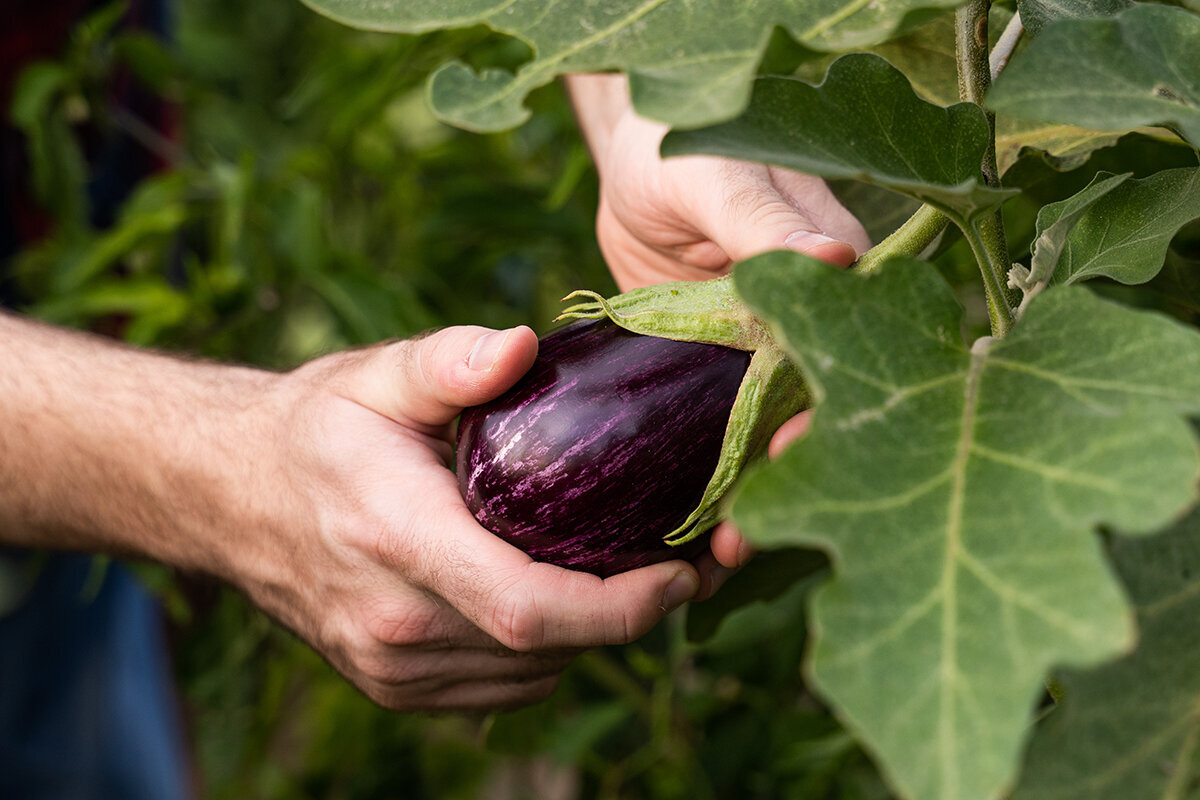
Greenhouse crop study 02 / United States
How to Grow Eggplants in a Greenhouse
The most polished fruit in the summer house is also one of the least forgiving: eggplant asks for settled heat, deliberate structure and a little attention when the flowers open.
Under glass, aubergines become a long-season architectural crop. The reward is not simply an earlier harvest. It is the ability to hold a steadier root zone, shelter leaves from damaging weather, manage airflow and keep fruit developing when an exposed bed is still negotiating cold nights or sudden rain.
First principle / climate before cultivar
Do not merely shelter eggplant.
Give it a warmer room.Consistency, not intermittent heat, is the crop’s real luxury.
Give it a warmer room.Consistency, not intermittent heat, is the crop’s real luxury.
A greenhouse suits eggplant because warmth is a working material.
Eggplant is a warm-season nightshade and it does not respond well to a chilly start. University Extension guidance consistently places seed germination and early growth in a warm range, while plants exposed to cold nights often pause, lose flowers or never quite regain their momentum. A greenhouse gives a home gardener a chance to make warmth dependable rather than leaving the crop to a short, erratic summer.
The aim is not tropical excess. It is a balanced warm room with a responsive venting routine. Cool compost, a container standing in runoff, prolonged shade or a house sealed tight on a humid day can each slow the plant in a different way. Good plants look almost calm: upright leaves, measured new growth, retained flowers and fruit that enlarges without repeated swings in water supply.
That is why a greenhouse should be planned as a working growing room, not merely a weatherproof enclosure. Arrange the route from water source to pots, leave space to open vents and make every plant easy to inspect. Bloomcabin’s greenhouse setup guide is a useful companion for considering benches, paths, ventilation and water access before the first pot arrives.
The thermal orbit
Warm, but never airless.
Use a thermometer at plant height and treat it as part of the crop, not as decoration. A useful productive daytime target is roughly 70–85°F, while seed germination is more even in warmer media. At the same time, a greenhouse can overshoot quickly under strong sun. Opening roof vents and doors early, then using shade when needed, is far easier on plants than trying to rescue overheated foliage late in the afternoon.
70–85°Fproductive days
Warm startFruit setVent earlyShade peak
Germination
Start seed in a warm medium, usually around 75–85°F, to encourage more even emergence.
Growth
Bright, warm days build leaf area and stronger stems without forcing soft, stretched growth.
Fruit set
Protect flowering plants from chilling, stagnant humidity and extended periods of excessive heat.
Stress zone
Cold nights, dry pots and a sealed hot house can all interrupt flowering and fruit development.
Practical rhythm: close early in the season before a cold night arrives; open before solar heat accumulates; let moving air refresh the canopy without turning the plants into a draft corridor.
Specimen selection
Choose a form that suits the room, the pot and the plate.
There is no single ideal eggplant. A compact plant can be the sensible choice for a narrow greenhouse path, while a larger classic oval type can justify more root volume and a taller support. Select for the space you can actually give the plant, not for the biggest-looking transplant at the garden center.
Compact
Patio and dwarf types
Useful for containers and low staging. Smaller fruit often arrives earlier, and a compact habit makes it easier to preserve air around every leaf.
Elongated
Japanese-style fruit
Long, slender fruit is quick to inspect and convenient for high-turnover picking. Train stems so fruit hangs freely rather than pressing into foliage or glass.
Classic oval
Large purple globes
The sculptural standard. Give it an ample container, a robust stake or string, and enough room to develop a limited but meaningful fruit load.
Specialty
Striped, white or petite
Excellent for a small collection under glass. Their value is not novelty; it is variety in timing, size and kitchen use.
If the greenhouse also serves as a carefully designed garden room, explore Bloomcabin greenhouse design options while deciding how much height, circulation space and bench surface your crop deserves.
Bench protocol
Start slow enough to start strong.
Home growers in cool or variable regions gain useful time by raising transplants before the greenhouse has fully warmed. Begin seed roughly eight weeks before the intended planting window, but do not confuse an early calendar date with a greenhouse that is ready to grow.
A well-grown transplant has a sturdy stem, closely spaced leaves and a root ball that holds together without circling excessively. Avoid plants carrying obvious leaf spots or already struggling in tiny cells. The object is a short period of establishment, not a lengthy recovery from cold, crowding or root damage.
- 01
Sow in a warm medium
Set seed about ¼ inch deep in fresh, sterile seed-starting mix. A heat mat is useful for germination, but check moisture often: a warm cell dries faster than it looks.
- 02
Give light from above
Once seedlings emerge, provide strong overhead light and steady moisture. Thin or pot on after true leaves develop so stems do not stretch toward a distant window.
- 03
Wait for settled conditions
Move plants only when the house can hold warm nights and the root zone is no longer cold. A short delay is better than a month of stalled growth.
- 04
Support at planting time
Place the stake, string or cage when the plant goes in. Adding it later disturbs roots and leaves you trying to straighten stems already carrying flowers.
The root room
Use enough compost to create a steady reservoir.
Containers: volume is climate control.
Eggplants can grow well in containers, but a small pot asks you to solve the same problem repeatedly: watering, feeding and root temperature shift faster. For a compact variety, a 5-gallon container is a sensible lower threshold; larger, classic plants are generally more composed in 7–10 gallons of high-quality potting mix. Make drainage non-negotiable and raise pots slightly so surplus water can leave freely.
Dark containers can warm roots early in the season, but in hot Southern, Southwestern or high-sun locations they may also overheat. Position pots where they receive good light but can be shaded at the side, moved away from a blazing surface, or insulated from reflected heat.
Beds: depth plus breathing space.
In a greenhouse bed, work in mature compost only where drainage is already sound. Avoid creating an overly rich, soggy pocket that produces magnificent leaves and unreliable flowers. A working spacing of about 18–24 inches between plants is a practical starting point, adjusted for cultivar vigor and how aggressively you intend to train.
Keep the crown at the same level it occupied in the transplant pot. Water in carefully, then mulch the surface lightly if it helps preserve even moisture without trapping dampness at the stem base. In permanent beds, rotate away from eggplant relatives when possible; tomatoes, peppers, potatoes and eggplants share several disease concerns.
Vertical discipline
Train for access, air and fruit you can actually hold.
Plant elevation / leader, ties and fruit load
Support the architecture before it bears weight.
Eggplant branches may look sturdy until fruit swells. A single upright stake, a soft-tie system or one to three carefully managed leaders can all work in a home greenhouse. The best approach is the one that keeps each plant inspectable and lets you remove fruit without wrestling a wall of foliage.
Start by retaining the main stem and a small number of well-spaced, strong branches. Remove weak, inward-growing or ground-touching shoots gradually; do not strip a healthy plant all at once. Tie stems loosely at intervals with soft material that will not bite into growing tissue. As fruit appears, decide whether the branch has enough leaf area and strength to carry it.
A slightly reduced fruit load often means larger, better-finished eggplants and less breakage. Staking also makes practical sense under glass: the plant reads clearly, airflow improves, and pests are easier to spot before they become an established population.
Flowering intervention
The flower is self-fertile. The greenhouse must still help it perform.
Eggplant flowers contain both male and female parts, yet under glass the usual outdoor movement of insects and breeze is reduced. A little deliberate vibration during flowering can improve the chance of pollen moving where it needs to go. The aim is restraint, not constant handling.
Airflow
A light circulating fan or regular venting gives flowers modest movement and prevents humid stillness around the canopy.
Vibration
Tap the support string or gently touch a flower truss in late morning on a dry day. A small electric toothbrush held near, rather than against, the flower can also provide vibration.
Humidity
Heavy trapped humidity can make pollen less freely shed. Vent and water the root zone rather than routinely misting foliage.
Temperature
When flowers drop, inspect the climate record first. A cold spell, dry pot or overheated sealed greenhouse is often more revealing than a fertilizer bottle.
Do not expect every bloom to become a fruit. Instead, look for a continuing sequence of retained flowers and developing eggplants. If bloom drop becomes a pattern, simplify the diagnosis: check nighttime temperature, midday heat, pot moisture, airflow and whether the plant has become overly leafy from excess nitrogen.
Input / response ledger
Water and feed for continuity, not drama.
Eggplant quality is closely tied to even root-zone moisture. University of Minnesota Extension notes that inconsistent moisture can lower yield, increase bitterness and contribute to blossom-end rot, while light watering promotes shallow roots. In a greenhouse, rain is no longer making the decision for you; that is an advantage only when the watering routine is observant.
Water input
Deep, measured applications
Water at the base until the full root ball is moistened, then allow the surface to begin drying before the next irrigation. Check several pots; a sunny doorway position can dry far sooner than a shaded back corner.
Water at the base until the full root ball is moistened, then allow the surface to begin drying before the next irrigation. Check several pots; a sunny doorway position can dry far sooner than a shaded back corner.
Plant response
Firm leaves, steady growth and fruit that enlarges without shriveling or bitterness are better markers than a rigid daily schedule.
Firm leaves, steady growth and fruit that enlarges without shriveling or bitterness are better markers than a rigid daily schedule.
Feed input
Balanced nutrition
Use a complete fertilizer according to its label and the growing medium. Feed lightly but regularly through a long container season rather than making one large, late correction.
Use a complete fertilizer according to its label and the growing medium. Feed lightly but regularly through a long container season rather than making one large, late correction.
Watch the canopy
Too much nitrogen can create handsome foliage at the expense of blooms. Pale older leaves may suggest depleted media, but first rule out a cold or waterlogged root zone.
Too much nitrogen can create handsome foliage at the expense of blooms. Pale older leaves may suggest depleted media, but first rule out a cold or waterlogged root zone.
Drainage output
Water must leave
Never let a pot sit in a saucer of runoff. In beds, investigate slow drainage before adding more fertilizer or more water.
Never let a pot sit in a saucer of runoff. In beds, investigate slow drainage before adding more fertilizer or more water.
Root message
Repeated wilt in wet compost, yellowing and stalled growth point toward a root problem, not thirst. Correct the conditions before expecting new growth.
Repeated wilt in wet compost, yellowing and stalled growth point toward a root problem, not thirst. Correct the conditions before expecting new growth.
A drip line on a timer can be extremely useful, but only after you have watched a few irrigation cycles. Adjust seasonally: a cloudy spring morning, a July heat spell and a heavily fruiting plant do not consume water at the same rate.
Regional heat adaptation
In summer, the skill is releasing heat early enough.
Aubergines enjoy warmth, but a closed greenhouse in full sun can become hostile faster than the crop can use the heat. In humid regions, venting also helps foliage dry and reduces long periods of still air that invite disease. In dry, high-sun climates, airflow must be paired with intelligent shading and closer attention to containers, which can lose moisture with startling speed.
Start with an opening ritual: roof vents first, then door or lower ventilation to create a gentle chimney effect. A small circulation fan helps eliminate stagnant pockets but should not blast one plant continuously. On genuinely hot days, shade cloth or interior shading can soften the peak without turning the house dim for the entire season.
Watch fruit as well as leaves. Very hot, dry conditions can expose fruit to sunscald if foliage is sparse. Resist the temptation to prune heavily at the moment a heatwave arrives; leaves are part of the plant’s protective architecture.
Quiet diagnosis
Read the symptom, then correct the room.
Small round holes in young leaves
Flea beetles are a familiar eggplant pest, especially on small plants. They can weaken seedlings before the crop has enough leaf area to recover easily.
Bronzing, fine webbing or a dusty underside
Spider mites often intensify in hot, dry conditions. Examine leaf undersides carefully; damage can look like a vague loss of gloss long before the population is obvious.
Yellowing, inward curl and gradual collapse
Verticillium wilt and root problems demand a different response from simple thirst. Do not keep pouring water into a plant that is failing in already-wet media.
Dull, seedy or bitter fruit
This is commonly a maturity issue rather than a variety flaw. Eggplants change quickly once they pass their prime, so harvest more often during peak production.
Corrective rail
Scout twice each week, including undersides of leaves and tight growth points. Isolate serious pest problems from clean plants and remove badly infested leaves only if the plant can still photosynthesize well.
For insects
Use screening or other physical exclusion for vulnerable young plants where practical. Wash off small aphid colonies with water and avoid broad-spectrum treatments that remove beneficial insects along with pests. Follow product labels and local guidance if treatment is needed.
For environmental disorders
Review the last week rather than the last hour: overnight lows, high afternoon temperatures, watering gaps, drainage and fertilizer changes provide the useful evidence.
For disease risk
Keep foliage dry, remove spent fruit and leaf debris, sanitize tools, and avoid repeatedly growing eggplant relatives in the same unrefreshed greenhouse soil.
For a broader routine on ventilation, shading and watering systems, see Bloomcabin’s greenhouse gardening guide for US growers. A greenhouse is most productive when its climate systems make plant care easier to observe, not easier to ignore.
The gloss test
Pick at the height of reflection.
Eggplants are not a crop to leave for a once-a-week harvest. Pick when the fruit is shiny and firm; as it becomes overmature, the skin dulls, seeds harden and darken, and the flesh can become pithy or bitter. Harvest with pruners or a sharp knife, leaving a short piece of stem and the calyx attached. Do not twist fruit away from the plant.
Too youngReadyToo late
Skin may be glossy, but fruit is undersized and lacks the cultivar’s finished shape. Let it broaden or lengthen a little further.
Look for firm fruit, taut glossy skin, full color and a calyx that still looks fresh. This is the point of best texture for most varieties.
When reflection fades and seeds become conspicuous, texture turns spongy. Pick it anyway, then shorten the interval before the next round.
Use eggplants soon after picking. They are perishable and dislike prolonged very-cold storage. If a brief hold is unavoidable, keep them cool rather than icy; the kitchen is usually their best next destination: grilled, roasted, layered, charred or folded into a warm summer supper.
Questions from the greenhouse path
Eggplant FAQ
Can eggplants grow in an unheated greenhouse?
Yes, in many US regions, provided the greenhouse is warm enough when plants are introduced and you use the structure to extend the season rather than defeat winter. The key is dependable warmth, particularly at night. In cold climates, begin later or use appropriate heat protection instead of planting into cold compost.
How many plants fit in a small greenhouse?
Fewer than you may expect. Allow around 18–24 inches between plants, then reserve enough path space to water, pollinate, tie stems and inspect leaf undersides. Two well-managed plants can outperform a crowded collection that remains humid and inaccessible.
Why are my eggplant flowers falling off?
Inspect the climate first: low nighttime temperatures, excessive heat, dry pots and stagnant humid air can all interrupt fruit set. Then consider nutrient balance. Too much nitrogen favors leaves rather than flowers. A brief, gentle vibration can help where natural air movement and insect activity are limited.
Should I prune greenhouse eggplants?
Prune with a purpose. Remove damaged leaves, shoots that make the center too dense, and weak growth unlikely to carry useful fruit. Maintain enough healthy leaf area to feed the crop. Tie major stems early, and reduce fruit load only when a branch is clearly overextended.
How often should I water container eggplants?
There is no useful universal number. Check moisture below the surface and water thoroughly when the root zone needs it. Fruit-filled plants in warm weather may need frequent attention, while a cool cloudy spell can greatly slow water use. Avoid tiny daily splashes and avoid standing water.
When are eggplants ready to harvest?
Pick when fruit is firm and the skin is deeply colored and glossy. Dull skin, brown mature seeds and spongy flesh indicate fruit has stayed on the plant too long. Use pruners, leave a short stem, and harvest regularly to keep the plant producing.
Gallery catalogue / sources & further reading
Research behind the growing room.
- University of Minnesota Extension, Growing eggplant in home gardens — seed-starting, temperature, moisture, fertility, harvest and common problems.
- University of Illinois Extension, Eggplant — home vegetable gardening guidance for a warm-season crop.
- Penn State Extension, Eggplant in the Garden and the Kitchen — harvest maturity, kitchen use and storage guidance.
- UC Statewide Integrated Pest Management Program, Eggplant home and landscape guidance — pest, disease and environmental-disorder reference.
- University of Minnesota Extension, Flea beetles — identification and management considerations for young eggplants.
Adapt recommendations to your cultivar, local weather, greenhouse construction and product labels. When disease or a serious pest issue is suspected, consult your county Extension service or a qualified local horticulture professional.
A longer season, properly composed
Build a warmer room for longer-season crops.
A handsome greenhouse becomes especially valuable when it is planned as a productive climate room: usable growing height for trained plants, ventilation for heat release, staging for propagation and a clear path for daily observation. For eggplants, those details are the difference between merely surviving summer and carrying a glossy harvest through it.
Explore the Classic Aluminum GreenhouseSee how a Classic Aluminum Greenhouse can provide an elegant, adaptable foundation for warm-season crops, carefully arranged benches and the everyday ventilation that eggplants require.
