
How to Grow Broccoli in a Greenhouse
The Crown Weather Bureau · Greenhouse growing
How to Grow Broccoli in a Greenhouse
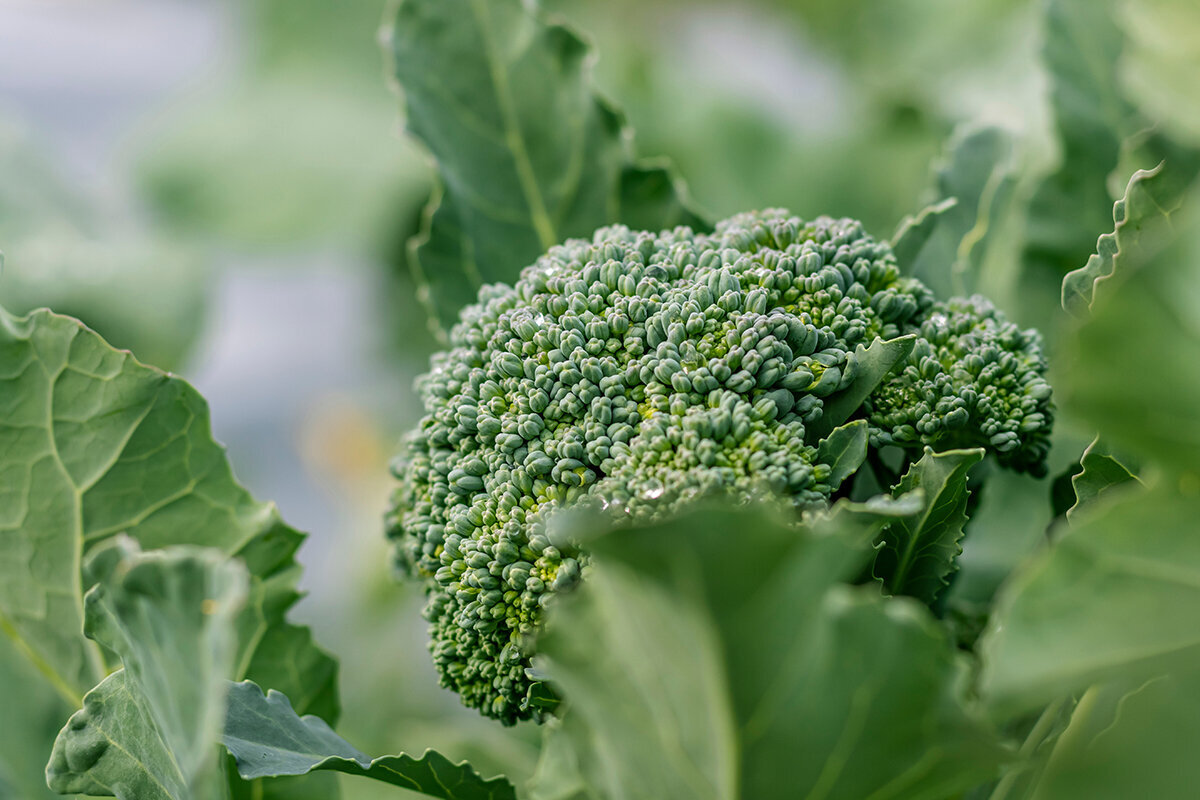
A fine broccoli crown is not merely grown. It is recorded: every interruption in moisture, excess of heat, cramped root run and missed harvest moment is written into the tightness of its green florets.
In a greenhouse, broccoli is an unusually rewarding cool-season crop—but only if the structure is used as a place of moderation rather than a place of permanent warmth. Build steady young plants, leave room for a full canopy, move humid air, and let the crop mature when the house is calm and cool.
Preferred seasonFall, winter or cool spring
Mature spacing18–24 in. per plant
Useful temperature bandAbout 60–75°F by day
Principal riskWarm, humid head formation
01 · Controlled coolness
The greenhouse does not make broccoli easier by making it warmer.
The operating principle
Use glazing, vents, doors, shade and irrigation to soften weather swings. The goal is an even, vigorous plant before the head begins to form—not a lush plant pushed through a hot interior.
Broccoli is a cool-season brassica. University guidance consistently links steady growth, adequate moisture, correctly aged transplants and cool head development with better crowns. A greenhouse gives you levers; it does not remove the crop’s preference for restraint.
02 · Select the elevation
Choose a broccoli habit for the greenhouse bench.
Seed catalogs often emphasize days to maturity. In a greenhouse, crown style, mature footprint and the ability to continue with side shoots deserve equal attention.
Compact heading
Fast crown
Short window · modest footprint
Sprouting
Many cuts
Small shoots · extended picking
Calabrese
Large crown
Broad canopy · generous spacing
Compact heading types
These are useful when a spring greenhouse window is brief. In favorable conditions, some make a central crown roughly 50–60 days after transplanting. Harvest the primary head promptly; side-shoot yield varies considerably by cultivar.
Sprouting types
Sprouting broccoli is less about a single grand head and more about repeated small harvests. It earns its place where steady picking matters, although its branching stems can become dense and need clear airflow.
Full-sized Calabrese types
Classic blue-green plants make the broadest canopy and usually claim the most bench space. They are often excellent for late-summer planting and autumn harvest, especially when selected for reliable side shoots.
For a first greenhouse crop, a heading cultivar with an appropriate seasonal maturity date is the clearest lesson in timing. For a longer harvest, add one or two sprouting plants at the end of the bed rather than trying to force every plant into the same role.
03 · The young plant sets the scale
Raise a transplant that is ready to run, not ready to flower.
Broccoli seedlings can look composed long before they are mature enough to occupy a productive bed. Avoid the temptation to hold them in small cells while waiting for a convenient date. Older, checked or root-bound starts are more vulnerable to early small heads, commonly called buttoning.
Start seed in a clean, free-draining seed mix about ¼–½ inch deep. Germination is generally reliable without bottom heat. Once seedlings emerge, give them bright light and even moisture; fertilize lightly after the first true leaf, then maintain a modest, regular feeding rhythm rather than one heavy push.
When plants have four or five true leaves and a sturdy root system, harden them gradually. A greenhouse makes this transition gentler, but it can also disguise stress if the bench is warm by day and abruptly cold at night.
Nursery-to-head scale strip
01
SowClean mix; shallow seed.
02
EmergenceBright light; gentle air.
03
Pot onGive roots room.
04
HardenIncrease exposure gradually.
05
TransplantWater in at final spacing.
Keep the medium evenly damp—not waterlogged—until emergence. Move seedlings immediately into strong overhead light, and use gentle air movement to encourage stocky stems and reduce persistently wet foliage.
Pot on before roots circle tightly. Handle seedlings by their leaves whenever possible. During hardening, increase light, air movement and temperature variation over roughly a week while keeping plants watered.
Colorado State University lists broccoli transplants at roughly five to seven weeks in its cool-season planting guide. Plant age alone is not the whole decision: choose firm, actively growing starts with a compact root system and no sign of a developing crown.
04 · Mature spacing is climate equipment
Plan for the canopy you will have in six weeks.
Most greenhouse broccoli disappointments begin with a visually tidy but overly crowded bed. Seedlings may fit at 10 inches apart. Mature plants do not. As leaves meet, humidity lingers around crowns, scouting becomes difficult and the plants compete for light and fertility at exactly the moment they should be building head weight.
Use 18 inches as a practical minimum for compact plants in a block, and move toward 20–24 inches where cultivars are broad, light is low, or your greenhouse retains humidity. University of Maryland recommends 16–24 inches within the row and 24–30 inches between rows in an outdoor garden; a small greenhouse benefits from treating the walking path and vent line as part of this spacing calculation.
Reserve access at both ends of the bed. You should be able to inspect the underside of leaves, check soil moisture and cut a central head without leaning through a neighboring crown.
Placement airflow diagram
Incoming air
Clear vent path
Clear vent path
Broccoli block
Open canopy
Open canopy
Harvest path
Dry access
Dry access
Place the tallest broccoli block where it will not obstruct door-to-roof-vent airflow. In a narrow house, a single central bed with paths on both sides is often more useful than two beds crammed against the glazing.
For containers, allow at least a 5-gallon vessel per plant with roughly 18 inches of separation, using a deep, fertile mix. Containers heat and dry faster than in-ground beds, so they demand closer attention during sunny spells.
05 · Climate chamber
Head quality is a pressure map, not a thermostat setting.
Broccoli tolerates cool conditions well, but its developing head is sensitive to accumulated heat and uneven water supply. Aim for bright, cool days with moving air. Temperatures around 60–75°F are a productive working range; on bright days, open vents early rather than waiting for heat to collect beneath the roof.
University of Minnesota notes that hot conditions while the head is developing harm quality, and that days around 86°F with nights above 77°F can prevent crown formation. In a glazed structure, those readings may arrive well before outdoor weather feels extreme. A min-max thermometer at canopy level makes the invisible visible.
Pressure ↑Stage →
High
Checked
Loose
Open
Mid
Water
Vent
Pick
Low
Steady
Set
Tight
Daily ventilation actions
- Morning
- Open roof vents or doors before direct sun turns the house into a heat store. Confirm that ventilation creates exchange, not merely a cracked opening.
- Midday
- Use shade cloth sparingly during heat events; broccoli needs light, but it does not need a stalled root zone or overheated crown.
- Evening
- Close in time to avoid a sharp chill when a cold night is forecast, while allowing foliage to dry before darkness whenever possible.
- After irrigation
- Vent sufficiently to clear humidity. Do not rely on wet leaves or a damp floor as the method for cooling the greenhouse.
06A · Water stream
Keep the root zone even.
Broccoli is not forgiving of a drought-and-drench rhythm. It needs a soil or growing medium that is moist, oxygenated and consistently supplied with water from transplanting through harvest. Water deeply enough to wet the active root zone, then judge the next irrigation by soil feel, pot weight and weather rather than by the calendar.
University of Minnesota advises approximately an inch of water per week where rain is absent, with more frequent irrigation on sandy ground. In a greenhouse, rainfall is not part of the calculation; warm sun, container volume and venting are. Drip irrigation or a careful base-directed wand keeps leaves and crowns drier than overhead splashing.
06B · Fertility stream
Feed for steady leaves before the crown.
Broccoli is a high-nutrient crop, but lavish nitrogen is not a substitute for root health, light and temperature management. Begin with a soil test where possible. Aim for fertile, well-drained soil with a pH around 6.0–7.0, using compost or well-rotted organic matter as part of the foundation.
Use a starter feed at transplanting if your fertility plan calls for it, then side-dress or apply a balanced liquid feed once plants are established. A further light feed after the central head is cut can support side shoots. Avoid fresh manure, and do not use products containing herbicide on a vegetable bed.
The two streams meet at head formation: a plant that has never had to pause for thirst or hunger is better prepared to make a close, sweet crown.
07 · Read the canopy
How a tight head forms.
A broccoli head is a cluster of undeveloped flower buds. Its quality is built before it looks like a head. First the plant must establish a generous leaf canopy and a root system capable of continuous uptake. Then, as conditions and cultivar maturity align, the central growing point changes course and the buds assemble.
That is why a crown can look wrong even when you begin paying attention only at harvest. Very small plants that form miniature heads are reporting an earlier interruption: cold shock, drought, nutrient shortage, transplant stress or a plant held too long. Coarse, separating buds and yellow petals are reporting a later interruption: heat, delayed picking or both.
Before initiationPrioritize rapid but balanced vegetative growth. Young plants need room, root oxygen, water and enough nutrients to make leaves.
At initiationKeep the house especially even. Avoid heat spikes, drought and drastic changes in fertilizer concentration.
At sizingProtect airflow around the crown. Scout closely and harvest at the tight-bud stage rather than waiting for extra diameter.
08 · Weather fronts
When the crown tells you something has changed.
Do not throw a generic treatment at every imperfect head. Compare the symptom with plant age, recent temperatures, irrigation history and the condition of leaves and roots.
Early head
Buttoning
Small plant.
Coarse buds
Loose head
Heat or drought.
Yellow buds
Opening
Pick now.
Hollow stem
Stress
Check roots.
Small early crown
Buttoning
Likely causes: a young plant experienced a check in growth—cold exposure, drought, low fertility, rough transplanting or excessive transplant age. The plant has switched into head formation before it built enough canopy.
Least disruptive response: harvest what is usable, review your nursery timing, and improve the next batch rather than trying to force this plant back into vegetative growth.
Open or coarse buds
Loose head
Likely causes: heat during head development, high humidity combined with warm conditions, inconsistent water, or simply an overdue harvest. The individual buds become more visible and the crown loses its dense, fine texture.
Least disruptive response: vent earlier on sunny days, water evenly at the root zone, protect against short heat surges, and cut promptly once the head is ready.
Yellow petals or yellow cast
Opening crown
Likely causes: maturity advanced faster than your picking schedule. Broccoli can move from tight green buds to flowers very quickly in warm weather; this is usually a harvest-timing problem, not a disease.
Least disruptive response: cut immediately. The stem and florets are still edible, though texture and flavor are best before flowering. Pick every day during a warm spell.
Brown florets or hollow stem
Internal stress
Likely causes: nutrient imbalance, erratic moisture, overly fast growth or cultivar sensitivity. Browning can be associated with boron deficiency; hollow stems are often linked to rapid growth and are not automatically a food-safety issue if the tissue is sound.
Least disruptive response: test soil or growing medium before adding micronutrients blindly. Stabilize watering and avoid overly aggressive feeding. Remove damaged tissue at harvest where appropriate.
09 · The quiet inspection round
Caterpillars, aphids and moisture-driven trouble arrive before they become obvious.
A greenhouse excludes some weather but does not exclude pests. Imported cabbageworms, cabbage loopers and diamondback moth larvae chew leaves and can shelter in folds near the crown. Aphids congregate on soft growth. Flea beetles can make seedlings look peppered with small holes. Inspect twice a week, and more often once heads begin to tighten.
Start with the least disruptive control: hand-remove caterpillars, wash small aphid colonies from sturdy leaves with a directed spray, remove badly infested leaves, and keep crop debris out of the house. Insect screening can help, provided it does not compromise ventilation. If you use any pesticide, select a product labeled for broccoli and follow the label exactly, including harvest intervals.
Humidity management is equally practical disease prevention. Maintain spacing, water soil rather than crowns, clear spent leaves and do not keep the greenhouse shut after irrigation just because the outdoor air feels cool.
Five-minute crown inspection
- Look under lower leaves for eggs, caterpillars and aphid colonies.+
- Open the canopy with your hands and check whether leaves are dry and moving air reaches the center.+
- Feel 2–3 inches below the surface before irrigating; do not guess from the top crust alone.+
- Check the central crown for separating buds, pest frass or yellowing.+
- Remove damaged leaves and place them outside the greenhouse, not on the path or under the bench.+
Rotate brassica crops where your layout permits. UMN recommends avoiding the same related crop family in the same ground for four years, a useful long-term principle for in-ground greenhouse beds as well as outdoor plots.
Harvest cut elevation
Main crown
Tight green buds
Tight green buds
Cut line
Above lower axils
Above lower axils
Leaf junctions
Keep intact
Keep intact
Side shoots
Laterals remain
Laterals remain
Cutting guide: harvest when the central head reaches a useful size and every bud remains tight. With a clean knife, take several inches of stem, making the cut above lower leaf junctions. Leave the rooted plant in place and healthy.
After the central cut: many heading cultivars make smaller side shoots from lateral buds. A light side-dress can support these secondary heads where your fertility plan calls for it.
10 · The bright cut
Harvest the crown, then let the plant answer again.
Do not wait for the crown to become as large as a supermarket specimen if its texture has begun to loosen. The best greenhouse broccoli is judged by tightness and tenderness rather than maximum diameter. In warm weather, inspect each day because buds can move quickly from compact green to open flower.
Side shoots are among the finest greenhouse harvests: tender, quick to cook and easy to pick in handfuls. Continue normal watering after the main crown is removed, keep the plant open to air, and cut shoots while their buds are still closely packed.
Cool broccoli immediately after harvest. Store it in the refrigerator, ideally in a humid but not soaking-wet environment, and use it promptly. The clock is short: warm storage rapidly reduces sweetness and tenderness.
For a greenhouse designed around practical paths, roof ventilation and a productive cool-season bench, explore the Classic Aluminum Greenhouse. Its clean, adaptable interior is a composed setting for a succession of broccoli, greens and early-season transplants.
11 · United States timing notes
Schedule the head for your coolest reliable window.
Northern and inland climates
Use the greenhouse to start a very early spring crop, then make a second sowing in midsummer for autumn heads. Fall crops often deliver the best quality because crowns form as outdoor heat declines.
Mid-Atlantic and humid regions
Think in two shoulder seasons. Ventilation and spacing matter intensely in spring, when bright sun can create a warm, wet house. Favor cultivars with maturity dates that put head formation before summer heat or after it breaks.
Southern and warm-summer regions
Make broccoli primarily an autumn through winter greenhouse crop. Sow and transplant so the crop develops during shortening days and cooler nights; summer greenhouse production is possible only with unusually strong cooling discipline.
Work backward from your target harvest window using the cultivar’s days to maturity from transplant, then add time for seedling production. A thoughtful greenhouse setup—with observed sun patterns, clear paths and tested vents—makes those timing decisions much more dependable.
12 · Field questions
A restrained answer is usually the right one.
Broccoli is a crop of small corrections. Before adding fertilizer, shade or treatments, identify whether the real interruption was heat, watering, root restriction, crowding or simply a missed harvest.
Can broccoli grow in an unheated greenhouse?+
Yes. Broccoli is cold tolerant and is well suited to an unheated house in cool seasons. The main advantage is protection from harsh weather and a longer shoulder season, not tropical warmth. Watch for severe freezes affecting young transplants and use ventilation on sunny days, even when outdoor temperatures feel cool.
How many broccoli plants fit in a small greenhouse?+
Count mature spacing, not seedling size. At 18–24 inches per plant, a modest bench may hold only a few full-sized heading plants. That can still be productive when you follow the central harvest with side shoots and use remaining space for lettuce, herbs or nursery trays.
Why are my broccoli heads small?+
Small heads may reflect a compact cultivar, but miniature crowns on undersized plants usually point to buttoning. Check whether seedlings were held too long, experienced cold or drought stress, lacked nutrients, or were disturbed at transplanting.
Should I shade broccoli in a greenhouse?+
Use shade as a temporary heat-management tool during unusually bright, hot periods, not as a permanent blanket. Broccoli needs substantial light to build the canopy that supports a good crown. First improve ventilation and watering; then add temporary shade if canopy-level temperatures still rise too quickly.
Can I grow broccoli in containers?+
Yes. Use a deep container of at least 5 gallons per plant, a fertile mix, and 18 inches or more between containers. Because pots warm and dry rapidly, container broccoli benefits from dependable irrigation and especially careful monitoring during sunny weather.
Sources & further reading
Extension guidance behind the greenhouse plan.
- University of Minnesota Extension — Growing broccoli in home gardens
- University of Maryland Extension — Growing broccoli in a home garden
- Colorado State University Extension — Growing vegetables in a hobby greenhouse
- Colorado State University Extension — Vegetable planting guide
- Colorado State University Extension — Vegetable garden hints
- Oregon State University Extension — Broccoli garden guidance
- University of Minnesota Extension — Harvesting and storing home garden vegetables
Crown plan
Design the calmest part of the growing year.
A serious greenhouse is not only a vessel for warm-weather tomatoes. It is a finely adjustable shelter for the crops that become exceptional in cool, bright conditions. Give broccoli a deliberate bench, enough aisle space to harvest cleanly, and ventilation that responds before the crown feels the pressure.
Configure a Bloomcabin Classic Aluminum Greenhouse around your own cool-season succession—broccoli, lettuces, brassica seedlings and the first herbs of spring. For ideas on finishes, staging and climate-minded additions, see our greenhouse colors and premium finishes guide and our overview of custom aluminum greenhouse options.
Plan your Classic greenhouseDecision 01Choose the cool-season harvest window first.
Decision 02Draw mature broccoli spacing, not seedling spacing.
Decision 03Keep an open, dry route for inspection and harvest.
