
How to Grow Grapes in a Greenhouse
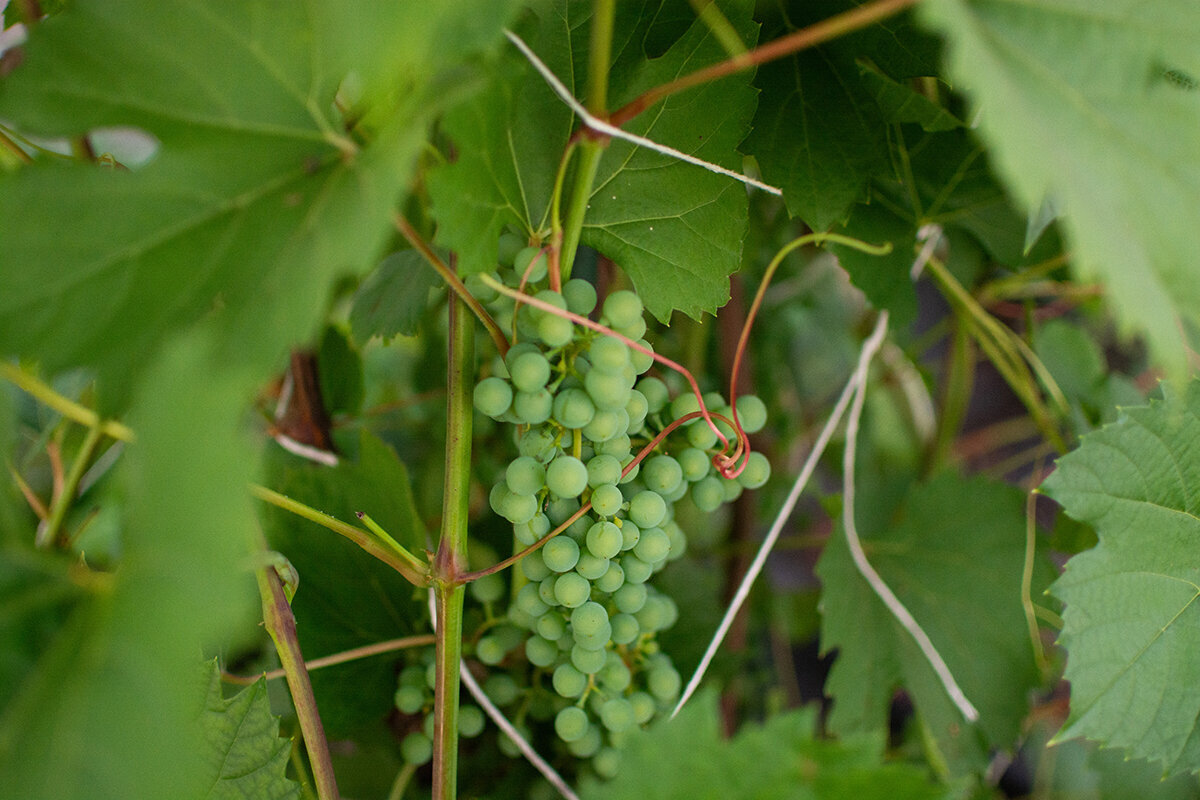
Bloomcabin field notes / permanent fruit under glass
How to Grow Grapes in a Greenhouse
A vine beneath glass is not a seasonal crop. It is a long-lived framework: roots below, disciplined wood at hand height, fruiting shoots lifted into a bright and breathable roof.
The case for table grapes under glass
Begin with architecture, not berries.
Growing grapes in a greenhouse gives a home gardener an unusual degree of control over rain, warmth, access, and the all-important shape of the canopy. It does not make a grapevine low-maintenance. It makes its management more deliberate—and, often, more rewarding.
Outside, persistent rain can keep foliage and bunches wet, while late frost, hungry birds, and uneven summer heat complicate the season. Under glass, a vine receives a warmer start and clusters are protected from direct rainfall. The trade-off is that the greenhouse can become hot and humid quickly. A handsome roof full of leaves is not automatically a healthy crop: grapes need moving air, disciplined spacing, and an annual decision about which wood stays and which wood goes.
Think of a greenhouse vine as a permanent resident positioned at the perimeter, not a pot plant placed among tomatoes. Give it a root run, a clear route toward the roof, and an aisle that still works when the canopy is at full width. Before choosing a model, explore the range of Bloomcabin greenhouses and conservatories and plan the grapevine as part of the structure rather than an afterthought.
Planting decisions
Choose for flavor, vigor, and pruning habit.
For most greenhouse gardeners, fresh-eating grapes are the natural ambition. But do not choose only by whether a catalog says seedless. Variety determines berry quality, disease tolerance, growth habit, winter needs, and whether the vine is best managed by cane pruning or spur pruning. Ask a local Cooperative Extension office or a reputable regional nursery what performs in your state.
Fresh eating
Table grape priorities
Look for pleasant flavor, manageable cluster size, reliable fruit set, and skin quality. Greenhouse protection can favor earlier ripening, but it cannot compensate for a cultivar poorly suited to your local winter or disease pressure.
- Choose vines sold on an appropriate root system for your region.
- Favor locally proven cultivars over novelty alone.
- Plan room for large leaves and vigorous laterals.
The pruning question
Cane or spur?
Fruit grows on current-season shoots that emerge from buds on one-year-old wood. Some cultivars crop well from short spurs retained along permanent cordons; others are more productive when long one-year canes are selected and tied down each winter. This is a cultivar decision, not a matter of style.
Extension guidance commonly notes that many American-type grapes and hybrids need cane pruning because their basal buds may be less fruitful. Build a wire layout that can accommodate the method your chosen vine requires.
Position at planting
Root zone first
Plant in a deeply prepared, well-drained border or a generously sized permanent container where roots will not compete with constantly replanted annuals. Keep the crown at its original nursery depth, water deeply to settle the soil, and install a sturdy stake immediately.
- Reserve about 6 feet of linear support space per vine as a useful starting point.
- Keep irrigation aimed at the root zone, not foliage.
- Leave service access around the trunk for pruning and inspection.
A greenhouse is especially helpful in cool or rainy locations, yet vines still need a true dormant season. In cold regions, review winter protection and whether the chosen cultivar must be managed for cold hardiness even when its roots are under cover.
Training hall / build support before growth begins
Give the vine a framework worthy of its roof.
Use corrosion-resistant wire, strong end anchors, and attachment points that are designed for the greenhouse frame or independently supported by posts. Do not improvise with a light shelf rail. A mature vine may carry dense foliage, woody arms, and many pounds of fruit; its support must also tolerate the pull created when shoots are tied and the canopy is pruned.
Elevation / framework
Permanent trunkVertical backbone
Permanent armsRetained cordons
Fruiting woodCanes and shoots
The trunk is established over the first years. Permanent arms, or cordons, may remain in a spur-pruned system, while carefully chosen one-year canes are renewed annually in a cane-pruned system. Current-season shoots carry the leaves and crop.
Dormant-season literacy
Read the age of the wood before you cut.
The most useful grape-growing fact is also the one that causes the most anxiety: the coming crop is borne on shoots that arise from buds on one-year-old canes. Dormant pruning is therefore an annual act of editing. Keep the permanent framework where your system calls for it, retain purposeful one-year wood, and remove the confusing excess.
I
Permanent wood
II
One-year cane
III
Current shoot
IV
Removal
Permanent wood: The trunk and, in many systems, cordons are the durable architecture. Keep them healthy and placed with purpose; they should not become a thicket of old, unproductive branches.
One-year cane: Well-exposed, pencil-thickness growth from the previous season is often the valuable fruiting wood, or the source of the short spurs retained for the next crop.
Current shoot: In spring, retained buds break into shoots. These shoots bear leaves, tendrils, and clusters, while also producing wood that may be useful next winter.
Removal: Most surplus growth from the prior season is cut away during dormancy. A vine that looks heavily pruned is often a vine being managed correctly.
Do not apply a universal bud count or copy a pruning diagram without confirming your cultivar and system. Cane-pruned table grapes and spur-pruned cordon systems are managed differently. The objective is balance: enough fruitful buds for a crop, enough leaf area to ripen it, and enough open space to keep the canopy dry and workable.
Spring through early summer
Shoots first. Clusters second.
As buds break, the greenhouse changes fast. The fine work is not waiting until there are bunches to admire; it is deciding early which shoots will occupy the canopy. Remove weak, misplaced, trunk-originating, or crowded shoots while they are small and easy to rub away. Retain well-spaced, healthy shoots, then tie them gently before tendrils bind them into an unworkable knot.
Stage 01Shoot selection
Stage 02Bloom
Stage 03Fruit set
Stage 04Thinning
Stage 05Berry growth
Shoot selection: Thin early enough to preserve an open pattern and direct energy into the shoots you intend to keep.
Bloom: Avoid disruptive handling. Grapevines are generally wind- and insect-pollinated, but extreme heat or stagnant air can undermine fruit set.
Fruit set: Small berries reveal the crop. On young vines, remove malformed or extra clusters before they compete with framework development.
Thinning window: For vigorous, heavily laden vines, reduce crop load judiciously. Better spacing matters more than chasing sheer cluster count.
Berry growth: Continue tying and control laterals. Keep the fruiting zone visible enough to inspect without stripping it bare.
A note on flower and fruit set
Greenhouse grapes do not need hand pollination as a default. The productive intervention is climate management: vent before heat builds, avoid overwatering that raises humidity, and maintain a canopy with moving air. If bloom is poor year after year, review cultivar suitability, temperature extremes, vine balance, and whether overly aggressive pruning or nutrition is driving leafy growth at the expense of fruit.
Glasshouse climate / fruit-zone discipline
Under glass, airflow is part of the pruning system.
A vine can make a greenhouse feel lush, but lushness turns risky when leaves overlap, clusters touch, and moist air stalls under the ridge. Pair roof ventilation with door or lower-level openings whenever conditions allow. The aim is exchange: warm air escapes high, fresher air enters low, and foliage dries rather than holding condensation.
Overhead plan / fruit bay
Access path
Clear working width
Clear working width
Leaf wall
One shoot plane
One shoot plane
Fruit zone
Free-hanging clusters
Free-hanging clusters
Water deeply and selectively. Newly planted vines need consistent moisture while they establish. Mature vines often need less frequent irrigation, but a dry greenhouse border and a ripening crop can still demand close observation. Apply water to the root zone early in the day when possible. Avoid splashing foliage, and never use a fixed schedule without checking soil moisture, weather, crop load, and plant response.
From verjuice to maturity
Harvest by taste, not color alone.
As berries soften and color develops, keep the canopy open but avoid suddenly exposing previously shaded clusters to severe heat. The right harvest moment is varietal: color is useful, yet flavor, sweetness, texture, and ease of berry release tell the fuller story. Pick in the cool of morning, use clean shears, and handle bunches by the stem.
After harvest, retain healthy leaves as long as they remain functional. They replenish the vine’s perennial reserves. Do not mistake an empty greenhouse roof for a finished season; postharvest care influences the following year.
Green berry growthMaintain water evenly. Avoid dramatic wet-dry cycles, particularly where berry splitting has been a problem.
Softening / veraisonContinue observation. Open the fruit zone modestly if laterals have closed it, but retain enough leaf cover to prevent sunburn.
Flavor checksTaste berries from different parts of the bunch over several days. A ripe-looking shoulder can conceal under-ripe berries below.
Harvest and cool-downRemove damaged berries and any fallen fruit promptly. Store harvested grapes cool, dry, and unwashed until use.
Problem cellar
Diagnose the climate before reaching for a cure.
Central diagnosis
The usual greenhouse mistake: too much of a good canopy.
When grapes look leafy but clusters color poorly, split, or rot, the immediate temptation is to add fertilizer or water. First inspect the physical picture. Can you see clusters? Are shoots stacked at the wire? Is there condensation after sunrise? Does the fruiting zone stay damp after irrigation? Is the vine carrying more bunches than its leaf area and root system can support?
- Poor color: commonly associated with shade, excessive crop, or a cultivar not suited to the conditions.
- Split berries: inspect for uneven soil moisture, rapid water uptake, disease, and overly compact clusters.
- Mites or small pests: check leaf undersides early, isolate heavily affected material, and use only controls labeled for grapes and the specific pest.
- Weak growth: investigate drainage, root restriction, nutrient status, low light, or a young vine asked to crop too heavily.
Reference table / adjust timing to your region and cultivar
A greenhouse grape year at a glance.
| Season | Primary task | What to inspect | The restraint to practice |
|---|---|---|---|
| Dormant winter | Prune to your cultivar’s cane or spur system; remove dead, tangled, and surplus wood. | Trunk health, wire tension, loose ties, and roof-clearance conflicts. | Do not leave extra buds merely because cutting feels severe. |
| Early spring | Guide the chosen trunk and train developing shoots. | Bud break, late cold risk, drainage, and the first signs of pests. | Do not overwater a root zone that is still cool and slow to dry. |
| Late spring | Thin shoots, tie growth, and begin active ventilation. | Canopy density, flower development, and daytime heat rise. | Do not let tendrils create an inaccessible roof tangle. |
| Summer | Manage laterals, crop load, airflow, and root-zone irrigation. | Condensation, shaded clusters, leaf disease, mites, and berry development. | Do not chase lush growth with high-nitrogen feeding. |
| Harvest / fall | Pick by flavor, sanitize fallen fruit, and retain healthy leaves afterward. | Splitting, rot, ripeness variation, and postharvest canopy health. | Do not strip functional leaves immediately after harvest. |
For broader layout decisions—water access, circulation space, beds, benches, and service zones—read the Bloomcabin greenhouse setup guide. A permanent vine works best when the rest of the interior has been designed around it.
FAQ
Questions from beneath the canopy.
A grapevine rewards observation more than rigid calendar gardening. These answers offer a sound starting point; cultivar recommendations and pest-control decisions should always be localized.
Can I grow grapes in a small greenhouse?
Yes, if you commit to one vine, a perimeter planting position, and strict training. A small greenhouse can support a vine, but it cannot hide poor canopy management. Choose a restrained or manageable cultivar, run support wires before planting, and preserve an aisle for pruning and harvest.
How many grapevines should I plant?
For most home greenhouses, one well-trained vine is enough to learn the system and fill a meaningful section of roof. Add a second only when there is true support length, root space, and a clear plan for keeping the fruit zones separate and accessible.
Do greenhouse grapes need pollinating by hand?
Usually no. Grapes are generally pollinated by wind and insects. Your most useful role is preventing extreme heat and stagnant humidity during bloom, and keeping the vine balanced rather than excessively leafy.
Should I grow the vine in a pot?
A large permanent container can work, especially where in-ground planting is impossible, but an in-ground or deeply prepared border generally offers a more forgiving root volume. Containers need closer watering, feeding, and winter-root-temperature management.
Why are my greenhouse grapes all leaves and no good fruit?
Common causes include excessive retained buds, too much nitrogen, a dense canopy, weak light at the fruiting zone, a young vine carrying too much crop, or a cultivar and pruning method that do not match. Start with dormant pruning and early shoot thinning before making drastic changes.
Sources and further reading
Trusted technical references.
These university and Extension resources informed the growing, training, pruning, canopy-management, and disease-prevention guidance in this article. Recommendations for cultivar selection, pesticides, and winter protection should be checked against current local guidance.
- University of Minnesota Extension — https://extension.umn.edu/gardening-minnesota/growing-grapes-home-garden
- University of Minnesota Extension — https://extension.umn.edu/commercial-fruit-production/training-systems-cold-climate-grapes
- Oregon State University Extension — https://extension.oregonstate.edu/catalog/ec-1639-growing-table-grapes
- Oregon State University Extension — https://extension.oregonstate.edu/news/prune-grapevines-winter-healthier-plants-better-harvests
- Penn State Extension — https://extension.psu.edu/early-season-grapevine-canopy-management-shoot-thinning
- Penn State Extension — https://extension.psu.edu/grapevine-fruit-zone-leaf-removal
- Utah State University Extension — https://extension.usu.edu/yardandgarden/research/grape-trellising-training-basics
The vintner’s harvest table
Plan the glasshouse around the vine you mean to keep.
Before planting, allow for the trunk, permanent framework, roof-level wires, open fruit zone, and the person who will prune it every winter. Explore the Bloomcabin Classic Aluminum Greenhouse, then use the USA greenhouse gardening guide to shape a productive interior from the first day.
Explore the Classic Aluminum Greenhouse