
How to grow strawberries in a greenhouse
Bloomcabin cultivation folio / United States
How to grow
strawberries in a greenhouse
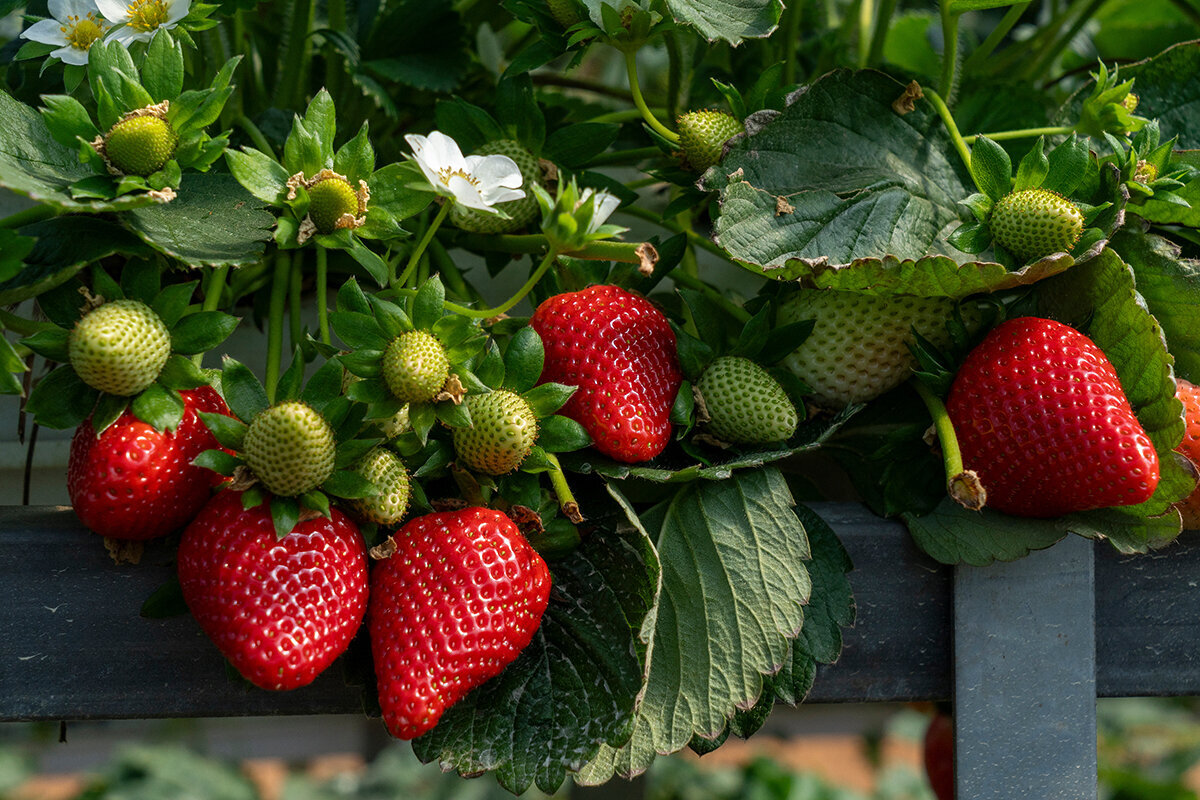
A greenhouse strawberry is not merely an early berry. It is a fragrant proof that light, air, water and timing have been held in a more exact balance.
01The greenhouse advantage
Precision is the luxury ingredient.
Strawberries repay attention in a particularly visible way. A crown planted a little too low may rot; a missed ventilating day can turn a room of white flowers into a gray-mold problem; a dry container can reduce fruit size before its leaves even look distressed. In open ground, weather often disguises these small errors. Under glass, the crop makes them legible—and gives the home gardener the means to correct them.
The reward is not simply an earlier harvest. Protected growing keeps rain off flowers and fruit, makes irrigation deliberate, and lets you organize plants at a comfortable picking height. A greenhouse also makes it easier to remove damaged fruit, check the undersides of leaves, and intervene before a minor issue becomes a crop-wide frustration. The plant remains seasonal rather than becoming a year-round houseplant, but a well-run greenhouse creates a gracious shoulder season before outdoor beds are fully awake and after they have lost momentum.
Start by treating a strawberry bay as its own microclimate. Give it bright light, a clear walkway, easy water access, and enough open volume around foliage for air to move. Avoid placing every pot tightly against glazing: plants near the edge can experience sharper temperature swings and dry faster than those at the center of the room. Before benches, irrigation and containers become permanent, Bloomcabin's greenhouse setup guide is useful reading.
For a dedicated picking room, the measured proportions and configurable ventilation of the Classic Aluminum Greenhouse make it straightforward to reserve one sunny side for fruit while retaining working space for propagation, potting and seasonal crops.
02Cultivar jewel case
Choose a fruiting rhythm before choosing a name.
A greenhouse is valuable space. Match the plant's production habit to the way you want to harvest, rather than collecting varieties at random. Begin with certified disease-free plants from a reputable nursery; clean starting material is one of the most effective pieces of disease prevention available to a home grower.
Variety names matter, but they matter after crop habit. Fruit flavor, firmness and tolerance for warm spells can vary locally, so trial two varieties before committing a whole bench. Keep plant tags and a short harvest note. A variety that tastes exceptional in your greenhouse deserves a place the following year.
For most home greenhouses, day-neutral plants are the composed, long-season choice. Add June-bearers only when a concentrated early-summer bowlful is the goal.
A short season
June-bearing
These form flower buds in the previous fall and deliver one abundant, concentrated crop in late spring or early summer. They suit jam, freezing and a celebratory harvest weekend. Their runners are part of the production system, so they are especially at home in a floor bed or raised bed where a matted row can be managed and renovated after harvest.
They can grow beautifully under glass, but their one-crop rhythm uses protected space differently from a long-season container planting. Choose them when you want a deliberate annual event and have room to manage runners, renovate plants and keep a narrow, open row.
The greenhouse favorite
Day-neutral
Day-neutral types flower and fruit whenever conditions are moderate rather than responding strongly to day length. Albion, Seascape, San Andreas, Monterey, Portola and Evie-II are among varieties commonly discussed for protected or extended-season systems. Select for flavor first, then observe how the plant handles your greenhouse heat, light levels and harvest schedule.
Remove runners so the plant spends its energy on flowers and fruit. In a home greenhouse, this habit is wonderfully practical: a few ripe berries every few days are easier to enjoy, inspect and cool than one brief glut. A shallow, evenly irrigated root zone and steady pollination will matter more than trying to force plants into fast growth.
Two pulses
Everbearing
Often described as producing an early crop and another toward fall, everbearing plants can be enjoyable in containers but are less predictable as a greenhouse centerpiece. Grow them if you already know and love a particular cultivar. Otherwise, day-neutral plants usually offer the clearer management plan for protected fruit, particularly when space is limited to one bench or a small group of troughs.
03A protected-crop calendar
Let local frost dates set the opening bell.
Across the United States, timing changes dramatically with elevation, latitude and whether the greenhouse is heated. Use your local last-frost date as the anchor, then observe temperatures inside your own structure. This is a management rhythm rather than a promise that every region shares the same month.
Late winterPrepareClean bay
Early springPlantSet crowns
Late springFlowerVent and pollinate
SummerPickWater and feed
FallRenewCull and sanitize
Late winter is for washing pots, checking vents and refreshing irrigation lines. In early spring, plant into cool bright conditions and protect container roots from hard freezes if the greenhouse is unheated. During bloom, open vents early, encourage pollinators and keep foliage dry. Through summer, harvest often, irrigate evenly and remove runners from day-neutral plants. In fall, decide which plants earn another season; compost weak, diseased or crowded plants, then clean the bay before winter.
04Crown, roots, restraint
The crown belongs exactly at the soil line.
The crown is the compact living center from which leaves, flower stems, runners and roots emerge. It is not a bulb and should not disappear under compost. The essential placement is simple: roots fully covered, active growth visible, crown centered at the surface of the growing medium.
Planting-depth cutaway
Too deep
Correct
Too high
Too deep: the crown remains wet and is prone to rot. Correct: the crown meets the surface while roots spread below. Too high: exposed roots dry quickly and the plant anchors poorly.
Before planting bare-root plants, rehydrate roots briefly in clean water while preparing holes wide enough to fan them out. Do not fold a long root system into a knot. Firm the mix around the roots, water thoroughly once to settle the medium, then recheck depth; settling often reveals a crown that needs lifting by a fraction of an inch.
Space most container plants about 10 to 12 inches apart. That distance is not an abstract recommendation: it gives enough room to water each root ball, reach fruit without crushing leaves, and let damp foliage dry after a humid night. In a trough, keep the row narrow enough to inspect from both sides.
- Use a sterile, free-draining potting mix rather than dense garden soil in pots.✦
- Keep fruit from touching wet soil, standing water or a debris-filled floor.✦
- Label the cultivar and planting date; greenhouse memory is unreliable by midsummer.✦
- Lift and replant immediately if an irrigation cycle exposes roots or buries the crown.✦
05The root-zone chapter
Moist, airy and never casually flooded.
Strawberry roots are shallow, with much of their activity close to the surface. That is why a plant can look leafy while its fruit is undersized: the upper root zone may be repeatedly drying and rewetting. In a greenhouse, containers warm and dry faster than outdoor beds, especially along glazing edges and on elevated benches.
Use a high-quality soilless mix with both water-holding capacity and drainage. A container at least 6 inches deep can work for compact systems, but a deeper trough or pot gives a steadier moisture reserve. Choose containers with generous drainage holes and do not rely on saucers that leave the root ball submerged. In a raised bed, make certain excess water has a path out of the bed.
Drip irrigation is the polished solution because it places water at the roots and keeps foliage and fruit drier. A moisture meter, a finger test several inches down, and the weight of a pot together make a better decision than a calendar. Water slowly enough for the root ball to absorb moisture, then allow a small amount of drainage rather than creating a permanently saturated container.
| Observe | Interpret | Refine |
|---|---|---|
| Top inch dry; pot feels light | Water before plants wilt | Apply slowly until a little drains; never leave roots standing in runoff. |
| Mix wet for days; leaves lack vigor | Drainage or frequency is excessive | Check emitter duration, container holes and the density of the mix. |
| Large leaves, few flowers | Often excess nitrogen or insufficient light | Use a balanced fertilizer at label rates; do not chase growth with extra feed. |
| Fruit shrinking in heat | Root-zone stress or hot air | Water earlier, vent sooner and shade only during peak heat. |
Feeding principle: let a soil test or the fertilizer label guide the program. Day-neutral plants fruit over a long period and need dependable nutrition, but more nitrogen is not a shortcut to better berries. It can create lush, crowded foliage that is harder to ventilate and more attractive to disease.
For layout ideas that make irrigation, drainage and access easier, revisit Bloomcabin's USA greenhouse setup guide before committing pipes or benches to one configuration.
06The green flowering room
A shapely berry begins with a fully pollinated flower.
Ventilate for flavor, then make pollination visible.
Strawberries are self-fertile, so you do not need a second cultivar for pollen compatibility. Yet each flower carries many individual stigmas, and each needs pollen for the berry to fill evenly. In an enclosed greenhouse, open doors and roof vents whenever weather allows, especially during bloom, so natural visitors can find the flowers.
Where pollinator access is limited, use a small soft brush to move pollen gently among open flowers every day or two during the dry middle of the day. An electric pollinator may also be used carefully. The goal is a light transfer of pollen, not rough handling. Misshapen fruit with a pointed or underdeveloped side often points back to incomplete pollination, though heat stress and pest damage can contribute too.
Ventilation is equally important. Growth slows in cold or excessive heat, and a sunny spring greenhouse can become hot much faster than the outdoor forecast suggests. Open vents early rather than waiting for the room to feel uncomfortable, run a gentle circulation fan if air is stagnant, and keep plants from forming a dense damp canopy. Review Bloomcabin's aluminum greenhouse product information when planning glazing and ventilation choices for a fruiting bay.
07Runner genealogy
Decide whether a runner is family—or competition.
Runners, also called stolons, carry young daughter plants away from the mother crown. In a June-bearing bed, they are how the planting fills out; selected daughters can be rooted to renew the row. In a day-neutral greenhouse system, they are usually competition for flowers and fruit. Remove them while small, before they claim water, light and energy.
If you want to propagate a favorite healthy June-bearer, root a well-placed daughter in a small pot of fresh mix while it remains attached to the mother. Once it has formed roots, sever the runner and grow it on separately. Do not use runners from weak or diseased plants; propagation can preserve pests and pathogens as faithfully as it preserves a good cultivar.
Mother plant to renewal
Mother
crown
crown
Runner
stolon
stolon
Remove
for fruit
for fruit
Root daughter
for renewal
for renewal
Day-neutral crop: remove runners promptly. Healthy June-bearing stock: root only the strongest daughter plants, then keep the new generation separate, clean and clearly labeled.
08A place for every berry
Design for clean fruit and an unhurried morning pick.
The best strawberry arrangement is the one you can water, inspect and harvest without kneeling into a thicket. Elevated containers offer excellent access and airflow, but they dry fastest. Floor beds are moisture-stable and visually lush, yet require a wider path and careful sanitation. A hybrid arrangement—one bench of day-neutral pots plus a small floor bed for June-bearers—is often the most versatile.
Leave enough aisle width to carry a watering can or harvest tray without brushing foliage. Put frequently harvested plants closest to the door. Keep the floor clear of fallen leaves and discarded fruit. For broader planning questions, Bloomcabin's aluminum greenhouse FAQ explains sizes, glazing choices and ventilation options that can influence the footprint of a growing area.
Bench pots
Flexible and clean
Raised bed
Stable root zone
Gutter or trough
Ergonomic picking
Floor bed
Runner-friendly rows
Bench pots suit quick replacement and automated drip. Raised beds provide a stable root zone but require drainage planning. Gutters and troughs create an easy picking height but need reliable supports and close moisture monitoring. Floor beds suit June-bearers and runner management when rows remain narrow, airy and simple to renovate.
09The cool diagnostic sheet
Read symptoms early, while choices are still gentle.
Gray, velvety fruit
Fine yellow stippling
Curled leaves, pale powder
Uneven or knobby berries
Gray, velvety fruitBotrytis gray mold often begins in flowers or near the calyx, then spreads on ripening fruit. Remove affected berries and spent blossoms promptly; increase air movement and avoid splashing water. Gray mold favors cool, humid conditions and plant debris.
Fine yellow stipplingCheck leaf undersides for spider mites, especially during warm dry periods. Stippling, scarring and bronzing are typical warning signs. Isolate badly infested plants and use the least-disruptive control appropriate for the issue.
Curled leaves, pale powderPowdery mildew can curl leaf edges upward and leave white growth, often below the leaf. It can thrive where humidity is high even if leaf surfaces are not wet. Thin crowded foliage and ventilate consistently.
Uneven or knobby berriesRevisit pollination first. Improve pollinator access or hand-pollinate open blossoms gently. Then check for heat stress, inconsistent watering and pest damage around flowers.
10Harvest salon
Pick when the berry is red to the shoulder, cool to the touch and unmistakably fragrant.
Strawberries do not become sweeter after picking. Let fruit remain on the plant until color reaches the shoulder and the berry has a clear fragrance. The finest time to pick is early morning, when fruit is cool and firm. A berry may deepen in color after harvest, but it will not gain meaningful sugar away from the plant.
Cradle the berry, then pinch or twist the stem above the calyx rather than pulling the fruit itself. Harvest every day or two in peak season. Frequent picking removes ripe fruit before it becomes a source of mold and gives you a close, recurring inspection of leaves, flowers and irrigation.
Not yetWhite shoulder
At its peakFull color + aroma
Past peakSoft or dull
White shoulder: wait, because sweetness will not materially improve off the plant. Full color and aroma: pick now, while the berry is firm enough to travel to the kitchen intact. Soft, leaking or dull fruit: use immediately or remove it from the plant and compost it if it is collapsing or moldy.
The storage rail
Cool quickly, wash late.
Set berries in a shallow container in a single or loose layer; crushing traps moisture and shortens their life. Refrigerate promptly, but do not wash before storage. Wash just before eating. Greenhouse berries harvested at their aromatic peak are best treated as a same-day luxury, even though properly cooled fruit may keep for several days.
Yield expectation: avoid promising a fixed number of pounds per plant. Cultivar, plant age, light, pollination, root volume, heat and your harvest interval all change the result. A small bay of healthy day-neutral plants is most rewarding when measured in repeated handfuls rather than one annual total.
11Quiet answers
Greenhouse strawberry FAQ
Can strawberries grow in an unheated greenhouse?
Yes. An unheated greenhouse is especially useful for extending spring and fall shoulder seasons, protecting plants from rain, and giving you a controlled place to manage watering and airflow. It does not make winter irrelevant: watch overnight temperatures, select varieties suited to your region, and provide additional protection or heat when freezing conditions threaten container roots.
How many strawberry plants fit in a home greenhouse?
Plan around access before maximum count. Day-neutral plants commonly need roughly 10 to 12 inches of space in containers or troughs, but leave clearance for air movement, watering and picking. Ten well-spaced plants with irrigation and circulation will usually outperform twenty crowded plants that remain damp and difficult to inspect.
Should I remove the first flowers?
For newly planted day-neutral strawberries, removing flowers for roughly four to six weeks can help crowns and roots establish before heavy fruiting. June-bearing plants are often managed more conservatively during establishment because their future crop depends on a strong crown. If you bought mature, actively fruiting plants for a short display season, use plant vigor as the guide rather than following a rule mechanically.
Why are greenhouse strawberries small but sweet?
Small fruit can be a cultivar trait, but it can also signal incomplete pollination, a dry root zone, excessive heat, too little light, crowded plants or a heavy crop on a young crown. Check pollination first, then water consistency and ventilation. Do not respond simply by applying more fertilizer.
How long should I keep greenhouse strawberry plants?
Day-neutral plants are frequently managed as annuals because first-season plants are highly productive and easier to keep clean. Container plants can decline after several seasons. Replace them earlier if crowns are weak, disease recurs, or the greenhouse bay has become crowded enough that routine sanitation and inspection are no longer simple.
12Sources & further reading
Notes from the field and the laboratory.
These extension and integrated-pest-management references informed the cultivation guidance in this article. Regional advice should take precedence when your state extension service offers a local recommendation.
- University of Maryland Extension — Growing Strawberries in a Home Garden
Crown depth, flowering, runner management, harvest and container renewal. - University of Minnesota Extension — Growing Strawberries in the Home Garden
Plant types, spacing, pollination and practical home-garden care. - University of Minnesota Extension — Day-Neutral Strawberries
Protected culture, varieties, temperature range and seasonal production. - University of Minnesota Extension — Irrigating Strawberries
Drip irrigation and consistent root-zone moisture. - University of Minnesota Extension — How Strawberry Plants Grow
Crown anatomy, shallow roots, runners and pollination. - Penn State Extension — Strawberry Disease: Gray Mold
Botrytis symptoms, humidity and sanitation. - UC IPM — Strawberry: Home and Landscape
Integrated approaches to common strawberry pests and diseases.
A Bloomcabin growing room
Reserve a strawberry bay.
Give the season's most anticipated fruit its own ordered corner: a bench of fragrant day-neutrals, a clean central path, a narrow irrigation line and roof vents ready before the first flowers open. The result is part kitchen garden, part conservatory ritual.
Explore the Classic Aluminum GreenhouseFor the broader collection and materials overview, explore Bloomcabin's aluminum greenhouses and conservatories.
