
How to grow watermelons in a greenhouse
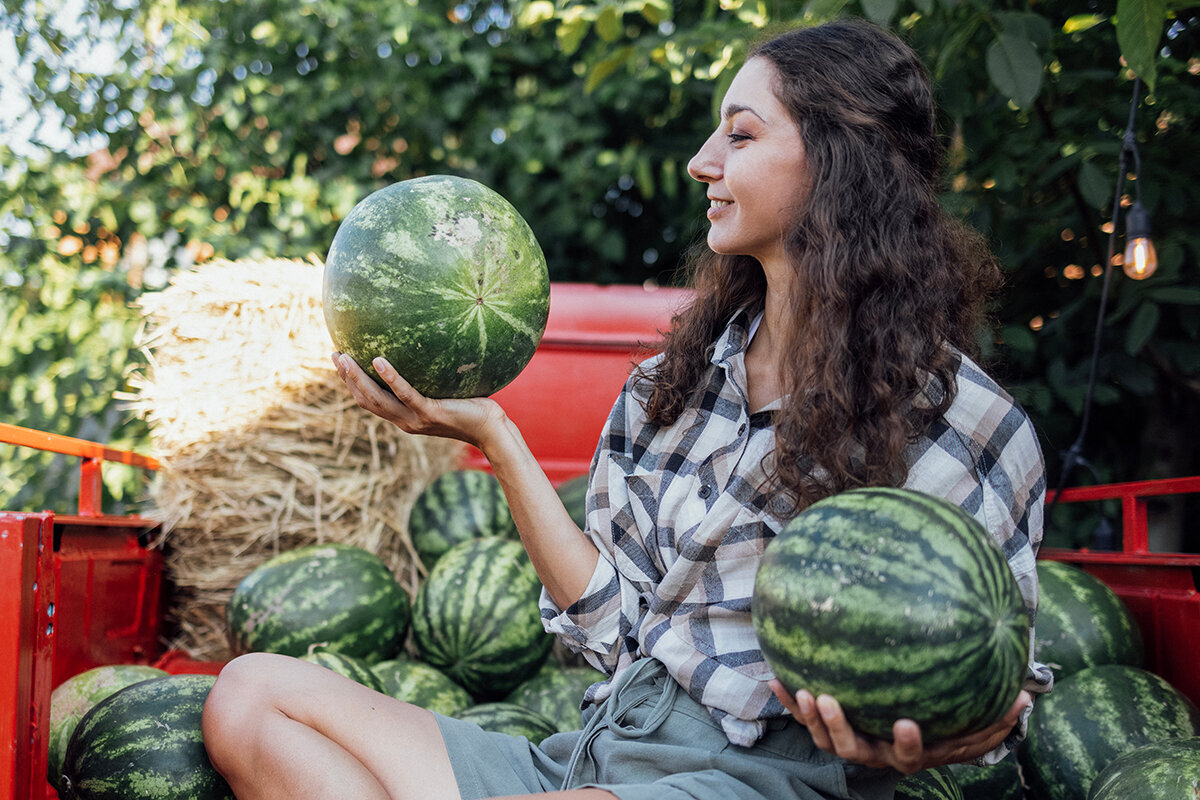
Bloomcabin field architecture / United States
How to grow watermelons in a greenhouse
Space. Heat. Support. A greenhouse watermelon is not simply a vine in warmer weather. It is a summer crop with a long reach, a heavy payload, and little tolerance for erratic water. Design the route before the plant takes the room.
1Serious vine per small greenhouse bay
The first decision is not variety. It is geometry.
Watermelon succeeds under glass when the greenhouse can carry its footprint: rooted bed, reachable fruit, open doors, working path, and enough clear air for foliage to dry after watering.
In a modest backyard greenhouse, one well-managed plant is often more productive than several plants forced into a tangle. Begin by reserving a real path and a dedicated vine route, then choose whether fruit will rest on the ground or hang from a purpose-built support. Browse the Bloomcabin greenhouse collection with interior circulation in mind, not only exterior dimensions.
For a warm-season crop that may occupy the house from late spring into late summer, a Classic Aluminum Greenhouse gives the clean rectangular planning logic that watermelons reward: long beds, an uninterrupted center route, roof ventilation, and a practical place to work around a developing fruit.
In the United States, the same greenhouse can solve very different problems depending on where it stands. A gardener in a short northern season may be capturing enough root-zone warmth to bring a melon through to maturity. In the Southwest, Gulf Coast, or a humid Mid-Atlantic summer, the greater challenge may be preventing heat buildup and keeping foliage dry. Treat the greenhouse as a controllable climate, not a promise of automatic summer conditions: monitor soil temperature, open ventilation early, and leave enough room to respond when the weather changes.
01 / Start with roots that have somewhere to go
Propagate briefly. Transplant deliberately.
01
Warm germination
Watermelon seed responds to warmth, not impatience. Sow individual seeds in roomy cells or 4-inch biodegradable pots with a free-draining mix. For dependable emergence, keep the medium warm; university guidance places best germination roughly between 70°F and 90°F. A heat mat is useful, but remove seedlings from intense bottom heat once they emerge.
02
Keep the young plant compact
Give strong light, moderate moisture, and enough spacing that leaves do not overlap. Watermelon transplants dislike root interruption and do not benefit from becoming large, viney plants in pots. The goal is a sturdy seedling with two or three true leaves, not a spectacular indoor specimen.
03
Wait for the bed, not the calendar
Set plants only when the greenhouse bed is reliably warm—at least 65°F at root depth is a useful threshold—and nights are no longer chilling the medium. In colder northern states, that may be substantially later than the first pleasant day. In hot regions, the same greenhouse may need ventilation and shade before a transplant needs extra heat.
02 / Ground culture or vertical culture?
Choose the load path before tying a single stem.
A watermelon vine can be directed, but it should never be treated as a weightless climbing plant. The decision is based on fruit size, available floor area, access, and the independently verified capacity of the support system—not on the desire to make a dramatic ceiling display.
A / Ground culture
Best for standard-size fruit and simpler structures
Allow the vine to travel low along a mulched bed or a clean floor-side run. Position each developing melon on a dry, insulating cradle such as a board, tile, or purpose-made support to reduce rot and prevent an uneven base.
- Choose this route for larger cultivars, uncertain overhead support, or first-time greenhouse growers.
- Plan about 5 to 6 feet of row direction per plant, then guide stems gently rather than sharply turning them.
- Keep fruit access clear; do not force yourself to step across vines to water or ventilate.
B / Vertical culture
Best for compact-fruited cultivars and engineered support
Train one principal leader up a separate trellis or tensioned crop-support system, then support every enlarging fruit with a broad sling. This can concentrate production beautifully, but only when the support is intended to transfer crop load safely.
- Select smaller-fruited or personal-size varieties whenever possible.
- Use a dedicated, rated trellis anchored to structural elements or independent posts—not glazing bars, roof vents, gutters, or decorative frame members.
- Leave room between foliage and glass so leaves do not scorch or trap stagnant humidity.
One-bay space budget
ROOT BED
CLEAR PATH
VINE LINE
FRUIT REACH
The greenhouse itself still needs to function. Watermelons are easiest to manage in a layout that protects a walking lane and lets both doors or vents be used without brushing foliage. Keep the bed deep, the path unobstructed, and the fruit within arm’s reach. Bloomcabin’s greenhouse setup guide is a useful companion when mapping beds, circulation, and irrigation before the season begins.
Measure from the practical working edge of the bed rather than from the greenhouse wall. A vine can be redirected; a blocked door, inaccessible drip connection, or melon hidden behind dense leaves creates a maintenance problem for weeks. If a proposed layout leaves no place to stand while you inspect fruit, pollinate flowers, or reach a vent handle, reduce the crop plan before planting.
03 / The sling laboratory
Fruit weight must travel through a designed support.
A developing watermelon can become heavy enough to tear a vine or distort an improvised support. A sling is not decoration. It spreads pressure over a broad area and transfers fruit weight back to a dependable tie point.
Make a cradle from wide, soft, quick-drying material: nylon mesh, old hosiery, shade-cloth offcuts, or purpose-made melon netting work well when clean and strong. Avoid narrow string, wire, or absorbent fabric that stays wet against the rind. Fit the sling while the fruit is still small, leave expansion room, and inspect its attachment each time you water.
For vertical crops, treat the stated strength of the greenhouse frame as separate from a fruit-support plan. Do not assume that an elegant roof member is a crop hanger. When in doubt, use ground culture or install independent interior posts and crossbars designed for the load.
Sling load path
FRUIT
WIDE SLING
RATED SUPPORT
Failure warning: Never attach a fruit sling to a roof vent, glazing bar, gutter, or a component not explicitly designed as a load-bearing crop support. Recheck knots, clips, and tension after rapid fruit expansion.
04 / Pollination is a handoff, not a hope
Identify the flower. Move fresh pollen. Then edit the crop.
Enclosure changes pollination. A greenhouse with wide-open doors may receive bee visits, but do not build the crop plan around that possibility. Watermelon has separate male and female flowers. The female flower carries a small, swollen miniature melon behind the petals; the male flower sits on a slender stem.
Morning01OPEN BLOOM
Identify02MALE FLOWER
Transfer03FRESH POLLEN
Confirm04FRUIT SWELLS
Check newly opened flowers early in the day, when pollen is fresh and female flowers are receptive. Pick a male flower or use a clean small brush to collect pollen from its center. Touch it to the center of a newly opened female flower, repeating with more than one male flower where available. Within several days, successful fruit begins to swell; a failed set usually yellows, stalls, or drops away.
Seedless note: Seedless watermelons still require pollination. They need compatible diploid pollenizer plants or a seed packet plan that includes them; a seedless plant on its own is not a complete fruit-setting system.
Allocation note: Once fruits are enlarging, choose the strongest, best-positioned fruit rather than trying to carry everything. For a vertically trained plant, one melon per plant is the cautious default. Exceptionally vigorous plants with clearly smaller-fruited varieties may carry more, but only if leaf area, support capacity, and irrigation are all keeping pace. Remove weak, badly shaped, or inconveniently placed fruit early and cleanly.
05 / Controlled water, not constant anxiety
Water in pulses that match the crop stage.
Watermelons use substantial water as canopy and fruit expand, yet their quality declines when roots repeatedly cycle from dry stress to saturation. A drip line is the calmest greenhouse tool here: it delivers water to soil rather than foliage, keeps paths drier, and makes changes easier to measure.
Check moisture below the mulch and several inches down rather than judging by a dusty surface. In sandy beds, smaller and more frequent applications may be needed. In heavier soil, slow down and allow air back into the root zone. Adjust for actual heat, plant size, and drainage rather than following one fixed daily runtime.
A simple rain gauge is of limited use inside a greenhouse, so make observation part of the irrigation system. Check an emitter at the beginning and far end of each line, especially after a filter cleanout or timer adjustment. Uneven delivery can look like a mysterious plant-health issue when one side of the bed is simply receiving less water. Record changes in runtime alongside notable heat events; this creates a more useful baseline for the next warm spell than watering by instinct alone.
Water demand by stage
Establishment
Even
Flowering
Steady
Fruit expansion
Highest
Final ripening
Measured
Do not create a drought-and-deluge cycle. Moisture stress around bloom can reduce fruit set and distort fruit. A sudden heavy watering when fruit is nearing maturity can encourage cracking, diluted flavor, and internal quality problems. Ease irrigation down only as the fruit approaches maturity; never let the plant collapse in an attempt to concentrate sweetness.
06 / Sun and storm management
Vent early. Shade judiciously. Keep leaves dry enough to work.
Watermelon enjoys heat, but a closed glasshouse can move beyond productive warmth very quickly. On clear days, open roof vents and doors before the interior becomes oppressive. If the greenhouse regularly surges into extreme heat, introduce shade cloth, increased cross-ventilation, and a morning inspection routine rather than relying on a late rescue.
Humidity is the quieter half of climate control. Dense leaves, wet floors, overhead watering, and closed evenings create a favorable environment for foliar disease. Water at the soil line, remove senescent leaves, keep fruit off wet surfaces, and use ventilation to clear damp air when outside conditions allow. Bloomcabin’s greenhouse FAQ outlines available roof-window and ventilation options that can support a more responsive growing environment.
During a heatwave, do not close the greenhouse simply because the crop is warm-season. Protecting the plant from a hot, stagnant interior matters more than preserving every degree of warmth. Conversely, a sudden cool, wet period can justify earlier door closure and a careful morning venting routine. The aim is not a perfectly fixed temperature; it is a stable enough root and leaf environment for growth, pollination, and ripening to continue without major swings.
Field manual / diagnose before reacting
Leaves wilt at midday, recover by eveningCheck root-zone moisture and greenhouse temperature first. Hot, dry air can outpace uptake; do not automatically add fertilizer.
Flowers drop or tiny fruit abortsLook for poor pollination, water stress, excessive heat, or overfeeding with nitrogen. Hand-pollinate in the morning and review conditions over several days.
White dusty patches on leavesSuspect powdery mildew. Improve airflow, remove badly affected tissue, avoid wet foliage, and use only disease controls labeled for edible cucurbits in your state.
Chewed leaves, beetles, or sticky new growthInspect undersides of leaves and flower areas. Cucumber beetles and aphids can transmit disease as well as cause direct damage; use physical removal and locally appropriate integrated pest management measures.
Fruit splits or shows a watery internal textureReview irrigation consistency and nitrogen. Rapid growth swings late in development are a more likely culprit than a lack of enthusiasm from the vine.
07 / Harvest evidence, not folklore
Use several signals. Reject the one-test verdict.
Watermelon does not reliably become sweeter after harvest. Mark the pollination date when you hand-pollinate; many varieties mature about five to six weeks later, but temperature, cultivar, and plant health all change the schedule. Inspect fruit repeatedly as that window approaches.
Useful clue
Nearest tendril
Compare
Rind finish
Ground-grown
Field spot
Never alone
Sound
Nearest tendril: The tendril nearest the fruit stem often changes from green to brown and dry as the melon matures. It is a helpful clue, but stress can dry tendrils early.
Rind finish: A ripe fruit commonly loses a hard gloss and develops a more muted finish. Compare it with younger fruit on the same plant rather than judging by memory.
Field spot: For fruit resting on the bed, the underside should progress from whitish to creamy yellow. A suspended fruit has no meaningful ground spot, so do not force this test onto trellised crops.
Sound: A duller, deeper sound may support the diagnosis, but thumping is not an infallible ripeness test. Use it only alongside time from pollination, tendril condition, and rind appearance.
Harvest cleanly: Cut the stem with pruners rather than twisting the fruit free. Handle the rind gently; bruises shorten keeping quality. Keep harvested melons out of direct sun, and refrigerate cut fruit promptly. Whole fruit is best enjoyed soon after picking rather than stored as though it were a winter squash.
Blueprint appendix
Watermelon greenhouse FAQ
What is the best watermelon variety for a greenhouse?+
Choose according to your support plan. Personal-size and compact-fruited cultivars are the most practical candidates for vertical culture. Standard or larger melons are generally safer on the ground, where the vine and fruit can rest without asking an overhead system to carry a substantial load.
How many watermelon plants can fit in a backyard greenhouse?+
It depends on bed length, access, and training method, but fewer plants are usually better. A small greenhouse may be most functional with one serious watermelon vine, especially if it is being trellised. Never sacrifice the working path or ventilation zone just to add another plant.
Do I need to hand-pollinate greenhouse watermelons?+
It is wise to do so unless you regularly observe reliable bee activity inside the greenhouse. Transfer fresh pollen from a male flower to a newly opened female flower in the morning. Seedless varieties also need compatible pollenizer plants nearby.
Can I hang watermelons from my greenhouse roof?+
Only if a separate support system has been designed and anchored for the expected crop load. Do not hang fruit from roof vents, glazing bars, gutters, or frame members unless the manufacturer explicitly confirms that use. Ground culture remains an excellent and lower-risk choice.
Why are my watermelons not sweet?+
Flavor depends on adequate light, warmth, leaf health, and consistent water. Cold roots, disease, excessive shading, severe water stress, or repeated late flooding can all reduce quality. Harvesting too early is also common, which is why several maturity signals should be used together.
Should I prune watermelon vines in a greenhouse?+
Prune with restraint. Remove damaged, diseased, or badly placed growth and direct vines into the route you planned. Severe routine pruning can reduce leaf area, which is the machinery producing sugars for the fruit. Crop allocation is often more important than aggressive vine removal.
Sources & further reading
Research behind the growing plan
These extension resources informed the temperature, pollination, irrigation, training, pest, and maturity guidance in this article. Conditions, cultivar behavior, and pesticide rules vary by state, so use your local Extension service for regional recommendations.
- University of Minnesota Extension — Growing melons in the home garden
- University of Maryland Extension — Growing melons in a home garden
- Oklahoma State University Extension — Watermelon production
- Utah State University Extension — How to grow watermelon in your garden
- University of Minnesota Extension — Fruits and vegetables that require pollination
- Utah State University Extension — High tunnels
A better watermelon season begins before seed sowing
Plan the structure before the vine takes the room.
Give the crop a true bed, a clear path, dependable ventilation, and a support strategy that respects fruit weight. The result is not simply more growing space—it is a calmer, more manageable summer greenhouse.
Explore the Classic Aluminum GreenhouseWhen choosing a configuration, prioritize usable bed area, ridge height, doors that preserve access, roof ventilation, and the ability to add shade or climate-supporting accessories as your growing ambitions expand.
