
How to Recognize a High-Quality Aluminum Pergola: 12 Features
Pergola Buying Report
How to Spot a High-Quality Aluminum Pergola
An aluminum pergola can look convincing in a product photo yet reveal important differences once you examine its structure, moving parts, water management, and installation details. This guide turns those details into clear questions you can use before choosing a design.
Quick Answer: What Signals Real Pergola Quality?
High quality aluminum pergola features are easiest to recognize when you inspect the complete system: substantial-looking frame sections, purposeful connections, a roof mechanism that is clearly explained, planned water paths, and a finish suited to outdoor exposure. The product description should help you understand how it is assembled rather than relying only on lifestyle imagery.
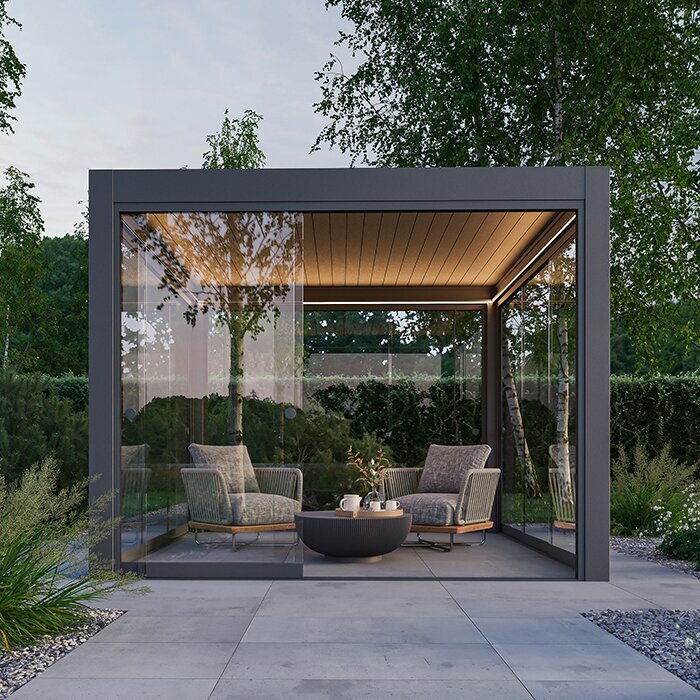
A premium-looking result also comes from fit and proportion. Posts should sit comfortably within the patio layout, roof components should appear integrated rather than added on, and serviceable parts should not be impossible to reach. Compare like for like: a regular fixed-roof pergola and a bioclimatic louvered design answer different outdoor-living needs.
01
Frame logic
Look for an intelligible load path from roof members through posts to the anchoring surface, with no unexplained decorative pieces doing structural work.
02
Water strategy
Ask where rain is collected, directed, and discharged, and how that route relates to doors, walkways, planting beds, and the finished patio level.
03
Ownership detail
Examine cleaning access, visible hardware, operating instructions, replacement-part availability, and the clarity of installation documentation before treating appearance as the deciding factor.
A practical inspection guide for comparing construction, roof design, drainage, finish, and day-to-day ownership.
Quality is not one visible feature; it is the way the frame, roof, fasteners, drainage, finish, and installation method work together. A well-considered pergola should feel coherent rather than overbuilt in one area and vague in another. Start by looking beyond overall dimensions and color, then ask how each component is supported, protected, accessed, and maintained over time.
For US homeowners, the right choice also depends on the site. A freestanding structure in an open yard faces different exposure, anchoring, and drainage questions than a pergola near a house or patio. Your local climate, surface condition, intended use, and municipal requirements all influence what constitutes an appropriate specification for your project.
Use this article as a comparison framework, not as a substitute for a site-specific review. Request clear product information, inspect drawings and finish samples where possible, and discuss installation assumptions before committing. When permits, setbacks, structural attachment, electrical additions, or insurance are relevant, confirm the details with the appropriate local authority, qualified installer, or insurer.
Inspection 01 · Feature 1–2
Read the Frame Before the Finish
Begin with the main frame because it establishes the pergola’s visual calm and practical credibility. Look at the relationship between beams, posts, and roof perimeter: the parts should read as a coordinated system, not as unrelated profiles placed together. Clean lines alone are not proof of quality, but inconsistent proportions, abrupt transitions, or vague support details are reasons to ask more questions before you compare colors or accessories.
Ask for dimensioned drawings that show the footprint, post positions, beam direction, and anchoring assumptions. This lets you test whether circulation, furniture, steps, and doors will still work around the structure. A capable supplier should be able to explain which components carry the roof, what is included in the frame package, and what the installation surface must provide. Avoid treating a rendering as a substitute for this basic review.
- Check whether post locations leave usable paths around dining chairs, grills, planters, and exterior doors rather than creating awkward pinch points.
- Compare the stated overall size with the clear covered area, since perimeter beams and posts influence the practical usable footprint.
For an adjustable-roof option, explore bioclimatic aluminum pergolas with the same attention to frame layout and support points.
Inspection 02 · Feature 3
Inspect Posts, Bases, and Anchoring
Posts do more than create the silhouette. They transfer forces to the ground and determine how naturally the pergola meets the patio. Examine base plates, trim pieces, and the proposed fixing approach rather than assuming they disappear after installation. A tidy base detail should still allow the installer to make secure connections appropriate to the substrate and should not conceal unanswered questions about drainage, leveling, or edge clearance.
The existing surface matters as much as the visible post. Concrete, pavers, decking, and newly planned terraces each require different site assessment and preparation. Share photographs, measurements, and information about what lies beneath the finished surface with the installer. If the project sits near a retaining wall, pool edge, utility route, or sloped grade, seek site-specific advice early. Do not assume a patio that supports furniture automatically suits a structural installation.
- Ask who verifies the substrate, levels the frame, and determines the fixing method before the crew arrives on site.
- Check that base details can be cleaned around and do not trap leaves, mulch, or standing water against the posts.
If a fixed-cover format suits your patio, compare regular aluminum pergolas by their post placement and anchoring details.
Inspection 03 · Feature 4
Understand the Louvered Roof System
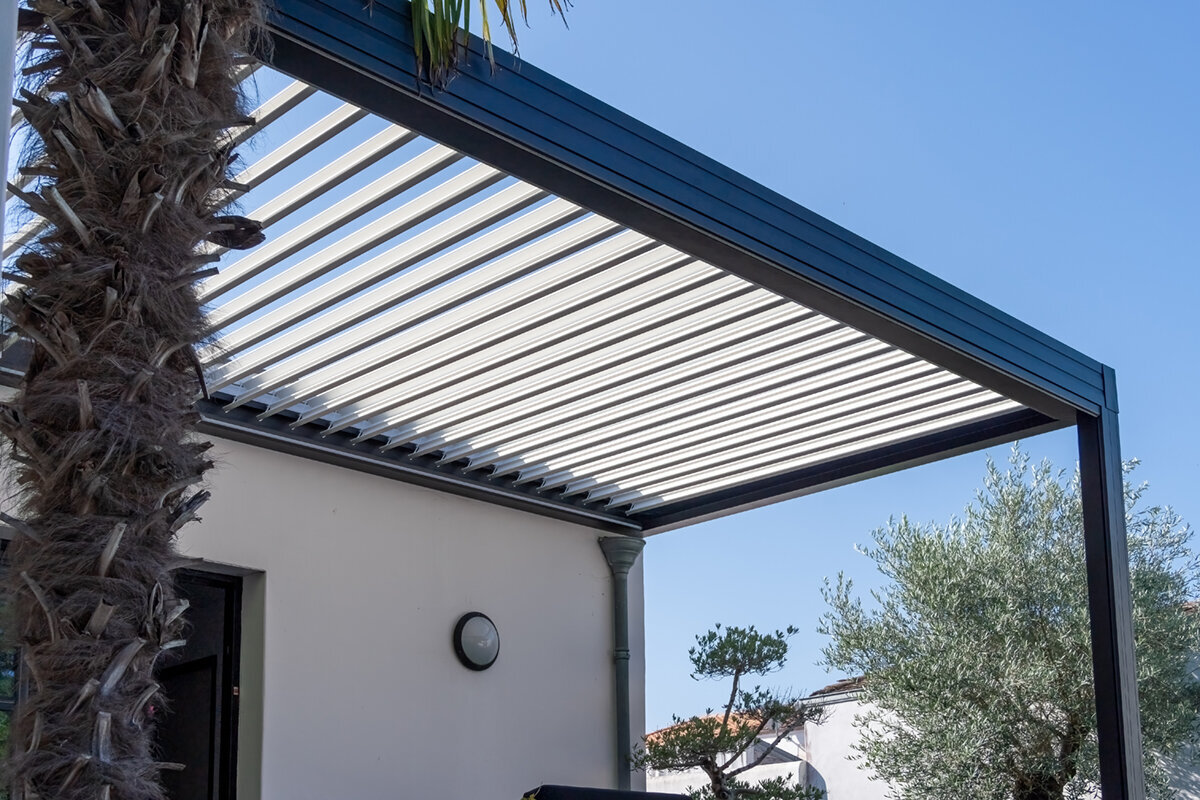
On a bioclimatic model, the roof is a central quality test. Ask how the louvers align when closed, how their edges meet, and how the system is operated. The answer should distinguish between the roof’s visual design and its actual moving components. Look for consistent spacing, a clean perimeter, and a straightforward explanation of normal use, cleaning, and what should be done before severe weather.
Do not judge a louvered roof only while it is open in a showroom image. Consider how the roof appears from inside the house, from the garden, and while seated beneath it. Think through the orientation of sun during the times you use the space most. A good design supports useful adjustment, but it should also fit your furniture plan, lighting ambitions, and expectations for shade without adding unnecessary complexity.
- Operate a display unit if possible, listening for smooth, controlled movement and watching whether louvers finish in an even position.
- Ask how roof components are accessed for routine cleaning, seasonal inspection, and any service work that may eventually be required.
See how bioclimatic pergola roof systems can shape shade and overhead character on a well-planned terrace.
Inspection 04 · Feature 5
Follow the Water Management Path
Drainage deserves close scrutiny because it affects comfort, maintenance, and the condition of nearby surfaces. A quality pergola design should make it easy to understand where water lands on the roof, how it reaches collection channels, and where it exits. Ask for the intended discharge points on a plan. This is more useful than a general claim that the roof includes drainage, especially beside thresholds, narrow side yards, or low spots in paving.
Consider the full site route after water leaves the structure. It should not be assumed that the patio, garden bed, or existing downspout can accept additional runoff without assessment. Discuss finished grades, splash areas, and any connection work with the relevant professional. Keep leaves and debris in mind too: a drainage arrangement is only as practical as its ability to be inspected and kept clear as part of normal outdoor upkeep.
- Locate discharge points before selecting post positions, particularly near pathways, entrances, seating areas, and neighboring property boundaries.
- Ask what routine cleaning is expected and whether channels, outlets, and accessible roof edges can be visually checked safely.
When comparing simpler roof forms, review traditional pergola drainage details alongside the overall patio drainage plan.
Inspection 05 · Feature 6–7
Look Closely at Connections and Hardware
Connections reveal whether a pergola has been resolved as a system. Inspect beam-to-post junctions, roof-edge corners, and any visible covers or fasteners. Well-finished components should meet neatly, but the key question is functional: can the connection be installed accurately, checked when needed, and protected from routine exposure? Decorative caps are welcome when they complete a detail, not when they make it impossible to understand what lies underneath.
Hardware selection should be discussed in context. Outdoor fasteners, brackets, seals, and trims face moisture, temperature shifts, cleaning, and occasional impact from everyday use. Ask which hardware remains visible, where adjustment is possible, and how installers protect finished surfaces while assembling the structure. Clear instructions and orderly component labeling are positive signs because installation quality depends on more than the pieces supplied in the box.
- Review close-up images or samples of corners and bases, not only wide-angle photographs that hide joints and fasteners.
- Ask whether trim pieces are removable for inspection and how replacement components are identified if future service becomes necessary.
For movable-roof construction, examine bioclimatic pergola connection details as carefully as the louvers themselves.
Inspection 06 · Feature 8–9
Assess the Aluminum Finish Honestly
A durable-looking finish starts with realistic expectations. Aluminum is valued for outdoor use, but every exterior surface benefits from regular care and a design that avoids persistent debris and moisture traps. View finish samples in daylight if you can, because color, texture, and sheen can change across a large structure. Compare the pergola with siding, window frames, decking, and landscape materials rather than choosing from a small swatch alone.
Ask how to clean the frame and what everyday contact might affect its appearance. Nearby trees, irrigation, grill smoke, salty air, pollen, and construction dust all shape the maintenance routine. The most suitable color is often one that complements the home while making normal dust and water marks less distracting. Do not rely on a computer render to judge surface texture or the appearance of joints in direct sun.
- Inspect samples against the home’s exterior at different times of day, including bright afternoon light and overcast conditions.
- Confirm recommended cleaning products and methods, then decide whether you can comfortably reach the surfaces requiring regular attention.
For a straightforward outdoor structure, browse regular pergola frame finishes in colors that work with your home and hardscaping.
Inspection 07 · Feature 10–11
Test Everyday Comfort and Usability
The strongest buying decision comes from imagining ordinary use, not just a special occasion. Map your dining table, lounge seating, grill clearance, pathways, and storage needs beneath the proposed roof. Check sightlines from key rooms and consider whether posts interrupt a favorite view. A high-quality pergola supports the way you already live outdoors while creating a clearer room-like zone, rather than forcing furniture into impractical positions.
Accessories and additions should be considered as part of the initial layout. Lighting, screens, heaters, fans, power, and side protection can affect clearances, wiring routes, maintenance access, and the visual balance of the structure. Decide what is essential now and what you may add later, then verify compatibility directly with the supplier. Electrical work should be planned and completed in accordance with applicable local requirements by an appropriately qualified professional.
- Use tape or temporary markers on the patio to test post positions, furniture movement, door swing, and circulation before ordering.
- List every planned accessory and ask how it affects the frame, roof operation, electrical planning, and future access.
For flexible light and airflow control, consider bioclimatic pergola outdoor living layouts that begin with how you use the patio.
Inspection 08 · Feature 12
Demand a Complete Project Picture
A quality product evaluation ends with a quality project process. Your quotation and drawings should make clear what is included, what site work remains separate, and which decisions must be confirmed before installation. Compare proposals at the same scope: dimensions, roof type, finish, anchoring, drainage direction, accessories, and installation assumptions. An unusually short description makes meaningful comparison difficult, even if the headline product looks similar.
Finally, ask who is responsible for each handoff, from measurement through site preparation and final cleanup. Keep copies of approved drawings, operating guidance, care instructions, and written product terms. If your project may involve a permit, homeowners association review, property-line consideration, or insurance question, verify requirements with the relevant authority or organization before work starts. Thoughtful planning protects the design intent as well as the investment.
- Request a line-by-line scope review so exclusions, owner responsibilities, finish selections, and accessory choices are understood before approval.
- Keep the final document set available for future maintenance, remodeling decisions, insurance discussions, and questions from subsequent property owners.
Start with regular pergola planning options when you want to compare a clear fixed-roof concept with your site needs.
Comparison
Quality Review: Fixed Roof or Bioclimatic Roof?
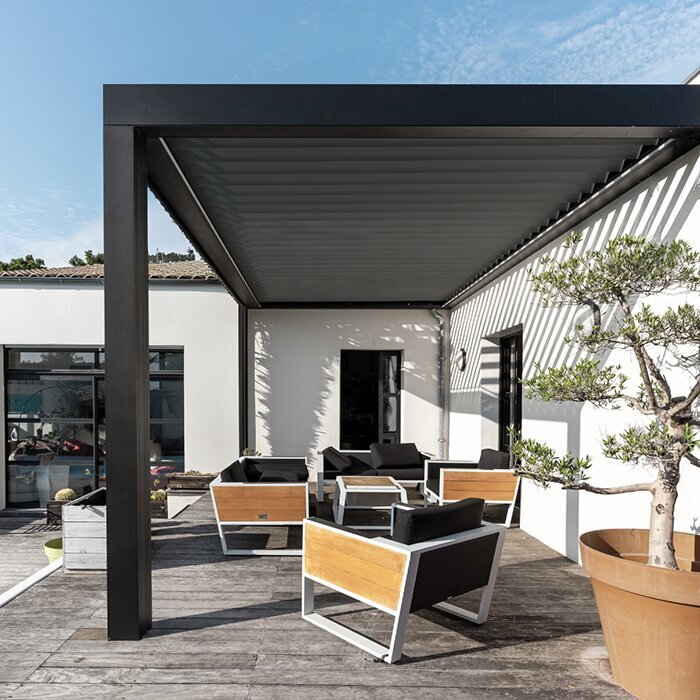
Neither format is automatically superior; the right choice depends on how you use the patio and which details you can verify. This comparison helps separate product type from product quality, so you can ask focused questions about the frame, roof, drainage, and ongoing care.
| Inspection point | Regular aluminum pergola | Bioclimatic aluminum pergola |
|---|---|---|
| Roof approach | Fixed overhead design with simpler visual planning. | Adjustable louvered roof requiring clear operating guidance. |
| Key inspection focus | Frame proportions, cover integration, and water direction. | Louver alignment, movement, seals, and water routing. |
| Daily use | Suited to a defined, consistent covered setting. | Suited to owners wanting adjustable overhead conditions. |
| Maintenance review | Check accessible roof surfaces, gutters, and fasteners. | Check cleaning access around louvers, channels, and mechanisms. |
| Planning priority | Coordinate footprint, posts, and patio drainage early. | Also consider orientation and operational clearance around the roof. |
A Five-Step Quality Review Before You Buy
Use this sequence when comparing models or discussing a proposal. It moves from your site and routine to technical questions, helping you identify missing information before a design choice becomes difficult to change.
01
Map the patio
Measure the intended zone, note doors, steps, grade changes, and existing utilities, then mark likely post locations with painter’s tape or stakes.
02
Define real use
List how many people use the area, where furniture belongs, when sunlight is strongest, and which additions, such as lighting or screens, matter.
03
Request drawings
Review a scaled layout showing dimensions, posts, beams, roof direction, drainage discharge, and every accessory included in the proposed scope.
04
Inspect component details
Ask for close views or samples of corners, bases, louvers, trims, finish colors, and hardware so you can assess construction beyond promotional imagery.
05
Confirm responsibilities
Clarify site preparation, anchoring assessment, electrical coordination, permits, and cleanup, then retain written guidance for operation and ongoing care.
12 Features to Check on Any Aluminum Pergola
Take this list to a showroom appointment or use it while comparing specifications. Each item points to a detail that affects appearance, installation clarity, maintenance, or practical use.
01. 1. Frame members appear proportioned as a coordinated system, with a clear path from roof to posts and foundations.
02. 2. Post locations preserve comfortable circulation, door clearance, furniture movement, views, and usable edges around the patio.
03. 3. Base plates and anchoring assumptions are explained for your actual surface, grade, and nearby site constraints.
04. 4. Roof type is clearly identified, with understandable information about fixed components or louver operation and care.
05. 5. Louvered models show even alignment, sensible perimeter detailing, and accessible areas for cleaning and service.
06. 6. Drainage collection and discharge points are identified before installation, not left as an undefined site decision.
07. 7. Corners, beam junctions, trims, and visible hardware look orderly while remaining understandable and reasonably inspectable.
08. Finish samples have been viewed outdoors beside the home, considering sunlight, landscaping, and ordinary cleaning needs.
Frequently Asked Questions
What is the first sign of a high-quality aluminum pergola?
Start with the complete structural layout rather than a single premium-looking detail. You should be able to identify the posts, main beams, roof perimeter, bases, and proposed anchoring approach from drawings or a clear explanation. If the system’s basic support logic is unclear, ask for more information before focusing on color or accessories.
Is a thicker-looking frame always better?
Not necessarily. Visual bulk does not tell you how a particular frame is engineered, anchored, or suited to its intended configuration. A better approach is to review the whole system, including connections, roof type, site conditions, installation requirements, and documentation. Compare proposals with matching dimensions and scope rather than judging a single profile in isolation.
How should I evaluate pergola drainage?
Ask for a simple explanation of the water path: where it is collected, how it travels through the structure, and where it exits at ground level. Then assess that point against your doors, paving, planting, grade, and existing drainage. A local installer or site professional can advise where site conditions require further review.
Do I need to consider permits before selecting a pergola?
It is wise to check early because requirements can vary by location, property conditions, dimensions, placement, and whether the structure is attached or includes electrical work. Contact your relevant local authority and, where applicable, your homeowners association. Do not assume a neighbor’s project or an online example establishes what applies to your property.
What maintenance questions should I ask?
Ask how to clean the aluminum surfaces, clear drainage areas, access the roof, and inspect visible connections. For a louvered design, also ask about normal operation and service access. Request the written care guidance and keep it with your project records, so routine tasks are understood from the beginning.
Can a quote help me compare quality?
Yes, provided it is detailed enough. Look for the exact model or roof type, dimensions, finish, accessories, anchoring assumptions, drainage direction, installation scope, and exclusions. A lower or higher total alone does not explain quality. Ask suppliers to clarify missing line items so you are comparing equivalent project scopes.
Explore Pergola Options
Quality Is a System, Not a Surface
The best aluminum pergola for your home is one whose design holds up under close inspection: frame, posts, roof, water management, connections, finish, and installation planning should all make sense together. Use the 12 features as a disciplined way to move beyond broad claims and assess what will shape your patio every day.
Bring your site measurements, photos, and outdoor-living priorities into the conversation early. Bloomcabin can help you explore pergola formats, but the most confident choice comes from matching a clearly documented product scope to your property, local planning context, and long-term maintenance expectations.
Compare roof styles and layout ideas, then build your questions around the details that matter on your own patio.
