
Is a Greenhouse Worth It in a Shaded or Partly Shaded Garden?
Greenhouse Planning
Quick answer: when shade still works
Yes, a greenhouse can be worth buying for a shaded or partly shaded garden, particularly when the site has bright ambient light or several hours of sun at useful times of day. It is best approached as a controlled garden workspace and a home for shade-tolerant or cool-season plants, not as a substitute for a full-sun vegetable plot.
The most promising sites usually avoid deep, all-day shade and gain light from open sky. Before choosing size or style, map sun and shadows across the growing season. That simple exercise helps you place the structure where it receives the most dependable light without creating access, drainage, or tree-maintenance problems.
01
Worth considering
Part shade can support seed starting, leafy crops, herbs, container plants, and sheltered gardening when expectations match the available light.
02
Proceed carefully
Dense shade from buildings or evergreen trees can make temperatures, growth, and plant selection harder to manage, especially outside summer.
03
Choose by use
Let your intended crops, daily access, and the garden’s brightest practical area guide the greenhouse format and internal layout.
A shaded garden can still make room for a thoughtful greenhouse.
Many gardens have imperfect light: mature trees, neighboring homes, fences, and covered patios can all limit direct sun. That does not mean a greenhouse has no role. It does mean that the usual expectation of a warm, sun-drenched growing space needs adjusting. In a partly shaded setting, the right greenhouse can become a useful place for starting plants, growing cool-season crops, and enjoying protected garden time.
Start by looking beyond a simple sunny-or-shady label. A site that receives gentle morning sun and bright light for much of the day behaves very differently from one enclosed by dense evergreens. Seasonal changes matter too. Deciduous trees may allow far more light in early spring than they do in midsummer, while a low winter sun can be blocked by buildings that seem distant in July.
Buying decisions should follow the garden rather than fight it. Think about light, access, drainage, nearby trees, and what you genuinely want to grow. A greenhouse may be worthwhile even with limited direct sun if it supports your gardening habits, but it is less likely to meet expectations centered on heat-loving summer crops throughout the season.
01 · Light assessment
Measure daylight before judging the site
A greenhouse changes the growing environment, but it cannot create sunlight where none reaches the garden. Spend several clear and overcast days observing the proposed area, noting when direct sun begins and ends, where shadows move, and whether the sky remains visibly open. Bright reflected light can be useful, yet it is not equivalent to direct sun for plants that need warmth and high light levels.
Repeat the check at different times of year if possible. Spring and fall are especially revealing because lower sun angles lengthen shadows from houses, sheds, and fences. Take photos from the proposed footprint in the morning, around midday, and late afternoon. They make it easier to compare locations and avoid relying on a single pleasant afternoon when the garden happens to look bright. Keep a simple light log rather than relying on impressions. Note direct sun, bright indirect light, and periods when nearby surfaces or structures make the area noticeably dimmer.
Mark sun and shade at regular intervals rather than estimating from memory after one day outdoors.
Notice whether branches, rooflines, or fences block low-angle light during early spring and fall.
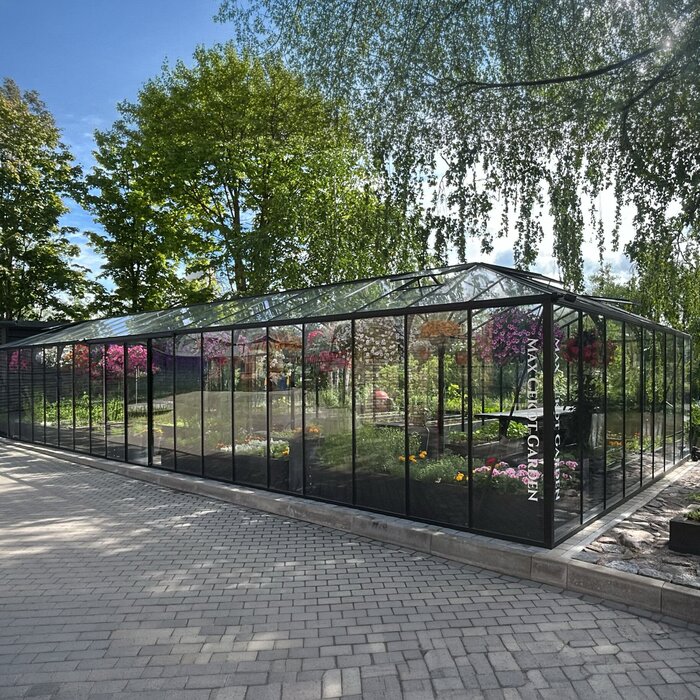
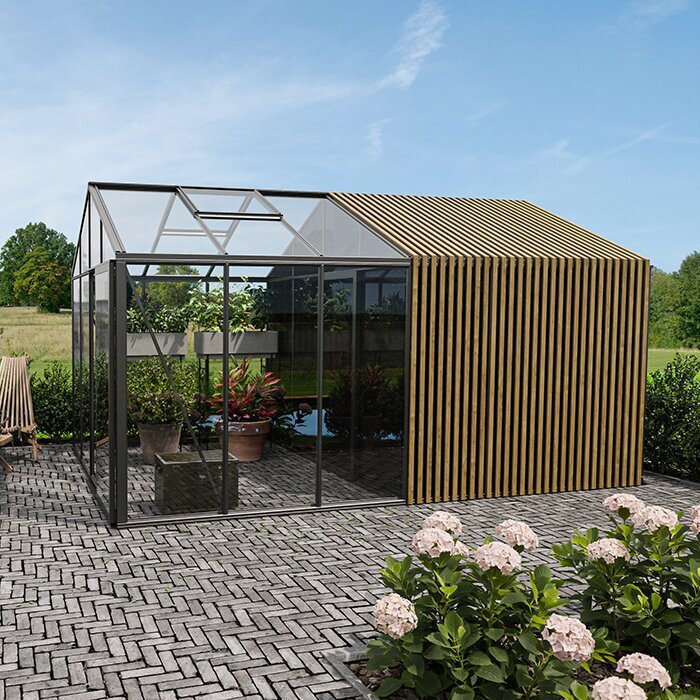
For gardeners comparing freestanding locations, explore a standard Classic greenhouse for open garden sites and assess it in the brightest practical part of the yard.
02 · Part shade
Understand the difference between part shade and deep shade
Part shade usually means a garden receives some direct sun but not continuously through the day. Morning sun with afternoon shade is often easier to work with than a site that stays dim until late afternoon, because plants can warm gradually and foliage dries earlier. Dappled shade beneath a high deciduous canopy can also be more workable than the heavy shade cast by an evergreen screen.
Deep shade is a different proposition. If walls, dense trees, or close buildings substantially restrict both direct light and open sky, a greenhouse may remain cool and dim for long stretches. That can still suit storage, potting, or a limited collection of shade-loving plants, but it is important not to buy with expectations built around prolific tomatoes, peppers, or other high-light summer crops.
Morning light is generally useful for warming the space after cooler nights and drying condensation on leaves.
A broad view of open sky often matters more than a brief, intense patch of late-day sun.
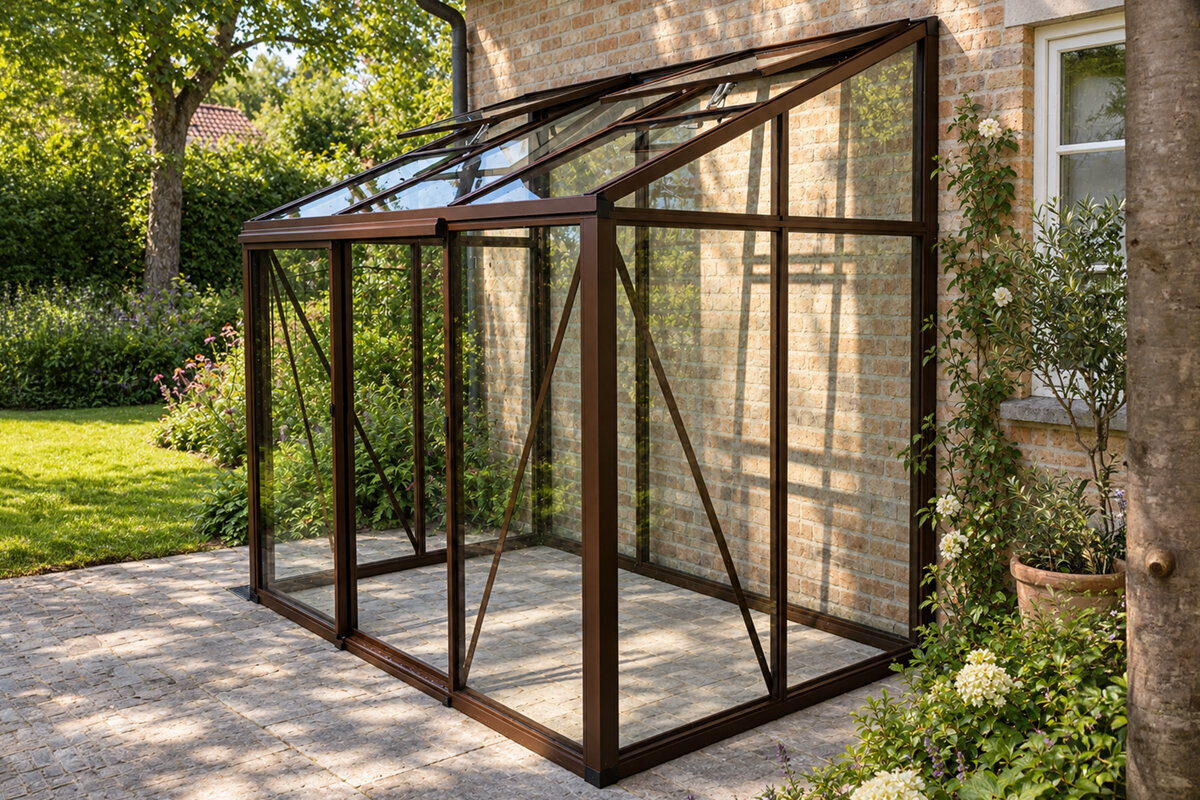
Where a sunny wall creates the clearest opportunity, consider a full-size regular Lean-To greenhouse beside a bright wall while checking that the wall does not cast persistent seasonal shade.
03 · Site choice
Find the brightest practical footprint
The ideal position is rarely the absolute brightest point if that spot is too exposed, difficult to reach, or needed for everyday outdoor living. Look for a compromise with good daylight, convenient water access, and a route you will use in wet weather. A greenhouse placed near the kitchen or back door often earns more use than one hidden at the far end of the yard, provided the light is adequate.
Keep clear of places where falling branches, leaf litter, or aggressive roots create ongoing work. Trees can shade a structure more than expected as they grow, and dripping sap or repeated debris can make glazing harder to keep clean. Leave enough room around the greenhouse to clean panels, manage planting beds, and maintain gutters or surrounding surfaces without squeezing through a narrow gap. Light can vary across a single wall-side footprint. Check the proposed roofline and growing area separately, since overhangs and nearby fences may affect them differently through the day.
Compare two or three possible footprints before committing; small shifts can noticeably improve available light.
Favor a location with clear walking access for soil, pots, harvested crops, and routine cleaning.
A freestanding structure can help you claim an open patch, such as a standard Classic greenhouse in a brighter border positioned away from the garden’s densest canopy.
04 · Building shade
Use walls thoughtfully, not automatically
A wall-adjacent greenhouse can be a sensible response to a compact or partly shaded garden, but the wall itself needs close evaluation. Its orientation, height, windows, roof overhangs, and neighboring structures all affect light. A wall that catches gentle sun and reflects daylight may be helpful; one that remains in the shadow of a taller house for much of the day may limit the benefit of the location.
Think about day-to-day conditions as well as brightness. A nearby door can make watering and tending easier, while runoff, downpipes, or tight passages may complicate the installation area. Observe how rain moves across the ground and whether the base location stays firm. For any structure near a home, confirm local planning requirements and discuss the proposal with the relevant authority when needed.
Check wall shadows during the seasons when you most want to sow and grow, not only in midsummer.
Allow space for safe access, cleaning, and rainwater management around the proposed installation area.
For a compact garden edge, a full-size regular Lean-To greenhouse for wall-side growing can be evaluated alongside the wall’s actual daylight pattern and site clearances.
05 · Growing goals
Match crops to the light you can offer
A shaded greenhouse can be genuinely productive when its planting list follows the conditions. Leafy greens, many salad crops, parsley, cilantro, chives, mint in containers, and young plants often cope with lower light better than fruiting crops. The space may be especially welcome for extending cool-weather gardening, sheltering starts from harsh weather, and giving container plants a more manageable place to grow.
Crops grown for fruit generally demand more light and warmth. Tomatoes, peppers, eggplants, melons, and cucumbers may grow slowly or yield modestly when the greenhouse is heavily shaded. That does not make them impossible in every part-shade site, but it makes them a less dependable reason to buy. Use the brightest shelves and beds for high-light plants, and be ready to adjust your crop list after a season of observation. Use a thermometer and regular observations to understand how the space behaves. A cooler location may call for slower sowing schedules and more careful attention to moisture around plants.
Prioritize greens, herbs, and spring starts when direct sun is limited for much of the day.
Reserve the brightest interior positions for fruiting plants and avoid overcrowding them with taller foliage.
To arrange benches and growing zones around changing light, browse a standard Classic greenhouse for flexible crop layouts and plan which areas will serve seedlings, greens, and containers.
06 · Climate balance
Manage cool, damp conditions with attention
Shade can reduce overheating, which may be welcome during hot spells, but it also means the greenhouse may warm slowly and hold moisture longer. Ventilation, spacing, tidy watering habits, and routine plant checks become central. Avoid treating a shaded structure as sealed shelter: still air and persistently wet foliage can create difficult growing conditions, particularly when plants are crowded or outdoor humidity is high.
Watch the site after rain and during cool mornings. Condensation, puddles near the base, or a damp path into the greenhouse are useful clues that drainage and air movement need attention. Water early when practical so leaves can dry, use clean pots and tools, and remove tired or diseased foliage promptly. These small routines are more influential than simply adding more plants to a low-light interior.
Open ventilation according to conditions, while avoiding the assumption that shade alone prevents excess humidity.
Use spacing and sensible watering to help foliage dry rather than creating a dense, damp interior.
When daily access from the house supports regular checks, a full-size regular Lean-To greenhouse for convenient monitoring may make ventilation and watering routines easier to keep.
07 · Structure and layout
Choose scale for realistic garden use
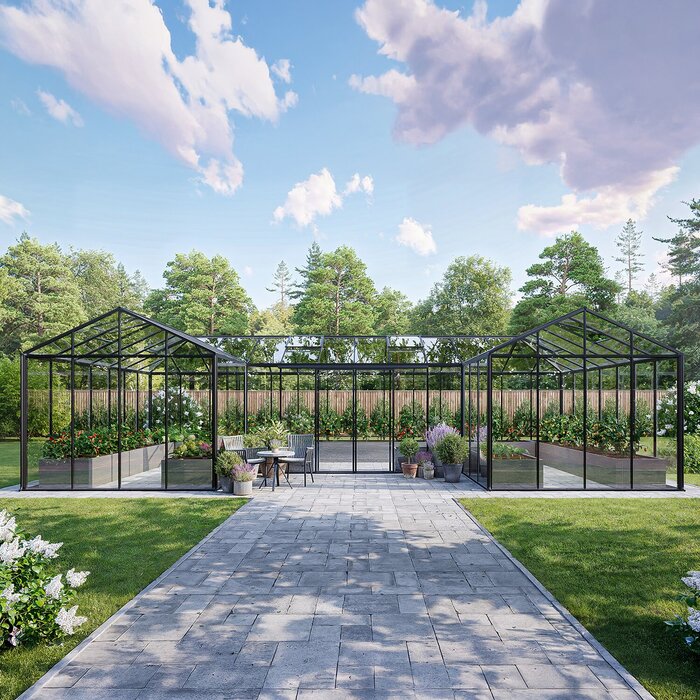
In a shaded setting, bigger is not always better. A generous greenhouse can provide comfortable room for potting, seating, and varied plant zones, but it also has more interior to organize around the available light. Choose a footprint that fits your intended use without overwhelming the brightest area of the garden. Map door swings, paths, shelving, and container positions before deciding what will work.
Interior layout should protect light as much as possible. Put lower plants and propagation areas where daylight is strongest, and avoid solid, tall storage that blocks the middle of the space. Movable tables and modest shelving make seasonal adjustments simpler. A greenhouse is often more satisfying when it has clear jobs: one area for sowing, one for plants, and one for tools rather than an accumulation of unrelated items. Consider how the greenhouse will feel during your usual gardening months. A well-used potting and propagation space can have value even when its light does not suit every summer crop.
Sketch pathways and benches to ensure the best-lit areas remain available for plants, not bulky storage.
Choose adaptable furniture so planting positions can change as shade shifts through the year.
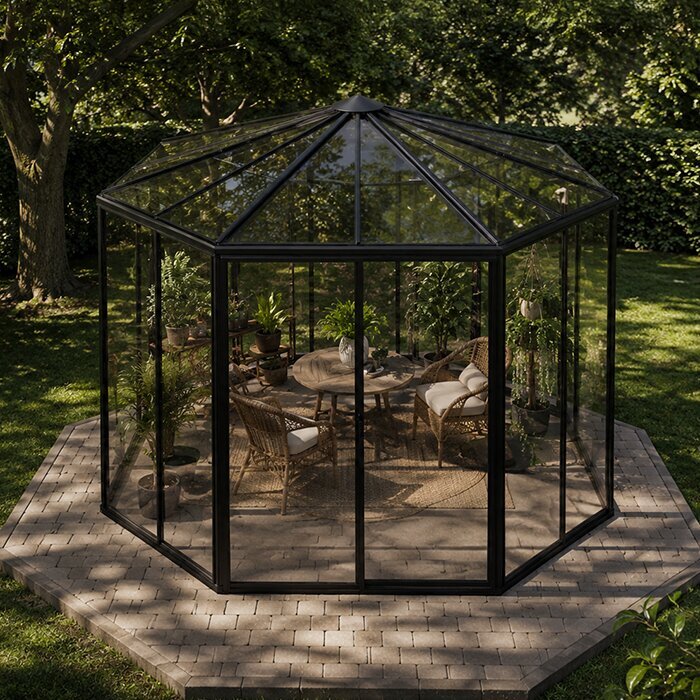
For a separate garden room with adaptable interiors, look at a standard Classic greenhouse with freestanding flexibility and size it around the space you will actively tend.
08 · Value decision
Decide whether the greenhouse fits your habits
The most useful question is not whether shade makes a greenhouse universally worthwhile, but whether it makes sense for your routine. It may be a strong choice if you enjoy seed starting, leafy crops, propagation, potting, or simply spending time among plants in a sheltered setting. It may disappoint if your only goal is abundant sun-loving vegetables in a garden that receives very little direct light.
Before purchasing, write down the activities you expect it to support in each season. Include practical matters such as base preparation, drainage, water access, cleaning, and how surrounding trees will be managed. Request current product information and a quotation for the configuration you are considering. If a property rule, boundary issue, or insurance question applies, check directly with the relevant local authority, association, or insurer rather than assuming an outcome.
Buy for several realistic uses, such as propagation, greens, potting, and plant care, rather than one optimistic crop.
Revisit the site plan after a week of observations before finalizing size, orientation, and access routes.
If a house-side workspace suits your everyday routine, explore a full-size regular Lean-To greenhouse for close-at-hand gardening after confirming light, drainage, and property-specific requirements.
How shaded sites compare
Use this snapshot to identify the condition closest to your garden. Real sites vary with season, surrounding surfaces, and tree cover, so treat it as a planning guide rather than a promise of crop performance.
Open, mostly sunny area
Broadest crop choice and seasonal flexibility
Prevent overheating while preserving clear access
Morning sun, afternoon shade
Greens, starts, herbs, selective fruiting crops
Use the early light and watch seasonal shadows
Dappled tree shade
Cool-season growing and potting-focused use
Manage debris, roots, and changing canopy cover
Bright wall-side location
Convenient growing close to the house
Check wall shadows, runoff, and installation clearance
Deep all-day shade
Limited shade-tolerant planting or workspace use
Set modest expectations before investing
A practical shade-site planning sequence
A short observation period can prevent a mismatch between the greenhouse you imagine and the light your garden actually provides. Work through these steps before narrowing product options.
01
Map a full day
Mark direct sun, dappled light, and deep shade across each candidate location. Include early morning and late afternoon, not just the brightest period.
02
Check another season
Compare the site when the sun is lower or trees are leafed out. Photos from the same viewpoint make changes easier to judge.
03
Name your crops
Separate must-grow crops from nice-to-have experiments. If fruiting summer vegetables are essential, give their light needs extra weight in the decision.
04
Test the routine
Walk the route with a watering can, potting supplies, and a wheelbarrow if relevant. Confirm that access will feel convenient in ordinary weather.
05
Review the installation area
Consider base, drainage, clearance, nearby trees, and property-specific requirements. Seek appropriate local guidance before making final installation decisions.
Shaded greenhouse buying checklist
Bring this list to your garden walk-through. Each answer helps clarify whether a greenhouse will become a useful extension of your gardening space.
01. Record direct sun and shadow at several times rather than relying on the garden’s overall impression.
02. Identify whether shadows come from deciduous trees, evergreens, fences, neighboring buildings, or your own home.
03. Choose the brightest workable location with practical access to water, tools, and everyday paths.
04. Match your crop plan to available light, giving leafy crops priority where conditions are cooler.
05. Check for falling branches, heavy leaf drop, roots, and sap before selecting a tree-adjacent site.
06. Plan interior shelving and storage so they do not steal the limited brightest growing space.
07. Observe drainage after rain and avoid locations that stay puddled or difficult to approach.
08. Confirm applicable local authority, community, boundary, and insurance considerations for your proposed installation.
Questions gardeners ask about shade
Can a greenhouse work with only morning sun?
It can, especially when the morning sun is consistent and the site remains bright afterward. This pattern often suits leafy vegetables, herbs, seedlings, and many container plants. For crops that rely on sustained warmth and strong light to flower and fruit, assess expectations carefully and keep the brightest positions available.
Is a greenhouse under a tree a bad idea?
Not always, but it needs a careful appraisal. A high deciduous canopy may allow useful seasonal light, while dense evergreen cover can be much more limiting. Consider branch safety, leaf fall, root competition around the base, dripping moisture, and the ongoing cleaning work before placing any structure beneath or close to a tree.
Will a shaded greenhouse stay too cold?
It may warm more slowly and lose the benefit of direct solar gain for much of the day. The practical effect depends on season, local weather, surrounding shelter, and how open the sky is. Think of it as a cooler growing environment, then select plants and routines that suit those conditions.
What vegetables are most realistic in part shade?
Salad leaves, spinach, arugula, kale, Asian greens, and many herbs are sensible starting points. Seedlings and young plants can also make good use of protected space. Fruiting vegetables can be tried where light is stronger, but they should not be the only purpose behind a greenhouse purchase in a shaded garden.
Should I remove trees to make room for a greenhouse?
Avoid treating tree removal as a simple greenhouse-planning step. Trees provide shade, habitat, privacy, and landscape value, while removal can involve safety, property, and local considerations. First investigate alternate locations, seasonal pruning by a qualified professional where appropriate, and a crop plan that works with the light already available.
Do I need permission for a greenhouse in my yard?
Requirements can vary by location, property type, size, placement, setbacks, homeowners association rules, and other local factors. Do not assume that a small garden structure is exempt. Review the relevant local authority guidance and any property agreements, and ask your insurer about questions specific to your coverage.
Explore greenhouse options
Make shade part of the design brief
A greenhouse in a shaded garden can be a worthwhile addition when it is placed with care and used for the kinds of plants that fit the available light. Observe before buying, protect the brightest growing positions, and value practical access as highly as an idealized sunny picture.
The strongest plan is an honest one: choose a location that works through the season, select crops that can thrive there, and choose a greenhouse format that supports how you garden. Bloomcabin can help you compare structure styles once your garden’s light and daily needs are clear.
Compare greenhouse styles with your site observations, crop list, and preferred garden routine in hand.
